• Home
  • Latest
  • Fortune 500
  • Finance
  • Tech
  • Leadership
  • Lifestyle
  • Rankings
  • Multimedia
TechGoogle

Why Yelp’s anti-competitive case against Google is weak at best

By
Mathew Ingram
Mathew Ingram
Down Arrow Button Icon
By
Mathew Ingram
Mathew Ingram
Down Arrow Button Icon
June 29, 2015, 7:04 PM ET
A person prepares to search the internet using the Google search engine, on May 14, 2014, in Lille.  In a surprise ruling on May 13, the EU's top court said individuals have the right to ask US Internet giant Google to delete personal data produced by its ubiquitous search engine.  AFP PHOTO / PHILIPPE HUGUEN        (Photo credit should read PHILIPPE HUGUEN/AFP/Getty Images)
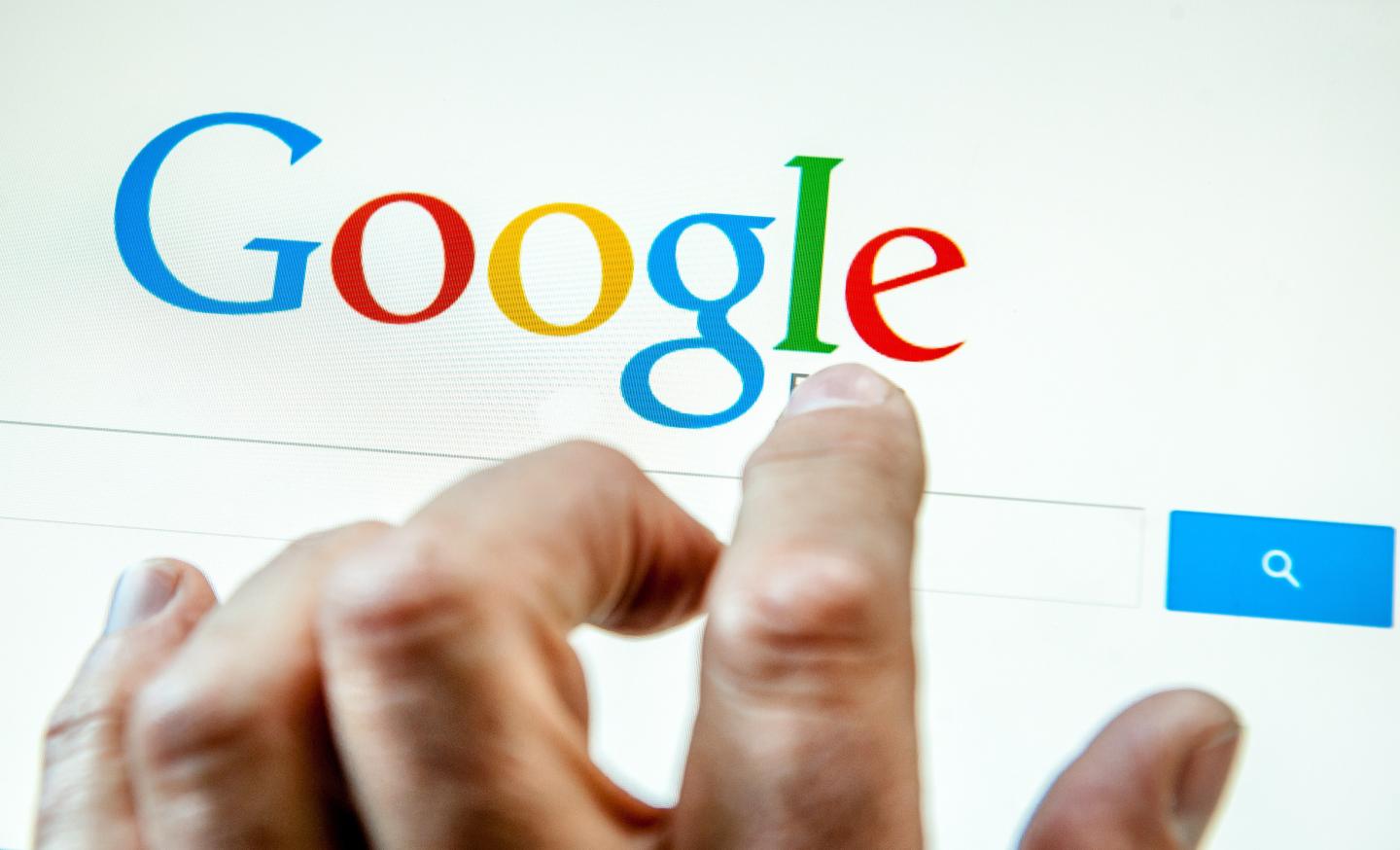
A person prepares to search the internet using the Google search engine, on May 14, 2014, in Lille. In a surprise ruling on May 13, the EU's top court said individuals have the right to ask US Internet giant Google to delete personal data produced by its ubiquitous search engine. AFP PHOTO / PHILIPPE HUGUEN (Photo credit should read PHILIPPE HUGUEN/AFP/Getty Images)Photograph by Philippe Huguen - AFP/Getty Images

There’s been a steady drumbeat of antitrust and anti-competitive accusations against Google (GOOG) over the past several years—not just in Europe but in the US as well—and one of the major players pounding out that message has been Yelp, the online recommendation network. The company launched another salvo on the weekend, with a paper co-authored by noted legal scholar Tim Wu, a law professor at Columbia University who is also a former Google Fellow and former advisor to the Federal Trade Commission.

In the paper, Yelp(YELO) and Wu and Harvard business professor Michael Luca try to make the case that Google systematically disadvantages users by giving them search results that highlight Google’s own services, rather than “objective” results for the term they entered. According to Wu—who coined the term “net neutrality,” but in the past has demurred on the subject of whether or not Google is being anti-competitive with some of its behavior—the evidence against the search giant is incontrovertible.

“When the facts change, your thinking should change,” Wu told Re/code. “The main surprising and shocking realization is that Google is not presenting its best product. In fact, it’s presenting a version of the product that’s degraded and intentionally worse for consumers. This is the closest I’ve seen Google come to [being] the Microsoft case.”

In order to arrive at this conclusion, Yelp and Wu looked at Google’s results for a range of local search terms—such as “pediatrician in New York”—including the so-called “One Box” the search giant typically displays containing results that come from Google-owned and operated services. The researchers then compared that to a set of results they got by using a browser plugin which stripped out the in-house results, but otherwise left the search untouched.

The fact that users are being disadvantaged by Google’s “self dealing,” the paper says, can be shown by how much more frequently they click on other results when One Box services are excluded. According to the survey, users clicked on the filtered results 45% more than they did on Google’s results with the One Box included.

In other words, Yelp and its co-authors argue, users obviously preferred the cleaned up results to the ones where Google tried to promote its own services. That’s obvious evidence of harm, the paper says, and therefore presumably Google should be sanctioned, or forced to change its behavior.

The idea that Google gives preference to its own services is at the center of the antitrust actions against the company, both in Europe and in the US. And the reason why Yelp and Wu are making such a big deal out of whether users are being disadvantaged is that consumer harm plays a central role in findings of antitrust or anticompetitive behavior in the US under the Sherman Antitrust Act—the law that the government employed to go after Microsoft in the 1990s.


There’s a common misperception that all you have to do to take action against a company like Google is to show that it has a monopoly in a specific market. But simply having a monopoly isn’t illegal—in the United States at least. What’s illegal is using that monopoly position in an anti-competitive way against others in the industry. And even then, anyone arguing an antitrust case has to show that this behavior actually harmed users in some way.

So the idea that Google is giving people inferior search results is a critical factor. But is that really what’s happening? That’s a difficult case to make. Search results aren’t an exact science by any means, nor is Google in the habit of talking about exactly how its algorithm functions. So any assumptions made by critics like Yelp or Wu have to be based on a kind of reverse engineering of a result they don’t really know anything about, and that process is inevitably going to be flawed.

For example, looking at whether a user is satisfied with a search on the basis of how much they click has a number of potential holes. Among them are the fact that much of Google’s strategy with the One Box approach is to give users as much information as possible about their query without making them click at all. So the fact that many didn’t click might actually mean that they were very satisfied with the results — so satisfied that they didn’t have to click to get more information. The paper also focused on hyper-local results, which are notoriously subjective.

Even if the results are accurate and users were not getting the best possible search results, Mike Masnick at Techdirt raised a good question when Yelp first started talking about its “Focus on the User” campaign last fall: Is the quality of search results really something the government should be issuing edicts about? Presumably, if Google results were that bad, users would flee.

The counter-argument, of course, is that Google has too much market power for anyone to leave, thanks to network effects and the influence of an illegally-acquired monopoly. But is the search market really a monopoly? And even if it is, will sanctioning Google do anything to solve that problem? Both of these questions are difficult to answer.

There’s a case to be made that Google is losing much of its previous dominance when it comes to finding content, in part because of the rise of Facebook and the power that social signals have (which is why Google cut a deal with Twitter for access to its “firehose” of user data). Some antitrust watchers would say Microsoft was in much the same position when the case against the company started in 1998. If the Justice Department had left well enough alone, market forces might have had as much or more of an effect on Microsoft and its market share as the government did.

It’s one thing to argue that Google is a large company that throws its weight around and promotes its own services, but it’s another thing entirely to argue that the company should be sanctioned by the federal government for that—or that doing so would somehow magically result in a better search marketplace for consumers. Neither of those are obvious.

About the Author
By Mathew Ingram
See full bioRight Arrow Button Icon

Latest in Tech

Finance
Lorem ipsum dolor sit amet, consectetur adipiscing elit, sed do eiusmod tempor incididunt ut labore et dolore magna aliqua. Ut enim ad minim veniam
By Fortune Editors
October 20, 2025
Finance
Lorem ipsum dolor sit amet, consectetur adipiscing elit, sed do eiusmod tempor incididunt ut labore et dolore magna aliqua. Ut enim ad minim veniam
By Fortune Editors
October 20, 2025
Finance
Lorem ipsum dolor sit amet, consectetur adipiscing elit, sed do eiusmod tempor incididunt ut labore et dolore magna aliqua. Ut enim ad minim veniam
By Fortune Editors
October 20, 2025
Finance
Lorem ipsum dolor sit amet, consectetur adipiscing elit, sed do eiusmod tempor incididunt ut labore et dolore magna aliqua. Ut enim ad minim veniam
By Fortune Editors
October 20, 2025
Finance
Lorem ipsum dolor sit amet, consectetur adipiscing elit, sed do eiusmod tempor incididunt ut labore et dolore magna aliqua. Ut enim ad minim veniam
By Fortune Editors
October 20, 2025
Finance
Lorem ipsum dolor sit amet, consectetur adipiscing elit, sed do eiusmod tempor incididunt ut labore et dolore magna aliqua. Ut enim ad minim veniam
By Fortune Editors
October 20, 2025

Most Popular

Finance
Lorem ipsum dolor sit amet, consectetur adipiscing elit, sed do eiusmod tempor incididunt ut labore et dolore magna aliqua. Ut enim ad minim veniam
By Fortune Editors
October 20, 2025
Finance
Lorem ipsum dolor sit amet, consectetur adipiscing elit, sed do eiusmod tempor incididunt ut labore et dolore magna aliqua. Ut enim ad minim veniam
By Fortune Editors
October 20, 2025
Finance
Lorem ipsum dolor sit amet, consectetur adipiscing elit, sed do eiusmod tempor incididunt ut labore et dolore magna aliqua. Ut enim ad minim veniam
By Fortune Editors
October 20, 2025
Finance
Lorem ipsum dolor sit amet, consectetur adipiscing elit, sed do eiusmod tempor incididunt ut labore et dolore magna aliqua. Ut enim ad minim veniam
By Fortune Editors
October 20, 2025
Finance
Lorem ipsum dolor sit amet, consectetur adipiscing elit, sed do eiusmod tempor incididunt ut labore et dolore magna aliqua. Ut enim ad minim veniam
By Fortune Editors
October 20, 2025
Finance
Lorem ipsum dolor sit amet, consectetur adipiscing elit, sed do eiusmod tempor incididunt ut labore et dolore magna aliqua. Ut enim ad minim veniam
By Fortune Editors
October 20, 2025
Fortune Secondary Logo
Rankings
  • 100 Best Companies
  • Fortune 500
  • Global 500
  • Fortune 500 Europe
  • Most Powerful Women
  • World's Most Admired Companies
  • See All Rankings
  • Lists Calendar
Sections
  • Finance
  • Fortune Crypto
  • Features
  • Leadership
  • Health
  • Commentary
  • Success
  • Retail
  • Mpw
  • Tech
  • Lifestyle
  • CEO Initiative
  • Asia
  • Politics
  • Conferences
  • Europe
  • Newsletters
  • Personal Finance
  • Environment
  • Magazine
  • Education
Customer Support
  • Frequently Asked Questions
  • Customer Service Portal
  • Privacy Policy
  • Terms Of Use
  • Single Issues For Purchase
  • International Print
Commercial Services
  • Advertising
  • Fortune Brand Studio
  • Fortune Analytics
  • Fortune Conferences
  • Business Development
  • Group Subscriptions
About Us
  • About Us
  • Press Center
  • Work At Fortune
  • Terms And Conditions
  • Site Map
  • About Us
  • Press Center
  • Work At Fortune
  • Terms And Conditions
  • Site Map
  • Facebook icon
  • Twitter icon
  • LinkedIn icon
  • Instagram icon
  • Pinterest icon

Latest in Tech

China stopped issuing new robotaxi licenses over a glitch. America can’t stop them from rolling into active shooter situations
LawChina
China stopped issuing new robotaxi licenses over a glitch. America can’t stop them from rolling into active shooter situations
By Catherina GioinoMay 4, 2026
2 hours ago
David Sacks
EconomyEconomic growth
Trump’s former AI czar says the quiet part out loud on the economy: ‘Stopping progress in AI would be equivalent to halting the U.S. economy’
By Tristan BoveMay 4, 2026
3 hours ago
A farmer in a field plowing with a horse
Economydisruption
BofA throws cold water on AI apocalypse panic: 60% of today’s jobs didn’t exist in 1940
By Nick LichtenbergMay 4, 2026
6 hours ago
doctor
AITech
A Harvard study just found AI can now out-diagnose physicians in the ER: ‘We’re already at the ceiling’
By Jake AngeloMay 4, 2026
7 hours ago
dario
AIAnthropic
Anthropic takes shot at consulting industry in joint venture with Wall Street giants
By Nick LichtenbergMay 4, 2026
8 hours ago
Frustrated job seeker on laptop
NewslettersFortune Workplace Innovation
Nearly 4 in 10 job candidates have bailed on a hiring round because it required an AI interview
By Emma BurleighMay 4, 2026
10 hours ago

Most Popular

As economic despair mounts, Russian official admits the country has had enough of Putin's war on Ukraine. 'We can’t even take one region'
Economy
As economic despair mounts, Russian official admits the country has had enough of Putin's war on Ukraine. 'We can’t even take one region'
By Jason MaMay 3, 2026
1 day ago
Diary of a CEO founder says he hired someone with 'zero' work experience because she 'thanked the security guard by name' before the interview
Success
Diary of a CEO founder says he hired someone with 'zero' work experience because she 'thanked the security guard by name' before the interview
By Emma BurleighMay 3, 2026
1 day ago
America got rich and got sad. A top economist says 2020 broke something that hasn't healed
Economy
America got rich and got sad. A top economist says 2020 broke something that hasn't healed
By Nick LichtenbergMay 3, 2026
1 day ago
Scott Bessent on financial literacy: 'it drives me crazy' to see young men in blue-collar construction jobs playing the lottery
Personal Finance
Scott Bessent on financial literacy: 'it drives me crazy' to see young men in blue-collar construction jobs playing the lottery
By Fatima Hussein and The Associated PressMay 1, 2026
3 days ago
I spent a decade selling homes to the ultra-wealthy. What I saw explains the housing market's nepo problem
Commentary
I spent a decade selling homes to the ultra-wealthy. What I saw explains the housing market's nepo problem
By Blake O'ShaughnessyMay 3, 2026
1 day ago
Sam Altman says the quiet part out loud, confirming some companies are ‘AI washing’ by blaming unrelated layoffs on the technology
AI
Sam Altman says the quiet part out loud, confirming some companies are ‘AI washing’ by blaming unrelated layoffs on the technology
By Sasha RogelbergMay 3, 2026
1 day ago

© 2026 Fortune Media IP Limited. All Rights Reserved. Use of this site constitutes acceptance of our Terms of Use and Privacy Policy | CA Notice at Collection and Privacy Notice | Do Not Sell/Share My Personal Information
FORTUNE is a trademark of Fortune Media IP Limited, registered in the U.S. and other countries. FORTUNE may receive compensation for some links to products and services on this website. Offers may be subject to change without notice.