
• Home
  • Latest
  • Fortune 500
  • Finance
  • Tech
  • Leadership
  • Lifestyle
  • Rankings
  • Multimedia

Trendingnow

1

Gen Z fled San Francisco for Texas and Florida. Now they’re turning ‘welcomer cities’ into the next big tech towns

2

Melinda French Gates' advice to new IPO millionaires: 'Give half your money away'

3

Anthropic disables Fable and Mythos AI models after U.S. government bars it from giving foreigners access

1

Gen Z fled San Francisco for Texas and Florida. Now they’re turning ‘welcomer cities’ into the next big tech towns

2

Melinda French Gates' advice to new IPO millionaires: 'Give half your money away'

3

Anthropic disables Fable and Mythos AI models after U.S. government bars it from giving foreigners access
LeadershipFortune 500

5 things you didn’t know about the Fortune 500

Alan Murray
By
Alan Murray
Alan Murray
Down Arrow Button Icon
Alan Murray
By
Alan Murray
Alan Murray
Down Arrow Button Icon
June 4, 2015, 6:00 AM ET
Alan Murray
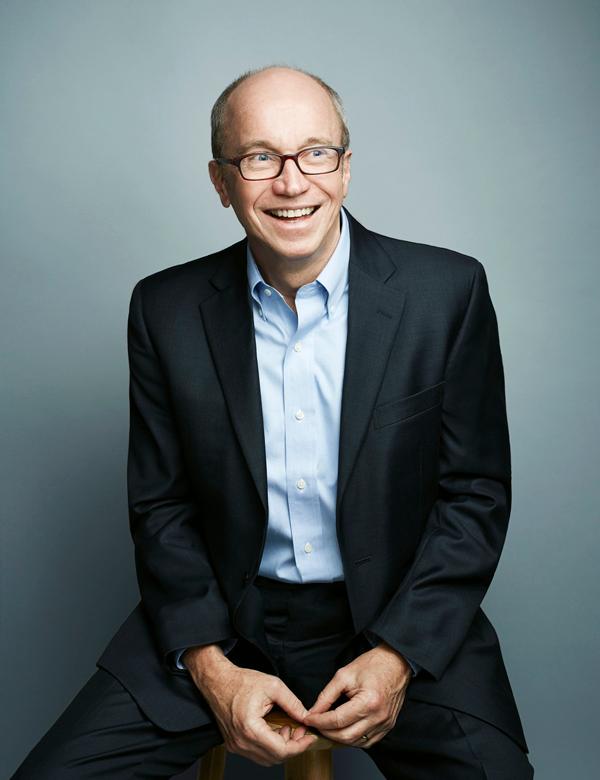
Alan Murray, editor of Fortune Magazine. Photograph by Wesley Mann for Fortune

Sixty years have passed since the first publication of the Fortune 500, which ranks the largest publicly held companies in the U.S. The list has become the iconic measure of business success. Companies flaunt their Fortune 500 rankings the way baseball players boast batting averages.

Much has changed in the intervening six decades, and at times we’ve changed with it. The globalization of business led us, in 1990, to launch the Fortune ­Global 500, which will be published in our August issue. And the rise of the service economy caused us, in 1995, to add service companies to the list of industrials.

Today’s business environment raises new questions and highlights some old ones. With growing criticism of public markets, should we consider all ­privately held companies (Dell, Uber, Mars) for the list? Are profits or market capitalization better metrics of size (No. 1 = Apple (AAPL)) than revenues (No. 1 = Walmart (WMT))? Should the Global 500 replace the Fortune 500 as our flagship? And at a meta level, has technology made “bigness” the wrong goal?

We’re pondering all those questions. But for now, we’ve kept the Fortune 500 in classic form. And we offer the following five facts, some of which—pardon us for saying so—may surprise you:

Fortune 500 companies are more important to the economy than ever before.

We live in the age of startups, right? Silicon Valley is the source of business dynamism, while “big” companies are bureaucratic, entrenched, obsolete.

But here’s a fact: Fortune 500 companies had revenues last year that equaled 71.9% of U.S. GDP—up from 58.4% two decades ago, and 35% in 1955. To be sure, much of that revenue comes from overseas operations. But these companies are still the guts of the U.S., and the global, economy.

We and others have noted that the logic behind these behemoths is changing. Ronald Coase won the Nobel Prize for his theory, developed three-quarters of a century ago, that giant companies were necessary because the “transaction costs” of building large industrial operations in the free market were too great. Since the onset of the digital era, however, those transaction costs have plummeted. You can now build a global business from your bedroom.

Yet a new logic—based on network effects and zero marginal costs of production—has led digital companies to achieve massive scale even faster than their industrial forebears—witness Google (GOOG), Facebook (FB), and the aforementioned Uber. Size still matters, even if for new reasons.

Rapid technological change is the greatest threat facing big business.

This year, as part of our research, we sent a survey to all the Fortune 500 CEOs. One question we asked: What is your company’s greatest challenge? “The rapid pace of technological change” topped the list, besting “cybersecurity” (a close second), as well as other popular business bogeymen, such as “increased regulation,” “shareholder activism,” and a “shortage of skilled labor.” Moreover, a whopping 94% of those who responded said their companies would change more in the next five years than in the past five.

Today’s CEOs clearly recognize that new technologies are going to radically change the way they do business. And they know they need to figure it out before their competitors do.

Despite the focus on change, “disruption” is overstated.

“Disruption” may be the most used word in the business vocab­ulary these days. And it is certainly the 2015 favorite for business-book titles.

But actual disruption isn’t as great as advertised. Sure, 57% of the companies on the 1995 Fortune 500 list aren’t there today. But that record isn’t dramatically different from the first two decades, when 45% of the companies on the 1955 list were gone by 1975.

Moreover, when we asked CEOs who their “most dangerous competitor” was, 57% said it was another Fortune 500 company. Only 20% cited competition from a startup, and only 4% cited competition from companies in less-­developed countries, the purported sources of ­disruption.

Fortune 500 companies have no plans to shed workers.

The latest wave of technology, with its emphasis on artificial intelligence, has raised the specter of displaced knowledge workers and caused many commentators to wonder what jobs will be left for humans.

But for now at least, the CEOs of the nation’s biggest companies harbor no doubts about the value of human capital. Fully 82% said they planned to employ more people two years from now than they do today.

Fortune 500 companies would prefer to be private.

The vast majority (84%) of CEOs who responded to the survey agreed with the statement: “It would be easier to manage my company if it were a private company.” Frustration with the pressures of public markets is clearly on the rise. Surviving the new technological revolution requires long-term thinking and smart investment. But public shareholders, searching for better investment returns in a zero-­interest-rate world, are demanding short-term results. Public-company CEOs are caught in the crosshairs.

In this issue, we present our latest ­Fortune 500 rankings. We also show you how some iconic companies—Walmart, Oracle (ORCL), PepsiCo (PEP), Facebook, Union ­Pacific (UNP), Caesar’s (CZR), Cummins (CMI) —are surfing the waves of change. We urge you to read it, and then put it on your bookshelf. You’ll find it a useful guide throughout the tumultuous year ahead.

Special thanks to assistant managing editor Brian O’Keefe, who oversaw this issue, and to senior editor Scott DeCarlo, who wrangled the data.

A version of this article appears in the June 15, 2015 issue of Fortune magazine with the headline ‘Myth-busting the Fortune 500’.

About the Author
Alan Murray
By Alan Murray
LinkedIn iconTwitter icon
See full bioRight Arrow Button Icon

Latest in Leadership

Finance
Lorem ipsum dolor sit amet, consectetur adipiscing elit, sed do eiusmod tempor incididunt ut labore et dolore magna aliqua. Ut enim ad minim veniam
By Fortune Editors
October 20, 2025
Finance
Lorem ipsum dolor sit amet, consectetur adipiscing elit, sed do eiusmod tempor incididunt ut labore et dolore magna aliqua. Ut enim ad minim veniam
By Fortune Editors
October 20, 2025
Finance
Lorem ipsum dolor sit amet, consectetur adipiscing elit, sed do eiusmod tempor incididunt ut labore et dolore magna aliqua. Ut enim ad minim veniam
By Fortune Editors
October 20, 2025
Finance
Lorem ipsum dolor sit amet, consectetur adipiscing elit, sed do eiusmod tempor incididunt ut labore et dolore magna aliqua. Ut enim ad minim veniam
By Fortune Editors
October 20, 2025
Finance
Lorem ipsum dolor sit amet, consectetur adipiscing elit, sed do eiusmod tempor incididunt ut labore et dolore magna aliqua. Ut enim ad minim veniam
By Fortune Editors
October 20, 2025
Finance
Lorem ipsum dolor sit amet, consectetur adipiscing elit, sed do eiusmod tempor incididunt ut labore et dolore magna aliqua. Ut enim ad minim veniam
By Fortune Editors
October 20, 2025

Most Popular

Finance
Lorem ipsum dolor sit amet, consectetur adipiscing elit, sed do eiusmod tempor incididunt ut labore et dolore magna aliqua. Ut enim ad minim veniam
By Fortune Editors
October 20, 2025
Finance
Lorem ipsum dolor sit amet, consectetur adipiscing elit, sed do eiusmod tempor incididunt ut labore et dolore magna aliqua. Ut enim ad minim veniam
By Fortune Editors
October 20, 2025
Finance
Lorem ipsum dolor sit amet, consectetur adipiscing elit, sed do eiusmod tempor incididunt ut labore et dolore magna aliqua. Ut enim ad minim veniam
By Fortune Editors
October 20, 2025
Finance
Lorem ipsum dolor sit amet, consectetur adipiscing elit, sed do eiusmod tempor incididunt ut labore et dolore magna aliqua. Ut enim ad minim veniam
By Fortune Editors
October 20, 2025
Finance
Lorem ipsum dolor sit amet, consectetur adipiscing elit, sed do eiusmod tempor incididunt ut labore et dolore magna aliqua. Ut enim ad minim veniam
By Fortune Editors
October 20, 2025
Finance
Lorem ipsum dolor sit amet, consectetur adipiscing elit, sed do eiusmod tempor incididunt ut labore et dolore magna aliqua. Ut enim ad minim veniam
By Fortune Editors
October 20, 2025
Fortune Secondary Logo
Rankings
  • 100 Best Companies
  • Fortune 500
  • Global 500
  • Fortune 500 Europe
  • Most Powerful Women
  • World's Most Admired Companies
  • See All Rankings
  • Lists Calendar
Sections
  • Finance
  • Fortune Crypto
  • Features
  • Leadership
  • Health
  • Commentary
  • Success
  • Retail
  • Mpw
  • Tech
  • Lifestyle
  • CEO Initiative
  • Asia
  • Politics
  • Conferences
  • Europe
  • Newsletters
  • Personal Finance
  • Environment
  • Magazine
  • Education
Customer Support
  • Frequently Asked Questions
  • Customer Service Portal
  • Privacy Policy
  • Terms Of Use
  • Single Issues For Purchase
  • International Print
Commercial Services
  • Advertising
  • Fortune Brand Studio
  • Fortune Analytics
  • Fortune Conferences
  • Business Development
  • Group Subscriptions
About Us
  • About Us
  • Press Center
  • Work At Fortune
  • Terms And Conditions
  • Site Map
  • About Us
  • Press Center
  • Work At Fortune
  • Terms And Conditions
  • Site Map
  • Facebook icon
  • Twitter icon
  • LinkedIn icon
  • Instagram icon
  • Pinterest icon

Latest in Leadership

SpaceX went from three consecutive rocket explosions and near-bankruptcy in 2008 to the biggest IPO in history
Startups & VentureSpaceX
SpaceX went from three consecutive rocket explosions and near-bankruptcy in 2008 to the biggest IPO in history
By Marco Quiroz-GutierrezJune 14, 2026
3 hours ago
A 1% mistake costs $10 billion: Inside the impossible math of managing Elon Musk’s trillionaire SpaceX wealth
Personal FinanceElon Musk
A 1% mistake costs $10 billion: Inside the impossible math of managing Elon Musk’s trillionaire SpaceX wealth
By Sydney LakeJune 14, 2026
3 hours ago
Boomers actually do hold most of the wealth and power. So why do they call it ‘whiny’ to point that out?
Economybaby boomers
Boomers actually do hold most of the wealth and power. So why do they call it ‘whiny’ to point that out?
By Nick LichtenbergJune 14, 2026
4 hours ago
Whop CEO Steven Schwartz
SuccessMillionaires
The Gen Z cofounder of $1.6 billion Whop says his platform has minted over 650 millionaires—he wants to make work fun and money worries obsolete
By Emma BurleighJune 14, 2026
5 hours ago
More and more of Musk’s companies end up under the same roof. Here’s a look at his sprawling empire
C-SuiteElon Musk
More and more of Musk’s companies end up under the same roof. Here’s a look at his sprawling empire
By The Associated PressJune 13, 2026
1 day ago
Melinda French Gates’ advice to new IPO millionaires: ‘Give half your money away’
Startups & VentureMost Powerful Women
Melinda French Gates’ advice to new IPO millionaires: ‘Give half your money away’
By Emma HinchliffeJune 13, 2026
1 day ago

Most Popular

Gen Z fled San Francisco for Texas and Florida. Now they’re turning ‘welcomer cities’ into the next big tech towns
Real Estate
Gen Z fled San Francisco for Texas and Florida. Now they’re turning ‘welcomer cities’ into the next big tech towns
By Sydney LakeJune 13, 2026
1 day ago
Melinda French Gates' advice to new IPO millionaires: 'Give half your money away'
Startups & Venture
Melinda French Gates' advice to new IPO millionaires: 'Give half your money away'
By Emma HinchliffeJune 13, 2026
1 day ago
Anthropic disables Fable and Mythos AI models after U.S. government bars it from giving foreigners access
AI
Anthropic disables Fable and Mythos AI models after U.S. government bars it from giving foreigners access
By Jeremy KahnJune 13, 2026
1 day ago
SpaceX CFO Bret Johnsen quietly engineered its historic IPO and became an overnight billionaire
C-Suite
SpaceX CFO Bret Johnsen quietly engineered its historic IPO and became an overnight billionaire
By Sasha RogelbergJune 13, 2026
1 day ago
Trump expects to sign a deal with Iran on Sunday, but Tehran may want to avoid giving him a gift on his birthday
Middle East
Trump expects to sign a deal with Iran on Sunday, but Tehran may want to avoid giving him a gift on his birthday
By Jason MaJune 13, 2026
18 hours ago
'It's not a jailbreak' — Research leading to U.S. export restrictions on top Anthropic models was for defense, cybersecurity CEO says
AI
'It's not a jailbreak' — Research leading to U.S. export restrictions on top Anthropic models was for defense, cybersecurity CEO says
By Jason MaJune 13, 2026
21 hours ago

© 2026 Fortune Media IP Limited. All Rights Reserved. Use of this site constitutes acceptance of our Terms of Use and Privacy Policy | CA Notice at Collection and Privacy Notice | Do Not Sell/Share My Personal Information
FORTUNE is a trademark of Fortune Media IP Limited, registered in the U.S. and other countries. FORTUNE may receive compensation for some links to products and services on this website. Offers may be subject to change without notice.