• Home
  • Latest
  • Fortune 500
  • Finance
  • Tech
  • Leadership
  • Lifestyle
  • Rankings
  • Multimedia

Trendingnow

1

Bolt CEO says he let go of his entire HR team for creating problems that didn’t exist: ‘Those problems disappeared when I let them go’ 

2

Despite a $500 million net worth, Shaq just finished his fourth degree. He warns graduates: 'Your character will take you further than your resume'

3

Meet a 21-year-old community college student who's going to China as the first American woman welder in the trades Olympics

1

Bolt CEO says he let go of his entire HR team for creating problems that didn’t exist: ‘Those problems disappeared when I let them go’ 

2

Despite a $500 million net worth, Shaq just finished his fourth degree. He warns graduates: 'Your character will take you further than your resume'

3

Meet a 21-year-old community college student who's going to China as the first American woman welder in the trades Olympics
Tech

How water technology can help farmers survive California’s drought

By
Katie Fehrenbacher
Katie Fehrenbacher
Down Arrow Button Icon
By
Katie Fehrenbacher
Katie Fehrenbacher
Down Arrow Button Icon
June 1, 2015, 7:05 AM ET
New Laws California
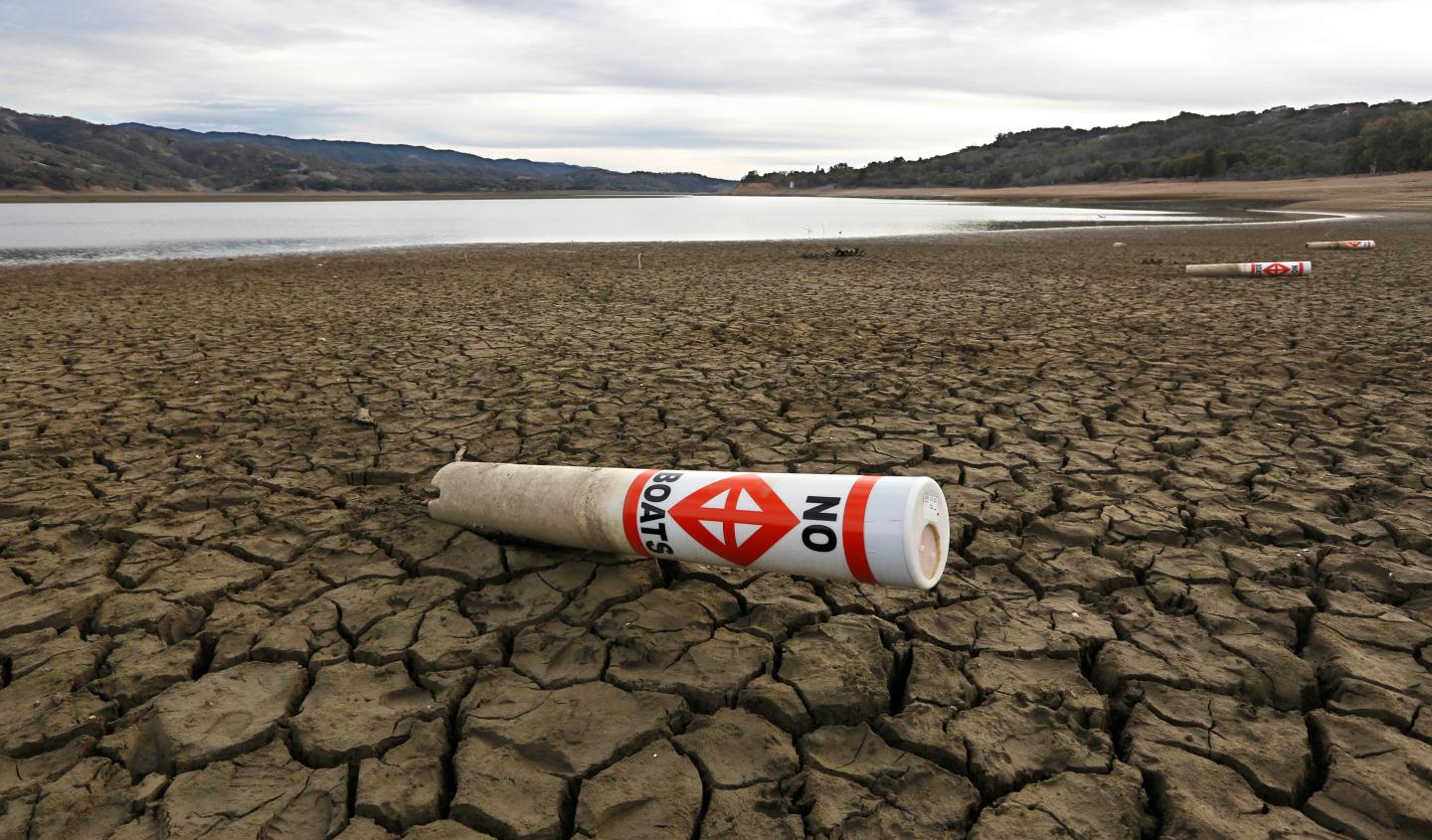
In this Feb. 4 2014 file photo, a warning buoy sits on the dry, cracked bed of Lake Mendocino near Ukiah, California.Photograph by Rich Pedroncelli — AP

Another year of crushing drought in California means new water cuts are in the works for both cities and farmers, who use up to 80 percent of the state’s water in an average year. In what is likely a sign of things to come, a group of farmers in the Sacramento-San Joaquin River Delta recently decided to voluntarily give up a quarter of their water by either fallowing the land or using other conservation methods.

Over the years, Silicon Valley—a region which has become synonymous with tech success—hasn’t been overly interested in funding water conservation technology, despite a drought taking place right in their backyard. Almost $12 billion was invested in Internet startups in 2014, compared to a few hundred million dollars in water startups.

But, it’s tech trends started in Silicon Valley— such as the Internet of things, big data, mobile, biotech and genetics, and nanotechnology —that could truly help farmers increase water efficiency. Founder and CEO of startup OnFarm, Lance Donny said a few years ago the agriculture industry was ripe for change and is “a sleeping giant” for digital tech.

It should be noted that farmers and cities mostly plan to reduce water use through new policies and better management, but here are some technologies I’ve been keeping an eye on that could help conserve more water in the state.

John Williamson harvests a four-acre field of oats on July 25, 2012 using a combine on his 200-acre organic farm in North Bennington, Vermont.
John Williamson harvests a four-acre field of oats on July 25, 2012 using a combine on his 200-acre organic farm in North Bennington, Vermont. (Robert Nickelsberg/Getty Images)
Photograph by Robert Nickelsberg — Getty Images

Sensor networks: Sensors and wireless networks are about as low cost as can be these days. Companies like Hortau, founded in 2002, use soil tension sensors—combined with data about temperature, weather and humidity—to manage smarter irrigation systems for farmers. These irrigation systems use gathered data to find more efficient times and better ways to use water.

Farm trade group American Farm Bureau Federation says 39 percent of farmers who grow water-needy corn or wheat now use sensor tech on their farms. Companies that already build sensor networks — like ThingWorx — for a variety of other industries are now targeting agriculture as new opportunities open up in the field.

While some companies are focused on making irrigation water go as far as possible, others are concentrating on protecting back-up water sources. Wisconsin-based startup Wellntel has developed a sensor system for monitoring ground water using sound waves, which farmers can then tap into like a savings account when surface water levels are low. It’s a far cry from the more traditional ground water measurement methods used today that rely on tape and chalk to monitor underground water.

 A Deere & Co John Deere 8130 tractor pulls a 24-row planter
A Deere & Co John Deere 8130 tractor pulls a 24-row planter as corn is planted in Malden, Illinois, U.S.(Daniel Acker/Bloomberg via Getty Images)
Photograph by Daniel Acker — Bloomberg via Getty Images

Data analytics: Some farmers aren’t willing (or able) to pay for smart irrigation systems and instead rely on companies that can provide valuable analytics. For example, young startup PowWow Energy uses electricity data from basic smart meters that are installed on water pumps and networks to detect pump leaks. There’s no hardware to install and a farmer receives a text message if there’s an abnormal spike in water use (which corresponds with the spike in energy from the meter).

The Climate Corporation, which was founded in 2006 and acquired by Monsanto in 2013, is another company that is focused on helping farmers by analyzing massive amounts of data about environmental conditions. The firm delivers insight and recommendations to farmers based on the data, which can lead to water being used more efficiently.

 Jeff Hodel farms 6,000 acres of corn and soybeans near Roanoke, Ill.
Construction on a $1 billion seawater desalination plant in Carlsbad, California in January can be seen in this photo. (Mike Blake/Reuters)
Photo: (C) Daniel Acker 2012 from The Human Face of Big Data

Management software, social media: Basic software and social networking tools that are commonly used for communication in other industries are starting to be used widely in the agriculture industry and could lead to better conservation efforts.

The Farmer’s Business Network just raised $15 million from Google Ventures, Kleiner Perkins and DBL Investors to grow its social network for independent farmers. On the platform, farmers can compare and collaborate with others in the industry on issues including water use, irrigation tools and weather information to increase yield.

Last month, OnFarm launched a new update to its farm data management software, which included new tools for water management for drought-stricken farmers. The software helps farmers manage data like real-time soil moisture, water balance information, irrigation scheduling, water reporting and more.

PHILIPPINES-WEATHER-TYPHOON-UN
A farmer sprays chemically engineered pesticides on a rice field in Leyte province, central Philippines. (Ted Aljibe/AFP via Getty Images)
Photograph by Ted Aljibe — AFP/Getty Images

Biotech and genetics: It’s not just digital tools that farmers are using to battle the drought. Companies are also using sophisticated genomics and breeding techniques to make seeds and crops that are more drought-resistant and water efficient.

Chicago-based Chromatin uses gene stacking (combining more than one gene in a plant) to make different types of water-efficient sorghum, which is a type of grass that is used for animal feed, grain, biofuel and brewing. Chromatin’s investors include GE Capital and BP Ventures.

Cibus is also using gene-editing technology to create water-efficient crops. The startup makes seeds that are pest tolerant and/or drought-resistant to increase a farmer’s harvest. Another company called Arcadia Biosciences went public in April and has helped seed companies deploy water-conservative crops like rice.

Construction continues on the Western Hemisphere's largest seawater desalination plant in Carlsbad
Construction on a $1 billion seawater desalination plant in Carlsbad, California in January can be seen in this photo. (Mike Blake/Reuters)
Photograph by Mike Blake — Reuters

Water cleaning & reuse: Water purification and desalination (a process that removes salt and minerals from water) has been around for decades and is an oft-used tool in most arid countries around the world. Israel is a major proponent of the process and reuses about 80 percent of its municipal wastewater for irrigation.

Reverse osmosis is one the most popular processes used in water cleaning technology, but generally uses a lot of energy and ends up being quite expensive. A company called Desalitech, based in Newton, Massachusetts, hopes to change that by creating water systems that use significantly less energy and therefore become accessible to both independent and commercial farms.

Other types of next-gen water cleaning systems are leveraging the latest in nanotechnology to create processes that can clean water with less energy. A startup called NanoH20 has developed nanotech-tweaked filtration techniques that clean water faster and as a result was later bought by Korean giant LG last year for $200 million.

Test-tube burger
A lab-grown meat burger made from Cultured Beef, which has been developed by Professor Mark Post of Maastricht University in the Netherlands, is seen. (David Parry/AP Images)
Photograph by David Parry — AP

Weirder ways for water conservation: There’s other, more unusual, methods startups are using to help reduce water use both directly and indirectly.

Five-year-old California startup mOasis makes a super absorbent gel polymer called hydrogel that farmers can put in soil ahead of planting seasons. The hydrogel — which is the size of a grain of sand, but can soak up 250 times its weight in water — absorbs excess water during irrigation and releases it as the soil dries out.

The company says using the gel can help farmers reduce water use by 20 percent, and cut water bills by 15 percent. The gel, developed at Stanford University, lasts about a year before it starts breaking down, and according to the company doesn’t leave behind bi-products that are environmentally questionable.

Permanently changing the paradigm of water-hungry industries could be another conceptual (and drastic) way to deliver water conservation in the long term. In California, cows raised for consumption often consume massive amounts of alfalfa, which is one of the most water-intensive crops. If cows raised explicitly for meat were replaced with lab-grown versions it would put less strain on water resources.

Startup Modern Meadow—based in Brooklyn, New York—is also hoping to change consumers’ eating habits by developing lab-printed meat that can be used in food or for leather goods. Another company called Cultured Beef is also working on their own version of lab-grown burgers as a way to conserve water.

California’s water issues aren’t expected to end anytime soon, but perhaps (just maybe) the ongoing drought will push Silicon Valley to finally do more.

Subscribe to Data Sheet, Fortune’s daily newsletter on the business of technology.

About the Author
By Katie Fehrenbacher
See full bioRight Arrow Button Icon

Latest in Tech

Finance
Lorem ipsum dolor sit amet, consectetur adipiscing elit, sed do eiusmod tempor incididunt ut labore et dolore magna aliqua. Ut enim ad minim veniam
By Fortune Editors
October 20, 2025
Finance
Lorem ipsum dolor sit amet, consectetur adipiscing elit, sed do eiusmod tempor incididunt ut labore et dolore magna aliqua. Ut enim ad minim veniam
By Fortune Editors
October 20, 2025
Finance
Lorem ipsum dolor sit amet, consectetur adipiscing elit, sed do eiusmod tempor incididunt ut labore et dolore magna aliqua. Ut enim ad minim veniam
By Fortune Editors
October 20, 2025
Finance
Lorem ipsum dolor sit amet, consectetur adipiscing elit, sed do eiusmod tempor incididunt ut labore et dolore magna aliqua. Ut enim ad minim veniam
By Fortune Editors
October 20, 2025
Finance
Lorem ipsum dolor sit amet, consectetur adipiscing elit, sed do eiusmod tempor incididunt ut labore et dolore magna aliqua. Ut enim ad minim veniam
By Fortune Editors
October 20, 2025
Finance
Lorem ipsum dolor sit amet, consectetur adipiscing elit, sed do eiusmod tempor incididunt ut labore et dolore magna aliqua. Ut enim ad minim veniam
By Fortune Editors
October 20, 2025

Most Popular

Finance
Lorem ipsum dolor sit amet, consectetur adipiscing elit, sed do eiusmod tempor incididunt ut labore et dolore magna aliqua. Ut enim ad minim veniam
By Fortune Editors
October 20, 2025
Finance
Lorem ipsum dolor sit amet, consectetur adipiscing elit, sed do eiusmod tempor incididunt ut labore et dolore magna aliqua. Ut enim ad minim veniam
By Fortune Editors
October 20, 2025
Finance
Lorem ipsum dolor sit amet, consectetur adipiscing elit, sed do eiusmod tempor incididunt ut labore et dolore magna aliqua. Ut enim ad minim veniam
By Fortune Editors
October 20, 2025
Finance
Lorem ipsum dolor sit amet, consectetur adipiscing elit, sed do eiusmod tempor incididunt ut labore et dolore magna aliqua. Ut enim ad minim veniam
By Fortune Editors
October 20, 2025
Finance
Lorem ipsum dolor sit amet, consectetur adipiscing elit, sed do eiusmod tempor incididunt ut labore et dolore magna aliqua. Ut enim ad minim veniam
By Fortune Editors
October 20, 2025
Finance
Lorem ipsum dolor sit amet, consectetur adipiscing elit, sed do eiusmod tempor incididunt ut labore et dolore magna aliqua. Ut enim ad minim veniam
By Fortune Editors
October 20, 2025
Fortune Secondary Logo
Rankings
  • 100 Best Companies
  • Fortune 500
  • Global 500
  • Fortune 500 Europe
  • Most Powerful Women
  • World's Most Admired Companies
  • See All Rankings
  • Lists Calendar
Sections
  • Finance
  • Fortune Crypto
  • Features
  • Leadership
  • Health
  • Commentary
  • Success
  • Retail
  • Mpw
  • Tech
  • Lifestyle
  • CEO Initiative
  • Asia
  • Politics
  • Conferences
  • Europe
  • Newsletters
  • Personal Finance
  • Environment
  • Magazine
  • Education
Customer Support
  • Frequently Asked Questions
  • Customer Service Portal
  • Privacy Policy
  • Terms Of Use
  • Single Issues For Purchase
  • International Print
Commercial Services
  • Advertising
  • Fortune Brand Studio
  • Fortune Analytics
  • Fortune Conferences
  • Business Development
  • Group Subscriptions
About Us
  • About Us
  • Press Center
  • Work At Fortune
  • Terms And Conditions
  • Site Map
  • About Us
  • Press Center
  • Work At Fortune
  • Terms And Conditions
  • Site Map
  • Facebook icon
  • Twitter icon
  • LinkedIn icon
  • Instagram icon
  • Pinterest icon

Latest in Tech

Samuel Corum/Getty Images
Big TechSpaceX
Elon Musk’s proposed pay package in SpaceX’s IPO filing reveals what the company actually is: a $1 trillion monster built to colonize Mars
By Eva RoytburgMay 20, 2026
6 hours ago
elon
SuccessIPOs
SpaceX IPO targets $28.5 trillion total addressable market, mission to ‘make life multiplanetary’ and understand ‘true nature of the universe’
By Nick LichtenbergMay 20, 2026
8 hours ago
Jensen Huang, chief executive officer of Nvidia
AINvidia
Nvidia tells skeptical investors that AI is ready to go mainstream
By Ian King and BloombergMay 20, 2026
8 hours ago
SpaceX finally files IPO prospectus, reveals revenue is up–but losses are too
Big TechSpaceX
SpaceX finally files IPO prospectus, reveals revenue is up–but losses are too
By Allie Garfinkle and Alexei OreskovicMay 20, 2026
9 hours ago
Elon Musk sits with his fists together, looking up.
Commentaryspace
SpaceX will be worth trillions, but the space station that made it possible is worth even more — if we don’t squander it
By Tejpaul BhatiaMay 20, 2026
9 hours ago
Antler CEO Magnus Grimeland says Silicon Valley doesn’t have a monopoly on tech: ‘People can innovate from almost anywhere’
AsiaAsia Agenda
Antler CEO Magnus Grimeland says Silicon Valley doesn’t have a monopoly on tech: ‘People can innovate from almost anywhere’
By Angelica AngMay 20, 2026
9 hours ago

Most Popular

Bolt CEO says he let go of his entire HR team for creating problems that didn’t exist: ‘Those problems disappeared when I let them go’ 
Workplace Culture
Bolt CEO says he let go of his entire HR team for creating problems that didn’t exist: ‘Those problems disappeared when I let them go’ 
By Preston ForeMay 19, 2026
1 day ago
Despite a $500 million net worth, Shaq just finished his fourth degree. He warns graduates: 'Your character will take you further than your resume'
Success
Despite a $500 million net worth, Shaq just finished his fourth degree. He warns graduates: 'Your character will take you further than your resume'
By Preston ForeMay 20, 2026
15 hours ago
Meet a 21-year-old community college student who's going to China as the first American woman welder in the trades Olympics
Future of Work
Meet a 21-year-old community college student who's going to China as the first American woman welder in the trades Olympics
By Mike Householder and The Associated PressMay 17, 2026
4 days ago
The Bezos family just donated $100 million to help achieve one of Mayor Zohran Mamdani’s top campaign promises
Politics
The Bezos family just donated $100 million to help achieve one of Mayor Zohran Mamdani’s top campaign promises
By Jake AngeloMay 12, 2026
8 days ago
Dr. Bernice King on why companies that walked back DEI were never truly committed: 'If you retreat that quick…that reveals who you really are'
Workplace Culture
Dr. Bernice King on why companies that walked back DEI were never truly committed: 'If you retreat that quick…that reveals who you really are'
By Preston ForeMay 19, 2026
1 day ago
Spirit Airlines apologizes to all the Americans who can't afford any summer vacation flights as it shuts down
Travel & Leisure
Spirit Airlines apologizes to all the Americans who can't afford any summer vacation flights as it shuts down
By Rio Yamat and The Associated PressMay 18, 2026
3 days ago

© 2026 Fortune Media IP Limited. All Rights Reserved. Use of this site constitutes acceptance of our Terms of Use and Privacy Policy | CA Notice at Collection and Privacy Notice | Do Not Sell/Share My Personal Information
FORTUNE is a trademark of Fortune Media IP Limited, registered in the U.S. and other countries. FORTUNE may receive compensation for some links to products and services on this website. Offers may be subject to change without notice.