
• Home
  • Latest
  • Fortune 500
  • Finance
  • Tech
  • Leadership
  • Lifestyle
  • Rankings
  • Multimedia

Trendingnow

1

Pentagon accuses Alibaba, Baidu and BYD, three of China's biggest companies, of supporting the Chinese military

2

'We are rapidly running out of time': Watchdog sounds Social Security alarm after 22% cut confirmed for 2032

3

Costco CEO Ron Vachris rose from forklift driver to the C-suite without a college degree: ‘Don’t chase a title’ is the career advice that got him there

1

Pentagon accuses Alibaba, Baidu and BYD, three of China's biggest companies, of supporting the Chinese military

2

'We are rapidly running out of time': Watchdog sounds Social Security alarm after 22% cut confirmed for 2032

3

Costco CEO Ron Vachris rose from forklift driver to the C-suite without a college degree: ‘Don’t chase a title’ is the career advice that got him there
Investingprivate equity

‘The circulatory system isn’t working.’ Goldman on what’s really wrong with private markets

Nick Lichtenberg
By
Nick Lichtenberg
Nick Lichtenberg
Business Editor
Down Arrow Button Icon
Nick Lichtenberg
By
Nick Lichtenberg
Nick Lichtenberg
Business Editor
Down Arrow Button Icon
June 10, 2026, 8:00 AM ET
goldman
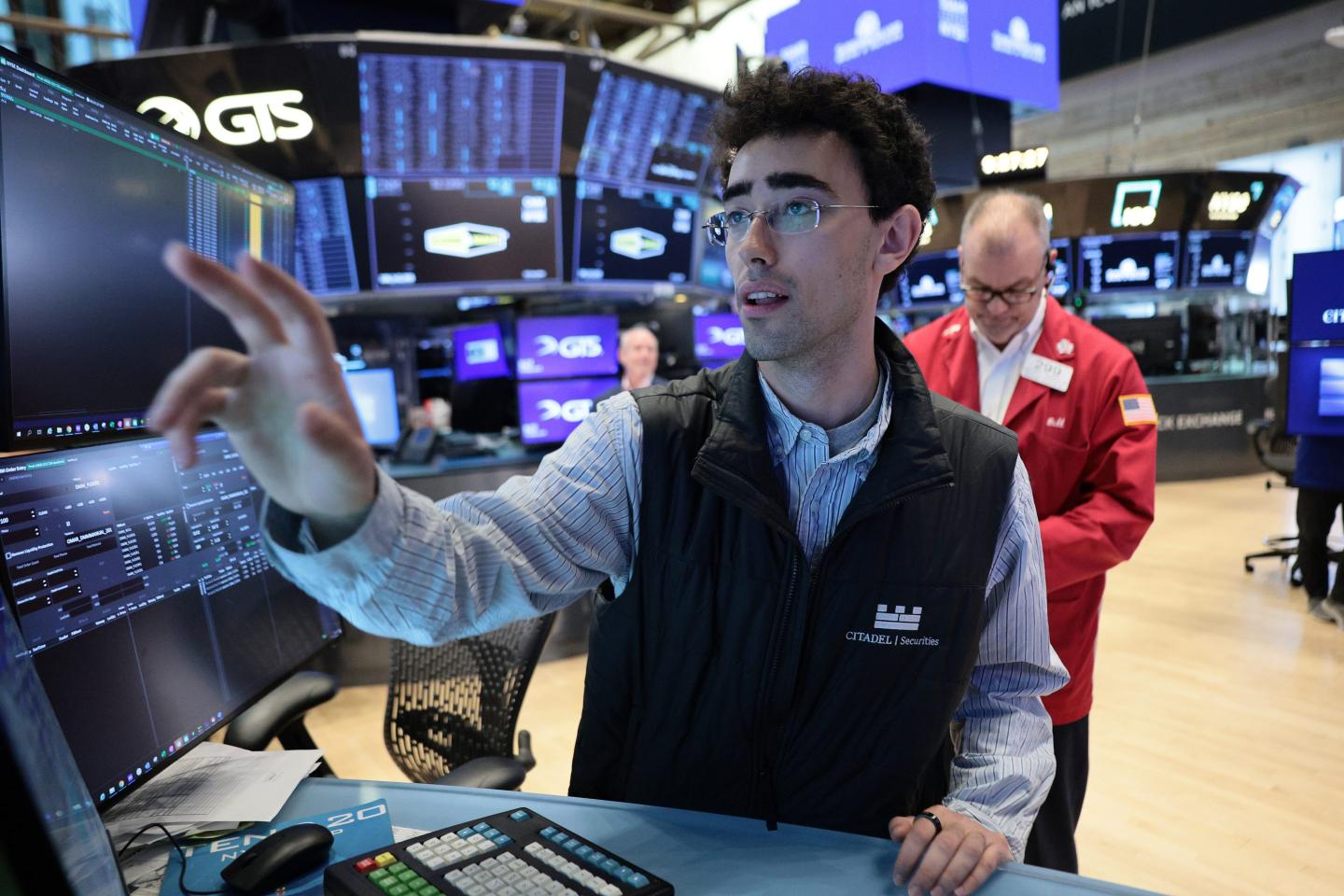
Traders work on the floor of the New York Stock Exchange during morning trading on June 04, 2026 in New York City.Michael M. Santiago/Getty Images

The machine that powers private markets — the steady rhythm of companies being bought, built, and sold — is jammed.

Recommended Video

Hold periods for buyout-backed companies have stretched to nearly seven years, up from five-and-a-half a decade ago. Distributions to investors, the lifeblood of the entire ecosystem, have fallen far below the historical norm of 15%-20%. The average venture-backed company now takes 14 years to go public. And retail investors who piled into private credit vehicles — at a 60% annualized rate for five consecutive years — recently found themselves unable to withdraw their money when they asked.

By any measure, something has changed. The question is how serious it is.

Goldman Sachs has an answer — and it’s more candid than you might expect from a firm with billions at stake in the outcome.

“The circulatory system is not working,” said Michael Brandmeyer, global head and CIO of the External Investing Group at Goldman Sachs Asset Management, on an episode of the bank’s Exchanges podcast. “And so, that’s making fundraising harder. It’s driving consolidation. It’s driving a lot of change in the industry.”

But Goldman’s verdict stops well short of crisis. And in a market where the prevailing press narrative has grown increasingly alarmed about private credit stress, the firm’s public positioning is notable — and worth scrutinizing.

How the gears got stuck

To understand the current logjam, you have to go back to 2022.

Between the Global Financial Crisis and the Fed’s rate-hiking cycle, private markets experienced what Brandmeyer describes as “a period of unprecedented growth” — a sixfold expansion over roughly 12 years. Cheap money, compressed volatility, and a sustained hunt for yield made alternatives an easy sell, and capital poured in.

Then the Fed raised rates by roughly 500 basis points, and “everything came to a halt.”

The problem wasn’t just that financing got more expensive. Private equity portfolios — leveraged by design, typically structured as one part equity to one part debt — were suddenly worth less, but the marks were slow to reflect that. With sellers holding out for pre-rate-hike valuations and buyers unwilling to pay them, deal flow essentially froze. North American buyout holding periods have climbed to around seven years, per Bain’s 2026 Global Private Equity Report.

“We think what’s happening is things are really going to return to historical norms,” said Pete Lyon, Goldman’s global co-head of Capital Solutions. “But it’s going to take some time.”

The credit debate Goldman is wading into

Nowhere is the tension between Goldman’s reassuring framing and the broader market reality more pronounced than in private credit.

Lyon pushed back hard on what he called a “conflation in the press between what is actually a systemic credit problem and what is not.” His read: current default rates are nowhere near the 10%-plus levels seen during the GFC — and even under severe stress, total losses would amount to perhaps 5%, compared to the 50%-plus peak-to-trough drawdown in public equity markets during the financial crisis.

But independent data tells a more complicated story. Fitch Ratings’ U.S. Private Credit Default Rate — which tracks distressed exchanges and payment-in-kind conversions alongside outright defaults — climbed from 5.8% in January 2026 to 7.0% by April. Proskauer’s Private Credit Default Index, which monitors nearly 700 loans totaling $189 billion, recorded a 2.73% default rate in Q1 2026, up from 1.84% a year prior.

Goldman acknowledged pockets of stress — particularly in software-centric companies and those over-levered coming out of the 2021–22 LBO boom — but drew a firm line at calling it a systemic credit crisis. The liquidity crunch in retail vehicles, Lyon argued, reflected investor misunderstanding rather than a flaw in the asset class itself.

“We’re in the middle of a market structure change,” Lyon said. “We have a situation here in alternatives where market structures are evolving very quickly.” At the same time, he made the distinction that historical averages in terms of defaults and underperformance make clear that we’re nowhere close to those averages. The retail liquidity squeeze, he argued, was “broadly an education point” where investors simply hadn’t understood that illiquidity is the product, not a flaw in it.

“We are at a big inflection point right now,” Brandmeyer agreed, “and there is certainly a lot of stuff going on,” but the data show this is not a systemic issue.

Illiquidity premium under pressure

Lurking beneath the distribution problem is a more fundamental challenge to the private equity value proposition.

For the first time in decades, the three-year rolling alpha of private equity relative to public markets has gone negative. Public markets surged 40% to 50% over two years while private equity marks, smoothed by design, failed to keep pace. Brandmeyer said he’s getting one question a lot, even at cocktail parties: “Should I still be having this allocation to private equity?”

Goldman’s response is that the comparison is cyclical rather than structural. Private equity historically shows its strongest outperformance when public markets are flat or modestly positive — and looks weakest precisely when public markets are ripping. “Alpha is cyclical in the private markets,” Brandmeyer said. “And that’s because private equity is a levered asset class. It is pro-cyclical.”

For all its candor about current stress, Goldman is ultimately making a bull case — grounded in specific structural shifts.

The secondary market is the most immediate relief valve. Goldman estimates it will grow from roughly $250 billion today to $500 billion within three to five years. The global secondary market hit $240 billion in transaction volume in 2025 — a 48% year-over-year jump and the largest year on record, according to Jefferies — with Lazard independently corroborating a 53% surge to $233 billion.

The IPO backlog has been building for months. Deal mandates at Goldman are, in Brandmeyer’s words, “very considerable.” The firm’s base case: pent-up supply, combined with renewed LP pressure on GPs to return capital, will drive normalization over the next 1 to 3 years — potentially exceeding the 2021 market peak if geopolitics cooperate. “But for the Iran War, we think that 2026 was setting up to be a great year,” Brandmeyer said.

The longer-term structural argument is about where the innovation economy now lives. The average VC-backed company takes 14 years to go public because it no longer needs to — tens of billions in private capital are available without the disclosure obligations and quarterly earnings pressure of public markets. Amazon went public in 1997 to raise $54 million. That era is over. “Most of the innovation out there in terms of new companies is going to live in the private markets,” Brandmeyer said. “I don’t see that changing, honestly.”

Goldman also sees the current stress accelerating an industry shakeout that was already underway. A “barbell-like structure” is forming: large multi-line public asset managers on one end, highly specialized boutiques with strong alpha on the other. Goldman, of course, sits comfortably at the large end of that barbell — with “a front row seat,” as Lyon put it, across agency, asset, and wealth management businesses. Its reassuring read on private markets is informed by that perch, but it’s also shaped by it.

Only time will tell

Private markets are in a genuine structural reset. The hold periods, the distribution drought, the retail liquidity crunch — these are real and measurable. Goldman isn’t denying any of it.

Goldman argues that “gummed up” is not the same as “broken.” That an asset class which survived the GFC, the 2020 pandemic shock, and the 2022 rate spike with loss rates well below public equity drawdowns has demonstrated real durability. That the structural forces driving capital into private markets — the migration of the innovation economy, the democratization of alternatives, the expansion of the secondary market — have long-term legs.

Whether you find that argument convincing likely depends on where you sit. For limited partners watching distributions dry up and default rates tick higher, the optimism may feel premature. For the GPs doing the work of building companies, it may feel earned.

Either way, the machine is straining. Goldman thinks it knows how to fix it. The next two years will tell us whether they’re right.

For this story, Fortune journalists used generative AI as a research tool. An editor verified the accuracy of the information before publishing.

The Fortune 500 Innovation Forum will convene Fortune 500 executives, U.S. policy officials, top founders, and thought leaders to help define what’s next for the American economy, Nov. 16-17 in Detroit. Apply here.
About the Author
Nick Lichtenberg
By Nick LichtenbergBusiness Editor
LinkedIn icon

Nick Lichtenberg is business editor and was formerly Fortune's executive editor of global news.

See full bioRight Arrow Button Icon

Latest in Investing

Finance
Lorem ipsum dolor sit amet, consectetur adipiscing elit, sed do eiusmod tempor incididunt ut labore et dolore magna aliqua. Ut enim ad minim veniam
By Fortune Editors
October 20, 2025
Finance
Lorem ipsum dolor sit amet, consectetur adipiscing elit, sed do eiusmod tempor incididunt ut labore et dolore magna aliqua. Ut enim ad minim veniam
By Fortune Editors
October 20, 2025
Finance
Lorem ipsum dolor sit amet, consectetur adipiscing elit, sed do eiusmod tempor incididunt ut labore et dolore magna aliqua. Ut enim ad minim veniam
By Fortune Editors
October 20, 2025
Finance
Lorem ipsum dolor sit amet, consectetur adipiscing elit, sed do eiusmod tempor incididunt ut labore et dolore magna aliqua. Ut enim ad minim veniam
By Fortune Editors
October 20, 2025
Finance
Lorem ipsum dolor sit amet, consectetur adipiscing elit, sed do eiusmod tempor incididunt ut labore et dolore magna aliqua. Ut enim ad minim veniam
By Fortune Editors
October 20, 2025
Finance
Lorem ipsum dolor sit amet, consectetur adipiscing elit, sed do eiusmod tempor incididunt ut labore et dolore magna aliqua. Ut enim ad minim veniam
By Fortune Editors
October 20, 2025

Most Popular

Finance
Lorem ipsum dolor sit amet, consectetur adipiscing elit, sed do eiusmod tempor incididunt ut labore et dolore magna aliqua. Ut enim ad minim veniam
By Fortune Editors
October 20, 2025
Finance
Lorem ipsum dolor sit amet, consectetur adipiscing elit, sed do eiusmod tempor incididunt ut labore et dolore magna aliqua. Ut enim ad minim veniam
By Fortune Editors
October 20, 2025
Finance
Lorem ipsum dolor sit amet, consectetur adipiscing elit, sed do eiusmod tempor incididunt ut labore et dolore magna aliqua. Ut enim ad minim veniam
By Fortune Editors
October 20, 2025
Finance
Lorem ipsum dolor sit amet, consectetur adipiscing elit, sed do eiusmod tempor incididunt ut labore et dolore magna aliqua. Ut enim ad minim veniam
By Fortune Editors
October 20, 2025
Finance
Lorem ipsum dolor sit amet, consectetur adipiscing elit, sed do eiusmod tempor incididunt ut labore et dolore magna aliqua. Ut enim ad minim veniam
By Fortune Editors
October 20, 2025
Finance
Lorem ipsum dolor sit amet, consectetur adipiscing elit, sed do eiusmod tempor incididunt ut labore et dolore magna aliqua. Ut enim ad minim veniam
By Fortune Editors
October 20, 2025
Fortune Secondary Logo
Rankings
  • 100 Best Companies
  • Fortune 500
  • Global 500
  • Fortune 500 Europe
  • Most Powerful Women
  • World's Most Admired Companies
  • See All Rankings
  • Lists Calendar
Sections
  • Finance
  • Fortune Crypto
  • Features
  • Leadership
  • Health
  • Commentary
  • Success
  • Retail
  • Mpw
  • Tech
  • Lifestyle
  • CEO Initiative
  • Asia
  • Politics
  • Conferences
  • Europe
  • Newsletters
  • Personal Finance
  • Environment
  • Magazine
  • Education
Customer Support
  • Frequently Asked Questions
  • Customer Service Portal
  • Privacy Policy
  • Terms Of Use
  • Single Issues For Purchase
  • International Print
Commercial Services
  • Advertising
  • Fortune Brand Studio
  • Fortune Analytics
  • Fortune Conferences
  • Business Development
  • Group Subscriptions
About Us
  • About Us
  • Press Center
  • Work At Fortune
  • Terms And Conditions
  • Site Map
  • About Us
  • Press Center
  • Work At Fortune
  • Terms And Conditions
  • Site Map
  • Facebook icon
  • Twitter icon
  • LinkedIn icon
  • Instagram icon
  • Pinterest icon

Latest in Investing

Top CD rates from major banks on June 10, 2026: Chase CDs, Bank of America CDs, Citibank CDs, and more
Personal FinanceCertificates of Deposit (CDs)
Top CD rates from major banks on June 10, 2026: Chase CDs, Bank of America CDs, Citibank CDs, and more
By Joseph HostetlerJune 10, 2026
3 hours ago
Current price of Ethereum for June 10, 2026
Personal FinanceEthereum
Current price of Ethereum for June 10, 2026
By Joseph HostetlerJune 10, 2026
3 hours ago
Current price of Bitcoin for June 10, 2026
Personal FinanceCryptocurrency
Current price of Bitcoin for June 10, 2026
By Joseph HostetlerJune 10, 2026
3 hours ago
goldman
Investingprivate equity
‘The circulatory system isn’t working.’ Goldman on what’s really wrong with private markets
By Nick LichtenbergJune 10, 2026
4 hours ago
A trader works on the floor of the New York Stock Exchange (NYSE) in New York, US, on Wednesday, June 3, 2026
InvestingWall Street
Wall Street dumped nearly $1 trillion in tech stocks by midday—then clawed it back and bought peanut butter and paint
By Eva RoytburgJune 9, 2026
18 hours ago
Options trader Chris Daytona, right, works on the floor of the New York Stock Exchange, Wednesday, June 3, 2026.
Investinginvestors
Mystery NASDAQ selloff adds tension into a make-or-break week for the AI trade
By Stan Choe and The Associated PressJune 9, 2026
22 hours ago

Most Popular

Pentagon accuses Alibaba, Baidu and BYD, three of China's biggest companies, of supporting the Chinese military
Asia
Pentagon accuses Alibaba, Baidu and BYD, three of China's biggest companies, of supporting the Chinese military
By Kate O'Keeffe and BloombergJune 8, 2026
2 days ago
'We are rapidly running out of time': Watchdog sounds Social Security alarm after 22% cut confirmed for 2032
Economy
'We are rapidly running out of time': Watchdog sounds Social Security alarm after 22% cut confirmed for 2032
By Nick LichtenbergJune 9, 2026
24 hours ago
Costco CEO Ron Vachris rose from forklift driver to the C-suite without a college degree: ‘Don’t chase a title’ is the career advice that got him there
Success
Costco CEO Ron Vachris rose from forklift driver to the C-suite without a college degree: ‘Don’t chase a title’ is the career advice that got him there
By Preston ForeJune 8, 2026
2 days ago
Current price of oil as of June 9, 2026
Personal Finance
Current price of oil as of June 9, 2026
By Joseph HostetlerJune 9, 2026
1 day ago
Current price of silver as of Tuesday, June 9, 2026
Personal Finance
Current price of silver as of Tuesday, June 9, 2026
By Joseph HostetlerJune 9, 2026
1 day ago
Wall Street dumped nearly $1 trillion in tech stocks by midday—then clawed it back and bought peanut butter and paint
Investing
Wall Street dumped nearly $1 trillion in tech stocks by midday—then clawed it back and bought peanut butter and paint
By Eva RoytburgJune 9, 2026
18 hours ago

© 2026 Fortune Media IP Limited. All Rights Reserved. Use of this site constitutes acceptance of our Terms of Use and Privacy Policy | CA Notice at Collection and Privacy Notice | Do Not Sell/Share My Personal Information
FORTUNE is a trademark of Fortune Media IP Limited, registered in the U.S. and other countries. FORTUNE may receive compensation for some links to products and services on this website. Offers may be subject to change without notice.