• Home
  • News
  • Fortune 500
  • Tech
  • Finance
  • Leadership
  • Lifestyle
  • Rankings
  • Multimedia
TechLogged In

Why can’t all wireless charging options just get along?

By
Jason Cipriani
Jason Cipriani
Down Arrow Button Icon
By
Jason Cipriani
Jason Cipriani
Down Arrow Button Icon
May 21, 2015, 7:08 AM ET
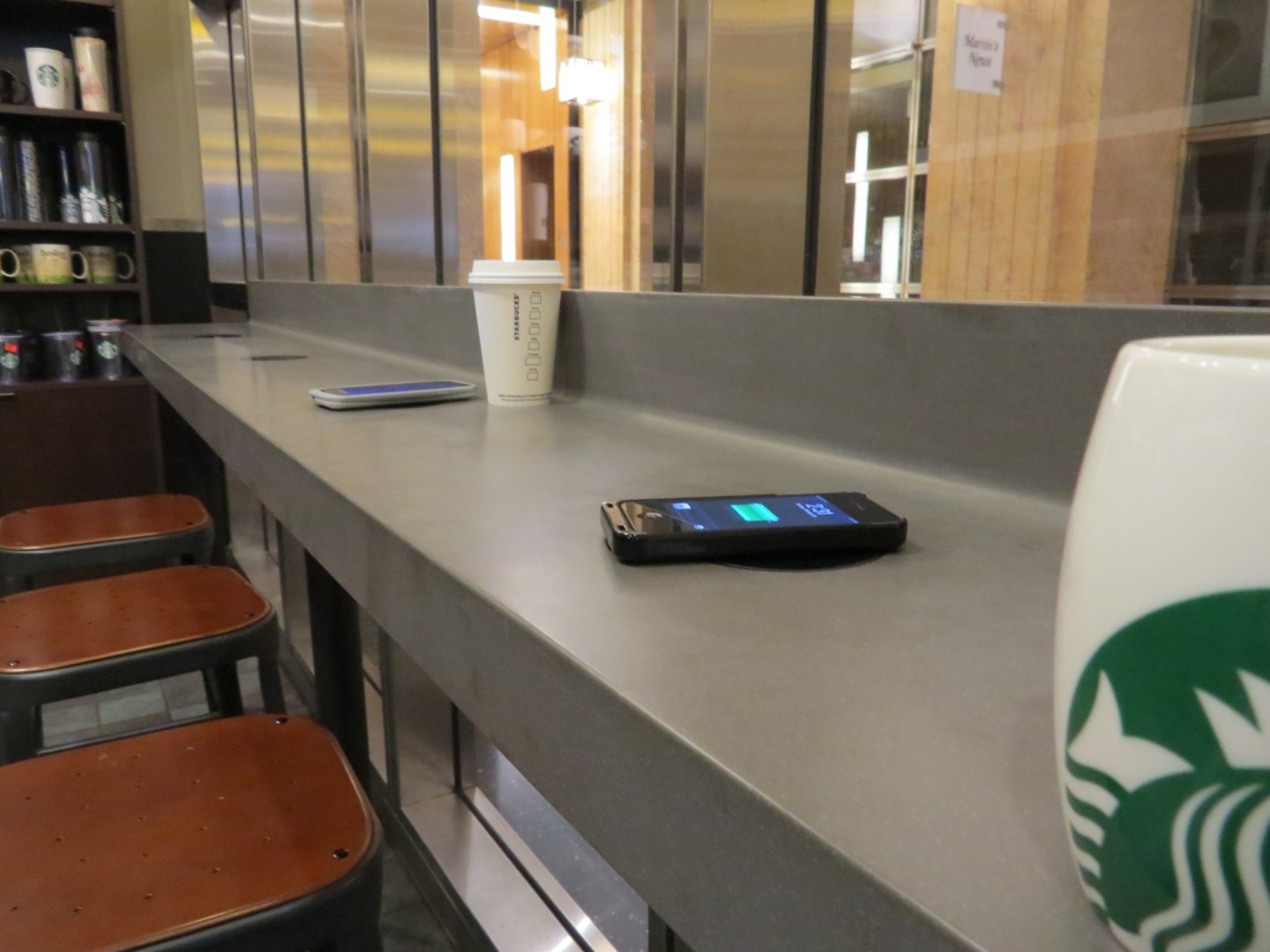
Courtesy of Starbucks

In 2009, Powermat made a splash at the International Consumer Electronics Show by debuting a lineup of wireless charging pads and adapters for smartphones.

The ability to place a device on your desk and walk away as your battery charged up promised to be nothing less than magical. In practice, however, it was nothing more than a parlor trick. Consumers were forced to use a case that increased the size of a device two-fold and an incredibly large mat that overwhelmed most nightstands. The experience, at that time, was more about “look what I can do” and less about making lives easier.

Thankfully, the technology used in wireless charging has improved since then. The mats now used are smaller, and bulky cases have been transformed into key-ring sized adapters or battery covers found on the back of a phone. More importantly, device manufacturers have begun implementing the technology directly into devices spurring further adoption. The price for these wireless charging stations range in shape and size ranging from $20 to $50.

Wireless charging works by using two different coils—one embedded into a small mat or dock, the other embedded into an adapter or built into the device itself—and placing them atop one another. An electromagnetic field is then created, through which power is transferred from the mat to the battery. (AnandTech offers a more in-depth explanation for those interested.)

However, not all wireless charging is created equal with two industry standards competing for bragging rights.

The Wireless Power Consortium (WPC) has lead the way with its Qi (pronounced chee) standard having seen wide adoption from the likes of Google, Microsoft, and Motorola (just to name a few). Even IKEA has entered the wireless charging ring with the upcoming release of furniture, lamps, and wireless charging pads all based on the Qi standard.

The Power Matters Alliance (PMA) has seen slower adoption, but is starting to make some headway through partnerships with companies like Starbucks (SBUX) to bring wireless charging stations to over 7,500 locations. Furthermore, a recent agreement to fold in yet another less popular wireless charging standard, Rezence, has boosted PMA’s chances of leading the path forward. PMA is appealing to retailers due to its ability to identify individual users, and potentially push ads or coupons to users through mobile apps.

All of this is interesting, yet little more than insider baseball information, since as consumers we don’t truly care about the nuances of who is behind what technology—we just want it to work.

The sole benefit of wireless charging is convenience. When your device is placed on a charging mat, it’s powering up. Although charging will stop if your device isn’t in the correct spot on the pad or should you remove your device to answer a text message.

Wireless charging inherently creates heat when in use, a characteristic that can cause damage to batteries over time. Resulting in slower charging rates and diminished battery life over time. But, it’s a trade-off that’s worth it. Instead of trying to line up a charging cable just so in the dark, you place a device on a pad, wait for the chime to indicate its lined up properly and walk away in seconds.

Ideally the products we use on a daily basis will begin to implement both wireless charging standards into products, as Samsung (SSNLF) did by incorporating both Qi and PMA standards into the Galaxy S6. Is this overkill? Perhaps, but a solution that provides the best possible user experience for the customer.

This dual-pronged approach all but eliminates the pain of trying to figure out if the mat inside McDonald’s will work with your Qi-enabled phone. (It won’t, McDonald’s (MCD) installed Powermat technology; a member of PMA).

And therein lies the problem, wireless charging in its current form requires too much thinking.

About the Author
By Jason Cipriani
See full bioRight Arrow Button Icon

Latest in Tech

Elon Musk
Big TechSpaceX
SpaceX to offer insider shares at record-setting $800 billion valuation
By Edward Ludlow, Loren Grush, Lizette Chapman, Eric Johnson and BloombergDecember 6, 2025
8 hours ago
Big TechApple
Apple rocked by executive departures, with chip chief at risk of leaving next
By Mark Gurman and BloombergDecember 6, 2025
11 hours ago
Nvidia CEO Jensen Huang said China is better equipped for an AI data center buildout than the U.S.
AITech
Nvidia CEO says data centers take about 3 years to construct in the U.S., while in China ‘they can build a hospital in a weekend’
By Nino PaoliDecember 6, 2025
13 hours ago
Arts & EntertainmentMedia
Former Amazon Studios boss warns the Netflix-Warner Bros. deal will make Hollywood ‘a system that circles a single sun’
By Jason MaDecember 6, 2025
14 hours ago
Jay Clayton
LawCrime
25-year DEA veteran charged with helping Mexican drug cartel launder millions of dollars, secure guns and bombs
By Dave Collins, Michael R. Sisak and The Associated PressDecember 6, 2025
15 hours ago
Elon Musk
LawSocial Media
Elon Musk’s X fined $140 million by EU for breaching digital regulations
By Kelvin Chan and The Associated PressDecember 6, 2025
15 hours ago

Most Popular

placeholder alt text
AI
Nvidia CEO says data centers take about 3 years to construct in the U.S., while in China 'they can build a hospital in a weekend'
By Nino PaoliDecember 6, 2025
13 hours ago
placeholder alt text
Big Tech
Mark Zuckerberg rebranded Facebook for the metaverse. Four years and $70 billion in losses later, he’s moving on
By Eva RoytburgDecember 5, 2025
2 days ago
placeholder alt text
Success
Nvidia CEO Jensen Huang admits he works 7 days a week, including holidays, in a constant 'state of anxiety' out of fear of going bankrupt
By Jessica CoacciDecember 4, 2025
3 days ago
placeholder alt text
Real Estate
The 'Great Housing Reset' is coming: Income growth will outpace home-price growth in 2026, Redfin forecasts
By Nino PaoliDecember 6, 2025
18 hours ago
placeholder alt text
Economy
Two months into the new fiscal year and the U.S. government is already spending more than $10 billion a week servicing national debt
By Eleanor PringleDecember 4, 2025
3 days ago
placeholder alt text
Economy
The most likely solution to the U.S. debt crisis is severe austerity triggered by a fiscal calamity, former White House economic adviser says
By Jason MaDecember 6, 2025
9 hours ago
Rankings
  • 100 Best Companies
  • Fortune 500
  • Global 500
  • Fortune 500 Europe
  • Most Powerful Women
  • Future 50
  • World’s Most Admired Companies
  • See All Rankings
Sections
  • Finance
  • Leadership
  • Success
  • Tech
  • Asia
  • Europe
  • Environment
  • Fortune Crypto
  • Health
  • Retail
  • Lifestyle
  • Politics
  • Newsletters
  • Magazine
  • Features
  • Commentary
  • Mpw
  • CEO Initiative
  • Conferences
  • Personal Finance
  • Education
Customer Support
  • Frequently Asked Questions
  • Customer Service Portal
  • Privacy Policy
  • Terms Of Use
  • Single Issues For Purchase
  • International Print
Commercial Services
  • Advertising
  • Fortune Brand Studio
  • Fortune Analytics
  • Fortune Conferences
  • Business Development
About Us
  • About Us
  • Editorial Calendar
  • Press Center
  • Work At Fortune
  • Diversity And Inclusion
  • Terms And Conditions
  • Site Map

© 2025 Fortune Media IP Limited. All Rights Reserved. Use of this site constitutes acceptance of our Terms of Use and Privacy Policy | CA Notice at Collection and Privacy Notice | Do Not Sell/Share My Personal Information
FORTUNE is a trademark of Fortune Media IP Limited, registered in the U.S. and other countries. FORTUNE may receive compensation for some links to products and services on this website. Offers may be subject to change without notice.