• Home
  • News
  • Fortune 500
  • Tech
  • Finance
  • Leadership
  • Lifestyle
  • Rankings
  • Multimedia
TechAerospace

The problem with the America’s Russian rocket phase-out

By
Clay Dillow
Clay Dillow
Down Arrow Button Icon
By
Clay Dillow
Clay Dillow
Down Arrow Button Icon
March 31, 2015, 7:05 AM ET
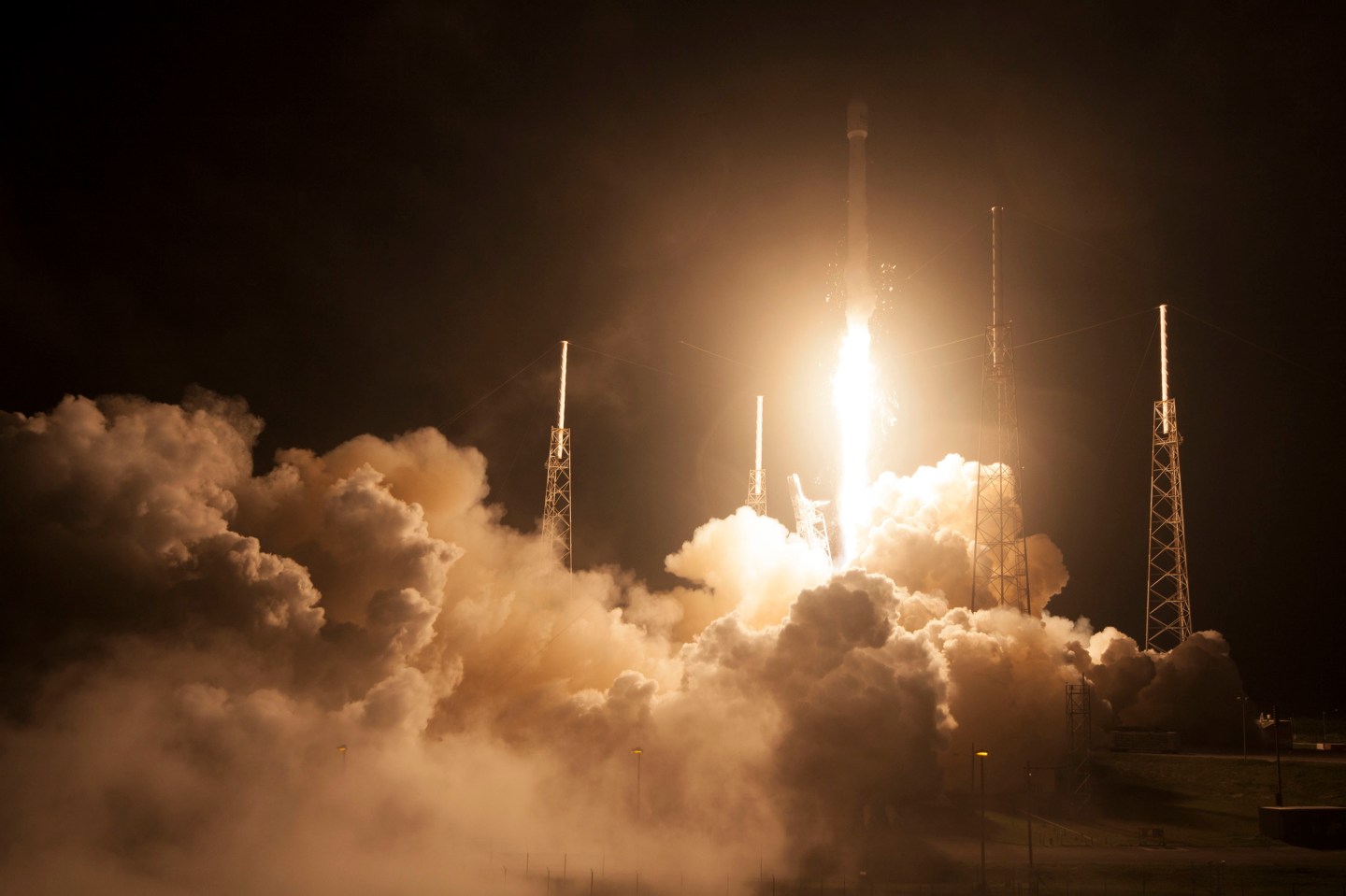
A SpaceX Falcon 9 rocket carrying an Asiasat satellite launches in Cape Canaveral, Fla. on August 7, 2014.
A SpaceX Falcon 9 rocket carrying an AsiaSat satellite launches in Cape Canaveral, Fla. on August 7, 2014.Courtesy: SpaceX

With pressure mounting to wean America off the Russian-built RD-180 rocket engines needed to launch sensitive national security assets into orbit, the Department of Defense is turning to U.S. industry for new ideas. Next month, the Pentagon will seek proposals for—ideally—two competing space launch technologies capable of replacing the RD-180, each of which would be developed under a public-private partnership.

But while the U.S. wants to generate more competition and flexibility within its space launch market, the idea looks more feasible on paper than in practice. It’s unclear (and unlikely) that the nascent U.S. space launch industry can produce new, reliable launch technologies to replace the Russian engines by the 2019 deadline mandated by Congress. And with SpaceX the only private spaceflight company currently on the road to earning U.S. Air Force launch certification, the Pentagon—despite its efforts at fostering competition—may soon trade one launch monopoly for another.

Currently a joint venture between Boeing and Lockheed Martin called United Launch Alliance (ULA) owns a monopoly on national security space launches, using legacy Atlas V and Delta IV heavy lift rockets to loft security-related assets into orbit. In an effort to trim cost, the Pentagon plans to retire the expensive Delta IV by 2018. The less-costly Atlas V requires the soon-to-be-banned RD-180 to fly.

Meanwhile, the Air Force expects to certify SpaceX’s Falcon 9 for smaller-payload national security launches in June. Its larger Falcon Heavy rocket—one capable of stepping into the heavy-lift role now occupied by the Atlas V and Delta IV—will fly for the first time later this year. It could enter service as soon as 2018.

The Pentagon’s plan for diversifying its launch options beyond the RD-180 and the Delta IV involves cultivating at least two public-private partnerships into which it would sink $220 million to help develop alternatives to the RD-180. The Pentagon next month will ask companies to submit their proposals for those partnerships, with the aim at producing at least two viable competing launch systems by 2019. Those systems would then compete for up to 28 national security-related launches expected between 2020 and 2024.

The Pentagon roadmap’s main problem is one of timing. Aside from SpaceX, there are only a few U.S. companies in the rocket engine business. ULA is looking into technologies from both GenCorp’s Aerojet Rocketdyne and the Jeff Bezos-backed private space venture Blue Origin. But in a statement last week ULA CEO Tory Bruno said neither technology could be developed and certified before 2022—a full three years beyond Congress’s deadline to stop using the RD-180.

Nor does the Pentagon really want a fast-tracked rocket engine, says Marco Caceres, senior analyst and director of space studies at aerospace consultancy Teal Group. “The engine is the core of your rocket, and the majority of things that go wrong in a rocket have to do with the engines,” he says, “You really don’t want to rush this.”

Moreover, the Pentagon plan intends to spread the cost of technology development out via public-private partnerships, each of which would require roughly a dozen private sector space launches each year to remain viable. That launch demand doesn’t yet exist, nor does a spike in demand appear on the horizon.

All that places SpaceX in a particularly good position to take on a lot, if not all, of the military’s space launches toward the end of this decade, at least until other launch technologies can be adequately matured. Barring a change in Congress’s stance on RD-180 imports or some kind of mishap that jeopardizes its certification, SpaceX might not just break ULA’s military launch monopoly—it may become the monopoly.

“Overall, SpaceX is starting to look very all-American and very attractive, and ULA looks weak without its Delta IV,” Caceres says. “All along ULA has had its eggs in one basket, but that only works as long as you’ve got a monopoly.”

[fortune-brightcove videoid=3790264082001]
About the Author
By Clay Dillow
See full bioRight Arrow Button Icon

Latest in Tech

LawInternet
A Supreme Court decision could put your internet access at risk. Here’s who could be affected
By Dave Lozo and Morning BrewDecember 2, 2025
5 hours ago
AITikTok
China’s ByteDance could be forced to sell TikTok U.S., but its quiet lead in AI will help it survive—and maybe even thrive
By Nicholas GordonDecember 2, 2025
5 hours ago
United Nations
AIUnited Nations
UN warns about AI becoming another ‘Great Divergence’ between rich and poor countries like the Industrial Revolution
By Elaine Kurtenbach and The Associated PressDecember 2, 2025
7 hours ago
Anthropic cofounder and CEO Dario Amodei
AIEye on AI
How Anthropic’s safety first approach won over big business—and how its own engineers are using its Claude AI
By Jeremy KahnDecember 2, 2025
7 hours ago
Nvidia founder and CEO Jensen Huang reacts during a press conference at the Asia-Pacific Economic Cooperation (APEC) CEO Summit in Gyeongju on October 31, 2025.
AINvidia
Nvidia CFO admits the $100 billion OpenAI megadeal ‘still’ isn’t signed—two months after it helped fuel an AI rally
By Eva RoytburgDecember 2, 2025
9 hours ago
Big TechInstagram
Instagram CEO calls staff back to the office 5 days a week to build a ‘winning culture’—while canceling every recurring meeting
By Marco Quiroz-GutierrezDecember 2, 2025
9 hours ago

Most Popular

placeholder alt text
Economy
Ford workers told their CEO 'none of the young people want to work here.' So Jim Farley took a page out of the founder's playbook
By Sasha RogelbergNovember 28, 2025
4 days ago
placeholder alt text
Success
Warren Buffett used to give his family $10,000 each at Christmas—but when he saw how fast they were spending it, he started buying them shares instead
By Eleanor PringleDecember 2, 2025
15 hours ago
placeholder alt text
Economy
Elon Musk says he warned Trump against tariffs, which U.S. manufacturers blame for a turn to more offshoring and diminishing American factory jobs
By Sasha RogelbergDecember 2, 2025
9 hours ago
placeholder alt text
Success
Forget the four-day workweek, Elon Musk predicts you won't have to work at all in ‘less than 20 years'
By Jessica CoacciDecember 1, 2025
1 day ago
placeholder alt text
C-Suite
MacKenzie Scott's $19 billion donations have turned philanthropy on its head—why her style of giving actually works
By Sydney LakeDecember 2, 2025
16 hours ago
placeholder alt text
Personal Finance
Current price of gold as of December 1, 2025
By Danny BakstDecember 1, 2025
2 days ago
Rankings
  • 100 Best Companies
  • Fortune 500
  • Global 500
  • Fortune 500 Europe
  • Most Powerful Women
  • Future 50
  • World’s Most Admired Companies
  • See All Rankings
Sections
  • Finance
  • Leadership
  • Success
  • Tech
  • Asia
  • Europe
  • Environment
  • Fortune Crypto
  • Health
  • Retail
  • Lifestyle
  • Politics
  • Newsletters
  • Magazine
  • Features
  • Commentary
  • Mpw
  • CEO Initiative
  • Conferences
  • Personal Finance
  • Education
Customer Support
  • Frequently Asked Questions
  • Customer Service Portal
  • Privacy Policy
  • Terms Of Use
  • Single Issues For Purchase
  • International Print
Commercial Services
  • Advertising
  • Fortune Brand Studio
  • Fortune Analytics
  • Fortune Conferences
  • Business Development
About Us
  • About Us
  • Editorial Calendar
  • Press Center
  • Work At Fortune
  • Diversity And Inclusion
  • Terms And Conditions
  • Site Map

© 2025 Fortune Media IP Limited. All Rights Reserved. Use of this site constitutes acceptance of our Terms of Use and Privacy Policy | CA Notice at Collection and Privacy Notice | Do Not Sell/Share My Personal Information
FORTUNE is a trademark of Fortune Media IP Limited, registered in the U.S. and other countries. FORTUNE may receive compensation for some links to products and services on this website. Offers may be subject to change without notice.