Editor’s note: In his new book, Cultural DNA: The Psychology of Globalization,Gunek Bains discusses the soft skills required to engage leaders in a connected world. Below is an edited excerpt:
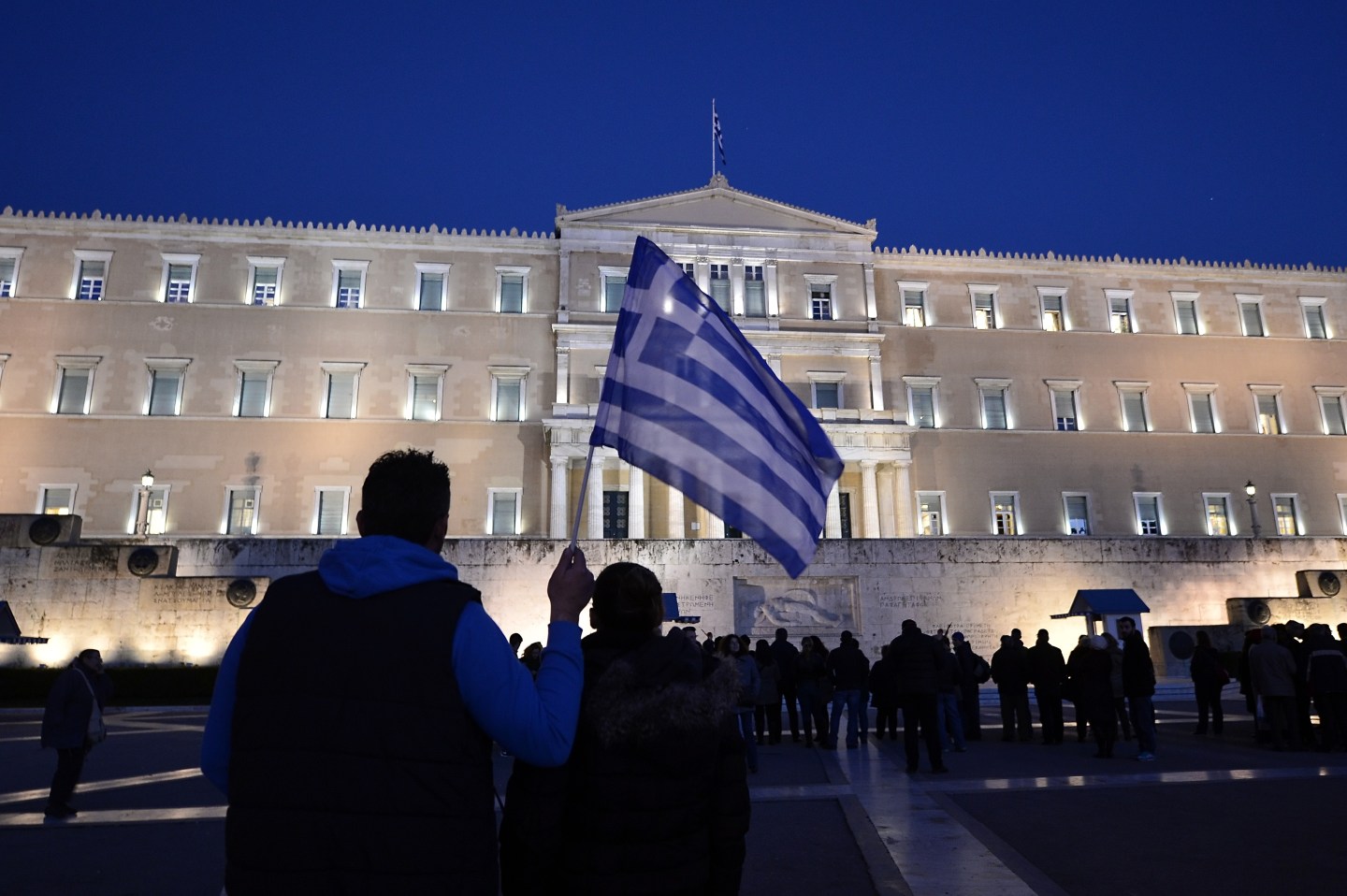
This week, the European Union faces yet another round of discussions as its leaders demand a better economic plan from Greece before releasing the funds the debt-troubled nation needs to prevent, in a matter of days, its default on debts. These last minute frantic scrambles to save the eurozone project are now all too regular and the pattern is likely to continue as other countries in the project lurch into payment crises, experience difficulties in the bond markets or elect governments that reject previously agreed to plans. However, to understand where all this is going, it is helpful to step back and analyze some of the fundamental reasons behind the crisis.
Essentially, what happened was that everyone got taken in by the heady catch-up growth of the southern European and Irish economies without discerning whether the momentum was sustainable or the euro project viable. People overlooked the relevance of deep-seated cultural factors to the issue of economic sustainability. The exact same thing is happening with respect to gauging the economic prospects of India, China and other emerging market economies today. It is easy to get caught up with the high, catch-up growth figures in all these regions and not to see the cultural problems bubbling underneath the surface that will, over time, influence whether this performance is sustainable. Global CEOs need to become cultural experts, psychologists, and historians if they are to make the right long-term calls for their companies.
The importance of this is illustrated by looking more deeply into the eurozone crisis. The drive to create a single economic entity with a common currency, free movement of people, and consistent rules is predicated on the unstated, but nevertheless strong, assumption that there is a high level of cultural similarity across the nations involved. In one sense this is true; but in another sense the cultural and psychological instincts of Greeks are not the same as those of Germans.
This is not to pass judgment on either, but rather to say that beyond obvious and superficial differences — like Greeks being more persistent and ingenious in circumventing EU rules around smoking in public places — there lurked deeper differences in attitudes towards financial and economic matters that the creators of the common currency failed to recognize or were blithely optimistic about. It is now apparent that many of the problems arose from the very different attitudes to economic management, payment of taxes, attitudes to borrowing, and orientation to work that exist in the eurozone and which threaten the whole project or at the least to stymie growth in the region for some time.
Going a bit deeper, many of these attitudinal and behavioral differences arise from profound differences in some underlying values. In particular, as will be discussed later, southern European countries have at their core a more religious, relational, and in-the-moment set of values — versus the northern countries where more secular, individualistic, and long-term psychological instincts are more evident.
Individualistic cultures require mechanisms other than religious authority or the sanction of one’s community to regulate people’s behavior, and hence place much greater emphasis on the rules set down by the state or other institutions. In the more relational cultures of southern Europe and Ireland, it is easier to trump rules imposed by more distant institutions; it is the obligations to one’s immediate circle that count. Furthermore, if you live in a culture with a more short-term orientation, you are likely to take the plunge when economic opportunities created by, for example, money being available at low interest rates present themselves without thinking too hard about the long-term consequences. This is the case whether you are a government doling out pensions and benefits or an individual making a property investment.
But where do these differences in underlying values themselves come from? We can go deeper still. Surprising as it may sound, from a cultural DNA point of view, the different psychological instincts in the southern European countries and Ireland versus northern Europe make sense when one looks at how modern humans settled Europe some 45,000 years ago. As will be demonstrated later, the original hunter-gatherer population of Europe came through two clearly differentiated routes — something that’s had a powerful impact on the continent’s psychological and cultural DNA. One path was through the Middle East, into Anatolia, then into the Balkans and southern Europe. The other involved a more northerly route through the Caucuses and Western Russia into Eastern Europe, Poland and Germany.
Although subsequent severe Ice Age events scrambled the picture later on, many of the peoples in northern Europe are descended from the population that followed the second path, and those in southern Europe, to a greater extent, the first path. Furthermore, when expansion occurred from the ice age refuges, those who moved north coped for tens of thousands of years with a radically different ecological environment compared to that which they left behind in the south.
Long-term planning and a sustained work ethic were critical to surviving the bitter winters of the north. Interestingly, there is also considerable evidence that a movement of people from Spain went along an Atlantic coastal route to repopulate Ireland and the west of Scotland. Today, there is still a clear genetic dividing line running through the UK that reflects this movement.
What is interesting is that many cultural traits, including Catholicism, map this pattern of entry and diffusion in Europe. The eurozone crisis also follows this exact pattern, including Ireland’s involvement. A sound argument can be made for the view that the pattern of migration and the different environmental challenges that humans faced in the south and along the Atlantic Coast lead to their psychological and cultural instincts evolving in a different way from those who had the challenge after the ice age of surviving in the ecological conditions of the north.
Understanding the deeper reasons for these difficulties is not just an exercise in intellectual exploration — it also has implications for the future. The Germans will not easily relax on their drive to impose explicit rules and guidelines that drive long-term success – because in the past their survival depended on this attitude. For Greeks, the temptation to take a more short-term, humanistic approach is irresistible. Solving the crisis in a genuinely long-term manner will require surfacing and working on these cultural differences. This will require the northern countries questioning their instincts and adapting as much as the countries who are experiencing the problems. All round it will require empathy for ways of looking at the world that just seem alien from one’s own perspective. This will be difficult for all parties but in the absence of this occurring the eurozone project is doomed.
Gurnek Bains is the author of “Cultural DNA: The Psychology of Globalization” (Wiley March 23, 2015) and chairman of YSC, a global corporate psychological consultancy. Follow him @GurnekBains1
Watch more business news from Fortune: