• Home
  • Latest
  • Fortune 500
  • Finance
  • Tech
  • Leadership
  • Lifestyle
  • Rankings
  • Multimedia

Trendingnow

1

‘I want to die broke’: Billionaire philanthropist Denny Sanford dies after giving away $4 billion

2

'Dr. Doom' Nouriel Roubini says we're headed for universal basic income or 'some form of socialism' as AI revolutionizes work—He calls that optimistic

3

Mark Cuban says he has the solution to growing income inequality, and it's to reward every employee—from CEO to janitor—with company stock

1

‘I want to die broke’: Billionaire philanthropist Denny Sanford dies after giving away $4 billion

2

'Dr. Doom' Nouriel Roubini says we're headed for universal basic income or 'some form of socialism' as AI revolutionizes work—He calls that optimistic

3

Mark Cuban says he has the solution to growing income inequality, and it's to reward every employee—from CEO to janitor—with company stock
CommentaryIndia

Why India’s economic plans are bolder than you think

By
Sanjay Sanghoee
Sanjay Sanghoee
Down Arrow Button Icon
By
Sanjay Sanghoee
Sanjay Sanghoee
Down Arrow Button Icon
March 3, 2015, 2:51 PM ET
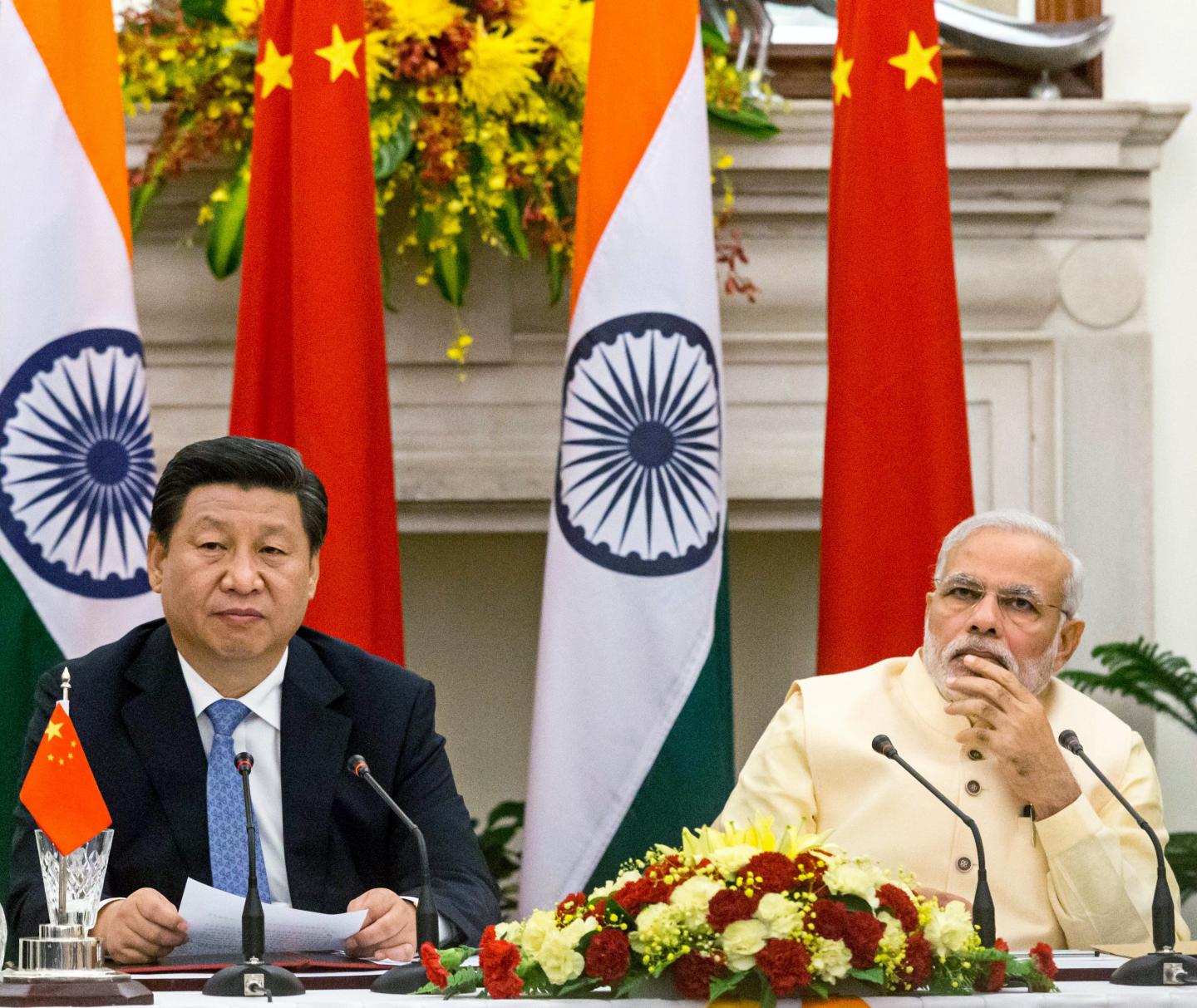
Chinese President Xi Jinping Meets With Indian Prime Minister Narendra Modi
Narendra Modi, India's prime minister, right, and Xi Jinping, China's president, attend a meeting to sign a series of agreements between the two nations at Hyderabad House in New Delhi, India, on Thursday, Sept. 18, 2014. Modi won a pledge from Xi to invest $20 billion as the leaders sought to adjust a lopsided trade relationship and resolve a decades-long border dispute. Photographer Graham Crouch/Bloomberg via Getty ImagesPhotograph by Graham Crouch — Bloomberg/Getty Images
Add Fortune on Google for similar content.

After months of speculation over how India will turn its economy around, the government finally unveiled its budget for the new fiscal year. While the $290 billion budget is business friendly, it doesn’t include major policy changes many had hoped for. This has disappointed analysts, as it comes at a time when the stakes are high: India is expected to surpass China as the world’s fastest growing major economy in 2015, with gross domestic product projected to grow between 8.1% and 8.5%.

Analysts are right to expect more economic reforms, but they have also failed to recognize the pragmatism of the budget and how it could actually help India realize its economic potential more effectively than radical change. Indian Finance Minister Arun Jaitley may have urged bolder moves, saying “we have to think in terms of a quantum leap,” but the budget signals that Prime Minister Narendra Modi’s administration prefers a more gradual and achievable approach.

Critics say the government isn’t doing enough to cut spending to meet its earlier target of 3.6% of GDP over the next 12 months. Officials have committed $11.3 billion for infrastructure, which includes spending on the construction and upgrade of roads and railways. Separately,officials have essentially left governments subsidies untouched; India will spendalmost $40 billion to subsidize oil, food, fertilizer, and other items this year.

While the infrastructure spend is large, it’s justified. India is notorious for its outdated and insufficient infrastructure, which can make commercial activities more expensive, unreliable, and ultimately unprofitable. Upgrading the country’s roads and railways is critical for promoting business activity and a pre-requisite for attracting foreign investment. It’s also important for meeting Modi’s goal of ramping up manufacturing, which he sees as a cornerstone for a strong economy and which depends heavily on the transport of raw materials to factories and goods to the market.

What’s more, infrastructure spending could boost economic growth, which could then reduce spending as a percentage of GDP in later years, especially as the need for further spending on infrastructure falls over time. The lack of that foundation, on the other hand, could slow India’s rapid economic growth and endanger its long-term progress.

As for the controversial subsidies, the government’s rationale is both similar and different.

Radical reform, such as eliminating subsidies en masse, would save the government money but could deliver a massive shock to average workers, many of whom rely on these subsidies for survival. In a nation where per capita income is 88,533 rupees (less than $1,500) and at least a fifth of all people live in poverty, subsidies are an essential part of life and can’t feasibly be eliminated until the economy is robust enough to provide citizens more jobs and higher wages. That, in turn, requires more economic activity and, not coincidentally, better infrastructure.

The point is that Modi rose on the promise of American-style capitalism but seems to be realizing that India’s path to prosperity might have to be different, and needs to take into account the welfare of its most valuable resource: human capital.

At the same time, subsidies next year are slated to fall to 14% of total spending versus 16% this year, according to Bloomberg, which is a sign that the government is just pacing itself and not abandoning plans to modernize the economy. Other initiatives in the budget, such as the reduction of the corporate tax rate from 30% to 25% over the next four years, and easing of restrictions on foreign investments, should further help to broaden the economy and help the government reduce spending to 3% of GDP by 2018.

Also, the Reserve Bank of India (RBI) has just adopted inflation targeting to decide monetary policy. A dangerous by-product of rapidly growing economies and deficit spending by governments is a rise in the prices of goods and services, which harms low wage earners and can force a tightening of interest rates, thereby choking the economy. By promising to watch this important metric and change interest rates accordingly, the government is signaling that it’s prepared to adjust its policies when needed. Whether this also translates into spending cuts and more reforms remains to be seen but there’s no overwhelming reason to believe that the Modi administration is not committed to fiscal discipline at a reasonable pace.

To conclude, India’s new budget may not be dramatic, but is based on a sober assessment of the reality of a vast and complex country. That is a good thing for investors, since a growth plan based on unrealistic expectations is bound to fail, whereas one that eschews fantasy in favor of slow, steady, progress can actually succeed.

Sanjay Sanghoee is a business commentator. He has worked at investment banks Lazard Freres, Dresdner Kleinwort Wasserstein, as well as at hedge fund Ramius Capital. He holds an MBA from Columbia Business School.

About the Author
By Sanjay Sanghoee
See full bioRight Arrow Button Icon
Add Fortune on Google for similar content.

Latest in Commentary

Finance
Lorem ipsum dolor sit amet, consectetur adipiscing elit, sed do eiusmod tempor incididunt ut labore et dolore magna aliqua. Ut enim ad minim veniam
By Fortune Editors
October 20, 2025
Finance
Lorem ipsum dolor sit amet, consectetur adipiscing elit, sed do eiusmod tempor incididunt ut labore et dolore magna aliqua. Ut enim ad minim veniam
By Fortune Editors
October 20, 2025
Finance
Lorem ipsum dolor sit amet, consectetur adipiscing elit, sed do eiusmod tempor incididunt ut labore et dolore magna aliqua. Ut enim ad minim veniam
By Fortune Editors
October 20, 2025
Finance
Lorem ipsum dolor sit amet, consectetur adipiscing elit, sed do eiusmod tempor incididunt ut labore et dolore magna aliqua. Ut enim ad minim veniam
By Fortune Editors
October 20, 2025
Finance
Lorem ipsum dolor sit amet, consectetur adipiscing elit, sed do eiusmod tempor incididunt ut labore et dolore magna aliqua. Ut enim ad minim veniam
By Fortune Editors
October 20, 2025
Finance
Lorem ipsum dolor sit amet, consectetur adipiscing elit, sed do eiusmod tempor incididunt ut labore et dolore magna aliqua. Ut enim ad minim veniam
By Fortune Editors
October 20, 2025

Most Popular

Finance
Lorem ipsum dolor sit amet, consectetur adipiscing elit, sed do eiusmod tempor incididunt ut labore et dolore magna aliqua. Ut enim ad minim veniam
By Fortune Editors
October 20, 2025
Finance
Lorem ipsum dolor sit amet, consectetur adipiscing elit, sed do eiusmod tempor incididunt ut labore et dolore magna aliqua. Ut enim ad minim veniam
By Fortune Editors
October 20, 2025
Finance
Lorem ipsum dolor sit amet, consectetur adipiscing elit, sed do eiusmod tempor incididunt ut labore et dolore magna aliqua. Ut enim ad minim veniam
By Fortune Editors
October 20, 2025
Finance
Lorem ipsum dolor sit amet, consectetur adipiscing elit, sed do eiusmod tempor incididunt ut labore et dolore magna aliqua. Ut enim ad minim veniam
By Fortune Editors
October 20, 2025
Finance
Lorem ipsum dolor sit amet, consectetur adipiscing elit, sed do eiusmod tempor incididunt ut labore et dolore magna aliqua. Ut enim ad minim veniam
By Fortune Editors
October 20, 2025
Finance
Lorem ipsum dolor sit amet, consectetur adipiscing elit, sed do eiusmod tempor incididunt ut labore et dolore magna aliqua. Ut enim ad minim veniam
By Fortune Editors
October 20, 2025
Fortune Secondary Logo
Rankings
  • 100 Best Companies
  • Fortune 500
  • Global 500
  • Fortune 500 Europe
  • Most Powerful Women
  • World's Most Admired Companies
  • See All Rankings
  • Lists Calendar
Sections
  • Finance
  • Fortune Crypto
  • Features
  • Leadership
  • Health
  • Commentary
  • Success
  • Retail
  • Mpw
  • Tech
  • Lifestyle
  • CEO Initiative
  • Asia
  • Politics
  • Conferences
  • Europe
  • Newsletters
  • Personal Finance
  • Environment
  • Magazine
  • Education
Customer Support
  • Frequently Asked Questions
  • Customer Service Portal
  • Privacy Policy
  • Terms Of Use
  • Single Issues For Purchase
  • International Print
Commercial Services
  • Advertising
  • Fortune Brand Studio
  • Fortune Analytics
  • Fortune Conferences
  • Business Development
  • Group Subscriptions
About Us
  • About Us
  • Press Center
  • Work At Fortune
  • Terms And Conditions
  • Site Map
  • About Us
  • Press Center
  • Work At Fortune
  • Terms And Conditions
  • Site Map
  • Facebook icon
  • Twitter icon
  • LinkedIn icon
  • Instagram icon
  • Pinterest icon

Latest in Commentary

Sumeet Agrawal is VP of Product Management (Data, AI Governance & Context Engineering for Agentic Systems) at Salesforce.
CommentaryAI agents
Salesforce VP on the leaky AI pipeline: why cheaper tokens won’t fix enterprise AI
By Sumeet AgrawalJuly 20, 2026
11 hours ago
japan
CommentaryJapan
Japan’s monetary conundrum — why the yen hit a 40-year low as interest rates hit a 31-year high
By Steve H. Hanke and John GreenwoodJuly 20, 2026
12 hours ago
ryan
CommentaryLeadership
I’ve interviewed 700 leaders. The ones outsourcing their thinking to AI lose their best people first
By Ryan HawkJuly 20, 2026
13 hours ago
ranch
CommentaryWorld Cup
Ranch dressing is quietly doing America’s diplomacy for it
By David BohigianJuly 19, 2026
2 days ago
jt
CommentaryRetirement
Gen X built their whole identity on never needing help. Retirement is the one door they can’t unlock alone
By Jeanne ThompsonJuly 19, 2026
2 days ago
biden
CommentaryLeadership
Ginsburg and Biden’s blind spot: when leaders don’t know when to leave
By Michael SonnenfeldtJuly 19, 2026
2 days ago

Most Popular

‘I want to die broke’: Billionaire philanthropist Denny Sanford dies after giving away $4 billion
Success
‘I want to die broke’: Billionaire philanthropist Denny Sanford dies after giving away $4 billion
By Sydney LakeJuly 20, 2026
11 hours ago
'Dr. Doom' Nouriel Roubini says we're headed for universal basic income or 'some form of socialism' as AI revolutionizes work—He calls that optimistic
AI
'Dr. Doom' Nouriel Roubini says we're headed for universal basic income or 'some form of socialism' as AI revolutionizes work—He calls that optimistic
By Jason MaJuly 18, 2026
2 days ago
Mark Cuban says he has the solution to growing income inequality, and it's to reward every employee—from CEO to janitor—with company stock
Success
Mark Cuban says he has the solution to growing income inequality, and it's to reward every employee—from CEO to janitor—with company stock
By Sasha RogelbergJuly 20, 2026
7 hours ago
Power companies are using eminent domain to seize land for data centers as 70% of Americans say not in my backyard
AI
Power companies are using eminent domain to seize land for data centers as 70% of Americans say not in my backyard
By Aaron Walayat and The ConversationJuly 19, 2026
2 days ago
Warren Buffett says his $147 billion investing career was an accident: ‘I may be one of the 10 luckiest in the world’
Future of Work
Warren Buffett says his $147 billion investing career was an accident: ‘I may be one of the 10 luckiest in the world’
By Sarah GlodekJuly 20, 2026
18 hours ago
Red Lobster’s 37-year-old CEO waited tables before joining the C-suite—he says it was a crash course in managing ‘difficult people and situations’
Success
Red Lobster’s 37-year-old CEO waited tables before joining the C-suite—he says it was a crash course in managing ‘difficult people and situations’
By Preston ForeJuly 19, 2026
2 days ago

© 2026 Fortune Media IP Limited. All Rights Reserved. Use of this site constitutes acceptance of our Terms of Use and Privacy Policy | CA Notice at Collection and Privacy Notice | Do Not Sell/Share My Personal Information
FORTUNE is a trademark of Fortune Media IP Limited, registered in the U.S. and other countries. FORTUNE may receive compensation for some links to products and services on this website. Offers may be subject to change without notice.