• Home
  • Latest
  • Fortune 500
  • Finance
  • Tech
  • Leadership
  • Lifestyle
  • Rankings
  • Multimedia
FinanceEconomics

How much would you pay for a Nobel Prize in economics? Now’s your chance.

By
Chris Matthews
Chris Matthews
Down Arrow Button Icon
By
Chris Matthews
Chris Matthews
Down Arrow Button Icon
February 20, 2015, 2:57 PM ET
Simon Kuznets
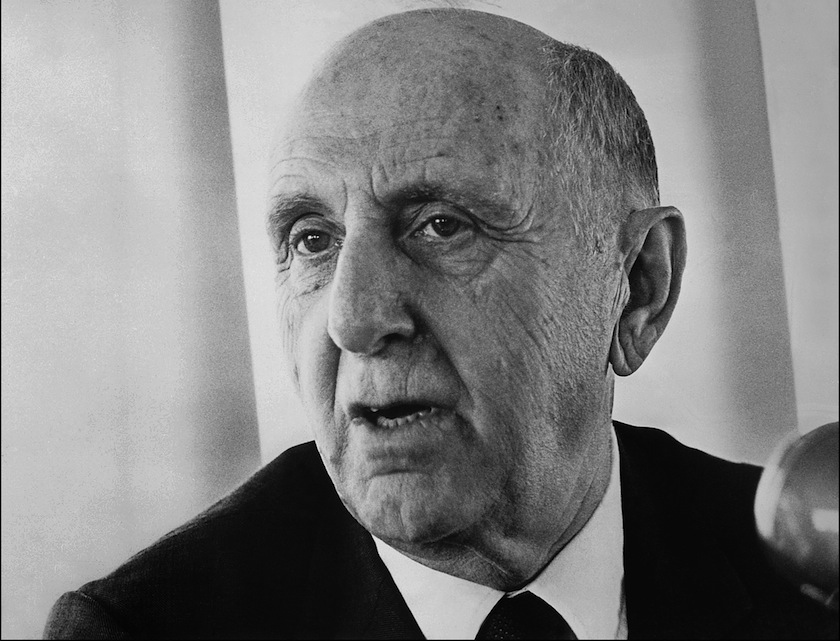
STOCKHOLM, SWEDEN: Portrait of American economist and nobel prize Simon Kuznets (1901-1985), taken 07 December 1971 during a press conference in Stockholm. (FILM) AFP PHOTOPhotograph by AFP/Getty Images

Most of the time, to get your hands on a Nobel Prize in economics, you need some serious brain power, decades of hard work on an esoteric subject, and the universal respect of the economics community. Now, to join the ranks of Krugman, Hayek, Myron and Scholes, all you need is a small fortune and the desire to spend it.

That’s right, this week, the Los Angeles-based auction house Nate D. Sanders will be accepting bids online for the Nobel Prize awarded to Belarusian-American economist Simon Kuznets, the third ever recipient of the Nobel Prize in economics. (If you are thinking about buying this piece, you should probably be aware that the economics prize is kind of the red-headed stepchild of the Nobel, as it was never endowed by Alfred Nobel himself, but by the Swedish Central Bank, decades after Nobel’s death).

That said, if you’re gonna shell out $150,000 on a Nobel Prize in economics—that’s where bidding starts—allow me to humbly suggest that this be the one. While every Nobel Prize-winning economist has made a great contribution to the science of economics, you’d be hard pressed to find someone who has had a bigger impact on the world beyond economics than Simon Kuznets.

Kuznets, who died in 1985, is the grandfather of the concept of gross domestic product, a statistic that gets bandied about every day in the press, by politicians, and activists. It wouldn’t be a stretch to say that, for some, GDP is the single best measure of human progress. The ubiquity of the statistic might lead some to think of it as timeless, but, in fact, it is quite young. The U.S. government only grew interested in calculating estimates of national income—of which GDP is one measure—during the depths of the Great Depression.

The idea of computing national income goes back to at least the 17th century. Private groups, like the National Bureau of Economic Research and the National Industrial Conference Board in the U.S., had been working to compute national income statistics in the United States in the years leading up to the Depression. But there was little agreement over what should be included in these measures. One bone of contention, for instance, was whether it should include household work, like child care or the preparation of meals.

Kuznets delivered his estimates to the Senate in 1934, putting numbers to the great suffering during those dark days. He showed that between 1929 and 1932 national income had fallen by more than 50%, and the income of wage earners had fallen 60%. These statistics helped guide the U.S. government’s efforts to stimulate the economy out of the Great Depression and the “recession within the depression” that struck the country in 1937.

Over the years, Kuznets and his colleagues tinkered with their methods, developing gross national product (GNP) in 1942, which measures the value of goods and services produced within the borders of the U.S. Unlike national income, GNP ignores the depreciation of capital stock. This was essential to understanding America’s war potential because it measured the production capability of the assets within our borders, regardless of whether foreigners owned those assets. The economics world gradually came to favor gross domestic product in the 1990s, partly as a reflection of the globalization of the U.S. economy. GDP, unlike GNP, measures the output of assets owned by U.S. citizens or entities that are both inside and outside the country.

Even today, there is a fierce debate over the worth of statistics like GDP. Some economists on the right side of the political spectrum question the wisdom of including government spending in our measures of national income because there is no market test for whether these expenditures do anything to improve welfare or make us richer. Those on the left criticize GDP for its failure to account for environmental degradation or the depletion of resources. If an oil company extracts $1 billion of oil from the ground and burns it, did we really become $1 billion richer? Or do we simply have less oil in the ground and more pollution?

The criticisms of GDP are numerous. In 2008, then French President Nicolas Sarkozy commissioned a group of economists, including Nobel laureate Joseph Stiglitz, to devise a new measure of national wealth that would include measures of quality of life and the sustainability of wealth, rather than just raw production figures.

Despite the criticisms, it’s unlikely governments will revise how they measure economic progress in the near future because the proposed alternatives involve a most difficult question: what constitutes well being and wealth? Considering the U.S. government can’t even tackle an overhaul of its tax code, asking it to address these loftier questions is probably a bit much.

But the debate over GDP is testament to just how important it is. We need these numbers to help us understand economic progress. Policy makers in the early 20th century likely failed to react as effectively to the Great Depression as they could because they lacked such tools at their disposal. In an age when we’re drowning in big data and statistics, such a scenario is hard to imagine. So, if you’re a history buff or an econ nerd—and the kind of person who will spend six figures on a piece of memorabilia—take a look at Kuznet’s prize.
About the Author
By Chris Matthews
See full bioRight Arrow Button Icon

Latest in Finance

Finance
Lorem ipsum dolor sit amet, consectetur adipiscing elit, sed do eiusmod tempor incididunt ut labore et dolore magna aliqua. Ut enim ad minim veniam
By Fortune Editors
October 20, 2025
Finance
Lorem ipsum dolor sit amet, consectetur adipiscing elit, sed do eiusmod tempor incididunt ut labore et dolore magna aliqua. Ut enim ad minim veniam
By Fortune Editors
October 20, 2025
Finance
Lorem ipsum dolor sit amet, consectetur adipiscing elit, sed do eiusmod tempor incididunt ut labore et dolore magna aliqua. Ut enim ad minim veniam
By Fortune Editors
October 20, 2025
Finance
Lorem ipsum dolor sit amet, consectetur adipiscing elit, sed do eiusmod tempor incididunt ut labore et dolore magna aliqua. Ut enim ad minim veniam
By Fortune Editors
October 20, 2025
Finance
Lorem ipsum dolor sit amet, consectetur adipiscing elit, sed do eiusmod tempor incididunt ut labore et dolore magna aliqua. Ut enim ad minim veniam
By Fortune Editors
October 20, 2025
Finance
Lorem ipsum dolor sit amet, consectetur adipiscing elit, sed do eiusmod tempor incididunt ut labore et dolore magna aliqua. Ut enim ad minim veniam
By Fortune Editors
October 20, 2025

Most Popular

Finance
Lorem ipsum dolor sit amet, consectetur adipiscing elit, sed do eiusmod tempor incididunt ut labore et dolore magna aliqua. Ut enim ad minim veniam
By Fortune Editors
October 20, 2025
Finance
Lorem ipsum dolor sit amet, consectetur adipiscing elit, sed do eiusmod tempor incididunt ut labore et dolore magna aliqua. Ut enim ad minim veniam
By Fortune Editors
October 20, 2025
Finance
Lorem ipsum dolor sit amet, consectetur adipiscing elit, sed do eiusmod tempor incididunt ut labore et dolore magna aliqua. Ut enim ad minim veniam
By Fortune Editors
October 20, 2025
Finance
Lorem ipsum dolor sit amet, consectetur adipiscing elit, sed do eiusmod tempor incididunt ut labore et dolore magna aliqua. Ut enim ad minim veniam
By Fortune Editors
October 20, 2025
Finance
Lorem ipsum dolor sit amet, consectetur adipiscing elit, sed do eiusmod tempor incididunt ut labore et dolore magna aliqua. Ut enim ad minim veniam
By Fortune Editors
October 20, 2025
Finance
Lorem ipsum dolor sit amet, consectetur adipiscing elit, sed do eiusmod tempor incididunt ut labore et dolore magna aliqua. Ut enim ad minim veniam
By Fortune Editors
October 20, 2025
Rankings
  • 100 Best Companies
  • Fortune 500
  • Global 500
  • Fortune 500 Europe
  • Most Powerful Women
  • Future 50
  • World’s Most Admired Companies
  • See All Rankings
Sections
  • Finance
  • Leadership
  • Success
  • Tech
  • Asia
  • Europe
  • Environment
  • Fortune Crypto
  • Health
  • Retail
  • Lifestyle
  • Politics
  • Newsletters
  • Magazine
  • Features
  • Commentary
  • Mpw
  • CEO Initiative
  • Conferences
  • Personal Finance
  • Education
Customer Support
  • Frequently Asked Questions
  • Customer Service Portal
  • Privacy Policy
  • Terms Of Use
  • Single Issues For Purchase
  • International Print
Commercial Services
  • Advertising
  • Fortune Brand Studio
  • Fortune Analytics
  • Fortune Conferences
  • Business Development
About Us
  • About Us
  • Editorial Calendar
  • Press Center
  • Work At Fortune
  • Diversity And Inclusion
  • Terms And Conditions
  • Site Map

Latest in Finance

InvestingHedge Funds
Bridgewater, D.E. Shaw among top hedge fund gainers of 2025
By Nishant Kumar and BloombergJanuary 2, 2026
4 hours ago
Economyeuro zone
Cash machines in this former communist country issue euros for the first time after becoming the 21st member of the currency union
By The Associated PressJanuary 2, 2026
4 hours ago
Man wearing a black suit with a microphone
InvestingMicrostrategy
Michael Saylor’s Strategy flirts again with the danger threshold at which his company is worth less than his Bitcoin
By Jim EdwardsJanuary 2, 2026
10 hours ago
Musk
Travel & LeisureElectric vehicles
Tesla is officially smaller than China’s BYD in EV sales as it reports second-straight year of falling sales
By Nick LichtenbergJanuary 2, 2026
10 hours ago
Trump
Economyfarming
Farmers see a ‘Band-Aid on a deep wound’ as White House reveals the size of their soybean tariff bailout
By Josh Funk, Didi Tang and The Associated PressJanuary 2, 2026
12 hours ago
trump
PoliticsTariffs and trade
Trump retreats on tariffs again, now on furniture, kitchen cabinets and vanities
By Michelle L. Price and The Associated PressJanuary 2, 2026
12 hours ago

Most Popular

placeholder alt text
Success
Marriott’s CEO spoke out about DEI. The next day, he had 40,000 emails from his associates
By Ashley LutzJanuary 1, 2026
1 day ago
placeholder alt text
Success
Melinda French Gates got her start at Microsoft because an IBM hiring manager told her to turn down its job offer—'It dumbfounded me'
By Emma BurleighDecember 31, 2025
3 days ago
placeholder alt text
Politics
Buddhist monks peace-walking from Texas to DC persist even after being run over on highway outside Houston
By The Associated PressDecember 30, 2025
3 days ago
placeholder alt text
Startups & Venture
Trump Mobile says its first-ever smartphone is delayed, and the government shutdown is to blame
By Dave SmithDecember 31, 2025
2 days ago
placeholder alt text
Success
Red Lobster’s 36-year-old CEO led the company after bankruptcy. Now he’s plotting the 'greatest comeback in the history of the restaurant industry'
By Sydney LakeJanuary 2, 2026
15 hours ago
placeholder alt text
Banking
Man says Goldman Sachs put him through a gauntlet of 39 one-on-one interviews—and the decisive conversation was less than a minute
By Dave SmithJanuary 2, 2026
15 hours ago

© 2025 Fortune Media IP Limited. All Rights Reserved. Use of this site constitutes acceptance of our Terms of Use and Privacy Policy | CA Notice at Collection and Privacy Notice | Do Not Sell/Share My Personal Information
FORTUNE is a trademark of Fortune Media IP Limited, registered in the U.S. and other countries. FORTUNE may receive compensation for some links to products and services on this website. Offers may be subject to change without notice.