• Home
  • Latest
  • Fortune 500
  • Finance
  • Tech
  • Leadership
  • Lifestyle
  • Rankings
  • Multimedia
LeadershipInnovation

To survive, companies need to stop hiding behind their walls

By
John Hagel III
John Hagel III
and
John Seely Brown
Down Arrow Button Icon
February 9, 2015, 10:59 AM ET
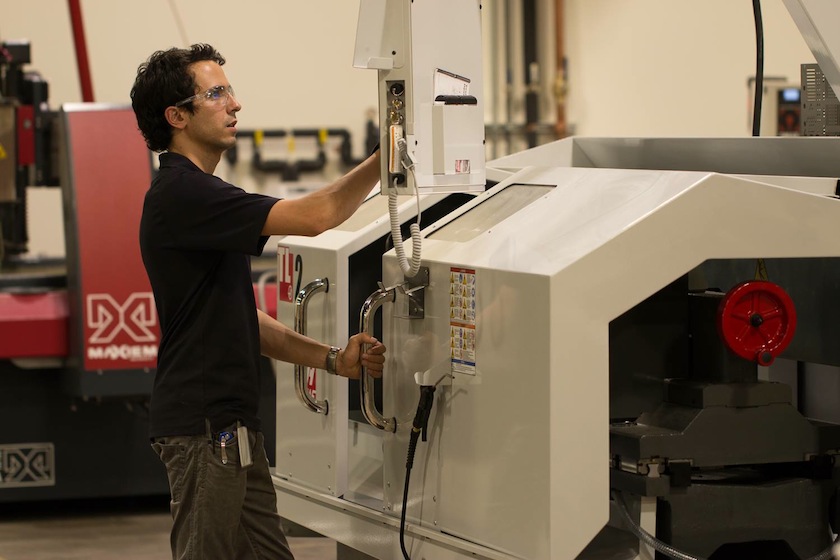
The FirstBuild micro-factory
The FirstBuild micro-factoryCourtesy of FirstBuild

Just down the road from General Electric’s (GE) Appliance Park, in a warehouse on the Belknap Campus at the University of Louisville, a new type of factory is emerging that reimagines how design and manufacturing should work.

This “micro-factory” will involve the work of a community of engineers, academics, entrepreneurs, and students who will perform rapid prototyping and small-scale production of home appliances. Home to FirstBuild—a partnership between GE Appliances and open-source hardware platform Local Motors—the micro-factory is breaking new ground in how people work with each other.

Meanwhile, in downtown Chandler, Arizona, undergraduate students from nearby Arizona State University (ASU) work with an Intel engineer in a 15,000 square-foot TechShop in the city’s former public works yard. The space now houses the ASU Chandler Innovation Center (ACIC), an education and research hub. The collaboration with TechShop, an independent company that acts as “a gym for Makers,” gives community members and students access to tools for fabrication and prototyping, and access to a community of makers, entrepreneurs, and craftsmen. With this project, the city of Chandler is making progress toward two strategic goals: reinvigorating a historic downtown area and giving a boost to the region’s reputation as an economic innovation corridor.

Why should these examples matter to large companies? Rapid advances in technology have led to more volatile demand for products and services, sudden shifts in customer expectations, and an overall need to respond faster and more flexibly to a changing environment. Companies that go it alone will struggle to find the talent and resources they need to compete. Businesses will need to work with others, those outside their walls, to do this.

We’ve written before about how companies need to build diverse networks where participants learn, build relationships and trust, collaborate around meaningful challenges, and improve performance as a result. We haven’t necessarily answered the question of who the other participants in these networks might be.

FirstBuild Louisville and TechShop ASU illustrate what networks in the 21st century might look like and how different this concept is from a company’s current collection of vendors or partners. Both examples reach beyond traditional industry and market boundaries. The phrase “win-win” may prompt an eye-roll, but finding new ways of creating something worthwhile for everyone—allowing all participants to develop capabilities, test ideas, gain access to resources, etc.—is the point of these learning networks. The more diverse the participants, the more plausible it is that each can gain from participating while also adding something that makes the whole community stronger.

These examples involve a city, one or more corporations, an educational institution, and a mixture of other civic organizations and for-profit businesses. They arose out of concerns that have pervaded the national consciousness: for companies, the need to remain competitive while developing and retaining talent; for local governments, the immediate need for employment and workforce development and to ensure the long-term economic viability of the region; for educational institutions, the pressure to teach students skills that are relevant to the future workforce.

The micro-factory in Louisville has revitalized a site that had been neglected for years. The factory and co-creation community will be open to anyone, both physically and virtually, a far cry from the tight controls and risk-management you find in traditional research and development (R&D). GE gains access to local talent; community members get access to resources; the university gains the ability to offer new learning opportunities for students and faculty.

The project in Chandler wasn’t just limited to TechShop and the local entrepreneurial ambition. Companies with facilities in the region, like Raytheon and Intel, have been investing in STEM education at local school systems and have been concerned with recruiting and talent retention. Employees at these companies are among the new community members. Meanwhile, other experiments, such as the Ford-TechShop partnership in Detroit and a similar build-out with BMW in Berlin, are providing more opportunities to discover what happens when community members and corporate employees are given access to equipment and space to explore, invent, and interact with each other outside the normal confines of the workplace.

Our Deloitte colleague Duleesha Kulasooriya points out, “Building a community, one that draws participants from across the spectrum of employees, enthusiasts, entrepreneurs, and students is a major rationale behind both of these initiatives. At the same time, the facilities are also important, which may at first seem counterintuitive considering that both corporate R&D and university engineering departments have already invested in machinery and equipment, typically of higher quality.”

According to Mitzi Montoya, Vice President and University Dean for Entrepreneurship and Innovation, the cost and perceived “seriousness” of the equipment restricts access and is part of what hinders innovation and prohibits broader participation. These new, not quite corporate, not quite university environments stocked with lower-end equipment are playgrounds for experts and novices to be curious and experiment without the burden of grades, curriculum, break-even numbers, or ROI hurdles. Instead, a community can work on ideas at the minimal costs of their time, materials, and possibly a monthly membership.

The idea of building a dynamic network isn’t about altruism, even when some participants are nonprofits and civic organizations. The benefits must have real value beyond PR and philanthropic goals for the businesses, governments, institutions, and individuals involved.

John Hagel III is the co-chairman of the Deloitte Center for the Edge based in Silicon Valley. John Seely Brown is the independent co-chairman of the Deloitte Center for the Edge.


About the Authors
By John Hagel III
See full bioRight Arrow Button Icon
By John Seely Brown
See full bioRight Arrow Button Icon

Latest in Leadership

Finance
Lorem ipsum dolor sit amet, consectetur adipiscing elit, sed do eiusmod tempor incididunt ut labore et dolore magna aliqua. Ut enim ad minim veniam
By Fortune Editors
October 20, 2025
Finance
Lorem ipsum dolor sit amet, consectetur adipiscing elit, sed do eiusmod tempor incididunt ut labore et dolore magna aliqua. Ut enim ad minim veniam
By Fortune Editors
October 20, 2025
Finance
Lorem ipsum dolor sit amet, consectetur adipiscing elit, sed do eiusmod tempor incididunt ut labore et dolore magna aliqua. Ut enim ad minim veniam
By Fortune Editors
October 20, 2025
Finance
Lorem ipsum dolor sit amet, consectetur adipiscing elit, sed do eiusmod tempor incididunt ut labore et dolore magna aliqua. Ut enim ad minim veniam
By Fortune Editors
October 20, 2025
Finance
Lorem ipsum dolor sit amet, consectetur adipiscing elit, sed do eiusmod tempor incididunt ut labore et dolore magna aliqua. Ut enim ad minim veniam
By Fortune Editors
October 20, 2025
Finance
Lorem ipsum dolor sit amet, consectetur adipiscing elit, sed do eiusmod tempor incididunt ut labore et dolore magna aliqua. Ut enim ad minim veniam
By Fortune Editors
October 20, 2025

Most Popular

Finance
Lorem ipsum dolor sit amet, consectetur adipiscing elit, sed do eiusmod tempor incididunt ut labore et dolore magna aliqua. Ut enim ad minim veniam
By Fortune Editors
October 20, 2025
Finance
Lorem ipsum dolor sit amet, consectetur adipiscing elit, sed do eiusmod tempor incididunt ut labore et dolore magna aliqua. Ut enim ad minim veniam
By Fortune Editors
October 20, 2025
Finance
Lorem ipsum dolor sit amet, consectetur adipiscing elit, sed do eiusmod tempor incididunt ut labore et dolore magna aliqua. Ut enim ad minim veniam
By Fortune Editors
October 20, 2025
Finance
Lorem ipsum dolor sit amet, consectetur adipiscing elit, sed do eiusmod tempor incididunt ut labore et dolore magna aliqua. Ut enim ad minim veniam
By Fortune Editors
October 20, 2025
Finance
Lorem ipsum dolor sit amet, consectetur adipiscing elit, sed do eiusmod tempor incididunt ut labore et dolore magna aliqua. Ut enim ad minim veniam
By Fortune Editors
October 20, 2025
Finance
Lorem ipsum dolor sit amet, consectetur adipiscing elit, sed do eiusmod tempor incididunt ut labore et dolore magna aliqua. Ut enim ad minim veniam
By Fortune Editors
October 20, 2025
Rankings
  • 100 Best Companies
  • Fortune 500
  • Global 500
  • Fortune 500 Europe
  • Most Powerful Women
  • Future 50
  • World’s Most Admired Companies
  • See All Rankings
Sections
  • Finance
  • Leadership
  • Success
  • Tech
  • Asia
  • Europe
  • Environment
  • Fortune Crypto
  • Health
  • Retail
  • Lifestyle
  • Politics
  • Newsletters
  • Magazine
  • Features
  • Commentary
  • Mpw
  • CEO Initiative
  • Conferences
  • Personal Finance
  • Education
Customer Support
  • Frequently Asked Questions
  • Customer Service Portal
  • Privacy Policy
  • Terms Of Use
  • Single Issues For Purchase
  • International Print
Commercial Services
  • Advertising
  • Fortune Brand Studio
  • Fortune Analytics
  • Fortune Conferences
  • Business Development
About Us
  • About Us
  • Editorial Calendar
  • Press Center
  • Work At Fortune
  • Diversity And Inclusion
  • Terms And Conditions
  • Site Map

Latest in Leadership

SuccessThe Promotion Playbook
A failed exam forced Claire Isnard back to school. It led to a chance encounter that propelled her into a corner office at Chanel
By Orianna Rosa RoyleDecember 18, 2025
31 minutes ago
Zohran
EconomyNew York City
Mamdani gets 74,000 resumes in sign of New York City’s job-market misery
By Georgia Hall and BloombergDecember 17, 2025
11 hours ago
Woodside Energy CEO Meg O'Neill speaks while seated on the sidelines of an energy conference.
EnergyBig Oil
Embattled BP replaces CEO, naming Woodside Energy chief as first-ever woman leader of a Big Oil giant
By Jordan BlumDecember 17, 2025
11 hours ago
Future of WorkJob seekers
New year, new job? Not so fast—more than half of employers aren’t planning to hire in Q1
By Paige McGlauflin and HR BrewDecember 17, 2025
13 hours ago
C-SuiteEurope
Exclusive: Hudson stores operator Avolta becomes first foreign company to open duty-free shops in Mainland China in 26 years
By Peter VanhamDecember 17, 2025
16 hours ago
Workplace CultureTech
Sheryl Sandberg says Silicon Valley’s hypermasculine rhetoric is ‘terrible’—contributing to ‘one of the worst’ corporate climates she’s ever seen
By Marco Quiroz-GutierrezDecember 17, 2025
17 hours ago

Most Popular

placeholder alt text
Economy
The $38 trillion national debt is to blame for over $1 trillion in annual interest payments from here on out, CRFB says
By Nick LichtenbergDecember 17, 2025
17 hours ago
placeholder alt text
Success
As millions of Gen Zers face unemployment, McDonald's CEO dishes out some tough love career advice for navigating the market: ‘You've got to make things happen for yourself’
By Preston ForeDecember 16, 2025
2 days ago
placeholder alt text
Economy
America's $38 trillion national debt 'exacerbates generational imbalances' with Gen Z and millennials paying the price, warns think tank
By Eleanor PringleDecember 16, 2025
2 days ago
placeholder alt text
Innovation
An MIT roboticist who cofounded bankrupt Roomba maker iRobot says Elon Musk's vision of humanoid robot assistants is 'pure fantasy thinking'
By Marco Quiroz-GutierrezDecember 16, 2025
2 days ago
placeholder alt text
AI
'Robots are going to be amongst us': Qualcomm exec says buckle up for the next 5 years. Your car is going to be the first shoe to drop
By Nino PaoliDecember 17, 2025
1 day ago
placeholder alt text
AI
IBM, AWS veteran says 90% of your employees are stuck in first gear with AI, just asking it to ‘write their mean email in a slightly more polite way’
By Marco Quiroz-GutierrezDecember 16, 2025
2 days ago

© 2025 Fortune Media IP Limited. All Rights Reserved. Use of this site constitutes acceptance of our Terms of Use and Privacy Policy | CA Notice at Collection and Privacy Notice | Do Not Sell/Share My Personal Information
FORTUNE is a trademark of Fortune Media IP Limited, registered in the U.S. and other countries. FORTUNE may receive compensation for some links to products and services on this website. Offers may be subject to change without notice.