• Home
  • Latest
  • Fortune 500
  • Finance
  • Tech
  • Leadership
  • Lifestyle
  • Rankings
  • Multimedia
CommentaryBox

How companies can avoid the pains of digital disruption

By
Aaron Levie
Aaron Levie
Down Arrow Button Icon
By
Aaron Levie
Aaron Levie
Down Arrow Button Icon
December 8, 2014, 10:20 AM ET
Aaron Levie, co-founder and chief executive officer at Box Inc.
Aaron Levie, co-founder and chief executive officer at Box Inc.Photograph by Bloomberg/Getty Images

From 1768 to the early 1990s, one company dominated the world’s market for encyclopedic information. For over 200 years, it had mastered the esoteric practice of selling libraries of information through a unique blend of traveling sales people and consumer distribution channels.

Suddenly, everything changed for Encyclopedia Britannica, as Philip Evans diagrammed in a seminal Harvard Business Review article in 1997. With the advent of the information age, what took Encyclopedia Britannica nearly two centuries to build up was undone by computer-oriented businesses in just a few years.

Blockbuster, Kodak and Borders have similar stories; these companies have taught us that in the digital era, with competition democratized across a widening landscape, managers and businesses are threatened by the very activities they’re most invested to accomplish. In Britannica’s case, this meant continuing to sell high-priced physical books with CD-ROMs as an add-on, rather than the other way around. For Borders, one of its perilous moves in entering the digital economy was contracting digital commerce to its eventual disruptor, Amazon (AMZN). And as responsive as Tower Records may have been to change, retail stores and physical supply chains became a burden when its core product turns into bits. In many cases, there’s simply no fighting the inevitable disruption at play in one’s industry, but how quickly you respond and the characteristics of that response are critical.

For many enterprises, it felt like the digital disruption of the 1990s had fully played out. Ecommerce sites were launched, supply chains were optimized, and information technology investments experienced a boom. But the first digital wave of the 1990s and 2000s merely brought digital interfaces and experiences to universes where similar, albeit analog, metaphors already existed. This is why the first technology company to explode was a web-version of a book catalog, and why news surged onto the Internet, scattering newspapers in its wake.

Fast-forward to 2014, and it’s becoming clearer that the transition to digital in news, media, and commerce was just the tip of the iceberg. It wasn’t until Internet ubiquity, location-aware smartphones, and a commoditization of underlying computing resources came together that our world was fully ripe for transformation.

This next decade will be about building digital “interfaces” and experiences in the rest of the economy. Enterprises once protected by significant investment in assets or slow-moving regulatory environments now run the risk of going the way of the record store if they don’t respond. Startups tackling markets as diverse as life sciences and eyewear are cropping up in a world where computing is infinitely scalable; talent can be acquired on-demand; contract manufacturing is just a few clicks away, and distribution to billions is nearly an entrepreneurial birthright.

Every company board, IT organization, and leadership team should assume that there are – or will be – new ways to more efficiently serve customers. In 2010, the Taxi industry neglected to ask, ‘what is the job we’ve been hired to do?’ and deliver a high-quality, on-demand experience for the consumer as a result. So Uber and later Lyft did it for them.

While few industries are as broken as the taxi industry, the same factors that have changed fortunes in urban transportation are at play in nearly every other market. The structures that once supported market dominance are becoming unsound: rigid “monopolies” that led to a false sense of competitive security due to a lack of new entrants (traditional healthcare systems); regulations that ensured high barriers to entry (traditional taxi companies); or businesses that won via constrained access to alternatives (big box retailers). These once-competitive advantages become inert in the face of newly valued characteristics, delivered by companies that focus on personalization, on-demand experiences, and don’t have the baggage of traditional infrastructure, vertical integration, or huge assets to amortize.

In a recent piece for Harvard Business Review, Harvard Business School professor Michael Porter wrote that “These new types of products alter industry structure and the nature of competition, exposing companies to new competitive opportunities and threats. … In many companies, smart, connected products will force the fundamental question, “What business am I in?””

No matter what the business, there’s a path to move from the industrial age to the information economy. The first step is to recognize the natural extensions of proprietary or unique value in this new digital world. If you’ve amassed massive infrastructure, consider creating application program interfaces (APIs) to let any outsider take advantage of your scale. For product companies, consider how a digital feedback loop can create a more dynamic relationship with your customer. If you’re a high-end provider, figure out how new technology lets you lower your costs and bring your solution to a wider set of customers. Digital transformation doesn’t mean throwing out your core competency, but it does mean heavily augmenting it with new experiences and technologies.

And beyond developing new products and technologies, part of the solution may be to partner with startups in Silicon Valley and beyond, as Whole Foods recently did by linking up with Instacart, where they’re already seeing transaction sizes increase by 150%, or as GE just did by investing in Airware, a leading drone startup. In other cases, the right answer might be through acquisition, as Nordstrom demonstrated by acquiring Trunk Club, or Monsanto did by scooping up the Climate Corp last year. This shift is even leading to a change in the DNA across the leadership team, as seen by the recent move of Gap naming Art Peck, its head of digital and innovation, as its next CEO.

As Marc Andreessen, founder of Netscape and VC firm Andreessen Horowitz said, software is eating the world. But technology-driven innovation won’t just come from the technology sector. Businesses across all industries have the opportunity to learn from companies who failed to catch the first wave of digital disruption and get ahead of this change, remaking themselves for the digital world.

Aaron Levie is CEO of Box. Levie is an investor of Airware. GE, Gap and Monsanto are customers of Box.


About the Author
By Aaron Levie
See full bioRight Arrow Button Icon

Latest in Commentary

Finance
Lorem ipsum dolor sit amet, consectetur adipiscing elit, sed do eiusmod tempor incididunt ut labore et dolore magna aliqua. Ut enim ad minim veniam
By Fortune Editors
October 20, 2025
Finance
Lorem ipsum dolor sit amet, consectetur adipiscing elit, sed do eiusmod tempor incididunt ut labore et dolore magna aliqua. Ut enim ad minim veniam
By Fortune Editors
October 20, 2025
Finance
Lorem ipsum dolor sit amet, consectetur adipiscing elit, sed do eiusmod tempor incididunt ut labore et dolore magna aliqua. Ut enim ad minim veniam
By Fortune Editors
October 20, 2025
Finance
Lorem ipsum dolor sit amet, consectetur adipiscing elit, sed do eiusmod tempor incididunt ut labore et dolore magna aliqua. Ut enim ad minim veniam
By Fortune Editors
October 20, 2025
Finance
Lorem ipsum dolor sit amet, consectetur adipiscing elit, sed do eiusmod tempor incididunt ut labore et dolore magna aliqua. Ut enim ad minim veniam
By Fortune Editors
October 20, 2025
Finance
Lorem ipsum dolor sit amet, consectetur adipiscing elit, sed do eiusmod tempor incididunt ut labore et dolore magna aliqua. Ut enim ad minim veniam
By Fortune Editors
October 20, 2025

Most Popular

Finance
Lorem ipsum dolor sit amet, consectetur adipiscing elit, sed do eiusmod tempor incididunt ut labore et dolore magna aliqua. Ut enim ad minim veniam
By Fortune Editors
October 20, 2025
Finance
Lorem ipsum dolor sit amet, consectetur adipiscing elit, sed do eiusmod tempor incididunt ut labore et dolore magna aliqua. Ut enim ad minim veniam
By Fortune Editors
October 20, 2025
Finance
Lorem ipsum dolor sit amet, consectetur adipiscing elit, sed do eiusmod tempor incididunt ut labore et dolore magna aliqua. Ut enim ad minim veniam
By Fortune Editors
October 20, 2025
Finance
Lorem ipsum dolor sit amet, consectetur adipiscing elit, sed do eiusmod tempor incididunt ut labore et dolore magna aliqua. Ut enim ad minim veniam
By Fortune Editors
October 20, 2025
Finance
Lorem ipsum dolor sit amet, consectetur adipiscing elit, sed do eiusmod tempor incididunt ut labore et dolore magna aliqua. Ut enim ad minim veniam
By Fortune Editors
October 20, 2025
Finance
Lorem ipsum dolor sit amet, consectetur adipiscing elit, sed do eiusmod tempor incididunt ut labore et dolore magna aliqua. Ut enim ad minim veniam
By Fortune Editors
October 20, 2025
Fortune Secondary Logo
Rankings
  • 100 Best Companies
  • Fortune 500
  • Global 500
  • Fortune 500 Europe
  • Most Powerful Women
  • Future 50
  • World’s Most Admired Companies
  • See All Rankings
Sections
  • Finance
  • Fortune Crypto
  • Features
  • Leadership
  • Health
  • Commentary
  • Success
  • Retail
  • Mpw
  • Tech
  • Lifestyle
  • CEO Initiative
  • Asia
  • Politics
  • Conferences
  • Europe
  • Newsletters
  • Personal Finance
  • Environment
  • Magazine
  • Education
Customer Support
  • Frequently Asked Questions
  • Customer Service Portal
  • Privacy Policy
  • Terms Of Use
  • Single Issues For Purchase
  • International Print
Commercial Services
  • Advertising
  • Fortune Brand Studio
  • Fortune Analytics
  • Fortune Conferences
  • Business Development
  • Group Subscriptions
About Us
  • About Us
  • Editorial Calendar
  • Press Center
  • Work At Fortune
  • Diversity And Inclusion
  • Terms And Conditions
  • Site Map
  • About Us
  • Editorial Calendar
  • Press Center
  • Work At Fortune
  • Diversity And Inclusion
  • Terms And Conditions
  • Site Map
  • Facebook icon
  • Twitter icon
  • LinkedIn icon
  • Instagram icon
  • Pinterest icon

Latest in Commentary

mallun
AISoftware
Your enterprise customers don’t know how to buy AI — and it’s killing deals
By Mallun YenMarch 27, 2026
7 hours ago
krueger
CommentarySafety
Rogue AI is already here
By David KruegerMarch 27, 2026
9 hours ago
kennnedy
CommentaryDrugs
America is handing its mRNA lead to China—and RFK Jr. is to blame
By Jeff CollerMarch 26, 2026
1 day ago
jerry
CommentaryEducation
The college degree isn’t dead. But the wrong kind could cost you $2 million
By Jerry BalentineMarch 26, 2026
1 day ago
trump
CommentaryMarkets
We’re no longer in a bull or bear market. We’re in a Trump market — and here’s how to navigate it
By Jeffrey Sonnenfeld and Steven TianMarch 26, 2026
1 day ago
EuropeLetter from London
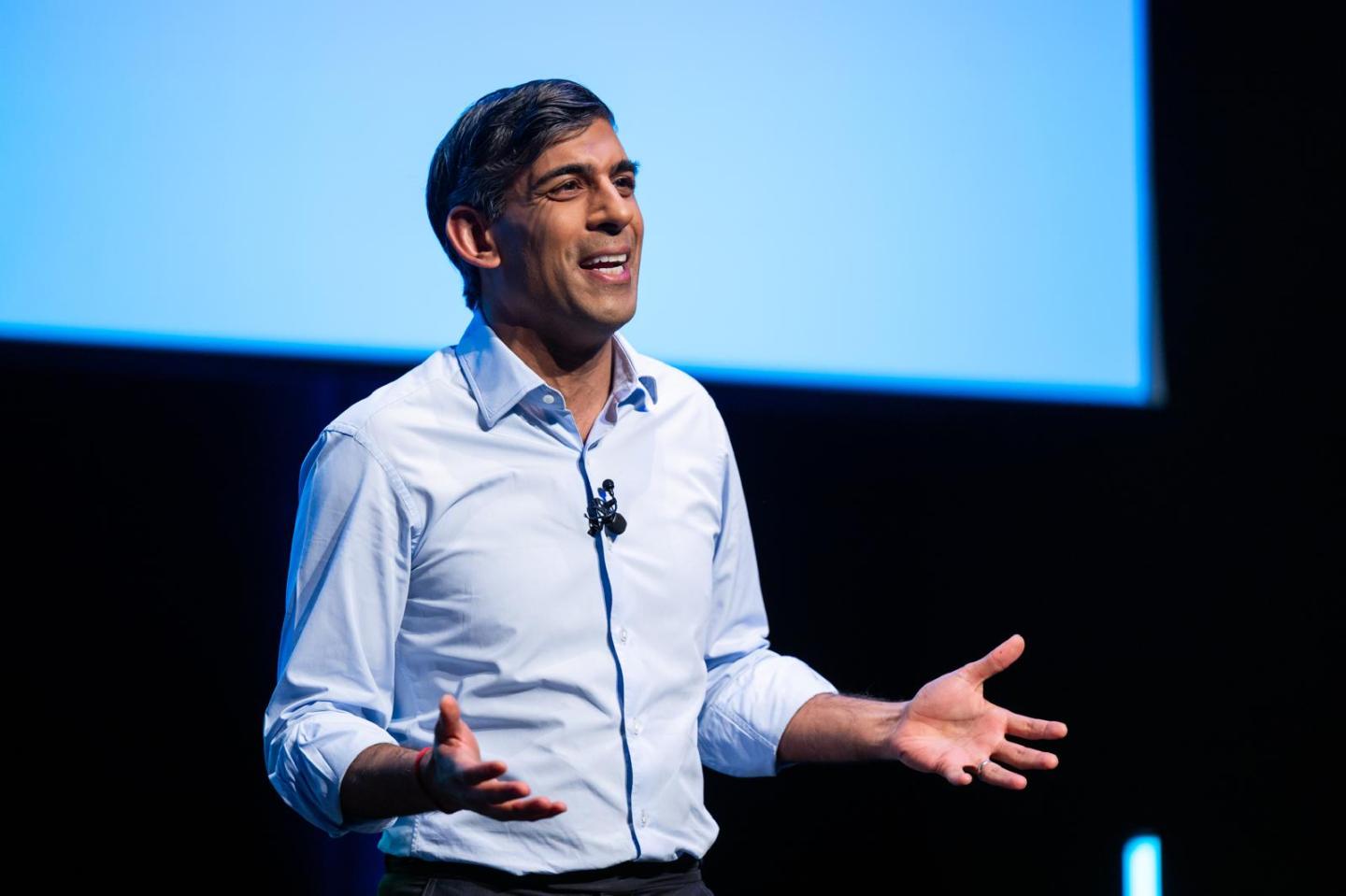
Rishi Sunak is giving advice to CEOs on AI. Here are his golden rules
By Kamal AhmedMarch 25, 2026
2 days ago

Most Popular

C-Suite
'I didn’t want anybody shooting me': Five Guys CEO gave away $1.5 million bonus to employees over botched BOGO burger birthday celebration
By Fortune EditorsMarch 25, 2026
2 days ago
AI
Exclusive: Anthropic acknowledges testing new AI model representing ‘step change’ in capabilities, after accidental data leak reveals its existence
By Fortune EditorsMarch 26, 2026
18 hours ago
Environment
Vail Resorts CEO says it’s time to think beyond the $1,000 ski pass that helped build the empire
By Fortune EditorsMarch 26, 2026
2 days ago
Success
Palantir’s billionaire CEO says only two kinds of people will succeed in the AI era: trade workers — ‘or you’re neurodivergent’
By Fortune EditorsMarch 24, 2026
3 days ago
Commentary
The Treasury just declared the U.S. insolvent. The media missed it
By Fortune EditorsMarch 23, 2026
4 days ago
Success
The scientist who helped create AI says it’s only 'a matter of time' before every single job is wiped out—even safer trade jobs like plumbing
By Fortune EditorsMarch 26, 2026
1 day ago

© 2026 Fortune Media IP Limited. All Rights Reserved. Use of this site constitutes acceptance of our Terms of Use and Privacy Policy | CA Notice at Collection and Privacy Notice | Do Not Sell/Share My Personal Information
FORTUNE is a trademark of Fortune Media IP Limited, registered in the U.S. and other countries. FORTUNE may receive compensation for some links to products and services on this website. Offers may be subject to change without notice.