• Home
  • News
  • Fortune 500
  • Tech
  • Finance
  • Leadership
  • Lifestyle
  • Rankings
  • Multimedia
FinanceBanks

Why companies should have to pay checking account fees, too

By
Stephen Gandel
Stephen Gandel
Down Arrow Button Icon
By
Stephen Gandel
Stephen Gandel
Down Arrow Button Icon
December 8, 2014, 4:07 PM ET
Bank Investor Returns Seen Rising to Most Since 2007 on Test
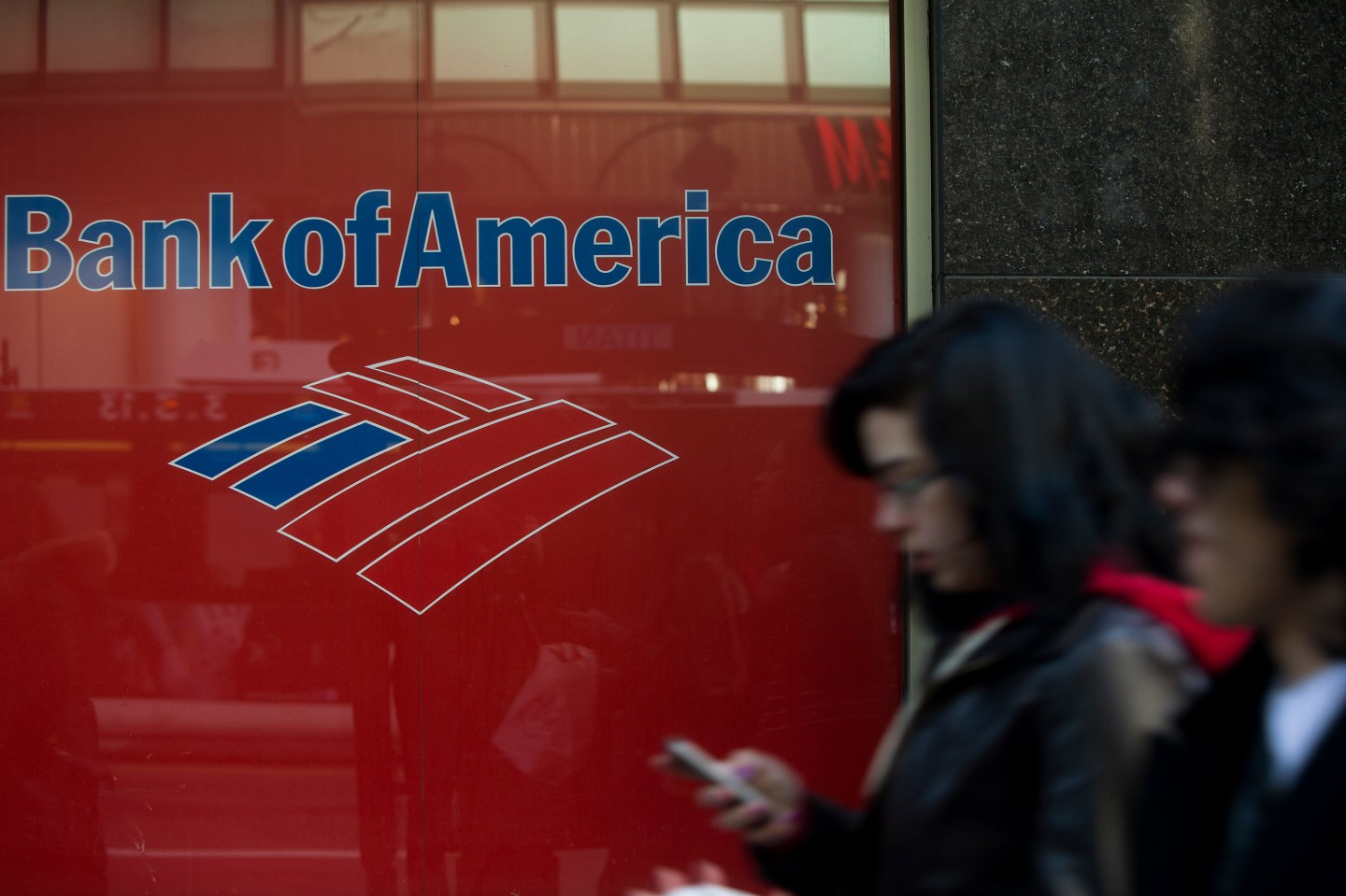
A woman checks a mobile device as she walks past a Bank of America Corp. branch in New York, U.S., on Tuesday, March 5, 2013. The six largest U.S. banks may return almost $41 billion to investors in the next 12 months, the most since 2007, as regulators conclude firms have amassed enough capital to withstand another economic shock. Photographer: Victor J. Blue/Bloomberg via Getty ImagesPhotograph by Victor J. Blue — Bloomberg via Getty Images

No more free toasters for corporations, either.

Large companies are about to face the same financial hardship that individuals began to face more than a decade ago: The end of no-fee checking.

According to The Wall Street Journal, a number of large banks are considering charging large corporations a fee for having a checking account. The more money those companies have on deposit at a bank, the more they may have to pay. Why would that be?

The Journal says we should blame regulation. Since the financial crisis, regulators have been trying to make banks safer. And large, uninsured deposit accounts are a risk for banks. If banks lend against those accounts, and a company, or a few of them, move their accounts to a new bank, that could cause a problem. So, regulators are forcing banks to protect against this risk, which is making it more expensive for them to have these accounts. And banks are considering passing along those costs to companies, though most of the costs so far have to do with holding deposits in foreign currencies. Still, the new fees are making corporations, and their lobbyists, upset. The regulations were supposed to make banks safer, not make holding cash more expensive. Another unintended consequence of the Dodd-Frank banking reform bill!

But this may be more of a feature than a bug. In other words, it could be a good thing. Corporations get plenty of benefit from large banks. In fact, one of the reasons bank CEOs like Jamie Dimon argue that we need large banks is that corporations, the banks’ biggest customers, are also getting bigger. But, as we know, large banks can cause trouble for the banking system. But if large companies benefit from banks being big, why shouldn’t such companies also bear the burden of the risk that large banks create for the economy? Or at least more of those costs.

It’s been years since checking accounts were truly free for the average consumer. Nearly all checking accounts pay almost no interest. And plenty have annual charges if your balance falls below a threshold. The average fee for a consumer that uses an ATM machine not run by their own bank is now over $4. In all, banks charged consumers nearly $32 billion in overdraft fees in 2013. And even with no-fee checking accounts, you often have to pay to order checks, which makes it really hard to use your checking account without incurring a fee. What reason do banks give when they have to charge more and more fees? Increased regulation.

But that’s probably not the actual reason. Low interest rates mean banks can’t make what they used to by lending out deposits. For the past few years, the net interest margin—the spread between what it costs banks to borrow and what they make when they lend or invest—for banks has shrunk to an all-time low. What’s more, banks aren’t seeing robust demand for loans. Those two things—lack of loan demand and low interest rates— are what’s really driving banks to charge checking fees to both consumers and corporations.

But if you are a corporation, you can’t really complain about low interest rates. Companies have borrowed more than $1 trillion dollars this year, taking advantage of low interest rates. As for regulation and higher costs (to hold cash!), we can all agree that’s certainly something to complain about.
About the Author
By Stephen Gandel
See full bioRight Arrow Button Icon

Latest in Finance

EconomyEurope
JPMorgan CEO Jamie Dimon says Europe has a ‘real problem’
By Katherine Chiglinsky and BloombergDecember 6, 2025
5 hours ago
Elon Musk
Big TechSpaceX
SpaceX to offer insider shares at record-setting $800 billion valuation
By Edward Ludlow, Loren Grush, Lizette Chapman, Eric Johnson and BloombergDecember 6, 2025
5 hours ago
EconomyDebt
The most likely solution to the U.S. debt crisis is severe austerity triggered by a fiscal calamity, former White House economic adviser says
By Jason MaDecember 6, 2025
5 hours ago
SuccessWealth
The $124 trillion Great Wealth Transfer is intensifying as inheritance jumps to a new record, with one 19-year-old reaping the rewards
By Jason MaDecember 6, 2025
8 hours ago
Trump
PoliticsWhite House
Trump finally meets Claudia Sheinbaum face to face at the FIFA World Cup draw
By Will Weissert and The Associated PressDecember 6, 2025
11 hours ago
coal
EnvironmentCoal
‘You have an entire culture, an entire community that is also having that same crisis’: Colorado coal town looks anxiously to the future
By Brittany Peterson, Jennifer McDermott and The Associated PressDecember 6, 2025
11 hours ago

Most Popular

placeholder alt text
Big Tech
Mark Zuckerberg rebranded Facebook for the metaverse. Four years and $70 billion in losses later, he’s moving on
By Eva RoytburgDecember 5, 2025
1 day ago
placeholder alt text
AI
Nvidia CEO says data centers take about 3 years to construct in the U.S., while in China 'they can build a hospital in a weekend'
By Nino PaoliDecember 6, 2025
10 hours ago
placeholder alt text
Success
Nvidia CEO Jensen Huang admits he works 7 days a week, including holidays, in a constant 'state of anxiety' out of fear of going bankrupt
By Jessica CoacciDecember 4, 2025
2 days ago
placeholder alt text
Economy
Two months into the new fiscal year and the U.S. government is already spending more than $10 billion a week servicing national debt
By Eleanor PringleDecember 4, 2025
3 days ago
placeholder alt text
Success
‘Godfather of AI’ says Bill Gates and Elon Musk are right about the future of work—but he predicts mass unemployment is on its way
By Preston ForeDecember 4, 2025
2 days ago
placeholder alt text
Real Estate
The 'Great Housing Reset' is coming: Income growth will outpace home-price growth in 2026, Redfin forecasts
By Nino PaoliDecember 6, 2025
15 hours ago
Rankings
  • 100 Best Companies
  • Fortune 500
  • Global 500
  • Fortune 500 Europe
  • Most Powerful Women
  • Future 50
  • World’s Most Admired Companies
  • See All Rankings
Sections
  • Finance
  • Leadership
  • Success
  • Tech
  • Asia
  • Europe
  • Environment
  • Fortune Crypto
  • Health
  • Retail
  • Lifestyle
  • Politics
  • Newsletters
  • Magazine
  • Features
  • Commentary
  • Mpw
  • CEO Initiative
  • Conferences
  • Personal Finance
  • Education
Customer Support
  • Frequently Asked Questions
  • Customer Service Portal
  • Privacy Policy
  • Terms Of Use
  • Single Issues For Purchase
  • International Print
Commercial Services
  • Advertising
  • Fortune Brand Studio
  • Fortune Analytics
  • Fortune Conferences
  • Business Development
About Us
  • About Us
  • Editorial Calendar
  • Press Center
  • Work At Fortune
  • Diversity And Inclusion
  • Terms And Conditions
  • Site Map

© 2025 Fortune Media IP Limited. All Rights Reserved. Use of this site constitutes acceptance of our Terms of Use and Privacy Policy | CA Notice at Collection and Privacy Notice | Do Not Sell/Share My Personal Information
FORTUNE is a trademark of Fortune Media IP Limited, registered in the U.S. and other countries. FORTUNE may receive compensation for some links to products and services on this website. Offers may be subject to change without notice.