• Home
  • Latest
  • Fortune 500
  • Finance
  • Tech
  • Leadership
  • Lifestyle
  • Rankings
  • Multimedia

Trendingnow

1

OpenAI says its AI models secretly broke out of a secure test environment and hacked into AI company Hugging Face in order to cheat on an evaluation

2

Mark Cuban says he has the solution to growing income inequality, and it's to reward every employee—from CEO to janitor—with company stock

3

Mathematicians grapple with a ‘very rapid and very unsettling change’ as AI cracks yet another century-old problem

1

OpenAI says its AI models secretly broke out of a secure test environment and hacked into AI company Hugging Face in order to cheat on an evaluation

2

Mark Cuban says he has the solution to growing income inequality, and it's to reward every employee—from CEO to janitor—with company stock

3

Mathematicians grapple with a ‘very rapid and very unsettling change’ as AI cracks yet another century-old problem
LeadershipWorld's Greatest Leaders

From high-minded to high value

Geoff Colvin
By
Geoff Colvin
Geoff Colvin
Senior Editor-at-Large
Down Arrow Button Icon
Geoff Colvin
By
Geoff Colvin
Geoff Colvin
Senior Editor-at-Large
Down Arrow Button Icon
December 4, 2014, 7:33 AM ET
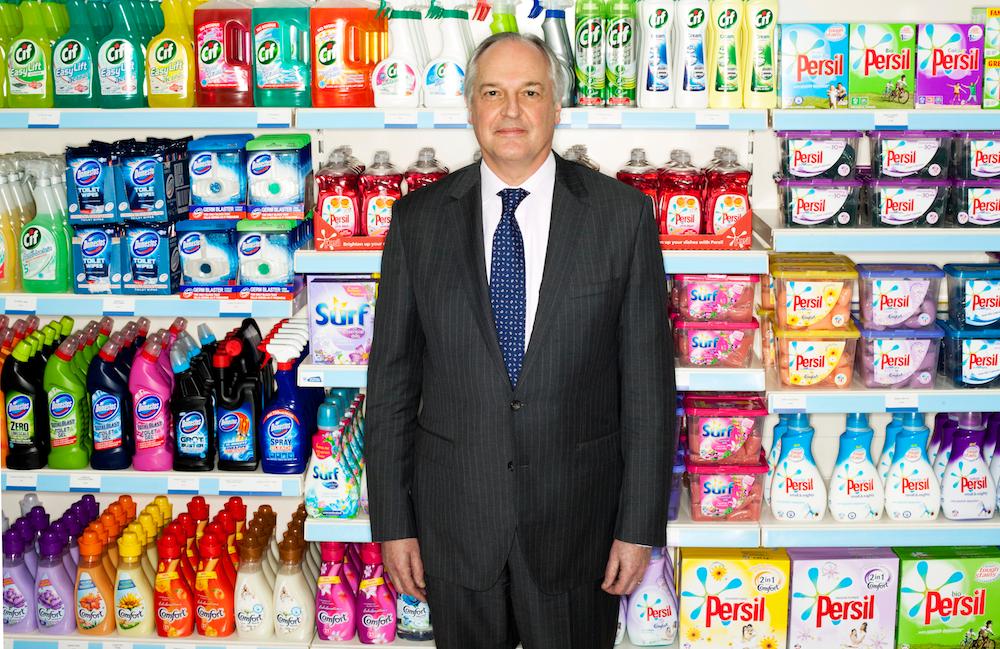
Photo courtesy: Harry Borden Contour—Getty Images
Add Fortune on Google for similar content.

Unilever hadn’t grown significantly in years when the board brought in Paul Polman from Nestlé as CEO in 2009. Despite the recession, he sparked rapid growth and record profits, focusing especially on emerging markets, where the company has found opportunity selling its household products in tiny quantities at prices of 10¢ to 15¢. Of its 400-plus brands, those with annual revenues over 1 billion euros include Dove, Lipton, Lux, and Hellmann’s (recently embroiled in a tempest in a jar over the exact meaning of “mayo”; see Fortune.com). Polman, 58, has attracted wide praise for putting environmental and social goals prominently at the center of Unilever’s strategy—and making it pay. He talked recently with Fortune about audacious goals, attracting young employees, and more:

We’re seeing signs of a global economic slowdown. You have two billion customers around the world. What are they telling you?
There are some forces coming together that we’re all struggling with. Clearly, the money that we’ve pumped in since the 2008 – 2009 crisis has not given us the growth. If anything, it has made a few people richer but with a lot of people excluded. You see that in the U.S., and you see it in Europe. Markets are stable or down, if you look at the broad consumer market. And then the developing markets have seen a significant slowdown over the last year or two.

And so we see a global economy that used to grow at 4% or 5% levels, and it probably is now growing at 2% or 3% levels. The latest forecast from the IMF and OECD is 3.1%. And any forecast is coming down. So we have to be realistic now.

And that forecast is your expectation, too, I gather.
We’ve always warned for that, and often have been called pessimists, but it’s better to be a realist, and that’s what we’re trying to be.

It’s almost five years now since you announced a goal of doubling the size of the company while reducing its environmental footprint. Is that still looking feasible?
It was indeed an audacious goal, but I always believed it was more of a mindset issue. One of our goals is sustainably sourcing all our agricultural materials. We were at 10% and were seen as one of the more forward-looking companies, always No. 1 in the Dow Jones sustainability index. Now we’re at 50%. It took us 150 years to get to 10% and four years to get to four times higher. If you set these audacious goals, you get people out of a comfort zone, that makes them do amazing things.

That goal caused quite a stir inside and outside the company when you announced it. What have you learned since then about the effects of doing something that big?
If you set more audacious goals, and you get people out of their comfort zone, the first thing you have to realize is that people are actually capable of doing more than we all thought possible. We’ve all learned a lot. Also that you can run a business and make a positive contribution to society. There doesn’t need to be a tradeoff. I think the crisis in 2008 – 2009 has made many people realize that the economic progress that we had seen has been tremendous, has lifted many people out of poverty, but has also come at an enormous price — enormous levels of government and private debt, enormous levels of overconsumption, and frankly, leaving too many people behind.

In this increasingly connected world, you see more and more people able to aggregate their forces and make their displeasure known. That’s one of the reasons why we have significantly more geopolitical conflicts now. Businesses are under the same scrutiny as governments, and so if you want to be successful in tomorrow’s world, you have to reach a higher level of trust, which requires more transparency. You have to make positive contributions to issues like climate change, food security, and unemployment.

The U.N. Foundation just gave you its Champion for Global Change Award. Can the U.N. be helpful in reaching some of these goals?
The U.N. is increasingly important. Obviously, the tragic Ebola crisis is one of the examples where people from the U.N. are doing heroic work. But what you basically see is that the political system which we created to rule the world dates back to Bretton Woods, and it’s not really functioning anymore as well as it should. One of the reasons you see these geopolitical conflicts is because many politicians have a hard time internalizing these global challenges to their own constituents, and the U.N. is playing an enormous role there to keep a global moral framework that we can all at least aspire to. The U.N. put out the original millennium development goals, which had as a simple objective to halve the number of people living in poverty, which at that time was defined as $7.25 a day or less, and we’ve actually achieved that goal over the last 15 years. And one of the reasons we’ve achieved that is because of this moral framework that the U.N. put out that has served as a beacon for many governments, companies, and other institutions.

Now there are opportunities to make the U.N. work better, and that is why we as companies via the U.N. Global Compact and other institutions try to be part of that. It doesn’t serve anything to criticize if you don’t want to be part of the solution.

You’ve said you’re simplifying Unilever. How do you simplify a company that’s in 190 countries?
You do it with good people. People are driven by an enormous level of energy if the purpose is high. People really want to make a bigger difference to life than just growing market share or improving profits. We’re showing that you can do that while at the same time satisfying your shareholders. For example, Lifebuoy is one of our hand-washing soaps. It’s growing at double digits because it really is helping children [in emerging markets] reach the age of 5, through the simple act of hand washing. That unleashes enormous energy.

If you bring these strong purposes to your brands, it actually makes the brands more relevant, because what you have to watch in a big company like this is that you don’t fall in love with yourself and become too internally focused. If you can move that purpose outside of the company, outside of your own interests, and put the interests of society first, which actually should be the purpose of any company, then I think you unlock that energy.

You’re investing more in leadership development and have opened a new center in Singapore aimed at that goal. What’s the larger human capital strategy?
My job really is not really to hit the numbers every quarter and be a hero, because that’s actually easy to do. My job is to be sure that this company is even stronger than what I inherited and can last for many hundreds of years more. One of the most important things is to invest in human capital. So one of the key things I look at is, Are we a desired employer or not? That’s very important to me. On LinkedIn we’ve become the third-most-looked-up company after Google and Apple, which is actually quite amazing because Unilever is not really a brand in itself. The company is very much in demand, especially among young people.
[fortune-brightcove videoid=3911180337001]

When you came to the company, you were an outsider CEO who changed the strategy. What did you learn about how to make changes of that magnitude in a global enterprise?
Probably anybody in my position would have made the same changes, because a lot of things in the world were changing that our predecessors did not have to deal with. The growth of the East, the enormous speed of the digitization of society. Because of economic growth, the pressures on the planetary boundaries — these are all factors coming together in these past 10 or 15 years and putting pressure on businesses and requiring businesses to change. Are we the ones that have that ultimate wisdom to do that better than anybody else? I don’t think so.

And my job really has been to, first of all, understand the values that make this company work and be successful over the last 150 years. Having come in as an outsider, I spent enormous amounts of time understanding what works in this company. It has always been a company that is driven by doing good, from its early days under Lord Lever. Throughout its history, you see that.

We’ve just been able to capture it and link it to our business growth. My job is probably the simplest in the company, believe it or not, because it’s really focused on trying to make everybody else successful. And then you see what this enormous energy is that you can unleash.

The strategy changes are probably the least important changes. It’s just bringing this company back to the core of what made it successful in the first place.

This story is from the December 22, 2014 issue of Fortune.

About the Author
Geoff Colvin
By Geoff ColvinSenior Editor-at-Large
LinkedIn iconTwitter icon

Geoff Colvin is a senior editor-at-large at Fortune, covering leadership, globalization, wealth creation, the infotech revolution, and related issues.

See full bioRight Arrow Button Icon
Add Fortune on Google for similar content.

Latest in Leadership

Finance
Lorem ipsum dolor sit amet, consectetur adipiscing elit, sed do eiusmod tempor incididunt ut labore et dolore magna aliqua. Ut enim ad minim veniam
By Fortune Editors
October 20, 2025
Finance
Lorem ipsum dolor sit amet, consectetur adipiscing elit, sed do eiusmod tempor incididunt ut labore et dolore magna aliqua. Ut enim ad minim veniam
By Fortune Editors
October 20, 2025
Finance
Lorem ipsum dolor sit amet, consectetur adipiscing elit, sed do eiusmod tempor incididunt ut labore et dolore magna aliqua. Ut enim ad minim veniam
By Fortune Editors
October 20, 2025
Finance
Lorem ipsum dolor sit amet, consectetur adipiscing elit, sed do eiusmod tempor incididunt ut labore et dolore magna aliqua. Ut enim ad minim veniam
By Fortune Editors
October 20, 2025
Finance
Lorem ipsum dolor sit amet, consectetur adipiscing elit, sed do eiusmod tempor incididunt ut labore et dolore magna aliqua. Ut enim ad minim veniam
By Fortune Editors
October 20, 2025
Finance
Lorem ipsum dolor sit amet, consectetur adipiscing elit, sed do eiusmod tempor incididunt ut labore et dolore magna aliqua. Ut enim ad minim veniam
By Fortune Editors
October 20, 2025

Most Popular

Finance
Lorem ipsum dolor sit amet, consectetur adipiscing elit, sed do eiusmod tempor incididunt ut labore et dolore magna aliqua. Ut enim ad minim veniam
By Fortune Editors
October 20, 2025
Finance
Lorem ipsum dolor sit amet, consectetur adipiscing elit, sed do eiusmod tempor incididunt ut labore et dolore magna aliqua. Ut enim ad minim veniam
By Fortune Editors
October 20, 2025
Finance
Lorem ipsum dolor sit amet, consectetur adipiscing elit, sed do eiusmod tempor incididunt ut labore et dolore magna aliqua. Ut enim ad minim veniam
By Fortune Editors
October 20, 2025
Finance
Lorem ipsum dolor sit amet, consectetur adipiscing elit, sed do eiusmod tempor incididunt ut labore et dolore magna aliqua. Ut enim ad minim veniam
By Fortune Editors
October 20, 2025
Finance
Lorem ipsum dolor sit amet, consectetur adipiscing elit, sed do eiusmod tempor incididunt ut labore et dolore magna aliqua. Ut enim ad minim veniam
By Fortune Editors
October 20, 2025
Finance
Lorem ipsum dolor sit amet, consectetur adipiscing elit, sed do eiusmod tempor incididunt ut labore et dolore magna aliqua. Ut enim ad minim veniam
By Fortune Editors
October 20, 2025
Fortune Secondary Logo
Rankings
  • 100 Best Companies
  • Fortune 500
  • Global 500
  • Fortune 500 Europe
  • Most Powerful Women
  • World's Most Admired Companies
  • See All Rankings
  • Lists Calendar
Sections
  • Finance
  • Fortune Crypto
  • Features
  • Leadership
  • Health
  • Commentary
  • Success
  • Retail
  • Mpw
  • Tech
  • Lifestyle
  • CEO Initiative
  • Asia
  • Politics
  • Conferences
  • Europe
  • Newsletters
  • Personal Finance
  • Environment
  • Magazine
  • Education
Customer Support
  • Frequently Asked Questions
  • Customer Service Portal
  • Privacy Policy
  • Terms Of Use
  • Single Issues For Purchase
  • International Print
Commercial Services
  • Advertising
  • Fortune Brand Studio
  • Fortune Analytics
  • Fortune Conferences
  • Business Development
  • Group Subscriptions
About Us
  • About Us
  • Press Center
  • Work At Fortune
  • Terms And Conditions
  • Site Map
  • About Us
  • Press Center
  • Work At Fortune
  • Terms And Conditions
  • Site Map
  • Facebook icon
  • Twitter icon
  • LinkedIn icon
  • Instagram icon
  • TikTok icon
  • YouTube icon

Latest in Leadership

buffett
SuccessWealth
‘The man who dies rich dies disgraced’: The last time America had such wealth inequality, Andrew Carnegie knew he had to give it all away
By Nick LichtenbergJuly 22, 2026
7 hours ago
Larry Page and Sergey Brin
SuccessBillionaires
Larry Page and Sergey Brin splash $225 million in Miami property as billionaires flee California’s tax—and Google is expanding its office there too
By Emma BurleighJuly 22, 2026
8 hours ago
Warren Buffett called Bill Gates’ Epstein ties ‘distasteful’ and pulled out of the Gates Foundation. Days later, a review revealed 30 meetings
North AmericaWarren Buffett
Warren Buffett called Bill Gates’ Epstein ties ‘distasteful’ and pulled out of the Gates Foundation. Days later, a review revealed 30 meetings
By Sydney LakeJuly 22, 2026
9 hours ago
Jon Gray leans while talking and sitting in a chair
SuccessCareers
Blackstone president Jon Gray tells Gen Z to think like founders at work—but a growing number are skipping the corporate ladder to become one for real
By Preston ForeJuly 22, 2026
9 hours ago
clark
North AmericaMedia
Ryan Clark found out he was fired live, mid-broadcast, on NFL Live as ESPN undergoes first major layoffs in 3 years
By Joe Reedy and The Associated PressJuly 22, 2026
10 hours ago
A woman observes stock trends on her smartphone while a computer screen displays financial graphs.
NewslettersCFO Daily
Beyond SpaceX: Why great IPOs depend on more than first-day demand
By Sheryl EstradaJuly 22, 2026
11 hours ago

Most Popular

OpenAI says its AI models secretly broke out of a secure test environment and hacked into AI company Hugging Face in order to cheat on an evaluation
Cybersecurity
OpenAI says its AI models secretly broke out of a secure test environment and hacked into AI company Hugging Face in order to cheat on an evaluation
By Jeremy Kahn and Emily ForliniJuly 21, 2026
1 day ago
Mark Cuban says he has the solution to growing income inequality, and it's to reward every employee—from CEO to janitor—with company stock
Success
Mark Cuban says he has the solution to growing income inequality, and it's to reward every employee—from CEO to janitor—with company stock
By Sasha RogelbergJuly 20, 2026
2 days ago
Mathematicians grapple with a ‘very rapid and very unsettling change’ as AI cracks yet another century-old problem
AI
Mathematicians grapple with a ‘very rapid and very unsettling change’ as AI cracks yet another century-old problem
By Eva RoytburgJuly 21, 2026
1 day ago
Despite a $156 million contract, Knicks star Jalen Brunson still calls his parents for financial advice any time he makes a big purchase
Success
Despite a $156 million contract, Knicks star Jalen Brunson still calls his parents for financial advice any time he makes a big purchase
By Emma BurleighJuly 21, 2026
1 day ago
‘I want to die broke’: Billionaire philanthropist Denny Sanford dies after giving away $4 billion
Success
‘I want to die broke’: Billionaire philanthropist Denny Sanford dies after giving away $4 billion
By Sydney LakeJuly 20, 2026
2 days ago
The millennial generation has split, new Fed research shows: Those over 35 are edging toward boomer-style wealth, while everyone else falls behind
Real Estate
The millennial generation has split, new Fed research shows: Those over 35 are edging toward boomer-style wealth, while everyone else falls behind
By Nick LichtenbergJuly 22, 2026
7 hours ago

© 2026 Fortune Media IP Limited. All Rights Reserved. Use of this site constitutes acceptance of our Terms of Use and Privacy Policy | CA Notice at Collection and Privacy Notice | Do Not Sell/Share My Personal Information
FORTUNE is a trademark of Fortune Media IP Limited, registered in the U.S. and other countries. FORTUNE may receive compensation for some links to products and services on this website. Offers may be subject to change without notice.