
Many professionals feel as though they’re walking a career tightrope in the tech revolution as AI agents sweep through corporate offices and robots step onto the factory floor. But America’s largest employer, Walmart, has a hopeful message for its 2.1 million workers: AI will improve your job, not take it.
Earlier last week at Walmart’s Associates Week gathering at its Arkansas headquarters, the retail behemoth announced it would be leveraging AI across a whole host of job functions, including designing clothes and coordinating the company’s trucks. Plus, every U.S. staffer now has the option of becoming certified in the use of OpenAI tools.
Naturally, the latest example of widespread workplace automation may put employees on edge: Professionals are watching entry-level openings decline, job competition heat up, and hiring freeze over. Meanwhile, in recent years, massive employers like Meta, Cisco, and Amazon have pulled back on hiring or reduced headcounts in the name of AI.
But the $967 billion grocery chain is assuring its workers that it’s not in lockstep with some of its peers on one matter: how AI will impact jobs. Executives at the event doubled down on creating a future where the tech will improve work for staffers—and not crater headcount—the Financial Times reported.
“Technology will power our future. But our associates will lead it,” Donna Morris, Walmart’s chief people officer, said last Friday.
Fortune reached out to Walmart for comment.
Walmart’s pushback against an AI jobs wipeout
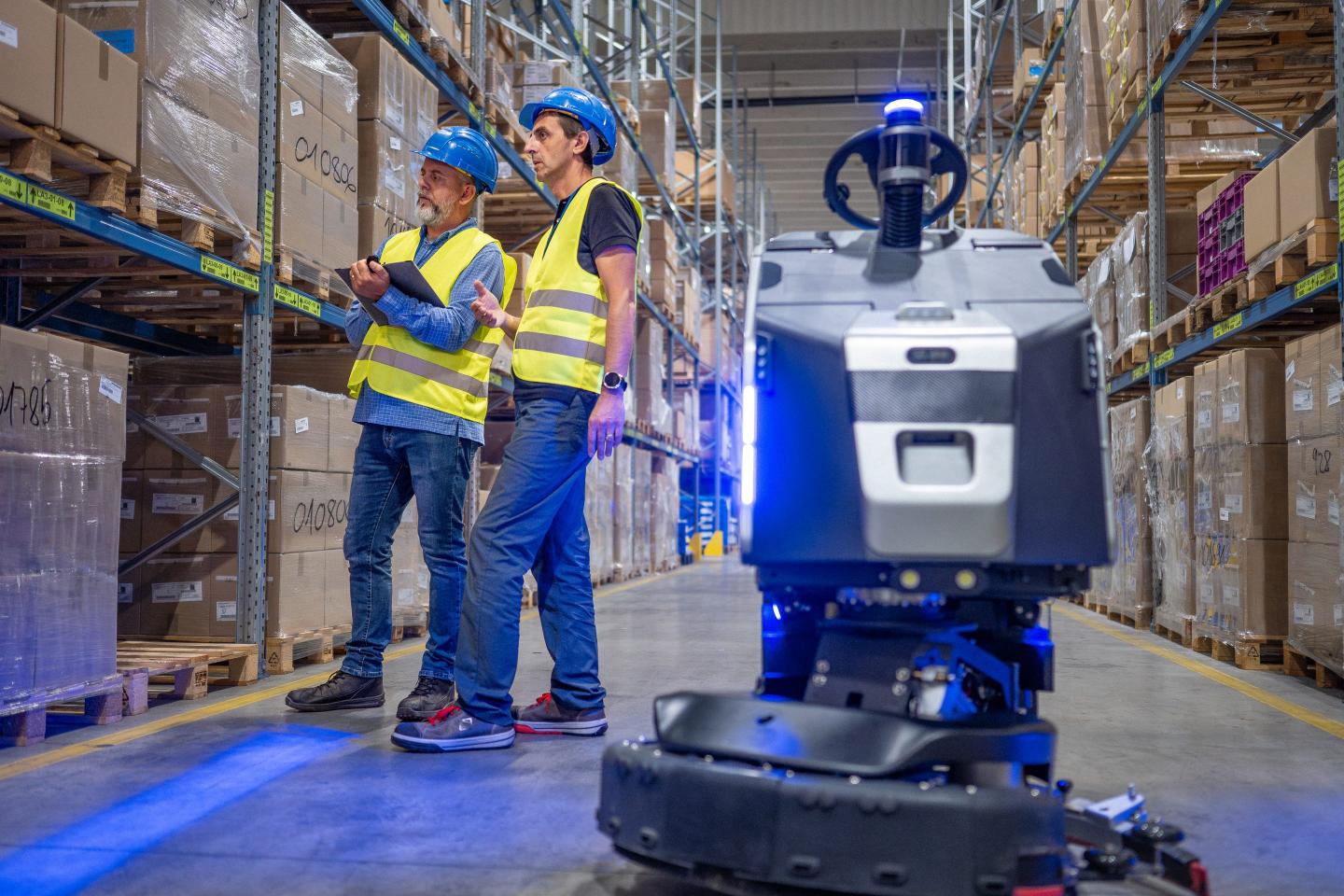
Walmart has been toying with advanced tech for years. AI-powered robots work alongside humans in Walmart warehouses to efficiently sort and package products; algorithms have been used to determine optimal pricing strategies; and the tools predict product demand to ensure that stores are stocked with popular items.
This year, the company has embarked on an AI skills push with its employees—and was quick to reassure staffers about the safety of their jobs.
This February, the retail giant announced that its 1.6 million U.S. and Canadian employees would receive free AI training. Both Walmart’s frontline and corporate staffers were equipped with an eight-hour program on the fundamentals of the technology in partnership with Google’s AI Professional Certification. The course covers a broad range of topics—including research, app building, and communication—connected to the newfound tools. And it’s all part of Walmart’s plan to upskill employees for a new way of work. Otherwise, they could get left behind.
Earlier this year, Morris told Fortune that there needs to be thoughtful workforce implementation with AI. A report from Google and Ipsos found that professionals who are fluent in the tools were found to be 4.5 times as likely to have received higher wages than staffers who weren’t digitally savvy. And it’s a concerning gap that highlights the importance of employers’ part to play in the tech transition, Walmart’s chief people officer said.
“We as big employers should be actively engaged in trying to equip our respective employees—in our case associates—to be prepared for a world that is AI-enabled and automated or digitized,” Morris told Fortune last year, adding that it’s “unfortunate” when businesses use AI to cut workers instead of training them for the future.
And there are some real incentives behind reskilling in the AI era. Professionals who strengthen their AI skills may be better set up to take on store leadership roles—and those titles come with much bigger paychecks. For example, Walmart’s top-performing regional managers can earn up to $620,000 annually; corporate positions are also an option. Morris says Walmart’s AI strategy is to set employees up for a successful future.
“We want to make sure that we equip all of our associates with the best tools to allow them to be successful as Walmart continues to reshape as a people-led, tech-powered company,” Morris continued. “But equally so that each of our associates has the ability to navigate their own careers.”