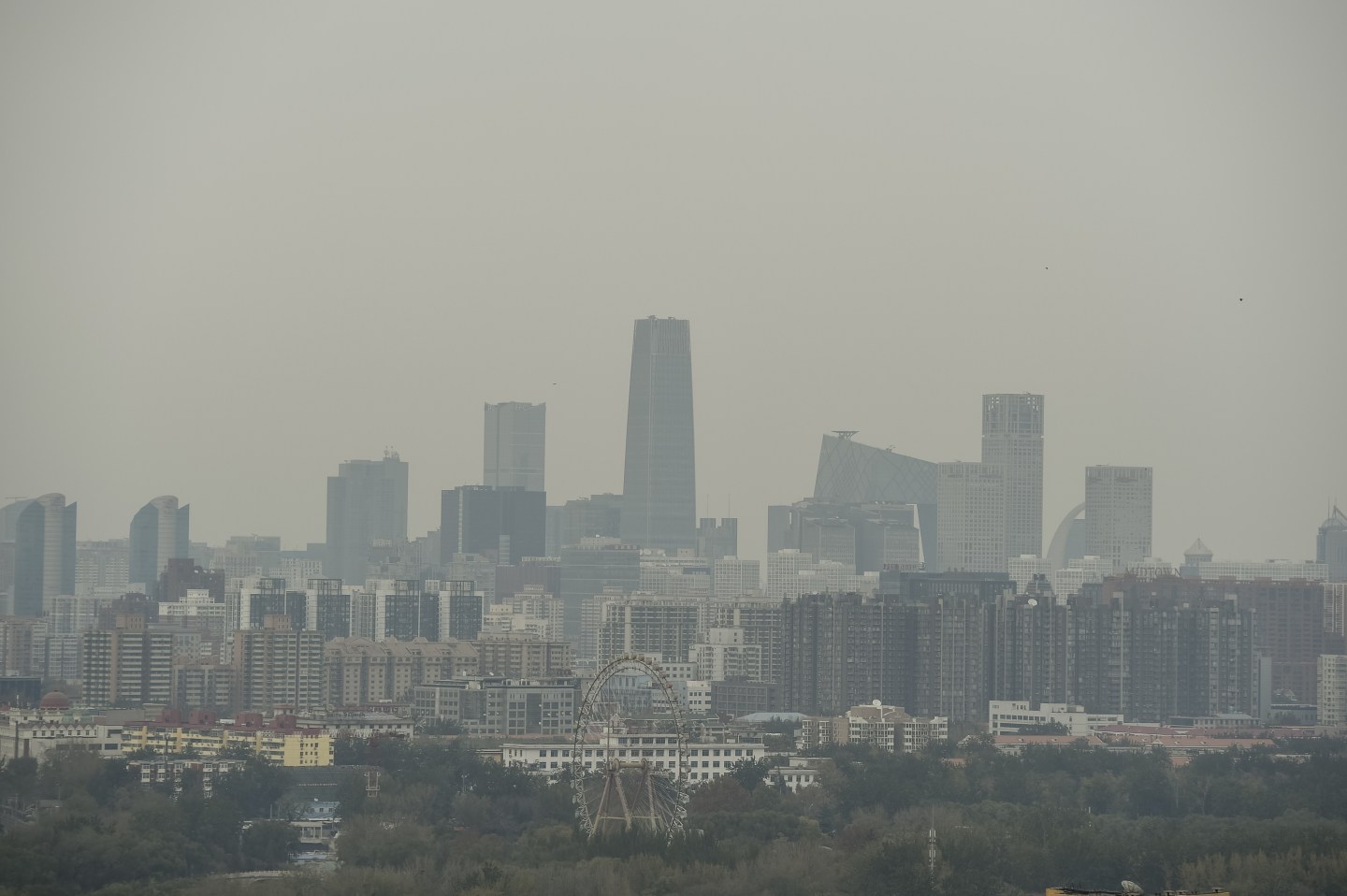
Beijing has spent the last few weeks prepping for the annual Asia-Pacific Economic Cooperation forum, APEC, the biggest world event the capital city has hosted since the 2008 Olympics.
Factories within 125 miles of the city were required to shut down production and half the city’s drivers were ordered off the road for a week to improve air quality. White traffic stripes on some roads were repainted in the middle of the night. Schools were closed for the week. My local DVD store moved its entire collection of pirated Hollywood movies to the basement and replaced the first floor shelves with odd classics like Ali Baba that wouldn’t draw second glances from passing foreign envoys.
In short, China is doing what China does best: coordinate a flawless international meeting to impress visitors with how far it has come. It is the world’s second-largest economy, the heaviest of heavyweights in Asia, and now a regular sparring partner with the U.S. over trade and economic matters.
In contrast to 2008, when China needed to prove itself to the world, this week’s APEC meetings between Fortune 500 CEOs, heads of state, and diplomatic missions, will revolve around what China wants now that it has risen.
The first news out of the meetings was a spat between the U.S. and China over tariffs on tech devices, an indication of the tenor of APEC: the forum is a place for incremental progress on small trade pacts, but mostly a time for goodwill meetings between diplomatic missions and leaders like U.S. President Obama and China’s President Xi Jinping, or Xi and Japan’s Prime Minister Shinzo Abe. Small news will flow out about trade, but APEC is unlikely to produce fireworks.
The U.S. and China remain far apart on climate change, fair trade, spying, and China’s relations in south Asia. The most important headway between the two countries might come from Xi and Obama’s meeting this week. ChinaFile asked four diplomatic watchers what to expect.
Besides political leaders, APEC attracts business leaders to China at an interesting time for foreign companies in the country. A host of things has made China lose some of its luster to multinationals: slowing growth, the rise of stronger Chinese competitors, and questionable investigations into foreign firms, the largest of which involves Qualcomm Inc (QCOM) and a possible $1 billion fine.
A Monday APEC panel about “Accelerating Regional Connectivity: What are the Investment , Infrastructure and Policy Priorities?” features two CEOs in the hot seat in China. Qualcomm’s Steve Mollenkopf is dealing with a year-long investigation into his company’s chipset pricing within China, which Western consultants see as part of China’s move to pressure on Western companies to reduce costs for its domestic smartphone makers who buy Qualcomm’s chips. But China earned some support when probes of Qualcomm recently extended to the U.S. and Europe.
On the same panel is Johnson & Johnson CEO (JNJ) Alex Gorsky, who addressed J&J’s own antimonopoly investigation in China this summer when the company was part of a group of contact lens makers paying $3 million to settle the investigation.
A large part of the APEC confab for Fortune 500 companies will likely involve conversations with Chinese regulators and local governments to smooth relations. Companies rarely talk about their dealings China but news of increased investigations and fines and slowing earnings has put foreign companies on the defensive, a place from which they’ll work to crawl out.
Beijing got both good and bad news this week surrounding APEC: Hong Kong democracy protestors called off plans to travel to the APEC forum, so there’s not much worry about outsiders embarrassing China during its big week. Now it only has to worry about embarrassing itself: The China Meteorological Administration’s spokesman said earlier this week the conditions for smog in Beijing were likely because of the one thing China’s government can’t control: wind patterns.
The agency said the risk of smog is highest on Monday night when Obama and Russian President Vladimir Putin are in town.





