Wall Street shouldn’t expect any big changes now that the Republicans are in control of both houses of Congress.
The Democrats still remain very much in play as they can easily filibuster bills in the Senate or veto them at the executive level. This means issues that are particularly near and dear to Democrats and President Obama, such as healthcare and financial reform (Obamacare and Dodd-Frank), aren’t going anywhere. It also means that any sort of “radical agenda” proposed, promoted, or promised by Republicans in either the Senate or the House is likely to be DOA come January.
But while big changes are out, the Republicans may be able to secure some small changes that could have an impact on a number of key sectors of the economy; namely, energy, finance, and defense. How this all unfolds depends much on the strength of the Republican leadership and its desire to actually get something done, outside of Washington theatrics. This means approaching President Obama with respect, while silencing the self-serving enfants terribles of their party, such as Senator Rand Paul (R-KY) and Senator Ted Cruz (R-TX). In other words, it won’t be easy.
On Tuesday, the Republicans trounced their Democratic opponents in a number of key Senate races to take control of both houses of Congress for the first time in over a decade. But while the Republicans will try to sell the victory as some sort of affirmation of their conservative agenda, the truth is a bit more nuanced.
For example, the Republicans benefitted from a demographic shift in the Senate this election cycle, as several senior Democrats retired from states that were at one time considered to be “blue” states when they first entered office decades ago but which have since turned bright red. This explains the big Republican victories in states like Montana, South Dakota, West Virginia and, to a certain extent, Arkansas. The other major Democratic losses can be attributed to it being a midterm election which, in general, favors Republicans, as they normally fail to attract mainstream, urban, young, women, and minority voters, who normally vote Democrat.
But no matter how it happened, the Republicans will control both houses of Congress come January, like it or not. The question now is, what are they going to do with this new power?
Well, Republicans are supposed to be conservative in nature, so that means they should be defenders of the status quo. Nevertheless, the ideal of what it means to be a Republican has grown ever so vague, especially in the last decade. With the rise of the fringe Tea Party movement, Republicans look as radical as the most liberal Democrat, albeit on the opposite side of the spectrum.
That being said, it’s hard to decipher exactly what the “Republican Agenda” will be come January and what it could mean for the economy and Wall Street. The campaigns this year were heavy on the partisan rhetoric but light on the issues. Repealing Obamacare and rolling back financial reform were two big issues mentioned by Republicans in stump speeches around the country, but with the Democrats still able to comfortably filibuster bills and the President armed with veto power, neither will happen, at least not in the next two years.
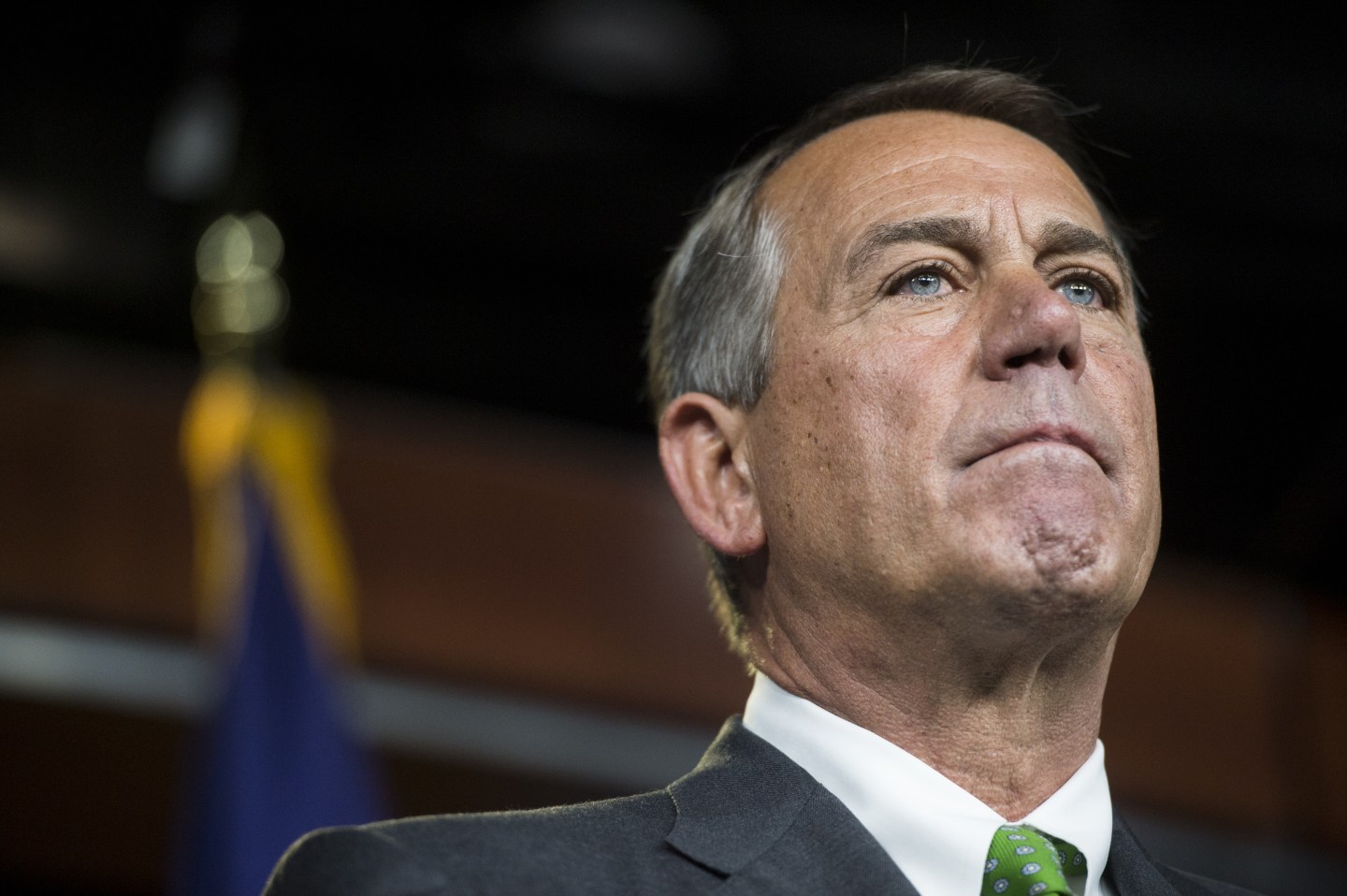
The best road map the Republicans have given the public so far comes in the form of a speech given by John Boehner (R-OH), the House Majority leader, to the American Enterprise Institute in September, where he laid out his vision of what he hoped to accomplish after the elections were over. A great deal of his speech focused on the energy industry and its importance to the economy. He wants to make it easier for drillers to access public lands and wants Congress to finally approve the Keystone Pipeline, which would bring Canadian crude down to Texas so it can be refined or shipped out. But Boehner doesn’t stop there. He believes that the energy boom presents a “once-in-a-generation opportunity to reset our economic foundation from the bottom up.”
Boehner has listed five major changes needed to keep the boom going, which coincides nicely with traditional Republican values, but would probably do nothing to keep the Shale Revolution going, especially with oil prices now below $80 a barrel. They include tax reform, changing the corporate tax code and the repatriation of foreign earnings; austerity, balancing the budget and cutting entitlement programs; legal reform, curbing excessive litigation; regulatory reform (rolling back Dodd-Frank); and education.
Austerity is probably the most dangerous to Wall Street and the economy at this point. If Republicans cut spending to levels needed to balance the budget without raising taxes, economic growth would stall. While the much-dreaded sequester cut federal spending across the board, it didn’t cause the economy to fall back into a recession when it came into force earlier this year. It did, however, shave a few points off this year’s growth rate.
With the presidential elections just two years away, it is highly unlikely that the Republicans would risk derailing the U.S. economy to fulfill some ridiculous notion of balancing the budget, especially with the U.S. able to borrow money for next to nothing. If anything, the U.S. should be borrowing as much as it can before rates start to go up.
Tea Party members among the Republican majority will shriek for austerity, but the leadership won’t let it happen. Meanwhile, the Democrats won’t let legal reform through, given that trial lawyers are one of their major allies and benefit greatly from the current legal system. Any reform that would see caps put on litigation would be better off done at the state level, anyway.
As for reforming the tax code, things could get interesting. The last major change to the corporate tax code was in 1986. Back then, the government was also divided, except that Congress was controlled by the Democrats and the White House was occupied by a conservative Republican. If Republicans and Democrats somehow pass corporate tax reform, it could have a major impact on how companies report their earnings and invest their cash. Those cash-rich companies with lots of foreign earnings stashed abroad, such as Apple, may find it unnecessary to sell public debt and could repatriate billions of dollars back to the U.S. The money could filter through the economy, giving a healthy pop to the economic growth rate. It could also be great news for shareholders, as companies may choose to use the cash to buy back stock or issue fat dividends.
As for rolling back Dodd-Frank, there is little Congress can do to successfully legislate the 849-page bill out of existence. Instead, financial reform will continue to be fought at the rule-making level, with Wall Street lawyers and lobbyists battling it out with the SEC, the Fed, and the CFTC in court, all while wheeling and dealing in back rooms.
Congress could blackmail the CFTC or SEC to delay implementation of certain laws by withholding funding, but that can only go so far. For instance, the Federal Reserve, is self-financed and is not subject to the congressional budgetary process. But they could make life hard for Fed Chair Janet Yellen by hauling her up for hearings and questioning her every move. It could also threaten to resurrect bills that call for the Fed to be “audited,” which would probably be Yellen’s biggest nightmare.
Education is the last big pillar in Boehner’s speech, and it is probably the most vague. Education is handled mostly at the state level, so Congress has little power to reform the nation’s school system even if it wanted to. Congress could offer states large block grants to be put toward education, but that would mean spending money, which would go against balancing the budget.
Despite Boehner’s best intentions and a relatively moderate and reasonable wish list, it would honestly be a miracle if he was able to get anything done in the next two years. It is hard enough for him to gather the necessary votes he needs in his own party to get something to pass, so getting Democrats to follow him as well looks like a tall order, especially with presidential elections only two years away. That probably explains why Boehner’s speech didn’t really promise to do anything concrete—even he’s not sure he can deliver.
But there is one glimmer of hope. Throughout the speech, Boehner didn’t utter the word Obamacare once and dodged questions about healthcare. Maybe he is sending a message that he is finally willing to accept Obamacare and move one? If that’s the case, change may indeed be afoot.