• Home
  • Latest
  • Fortune 500
  • Finance
  • Tech
  • Leadership
  • Lifestyle
  • Rankings
  • Multimedia
FinanceFederal Reserve

Are we really saying goodbye to QE forever?

By
Chris Matthews
Chris Matthews
Down Arrow Button Icon
By
Chris Matthews
Chris Matthews
Down Arrow Button Icon
October 29, 2014, 9:20 AM ET
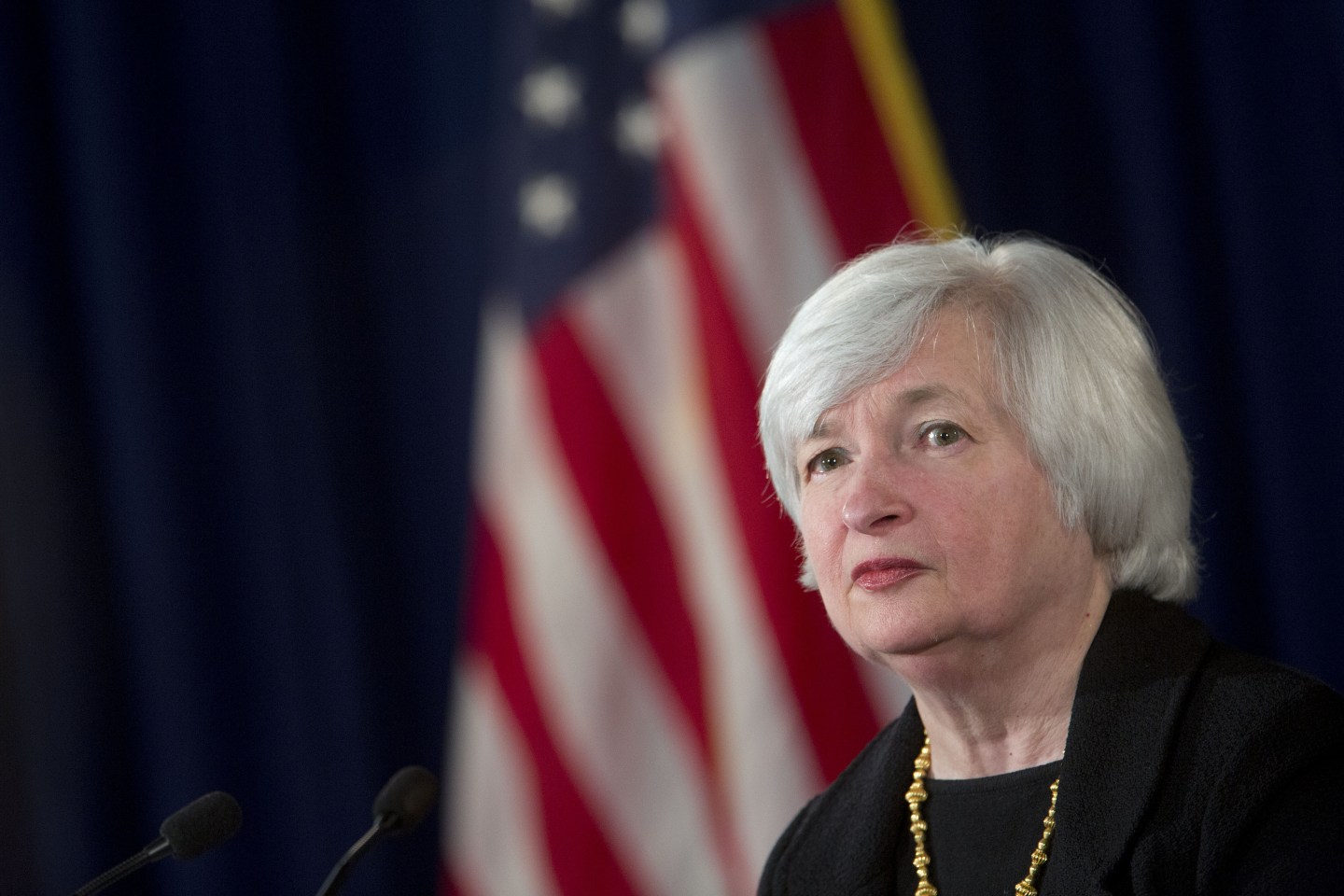
Fed Chair Janet Yellen Holds News Conference Following FOMC Meeting
Janet Yellen, chair of the U.S. Federal Reserve, listens to a question during a news conference following a Federal Open Market Committee (FOMC) meeting in Washington, D.C., U.S., on Wednesday, Sept. 17, 2014. The Federal Reserve maintained a commitment to keep interest rates near zero for a "considerable time" after asset purchases are completed, saying the economy is expanding at a moderate pace and inflation is below its goal. Photographer: Andrew Harrer/Bloomberg via Getty ImagesPhoto by Bloomberg — Getty Images

At long last, it’s here: On Wednesday, the Federal Reserve is expected to announce the end of its stimulative bond-buying program, known as quantitative easing.

Or at least that’s what a lot of headlines will read. Technically, the program won’t be ending because the Federal Reserve will still keep on its books the trillions of dollars of longer-term government debt and mortgage bonds that it has bought since the first round of QE in 2008. And the Federal Reserve argues that keeping these bonds off the market will continue to have stimulative effects.

Federal Reserve officials have made it clear that its cessation of bond buying hinges on the continuing improvement of the U.S. economy. If things get worse, the Fed assures us, they won’t hesitate to start bond buying once again. But the conventional wisdom is that, even if the economy isn’t a strong as we’d like, it’s strong enough to no longer need the Fed to continue to pile on support, and that we’re beginning the process of returning to something that looks more like pre-crisis Fed policy.

It would be nice if market participants could actually agree on what all these years of bond buying has done for the economy. But they can’t. So it’s not surprise that why no one can agree on what the end of QE will actually mean for the markets or the economy.

Take, for instance, the disconnect between the Federal Reserve’s own predictions for inflation and the future path of interest rates and what the bond markets think will happen. As Jim O’Sullivan, chief U.S. economist at High Frequency Economics, points out in a recent note to clients, the bond market is predicting that inflation will continue to fall below the Fed’s goals and that interest rates will be 150 basis points below what the Fed is hoping for by the end of 2015.

O’Sullivan thinks that the difference can be summed as a disagreement between the Fed and the bond market over how well the economy will be doing a year from now. The Fed is more optimistic than the bond market when it comes to employment and inflation, and something, eventually “will have to give,” he writes. “We expect bond yields to rise as market expectations for Fed policy adjust.” Even a scenario in which the Fed ends up “lowering their projections somewhat,” Sullivan argues, “would entail higher bond yields.”

But others point out that the Fed has been consistently overoptimistic in recent years, so why should we expect anything different next year? Jim Bianco, president of Bianco Research, points to recent comments by St. Louis Federal Reserve Bank President James Bullard that declining inflation expectations suggest that the central bank should hold off ending QE altogether. Bullard’s about-face on QE, which just a few months ago he was certain would end this fall, is evidence of the Fed’s unmerited optimism. As Bianco said last week in a conference call with clients:

I have argued and will continue to argue that the Fed is going to get out of QE on the October 28th meeting. They’re going to taper $15 billion and they’re done. If you ask the Fed whether they are done with QE forever, they will tell you, “Yes.” If you put them under truth serum and ask them that, they would still tell you, “Yes.” As was the case after QE1 and after QE2, they were dead serious—“We’re done. This experiment is done forever.”

Then, we had a 17% correction in stocks after QE1 ended and the Fed freaked out and gave us more money printing to stop it (QE2). When QE2 ended stocks had a 20% correction and again the Fed freaked out and gave us Operation Twist. This eventually morphed into more money printing.

In other words, the Fed said it was done before, but that’s only because it was too optimistic about the future health of the economy. So the central bank may end QE tomorrow, but the chances that the Fed will rev up its bond-buying machine in the near future are significant.

Bianco believes the main goal of QE is to prop up the stock market with the hope that an expensive stock market will give people the confidence to spend. Fed officials would probably argue that higher asset prices are merely a second-order effect of their policy and that they are primarily trying to lower interest rates in an effort to get businesses to invest. But either way, the policy requires growth in demand to organically materialize within the economy so that there are people and firms willing to invest at these new low interest rates.

And it’s this last part that really hasn’t come to fruition. Job gains continue to accelerate, but wage growth is flat. Economic growth in 2014 might end up a tick above last year, but it’s still far below what you would normally see in a recovery. To believe Wednesday will truly mark the beginning of the end of Fed stimulus, you’d have to believe that we are in the beginning stages of a legitimately robust recovery. There’s some evidence to support this notion, but don’t expect the jury to return with a decision anytime soon.


About the Author
By Chris Matthews
See full bioRight Arrow Button Icon

Latest in Finance

Finance
Lorem ipsum dolor sit amet, consectetur adipiscing elit, sed do eiusmod tempor incididunt ut labore et dolore magna aliqua. Ut enim ad minim veniam
By Fortune Editors
October 20, 2025
Finance
Lorem ipsum dolor sit amet, consectetur adipiscing elit, sed do eiusmod tempor incididunt ut labore et dolore magna aliqua. Ut enim ad minim veniam
By Fortune Editors
October 20, 2025
Finance
Lorem ipsum dolor sit amet, consectetur adipiscing elit, sed do eiusmod tempor incididunt ut labore et dolore magna aliqua. Ut enim ad minim veniam
By Fortune Editors
October 20, 2025
Finance
Lorem ipsum dolor sit amet, consectetur adipiscing elit, sed do eiusmod tempor incididunt ut labore et dolore magna aliqua. Ut enim ad minim veniam
By Fortune Editors
October 20, 2025
Finance
Lorem ipsum dolor sit amet, consectetur adipiscing elit, sed do eiusmod tempor incididunt ut labore et dolore magna aliqua. Ut enim ad minim veniam
By Fortune Editors
October 20, 2025
Finance
Lorem ipsum dolor sit amet, consectetur adipiscing elit, sed do eiusmod tempor incididunt ut labore et dolore magna aliqua. Ut enim ad minim veniam
By Fortune Editors
October 20, 2025

Most Popular

Finance
Lorem ipsum dolor sit amet, consectetur adipiscing elit, sed do eiusmod tempor incididunt ut labore et dolore magna aliqua. Ut enim ad minim veniam
By Fortune Editors
October 20, 2025
Finance
Lorem ipsum dolor sit amet, consectetur adipiscing elit, sed do eiusmod tempor incididunt ut labore et dolore magna aliqua. Ut enim ad minim veniam
By Fortune Editors
October 20, 2025
Finance
Lorem ipsum dolor sit amet, consectetur adipiscing elit, sed do eiusmod tempor incididunt ut labore et dolore magna aliqua. Ut enim ad minim veniam
By Fortune Editors
October 20, 2025
Finance
Lorem ipsum dolor sit amet, consectetur adipiscing elit, sed do eiusmod tempor incididunt ut labore et dolore magna aliqua. Ut enim ad minim veniam
By Fortune Editors
October 20, 2025
Finance
Lorem ipsum dolor sit amet, consectetur adipiscing elit, sed do eiusmod tempor incididunt ut labore et dolore magna aliqua. Ut enim ad minim veniam
By Fortune Editors
October 20, 2025
Finance
Lorem ipsum dolor sit amet, consectetur adipiscing elit, sed do eiusmod tempor incididunt ut labore et dolore magna aliqua. Ut enim ad minim veniam
By Fortune Editors
October 20, 2025
Rankings
  • 100 Best Companies
  • Fortune 500
  • Global 500
  • Fortune 500 Europe
  • Most Powerful Women
  • Future 50
  • World’s Most Admired Companies
  • See All Rankings
Sections
  • Finance
  • Leadership
  • Success
  • Tech
  • Asia
  • Europe
  • Environment
  • Fortune Crypto
  • Health
  • Retail
  • Lifestyle
  • Politics
  • Newsletters
  • Magazine
  • Features
  • Commentary
  • Mpw
  • CEO Initiative
  • Conferences
  • Personal Finance
  • Education
Customer Support
  • Frequently Asked Questions
  • Customer Service Portal
  • Privacy Policy
  • Terms Of Use
  • Single Issues For Purchase
  • International Print
Commercial Services
  • Advertising
  • Fortune Brand Studio
  • Fortune Analytics
  • Fortune Conferences
  • Business Development
About Us
  • About Us
  • Editorial Calendar
  • Press Center
  • Work At Fortune
  • Diversity And Inclusion
  • Terms And Conditions
  • Site Map
  • Facebook icon
  • Twitter icon
  • LinkedIn icon
  • Instagram icon
  • Pinterest icon

Latest in Finance

A smartphone displaying the Google Gemini logo.
AIEye on AI
As ‘agentic commerce’ gains ground, companies shouldn’t put too much faith in ‘GEO,’ one industry insider warns
By Jeremy KahnJanuary 13, 2026
3 hours ago
BankingDebt
Why the $38 trillion national debt doomed Fed independence regardless of the Trump/Powell drama, top economist says
By Eva RoytburgJanuary 13, 2026
3 hours ago
bastian
Economyearnings
Delta sees wealthy high fliers leading to another record year—but its CEO sees the main cabin ‘struggling greatly’
By Nick LichtenbergJanuary 13, 2026
3 hours ago
The Synchrony Bank Logo on a green layered background.
Personal FinanceCertificates of Deposit (CDs)
Synchrony Bank CD Rates 2026
By Joseph HostetlerJanuary 13, 2026
3 hours ago
AIGoldman Sachs Group
‘Humans could go the way of horses’: Goldman calculated how bad the AI ‘job apocalypse’ will be—and its analysts were pleasantly surprised
By Jim EdwardsJanuary 13, 2026
5 hours ago
Mark Zuckerberg
Future of WorkMeta
Meta is changing its performance review to reward output over effort, taking a page from Amazon and X
By Jake AngeloJanuary 13, 2026
5 hours ago

Most Popular

placeholder alt text
Economy
Treasury spent $276 billion in interest on the national debt in the final three months of 2025, says the CBO—up $30 billion from a year prior
By Eleanor PringleJanuary 12, 2026
1 day ago
placeholder alt text
Economy
‘Sell America’: Investors dump U.S. assets in fear of the end of Fed independence
By Jim EdwardsJanuary 12, 2026
1 day ago
placeholder alt text
Newsletters
The oil CEO who stood up to Trump is a follower of the disciplined 'Exxon way' and has a history of blunt statements
By Jordan BlumJanuary 13, 2026
12 hours ago
placeholder alt text
Tech
Elon Musk asked people to upload their medical data to X so his AI company could learn to interpret MRIs and CT scans
By Sasha RogelbergJanuary 11, 2026
2 days ago
placeholder alt text
Success
An exec at $62 billion giant Colgate says Gen Z workers, despite getting flak for being woke and lazy, are actually ‘pushing us to get better’
By Emma BurleighJanuary 10, 2026
3 days ago
placeholder alt text
Economy
The longer the Supreme Court delays its tariff decision, the better it is for President Trump
By Jim EdwardsJanuary 13, 2026
11 hours ago

© 2025 Fortune Media IP Limited. All Rights Reserved. Use of this site constitutes acceptance of our Terms of Use and Privacy Policy | CA Notice at Collection and Privacy Notice | Do Not Sell/Share My Personal Information
FORTUNE is a trademark of Fortune Media IP Limited, registered in the U.S. and other countries. FORTUNE may receive compensation for some links to products and services on this website. Offers may be subject to change without notice.