Not many people are built for the long hours, high stress, target-on-your-back reality that comes with running a large company. You’re constantly subject to the demands of the board of directors, upset customers, and annoyed employees, all while attempting to steer a company to profitability.
Of course, it doesn’t always go swimmingly.
This year, we’ve seen a rash of infighting and outrageous behavior that has led to a number of CEOs to quit or be shown the door. Luxottica Group, the largest eyewear maker in the world, shuffled out their second CEO in less than two months last week, following a struggle over how much control should be given to the founder of the company, according to reports.
American Apparel (APP) finally cut ties with its brash founder Dov Charney in June in the wake of one among many claims of misconduct. Online advertising platform RadiumOne fired its CEO following a domestic abuse scandal. Stadium food vendor Centerplate’s CEO stepped down after video showed him kicking a dog in an elevator. Finally, “Bond King” Bill Gross left Pimco, the company he founded, to join competitor Janus in the midst of reports that he was to be fired the next day.
Then again, CEO departures aren’t all tabloid-fodder. Many leaders step down gracefully, without treating the organization like a forgotten bachelor pad. Look at J.C. Penney (JCP), which recently named Marvin Ellison as CEO-in-waiting until Mike Ullman retires in August 2015. Or even Oracle (ORCL), whose founder Larry Ellison decided to step aside and officially yield chief executive duties to Safra Catz and Mark Hurd.
In a time when work-life balance seems ever-more enticing while CEO pay knows no bounds, it’s refreshing to find examples of leaders stepping down without poor results, scandal, or even legal issues following in their wake.
Here are five CEOs who knew how to lead, even if it meant realizing that the company would be a better place without them.
Gerard J. Arpey, AMR
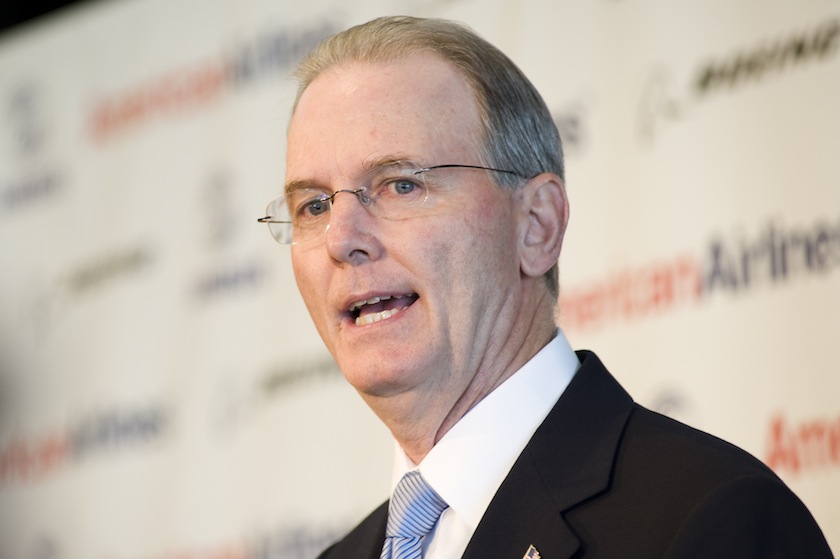
Declarations of bankruptcy have become an industry norm for airlines. By doing so, an airline can re-negotiate with unions and rid itself of unwanted costs. But in 2011, when AMR Corp.—parent of American Airlines—prepared to file its papers, the biggest opponent of the move was CEO and Chairman Gerard J. Arpey. He didn’t support the decision because he didn’t believe in walking away from commitments, like pensions, to appease investors.
“I believe it’s important to the character of the company and its ultimate long-term success to do your very best to honor those commitments,” Arpey told D. Michael Lindsay, the president of Gordon College, writing for The New York Times months before the bankruptcy decision. “It is not good thinking—either at the corporate level or at the personal level—to believe you can simply walk away from your circumstances.”
Arpey quit to let someone with experience handling bankruptcies to take over, despite the board’s request that he stay. He now works in private equity at the Emerald Creek Group.
Bill Gates, Microsoft

It may be easier to quit the company you founded when you’re one of the wealthiest men in the world. But few uber-rich CEOs have taken the lead in philanthropic causes like Bill Gates.
In 2008, Gates announced that he would step away from the day-to-day operations at Microsoft (MSFT) (he resigned as CEO in 2000, but remained an integral part of the daily strategy at Microsoft as chief software architect until 2008) to devote more time to the Bill and Melinda Gates Foundation. He remained Microsoft’s chairman through 2014.
Meanwhile, Gates has led initiatives to increase the availability of the polio and malaria vaccine across the world, improve world hunger through a $40 million agriculture research program. He even signed on to Warren Buffett’s Giving Pledge, committing a majority of his fortune to charity once he passes away.
Gates hasn’t avoided controversial topics. He stepped up efforts to reform the U.S. educational system, trumpeting the Common Core standards, which provide uniform curriculum guidelines for all American students. Forty-three states and the District of Columbia have adopted the standards. But critics have circled, arguing the rules have produced limited results. Still, it represents one of the largest education reforms in U.S. history.
Coby Brooks, Hooters

When Coby Brooks took over as the head of the restaurant chain known for fun-loving, scantily clad waitresses, it was wrapped in tragedy. His father, who bought the restaurant in 1984 and turned it into a national chain, had just passed away. The elder-Brooks, Robert, died in 2006, leaving 30% to Coby, 30% to a younger daughter, and the rest to various family members and organizations. Robert’s second wife, however, was not pleased with her share, which was reportedly for $1 million a year for 20 years. So she sued for additional control of the company. This led Hooters down a three-year battle for ownership.
Finally, in 2009, the two sides settled, but it forced the younger Brooks to raise funds to keep the company running. Instead of sticking around, he sold the chicken wing chain to a group of investors. Coby became an early investor in another “breastaraunt” chain, Twin Peaks, which has increased its foothold to nearly 60 locations across the country in less than 10 years. Like father, like son.
Meg Whitman, eBay
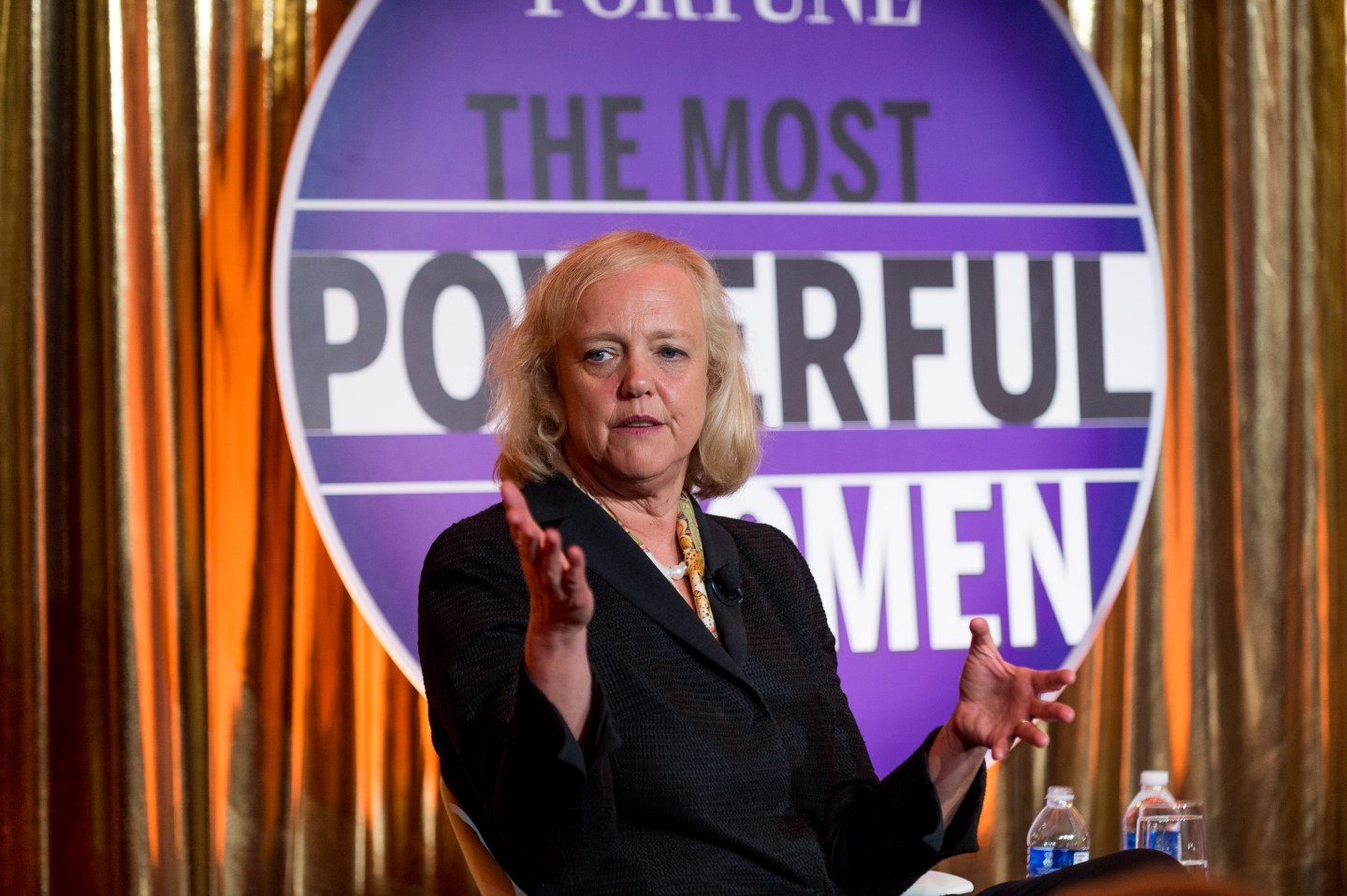
When Meg Whitman joined eBay in 1998, the e-commerce auction site was just a small, quirky startup that used company-wide meetings and candy jars to determine its strategy. But it had grown significantly in a short period, convincing Whitman to join the firm. Good thing she did, as she grew the company to over $8 billion in sales by the time she left in 2008 as one of the richest women in America.
Despite her success, investors wanted to see significant change at eBay (EBAY). A $2.8 billion purchase of Internet telephone service Skype never panned out, while Amazon’s growth began to affect eBay’s bottom line. But really, it was just time. Whitman had long said that 10 years was the term limit for an effective CEO. She stayed true to her word.
Whitman decided to try her hand at politics, seeking the California governor’s seat in 2010. She lost to Democrat Jerry Brown.
Whitman ultimately wound up running Hewlett-Packard (HPQ). In October, she announced that the tech giant would split into two, leaving her as the head of the corporate technology unit and chair of the consumer hardware business.
Mohamed El-Erian, Pimco

Mohamed El-Erian had many reasons to leave bond trading firm Pimco at the start of 2014. His boss, Bill Gross, had bet large on the notion that bonds would return to their profitable past, but it had yet to come to fruition. Investors began to flee the firm’s flagship Total Return Fund. And then there were the reports that Gross’ behavior had grown erratic, that he had been fighting with many employees, including El-Erian. But the final straw had little to do with Gross; instead, it was a sign from El-Erian’s daughter.
Writing for Worth Magazine, El-Erian told the story of one night, when he was urging his daughter to brush her teeth. In response, she provided “a list that she had compiled of her important events and activities that I had missed due to work commitments.
“Talk about a wake-up call,” El-Erian wrote.
Allianz, Pimco’s parent company, hired El-Erian as a chief economic adviser, where he works part-time. Proof that work-life balance is attainable for some.