In September, one of the top hospitals in Texas (ranked 15 out of 620 by U.S. News and World Report) sent home a Liberian patient with a 103-degree temperature without even considering the Ebola virus. Despite 38 years of knowledge about the virus and its risks, U.S. hospitals and the CDC are unprepared for the real-world consequences of an Ebola crisis on national soil.
What is the possibility that now, six years after the financial crisis, banks and regulators will be able to stop the next financial contagion in its tracks? The short answer: slim to none. But that doesn’t mean we should give up.
In August, the Federal Reserve and the FDIC rejected 11 megabanks’ living wills—plans that were supposed to outline the actions each bank would take in the event of financial distress or insolvency. Regulators want banks to have living wills to avoid the kind of downward spiral and economic distress that occurred in 2008 and to ensure taxpayers don’t pick up the tab for bank failures next time around.
As part of its rebuke of the living will submissions, the Federal Reserve and FDIC asked banks to address the way in which financial contracts (i.e. derivatives) would be unwound when a bank became insolvent. On October 11, 18 global banks responded, addressing cross border contracts with an agreement that will become effective January 1, 2015.
Rather than immediately rush in to close out financial contracts with a bank going under (which accelerated Lehman Brothers’ downfall), non-U.S. banks that have signed on will give participating U.S. banks undergoing orderly liquidation until the next business day at 5 p.m. eastern to be deemed creditworthy before they rush in ahead of other creditors to close out their contracts. This time period mirrors the orderly liquidation timeframe in Title II of Dodd-Frank financial reform legislation.
The U.S. banks covered include the biggest derivatives holders, JPMorgan, Citigroup, Goldman Sachs, Bank of America, and Morgan Stanley.
The Federal Reserve and FDIC welcomed the October 11 announcement, but noted that they “look forward to the continuation of this important work.” And there is much more to do. The agreement does not yet address U.S. regulators’ requests to handle bankruptcy cases. The International Swaps and Derivatives Association, ISDA, says U.S. regulators will have to make regulatory changes before that happens.
The agreement announced is a minor improvement, Bart Naylor, financial policy advocate at Public Citizen, told me. Naylor is concerned about the speculative use of financial contracts by the banks and the privileged rights that they still enjoy. In that sense, a bank is like “a gambling addict who plays the ponies [and] is in debt to all his family and neighbors to cover old bets. He dies. The mobsters to whom he still owes for losing bets come into his house and take enough jewelry and furniture to cover those losses. His family and neighbors can take the rest, but there’s unlikely to be enough to cover their loans.”
Will the agreed upon grace period be that useful? Can banks, even with adequate plans, possibly have a chance of being deemed creditworthy by the next business day?
The history of Lehman shows the difficulties, Naylor says. A recent New York Times report describes that when the New York Fed was debating what to do about the investment bank, some at the regulator thought Lehman was solvent but other bankers “could not decide.” Valuing the assets of a complex bank is not an overnight affair.
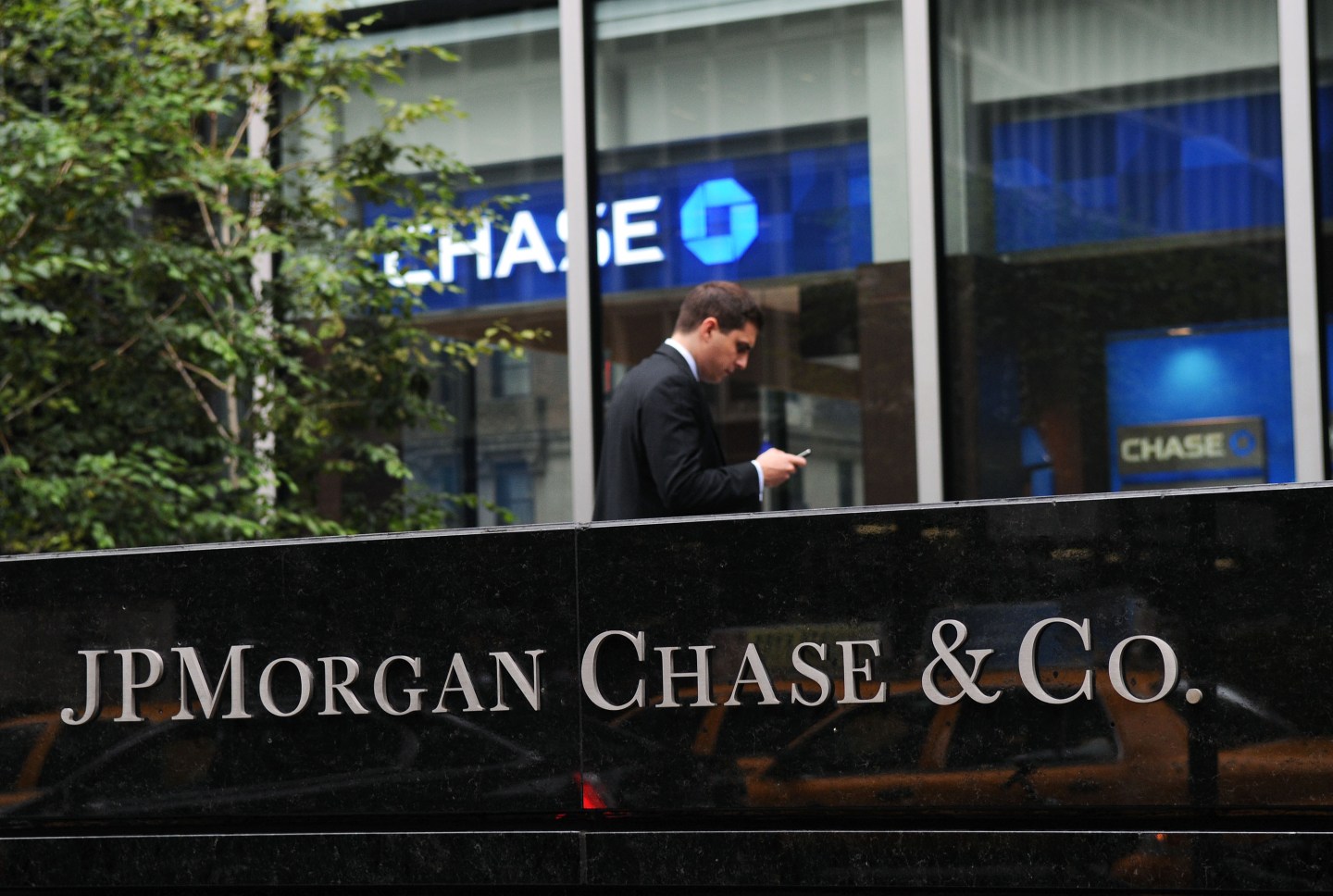
In the same way that most people don’t fully grasp the extent and severity of income inequality in the U.S., many people also don’t understand the sheer size of U.S. bank derivatives holdings and the concentration of those contracts among just a few firms. According to the U.S. Office of the Comptroller of the Currency, “four large commercial banks represent 93% of the total banking industry notional amounts” (i.e. the face amounts used to calculate the payments on derivatives) — “and 86.3% of industry NCCE” (net current credit exposure). Those four banks are JPMorgan (JPM), Citigroup (C), Goldman Sachs (GS), and Bank of America (BAC). The report shows that JPMorgan’s holding company, with (just) $2.5 trillion in assets, has over $68 trillion in notional derivatives.
Existing rules authorize federal regulators to address bank practices that threaten financial stability. But will regulators act? Consider the recent revelations about the firing of New York Fed bank examiner Carmen Segarra after she tried to hold Goldman Sachs accountable for weaknesses in its conflict of interest policies following the financial crisis. “Regulators are captured, they are bullied by members of Congress who hear from bank lobbyists, and these members don’t hear much from their constituents about the dangers because this area is too complex, not urgent/immediate,” Naylor told me in an email. “So [this October 11 agreement] is what a few good regulators could negotiate in this dynamic.”
In math, derivatives help us determine the slope of a line. Right now, banks’ use of derivatives and AWOL living wills leave us on a slippery slope with far too little being done too slowly. Weak rules and useless living wills could affect more U.S. lives than Ebola ever will. We will only harm ourselves by remaining complacent and keeping silent.
Eleanor Bloxham is CEO of The Value Alliance and Corporate Governance Alliance, an independent board education and advisory firm she founded in 1999. She has been a regular contributor to Fortune since April 2010 and has advised analysts, regulators, shareholders, and banks of every size on the economics of financial services.