• Home
  • Latest
  • Fortune 500
  • Finance
  • Tech
  • Leadership
  • Lifestyle
  • Rankings
  • Multimedia

Trendingnow

1

Nvidia CEO Jensen Huang admits he criticizes everything his 42,000-plus employees show him: ‘You can’t go a day without some criticism’

2

Jeff Bezos wants the bottom half of earners to pay zero income tax—he says nurses making just $75K should save $12K a year

3

The U.S. campaigned to host the World Cup. Now soccer fans will trade their countries' train system for the U.S.'s 'D' rated infrastructure

1

Nvidia CEO Jensen Huang admits he criticizes everything his 42,000-plus employees show him: ‘You can’t go a day without some criticism’

2

Jeff Bezos wants the bottom half of earners to pay zero income tax—he says nurses making just $75K should save $12K a year

3

The U.S. campaigned to host the World Cup. Now soccer fans will trade their countries' train system for the U.S.'s 'D' rated infrastructure
FinanceInvesting

Why is the market sliding so hard, so fast?

Shawn Tully
By
Shawn Tully
Shawn Tully
Senior Editor-at-Large
Down Arrow Button Icon
Shawn Tully
By
Shawn Tully
Shawn Tully
Senior Editor-at-Large
Down Arrow Button Icon
October 15, 2014, 4:38 PM ET
Stock Market Opens After One Day After Dow Plunges Over 200 Points
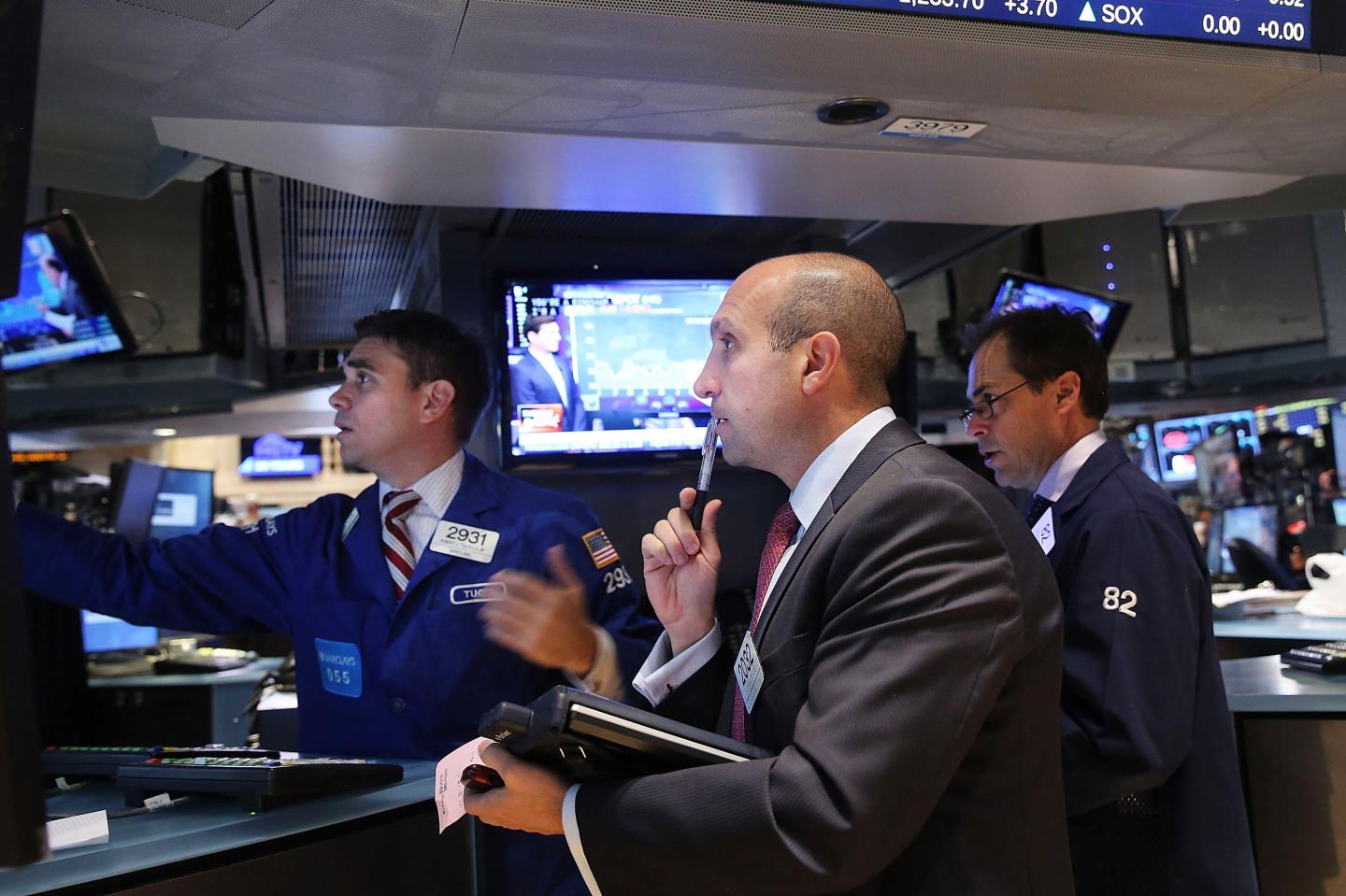
NEW YORK, NY - OCTOBER 14: Traders work on the floor of the New York Stock Exchange (NYSE) during early trading on October 14, 2014 in New York City. In morning trading the Dow was up over 50 points following a drop yesterday of over 200 points as investors grow concerned about the global economy falling back into recession. (Photo by Spencer Platt/Getty Images)Photo by Spencer Platt — Getty Images

Why is the stock market sliding so fast? Why do the Wall Street mavens who were predicting big gains for 2014 suddenly look so wrong?

In a day of elastic swings, though always in negative territory, the S&P shed 15 points on Wednesday. It’s the most recent leg in a series of sharp daily declines that have erased virtually all of the once-sumptuous market advance for 2014.

On September 2, the S&P stood at an all-time high of 2017, handing investors near double-digit gains in just eight months. In a flash, the S&P has retraced a parabola that puts it back nearly to where it started. The Dow is faring even worse. Following its 173-point decline on Wednesday, the index has now dropped 2.6% from the start of 2014.

It’s easy to find logical-sounding reasons for the sudden reversal. The fall in oil prices is frequently cited as a major catalyst. The collapse of Europe’s over-advertised recovery also appears to be spooking investors. The military conflicts flaring across the globe are a credible culprit as well.

All of these factors may be hastening the downturn. Or they may not. In each case, the argument that they have little or no effect is just as convincing as the case that they’re decisive. For example, the drop in the price of crude will boost profits for airlines and truckers, and pad folks’ wallets for spending at restaurants and auto showrooms. That will largely offset the drag in growth and profits from oil production. The bad news in Europe has been mounting for months—just as the S&P hit its historic peak. The story of escalating world conflict is similar.

And much of the recent news appears reasonably favorable to markets. The dovish Fed minutes released on October 8 sparked a big market rally and nourished hopes that interest rates will remain extremely low for many months to come. Earnings have been mixed, but hardly disastrous, with marquee names such as J&J (JNJ), Alcoa (AA), and Costco (COST) beating estimates, offsetting disappointing results at Monsanto (MON) and Yum Brands (YUM).

So the question is, why now?

The correct answer is that whenever stocks drop, the “experts” summon all kinds of after-the-fact reasons. Meanwhile, similar things happened during many other periods when stocks fared just fine. Why didn’t the market go through a major correction when Ukraine erupted earlier this year? The market trend over a month or even much longer tells us nothing about where prices will be in a year.

All we know is what already happened. And what has happened tells us that investors, right now, want to be paid in the future for taking the risk of owning stocks.

Put simply, the market is vulnerable to a big drop now because prices are so high. That makes stocks more vulnerable to a correction. The fall in the S&P from 2017 to 1865 has pushed the price-to-earnings multiple, based on one year of trailing earnings, from 20.2 to 18.6. A reasonable measure of future returns is the reverse of the PE, or the earnings yield. By that yardstick, investors can now expect 5.4% annual returns before inflation, versus 4.9% at the market’s peak. So our best conclusion is that investors suddenly decided they weren’t getting paid enough for the volatility and churning anxiety of holding stocks, and they wanted a bigger cushion for living with that uncertainty.

We don’t know if that trend will continue. Still, it’s clear that the drop so far has been relatively small, and that the extra comfort level built into stocks has been slender. The danger is that investors will want a lot more cushion. If they do, share prices will need to drop far, far more.

In fact, the events of recent weeks simply underscore how risky stocks really are. The best argument for today’s high PEs is that equities are now a placid, reliable place that resemble bonds more and more. Just look at how smoothly they’ve risen since the depths of 2009. So if stocks lack the menace of yore, you should be happy to own them even if their returns won’t match the glories of the past.

But churning of the markets over the last few weeks undermines that argument. Who wants to put their nest eggs and emotions through this kind of turbulence without getting paid handsomely? It’s possible that the current selloff marks the start of a giant reset caused by investors’ suddenly deciding equities are a rough ride after all. Or maybe not.

The stock market’s fate is reminiscent of the famous tale from ancient Babylonia—and title of a great John O’Hara novel, known as Appointment in Samara. The fable tells of a servant who saw Death in a marketplace, and in a panic, borrowed a horse from a merchant and galloped off to Samarra, and what he thought was safety. Death approached the merchant, and the merchant told him why the terrified servant had fled. “I wasn’t looking for him here,” Death explained. “I was just surprised to see him in this marketplace, since I have an appointment with him tonight in Samarra.”

Maybe the market will prosper in a Samarra of low expectations. Or maybe it will succumb to the menace that always comes, and few anticipate, when investors want to get paid more, a lot more, for gains that dissolve like a mirage in the desert.

About the Author
Shawn Tully
By Shawn TullySenior Editor-at-Large

Shawn Tully is a senior editor-at-large at Fortune, covering the biggest trends in business, aviation, politics, and leadership.

See full bioRight Arrow Button Icon

Latest in Finance

Finance
Lorem ipsum dolor sit amet, consectetur adipiscing elit, sed do eiusmod tempor incididunt ut labore et dolore magna aliqua. Ut enim ad minim veniam
By Fortune Editors
October 20, 2025
Finance
Lorem ipsum dolor sit amet, consectetur adipiscing elit, sed do eiusmod tempor incididunt ut labore et dolore magna aliqua. Ut enim ad minim veniam
By Fortune Editors
October 20, 2025
Finance
Lorem ipsum dolor sit amet, consectetur adipiscing elit, sed do eiusmod tempor incididunt ut labore et dolore magna aliqua. Ut enim ad minim veniam
By Fortune Editors
October 20, 2025
Finance
Lorem ipsum dolor sit amet, consectetur adipiscing elit, sed do eiusmod tempor incididunt ut labore et dolore magna aliqua. Ut enim ad minim veniam
By Fortune Editors
October 20, 2025
Finance
Lorem ipsum dolor sit amet, consectetur adipiscing elit, sed do eiusmod tempor incididunt ut labore et dolore magna aliqua. Ut enim ad minim veniam
By Fortune Editors
October 20, 2025
Finance
Lorem ipsum dolor sit amet, consectetur adipiscing elit, sed do eiusmod tempor incididunt ut labore et dolore magna aliqua. Ut enim ad minim veniam
By Fortune Editors
October 20, 2025

Most Popular

Finance
Lorem ipsum dolor sit amet, consectetur adipiscing elit, sed do eiusmod tempor incididunt ut labore et dolore magna aliqua. Ut enim ad minim veniam
By Fortune Editors
October 20, 2025
Finance
Lorem ipsum dolor sit amet, consectetur adipiscing elit, sed do eiusmod tempor incididunt ut labore et dolore magna aliqua. Ut enim ad minim veniam
By Fortune Editors
October 20, 2025
Finance
Lorem ipsum dolor sit amet, consectetur adipiscing elit, sed do eiusmod tempor incididunt ut labore et dolore magna aliqua. Ut enim ad minim veniam
By Fortune Editors
October 20, 2025
Finance
Lorem ipsum dolor sit amet, consectetur adipiscing elit, sed do eiusmod tempor incididunt ut labore et dolore magna aliqua. Ut enim ad minim veniam
By Fortune Editors
October 20, 2025
Finance
Lorem ipsum dolor sit amet, consectetur adipiscing elit, sed do eiusmod tempor incididunt ut labore et dolore magna aliqua. Ut enim ad minim veniam
By Fortune Editors
October 20, 2025
Finance
Lorem ipsum dolor sit amet, consectetur adipiscing elit, sed do eiusmod tempor incididunt ut labore et dolore magna aliqua. Ut enim ad minim veniam
By Fortune Editors
October 20, 2025
Fortune Secondary Logo
Rankings
  • 100 Best Companies
  • Fortune 500
  • Global 500
  • Fortune 500 Europe
  • Most Powerful Women
  • World's Most Admired Companies
  • See All Rankings
  • Lists Calendar
Sections
  • Finance
  • Fortune Crypto
  • Features
  • Leadership
  • Health
  • Commentary
  • Success
  • Retail
  • Mpw
  • Tech
  • Lifestyle
  • CEO Initiative
  • Asia
  • Politics
  • Conferences
  • Europe
  • Newsletters
  • Personal Finance
  • Environment
  • Magazine
  • Education
Customer Support
  • Frequently Asked Questions
  • Customer Service Portal
  • Privacy Policy
  • Terms Of Use
  • Single Issues For Purchase
  • International Print
Commercial Services
  • Advertising
  • Fortune Brand Studio
  • Fortune Analytics
  • Fortune Conferences
  • Business Development
  • Group Subscriptions
About Us
  • About Us
  • Press Center
  • Work At Fortune
  • Terms And Conditions
  • Site Map
  • About Us
  • Press Center
  • Work At Fortune
  • Terms And Conditions
  • Site Map
  • Facebook icon
  • Twitter icon
  • LinkedIn icon
  • Instagram icon
  • Pinterest icon

Latest in Finance

American Economist Robert Solow
EconomyProductivity
Employees using AI are working faster, but the economy isn’t more efficient. A look at what happened in the pre-Internet era might explain why
By Tristan BoveMay 27, 2026
6 hours ago
man giving child keys to home
EconomyWealth
A study finds escaping your income bracket no longer means building wealth. That disconnect may be what’s driving consumer pessimism to record highs
By Jake AngeloMay 27, 2026
8 hours ago
crfb
Economynational debt
Interest on the national debt is eating a record 19% of federal revenue — and watchdog warns it will get worse
By Nick LichtenbergMay 27, 2026
9 hours ago
Nvidia CEO Jensen Huang
EconomyWealth
Even if every California billionaire left tomorrow, it would take 25 years for the state to lose as much as it stands to gain from proposed wealth tax
By Tristan BoveMay 27, 2026
9 hours ago
Frustrated man in work meeting
SuccessCareers
Real estate billionaire was called the ‘worst analyst’ at Goldman Sachs—now he says the criticism was the best thing that ever happened to him
By Emma BurleighMay 27, 2026
11 hours ago
new
Big TechObituary
Donald Newhouse saw the internet coming in 2004. His newspapers still weren’t ready
By Scott Mayerowitz and The Associated PressMay 27, 2026
11 hours ago

Most Popular

Nvidia CEO Jensen Huang admits he criticizes everything his 42,000-plus employees show him: ‘You can’t go a day without some criticism’
Success
Nvidia CEO Jensen Huang admits he criticizes everything his 42,000-plus employees show him: ‘You can’t go a day without some criticism’
By Preston ForeMay 26, 2026
1 day ago
Jeff Bezos wants the bottom half of earners to pay zero income tax—he says nurses making just $75K should save $12K a year
Success
Jeff Bezos wants the bottom half of earners to pay zero income tax—he says nurses making just $75K should save $12K a year
By Preston ForeMay 21, 2026
6 days ago
The U.S. campaigned to host the World Cup. Now soccer fans will trade their countries' train system for the U.S.'s 'D' rated infrastructure
Travel & Leisure
The U.S. campaigned to host the World Cup. Now soccer fans will trade their countries' train system for the U.S.'s 'D' rated infrastructure
By Catherina GioinoMay 25, 2026
3 days ago
Sam Altman and Dario Amodei are both walking back their AI jobs apocalypse prophecies as they eye blockbuster IPOs
AI
Sam Altman and Dario Amodei are both walking back their AI jobs apocalypse prophecies as they eye blockbuster IPOs
By Sasha RogelbergMay 26, 2026
1 day ago
Techlash grows in education: 'My daughter went to middle school and was sent home with a screen addiction in her backpack'
North America
Techlash grows in education: 'My daughter went to middle school and was sent home with a screen addiction in her backpack'
By Jocelyn Gecker and The Associated PressMay 26, 2026
1 day ago
Current price of oil as of May 27, 2026
Personal Finance
Current price of oil as of May 27, 2026
By Joseph HostetlerMay 27, 2026
12 hours ago

© 2026 Fortune Media IP Limited. All Rights Reserved. Use of this site constitutes acceptance of our Terms of Use and Privacy Policy | CA Notice at Collection and Privacy Notice | Do Not Sell/Share My Personal Information
FORTUNE is a trademark of Fortune Media IP Limited, registered in the U.S. and other countries. FORTUNE may receive compensation for some links to products and services on this website. Offers may be subject to change without notice.