• Home
  • Latest
  • Fortune 500
  • Finance
  • Tech
  • Leadership
  • Lifestyle
  • Rankings
  • Multimedia

Trendingnow

1

After forcing workers back to the office, Goldman Sachs and JPMorgan Chase are now letting their staff work remotely—but only for the World Cup

2

Markets tumble worldwide as Fed resets expectations: $400 billion wiped off SpaceX stock

3

The Pentagon said Iran War costs $29 billion,but the real cost is closer to $200 billion—and counting

1

After forcing workers back to the office, Goldman Sachs and JPMorgan Chase are now letting their staff work remotely—but only for the World Cup

2

Markets tumble worldwide as Fed resets expectations: $400 billion wiped off SpaceX stock

3

The Pentagon said Iran War costs $29 billion,but the real cost is closer to $200 billion—and counting
FinanceEurope

As Europe’s economy continues to sink, it’s time for Germany to step aside

By
Cyrus Sanati
Cyrus Sanati
Down Arrow Button Icon
By
Cyrus Sanati
Cyrus Sanati
Down Arrow Button Icon
September 5, 2014, 4:10 PM ET
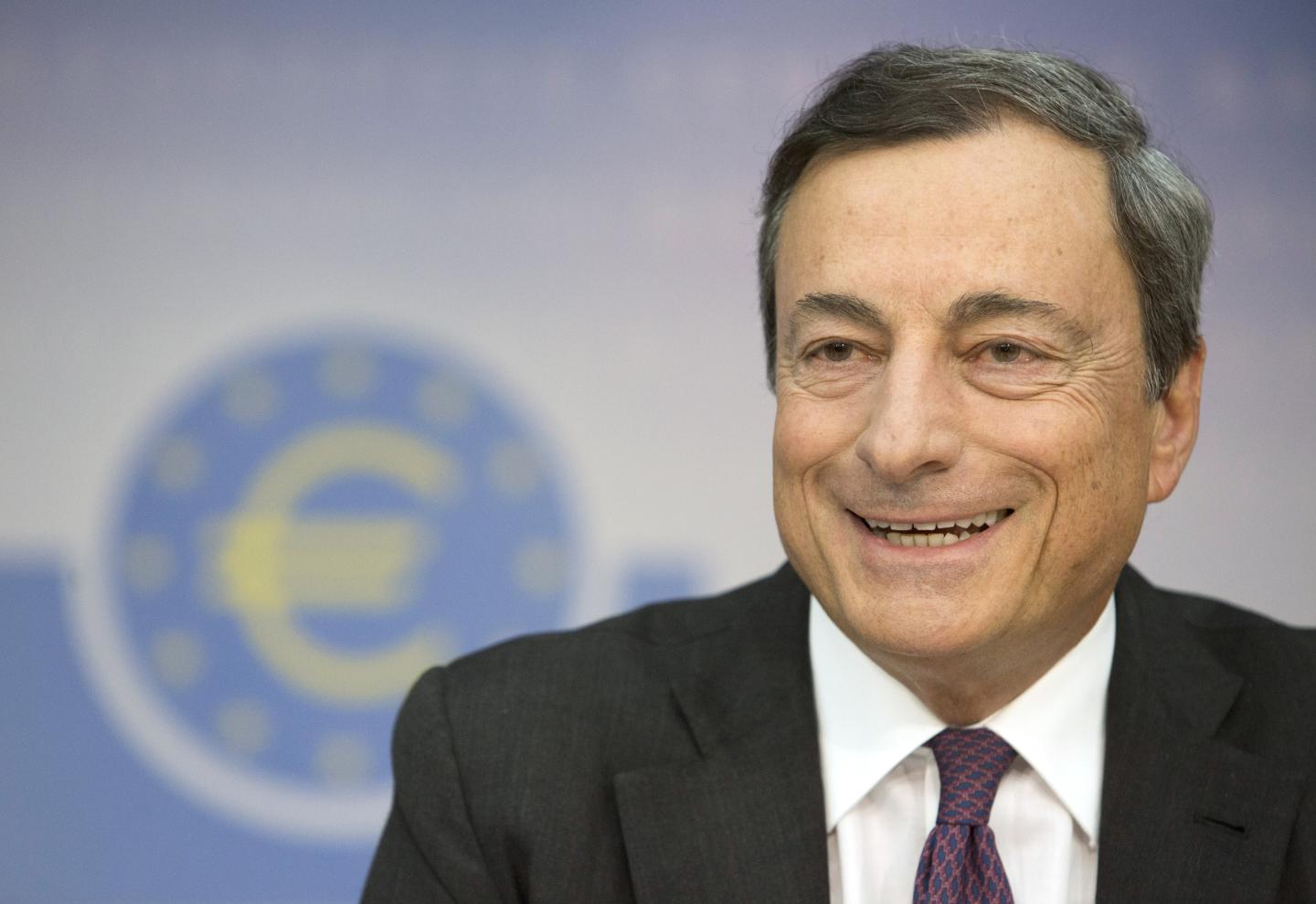
ECB President Mario Draghi Rates Conference
Mario Draghi, president of the European Central Bank (ECB), reacts as he speaks during a news conference to announce the bank's interest rate decision in Frankfurt, Germany, on Thursday, Sept. 4, 2014. The European Central Bank unexpectedly cut interest rates at today's decision to spur economic growth and stave off the threat of deflation. Photographer: Martin Leissl/Bloomberg via Getty ImagesBloomberg via Getty Images
Add Fortune on Google for similar content.

The political and monetary dysfunction of the eurozone continues to hobble the continent’s ability to pull itself out of its long-running economic malaise.

Thursday’s decision by the European Central Bank (ECB) to begin buying up asset-backed securities (ABS) in a bid to revive the continent’s moribund securitization market would have probably happened ages ago if it weren’t for misplaced opposition from core eurozone members, most notably Germany, to growing the ECB’s balance sheet.

Such opposition isn’t rooted in what some believe to be inherently conservative German economic values. Instead, it stems from the base fear that Germany and the other “core” eurozone members are being taken advantage of by their “free-spending” eurozone partners on the periphery. This sort of “us vs. them” attitude has cost the Europeans valuable time in what should have been a fairly easy economic recovery. Given Europe’s sad economic state, it may be time for Germany to step aside and allow the ECB to do its job.

The ECB jolted markets on Thursday by announcing further interest rate cuts across the eurozone. It cut its main benchmark refinancing rate by 10 basis points from 0.15% to 0.05% and did the same for its main depository rate, taking it further into negative territory, from -0.1% to -0.2%. That negative rate basically means that the ECB is essentially charging banks 0.2% interest to park their money with them. When the ECB cut the depository rate to negative back in June, it did so with the hopes that member banks would withdraw their funds from the ECB and start lending it out to businesses.

It hasn’t worked out so well. European banks still aren’t lending as much as the ECB would like them to, even with the negative depository rate. Encouraging banks to lend, especially in today’s tough economic climate, is no simple task. But it is even harder in the eurozone, where fiscal policy (government spending) and monetary policy (central bank action) aren’t coordinated. Politicians in Europe’s core economies, most notably in Germany, have blocked the ECB from taking the sort of aggressive action needed to pull the eurozone out of the mud.

Bailing out banks and governments on Europe’s periphery is understandably unpopular in Germany, so its politicians have had to walk a fine line during the crisis, only agreeing to act when it was absolutely necessary or when a German bank was in trouble. Banks and national governments have been patched up just enough to protect the euro from total collapse. Anything beyond that was considered superfluous. Europe has moved from crisis to crisis, creating an air of instability that has bred investor skepticism, hindering economic growth across the entire continent.

This stands in stark contrast to the swift and coordinated action taken by the U.S. government and the Federal Reserve in 2008 to stabilize its broken banking sector. The Fed, the Treasury Department, and Congress worked together to blast the economy with cash and helped create a mechanism in which troubled banks could offload their bad assets. It didn’t matter if a troubled bank was in New York, North Carolina, or California—the U.S. was united in getting the nation back up and running.

Europe’s fractured response to the economic crisis serves as a reflection of its fractured political system. Angela Merkel was German first; European, second. While many banks in the eurozone have recovered from the financial crisis and are well capitalized, plenty of them, especially those on Europe’s periphery, are effectively insolvent and cannot lend a dime, even if they wanted to.

The recent near-collapse of Portugal’s Banco Espírito Santo this summer is a good example of the current state of affairs. BES was the only major Portuguese bank not to take a government bailout at the height of the eurozone debt crisis, and it was largely seen as a model of good banking. Turns out the bank was basically hiding billions of euros of bad loans it made in Angola years ago and had been funding its operations through short-term borrowing on the commercial paper market. When that paper dried up in the spring, BES was forced to come clean, nearly taking the eurozone down with it in the process.

It would be foolish to think BES was unique or that the problem is confined just to Europe’s periphery. Indeed, at the end of July, Erste Bank, one of Austria’s largest lenders, said it was writing off 1.1 billion euros worth of bad loans and mortgages it made in Eastern Europe, much of which were issued in the run up to the financial crisis.

Mario Draghi, the head of the ECB, has had enough. He is now openly defying the political superstructure of the E.U. and pushing the limits of his office in an effort to finally turn the region’s economy around. Last week, at the annual central banker pow-wow in Jackson Hole, Wyoming, the normally obedient Draghi called on European governments (ahem, Germany) to step up and take a larger role in helping to combat the eurozone’s economic issues. In other words, Germany either needs to get with the program and support him or get out of the way.

On Thursday, Draghi gave a nod to Germany and lowered interest rates, but he also did something for himself by saying he was going to try and restart the securitization markets across the eurozone by purchasing asset-backed securities directly from the banks. This would expand the size of the ECB’s balance sheet, which is basically like printing money, something that Germany has been vehemently opposed to. Nevertheless, Draghi believes that restarting ABS purchases is crucial to getting the banks to lend more as they won’t have to take on all the credit risk themselves—just collect the fees from doing the deals and sell the securities to other investors. He’s probably right, but the ECB will need to make some big purchases to get things going. For that, he will need support from all the major eurozone countries, including Germany.

But Draghi doesn’t want to stop at just buying up ABS. He wants to buy government bonds, too, known as “quantitative easing.” Draghi sees what QE has done in the U.S. and he wants the same thing to happen in Europe. It is unclear how exactly QE would work in the eurozone given that there are 18 sovereign nations to deal with. Whose bonds do you buy and for how much? In any case, the ultimate goal of QE is to instill confidence among investors. QE has been credited for the run-up in the stock market in the U.S. Whether the rally is “real” or not is inconsequential; Draghi just wants a change in sentiment that will ultimately boost the economy out of its hole. Nothing gets someone spending like a new credit card (thanks to those ABS purchases) and seeing their retirement accounts swoon (thank you, QE).

Draghi is testing the waters with the ABS proposal. If Germany doesn’t freak out, he will go full QE. So far, there has only been muted skepticism out of Berlin to his plan, but that’s better than members of the Reichstag threatening to take the ECB to court to try and declare its actions unconstitutional, as some have threatened in the past. With Germany’s economy going nowhere and the rest of Europe sinking, it may be time to let Mario run the show.

About the Author
By Cyrus Sanati
See full bioRight Arrow Button Icon
Add Fortune on Google for similar content.

Latest in Finance

Finance
Lorem ipsum dolor sit amet, consectetur adipiscing elit, sed do eiusmod tempor incididunt ut labore et dolore magna aliqua. Ut enim ad minim veniam
By Fortune Editors
October 20, 2025
Finance
Lorem ipsum dolor sit amet, consectetur adipiscing elit, sed do eiusmod tempor incididunt ut labore et dolore magna aliqua. Ut enim ad minim veniam
By Fortune Editors
October 20, 2025
Finance
Lorem ipsum dolor sit amet, consectetur adipiscing elit, sed do eiusmod tempor incididunt ut labore et dolore magna aliqua. Ut enim ad minim veniam
By Fortune Editors
October 20, 2025
Finance
Lorem ipsum dolor sit amet, consectetur adipiscing elit, sed do eiusmod tempor incididunt ut labore et dolore magna aliqua. Ut enim ad minim veniam
By Fortune Editors
October 20, 2025
Finance
Lorem ipsum dolor sit amet, consectetur adipiscing elit, sed do eiusmod tempor incididunt ut labore et dolore magna aliqua. Ut enim ad minim veniam
By Fortune Editors
October 20, 2025
Finance
Lorem ipsum dolor sit amet, consectetur adipiscing elit, sed do eiusmod tempor incididunt ut labore et dolore magna aliqua. Ut enim ad minim veniam
By Fortune Editors
October 20, 2025

Most Popular

Finance
Lorem ipsum dolor sit amet, consectetur adipiscing elit, sed do eiusmod tempor incididunt ut labore et dolore magna aliqua. Ut enim ad minim veniam
By Fortune Editors
October 20, 2025
Finance
Lorem ipsum dolor sit amet, consectetur adipiscing elit, sed do eiusmod tempor incididunt ut labore et dolore magna aliqua. Ut enim ad minim veniam
By Fortune Editors
October 20, 2025
Finance
Lorem ipsum dolor sit amet, consectetur adipiscing elit, sed do eiusmod tempor incididunt ut labore et dolore magna aliqua. Ut enim ad minim veniam
By Fortune Editors
October 20, 2025
Finance
Lorem ipsum dolor sit amet, consectetur adipiscing elit, sed do eiusmod tempor incididunt ut labore et dolore magna aliqua. Ut enim ad minim veniam
By Fortune Editors
October 20, 2025
Finance
Lorem ipsum dolor sit amet, consectetur adipiscing elit, sed do eiusmod tempor incididunt ut labore et dolore magna aliqua. Ut enim ad minim veniam
By Fortune Editors
October 20, 2025
Finance
Lorem ipsum dolor sit amet, consectetur adipiscing elit, sed do eiusmod tempor incididunt ut labore et dolore magna aliqua. Ut enim ad minim veniam
By Fortune Editors
October 20, 2025
Fortune Secondary Logo
Rankings
  • 100 Best Companies
  • Fortune 500
  • Global 500
  • Fortune 500 Europe
  • Most Powerful Women
  • World's Most Admired Companies
  • See All Rankings
  • Lists Calendar
Sections
  • Finance
  • Fortune Crypto
  • Features
  • Leadership
  • Health
  • Commentary
  • Success
  • Retail
  • Mpw
  • Tech
  • Lifestyle
  • CEO Initiative
  • Asia
  • Politics
  • Conferences
  • Europe
  • Newsletters
  • Personal Finance
  • Environment
  • Magazine
  • Education
Customer Support
  • Frequently Asked Questions
  • Customer Service Portal
  • Privacy Policy
  • Terms Of Use
  • Single Issues For Purchase
  • International Print
Commercial Services
  • Advertising
  • Fortune Brand Studio
  • Fortune Analytics
  • Fortune Conferences
  • Business Development
  • Group Subscriptions
About Us
  • About Us
  • Press Center
  • Work At Fortune
  • Terms And Conditions
  • Site Map
  • About Us
  • Press Center
  • Work At Fortune
  • Terms And Conditions
  • Site Map
  • Facebook icon
  • Twitter icon
  • LinkedIn icon
  • Instagram icon
  • Pinterest icon

Latest in Finance

Top CD rates from major banks June 24, 2026: Chase CDs, Bank of America CDs, Citibank CDs, and more
Personal FinanceCertificates of Deposit (CDs)
Top CD rates from major banks on June 24, 2026: Chase CDs, Bank of America CDs, Citibank CDs, and more
By Joseph HostetlerJune 24, 2026
31 minutes ago
Current price of gold as of June 24, 2026
Personal Financegold prices
Current price of gold as of June 24, 2026
By Danny BakstJune 24, 2026
34 minutes ago
Current price of Ethereum for June 24, 2026
Personal FinanceEthereum
Current price of Ethereum for June 24, 2026
By Joseph HostetlerJune 24, 2026
36 minutes ago
Current price of Bitcoin for June 24, 2026
Personal FinanceCryptocurrency
Current price of Bitcoin for June 24, 2026
By Joseph HostetlerJune 24, 2026
36 minutes ago
Taktile cofounders Maik Taro Wehmeyer (left) and Maximilian Eber (right) stand side by side, smiling at the camera.
Startups & VentureVenture Capital
Exclusive: Taktile raises $110 million from Goldman Sachs, Tiger Global to automate high-stakes financial decisions 
By Camila Grigera NaónJune 24, 2026
39 minutes ago
price-of-oil-06-23-2026
Personal FinanceOil
Current price of oil as of June 24, 2026
By Joseph HostetlerJune 24, 2026
52 minutes ago

Most Popular

After forcing workers back to the office, Goldman Sachs and JPMorgan Chase are now letting their staff work remotely—but only for the World Cup
Success
After forcing workers back to the office, Goldman Sachs and JPMorgan Chase are now letting their staff work remotely—but only for the World Cup
By Orianna Rosa RoyleJune 23, 2026
1 day ago
Markets tumble worldwide as Fed resets expectations: $400 billion wiped off SpaceX stock
Banking
Markets tumble worldwide as Fed resets expectations: $400 billion wiped off SpaceX stock
By Jim EdwardsJune 23, 2026
1 day ago
The Pentagon said Iran War costs $29 billion,but the real cost is closer to $200 billion—and counting
Economy
The Pentagon said Iran War costs $29 billion,but the real cost is closer to $200 billion—and counting
By Jacqueline MunisJune 24, 2026
7 hours ago
Current price of oil as of June 23, 2026
Personal Finance
Current price of oil as of June 23, 2026
By Joseph HostetlerJune 23, 2026
1 day ago
Texas and Charlotte used to build huge McMansions—now they're copying the California design tricks they once mocked
Real Estate
Texas and Charlotte used to build huge McMansions—now they're copying the California design tricks they once mocked
By Sydney LakeJune 22, 2026
2 days ago
Current price of gold as of June 23, 2026
Personal Finance
Current price of gold as of June 23, 2026
By Danny BakstJune 23, 2026
1 day ago

© 2026 Fortune Media IP Limited. All Rights Reserved. Use of this site constitutes acceptance of our Terms of Use and Privacy Policy | CA Notice at Collection and Privacy Notice | Do Not Sell/Share My Personal Information
FORTUNE is a trademark of Fortune Media IP Limited, registered in the U.S. and other countries. FORTUNE may receive compensation for some links to products and services on this website. Offers may be subject to change without notice.