It looks like Wall Street may have finally had its fill of bad candy—and bad tech stocks.
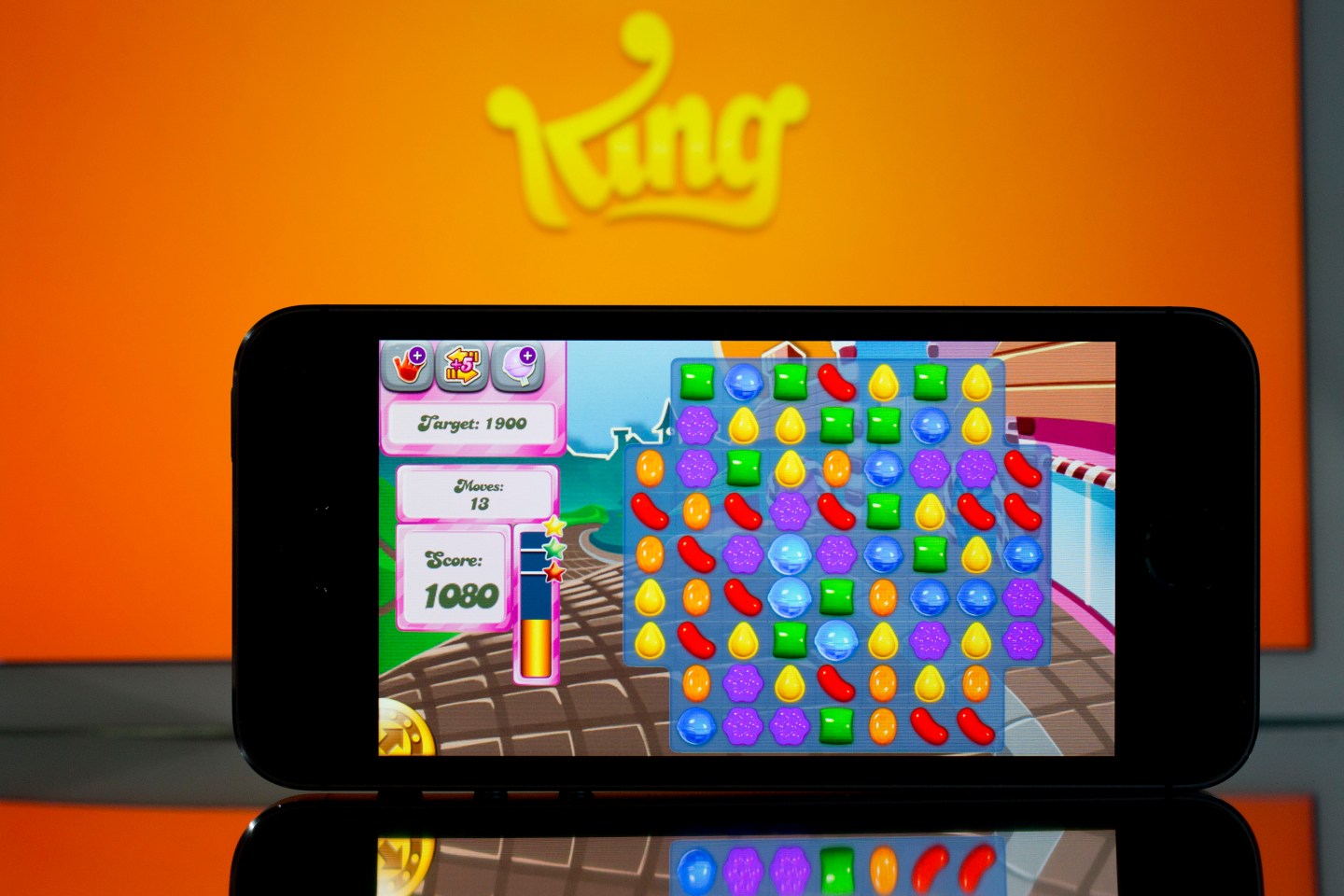
King Digital Entertainment (KING), maker of the (once) popular mobile gaming app “Candy Crush Saga,” saw its shares fall over 20% late Tuesday after the company reported sluggish growth and tepid earnings for the previous quarter. The mobile gaming kingpin’s new titles apparently failed to generate sufficient cash to cover the “unexpectedly” steep drop in revenue from its maturing Candy Crush franchise. With a fickle audience, rapidly changing technology, and almost no barriers to entry, King as well as the rest of the mobile gaming space have proven to be terrible equity investments. It may be time for them to head back to their garages in Silicon Valley and stay there until they are mature enough to come back to Wall Street.
The recent IPO boom has brought a lot of questionable companies to the public markets in the last couple of years. While none have boasted the absurd bubble-like valuations that characterized the Internet IPO boom of the late 1990s, a few have come pretty close. Of all the companies that went public, King Digital Entertainment, was clearly among the sketchiest. It was riding the wave of other “web 2.0” properties that had recently gone to the market and garnered strong valuations.
King, as a maker of “mobile gaming” products, was pretty much the bottom of the tech barrel. It had explosive growth, with 2013 revenues up 11-fold over the previous year, yielding profits of around $567 million. But around 80% of that revenue came from only one of its various games—Candy Crush. King tried to sell investors on the notion that it could repeat and build on Candy Crush’s success, but few took the bait. Its stock fell 16% on its first day of trading.
Despite the odds, King posted some encouraging profits in its first quarterly earnings as a public company. It had been able to diversify its revenue so that Candy Crush only accounted for 68% of its revenue, instead of 80%. Maybe the market misjudged King after all? Its stock price rallied. The investment banks set lofty price targets and slapped a “buy” rating on the stock.
King Digital posted a profit on Tuesday and issued a sizable $150 million special dividend to its shareholders, but it failed to meet Wall Street’s aggressive price targets. Its other games still aren’t doing well, while revenues from Candy Crush have continued to fall. Deutsche Bank lowered its earnings target from $27 a share to $12 a share (the stock was trading around $14.50 in the after hours markets).
So, is this a case of Wall Street simply expecting too much, too soon, or does King Digital simply not have what it takes to compete with the big boys of the tech world? It seems to be a little bit of both.
Mobile gaming is in its infancy and there are a lot of questions about its ability to generate consistent profits for its investors. The sector may have great potential to grow, amid the proliferation of smartphones in Asia for example, but companies that have managed to produce hit games in the past may not reap the rewards of such future growth. Rival game maker Zynga (ZNGA), which at one point commanded a market valuation of over $7 billion, has had a hard time repeating the success of its Farmville franchise and has seen its share price tumble month after month as a result—down 30% this year and down over 70% since its IPO in December 2011.
Why is it so hard to repeat success in this market? Let’s think about what has worked in the past. Successful mobile games like Angry Birds, Farmville, and Candy Crush have appealed to a wide audience: they are simple enough for children to play but interesting enough to draw in teens and adults. The games weren’t overly complex, lasting between five and 15 minutes per round and none were “graphic hogs,” allowing them to be used on as many smartphones as possible.
These games are all very simple. There are really no major skill barriers here, meaning that just about any mid-level programmer has a shot at making it big. This presents major competition issues for established mobile gaming companies like Zynga. Candy Crush, for instance, only hit the scene in late 2012. It basically came out of nowhere, taking Zynga, the leader in the space, totally by surprise. Overnight, the company, with its billions of dollars of investor capital, was suddenly losing market share to some startup. This level of market disruption is chaotic, leading to lofty expectations and broken companies.
To make matters worse, none of these mobile gaming companies control the distribution of their product, relying on Facebook or app stores owned by Google, Apple, or Microsoft to do it for them. These companies are highly vulnerable to being squeezed at the distribution end. If Google wants, say, half of Zynga’s profits in exchange for distributing its latest game, Zynga really can’t say no. That’s because around 80% of mobile phone users have Google’s Android operating system running on their smartphones. The concentration of the digital distribution market could be a major impediment for all “app”-based companies, especially those that rely on multiple in-app purchases, like King Digital and Zynga.
King Digital could very well come out with the next blockbuster game tomorrow, but it’s just as likely to come out with a flop. It seems that mobile gaming companies operate like venture capital firms in that they expect only one out of eight or more games they launch to take off. This is a problem for a company with high growth expectations as it could mean major lumpiness in the revenue stream.
Such lumpiness is expected if a product belongs to a mature market with an investor base with long-term growth expectations, but that’s hardly the case with mobile gaming. Erratic earnings is a recipe for disaster as it ultimately alienates investors across the entire risk spectrum. So until these gaming companies can figure out what works, it may be best for them to go private again and tinker around in Silicon Valley until they get it right.