• Home
  • Latest
  • Fortune 500
  • Finance
  • Tech
  • Leadership
  • Lifestyle
  • Rankings
  • Multimedia
FinanceWall Street

Two cheers for ‘too big to fail’

By
Roger Lowenstein
Roger Lowenstein
Down Arrow Button Icon
By
Roger Lowenstein
Roger Lowenstein
Down Arrow Button Icon
August 7, 2014, 11:18 AM ET
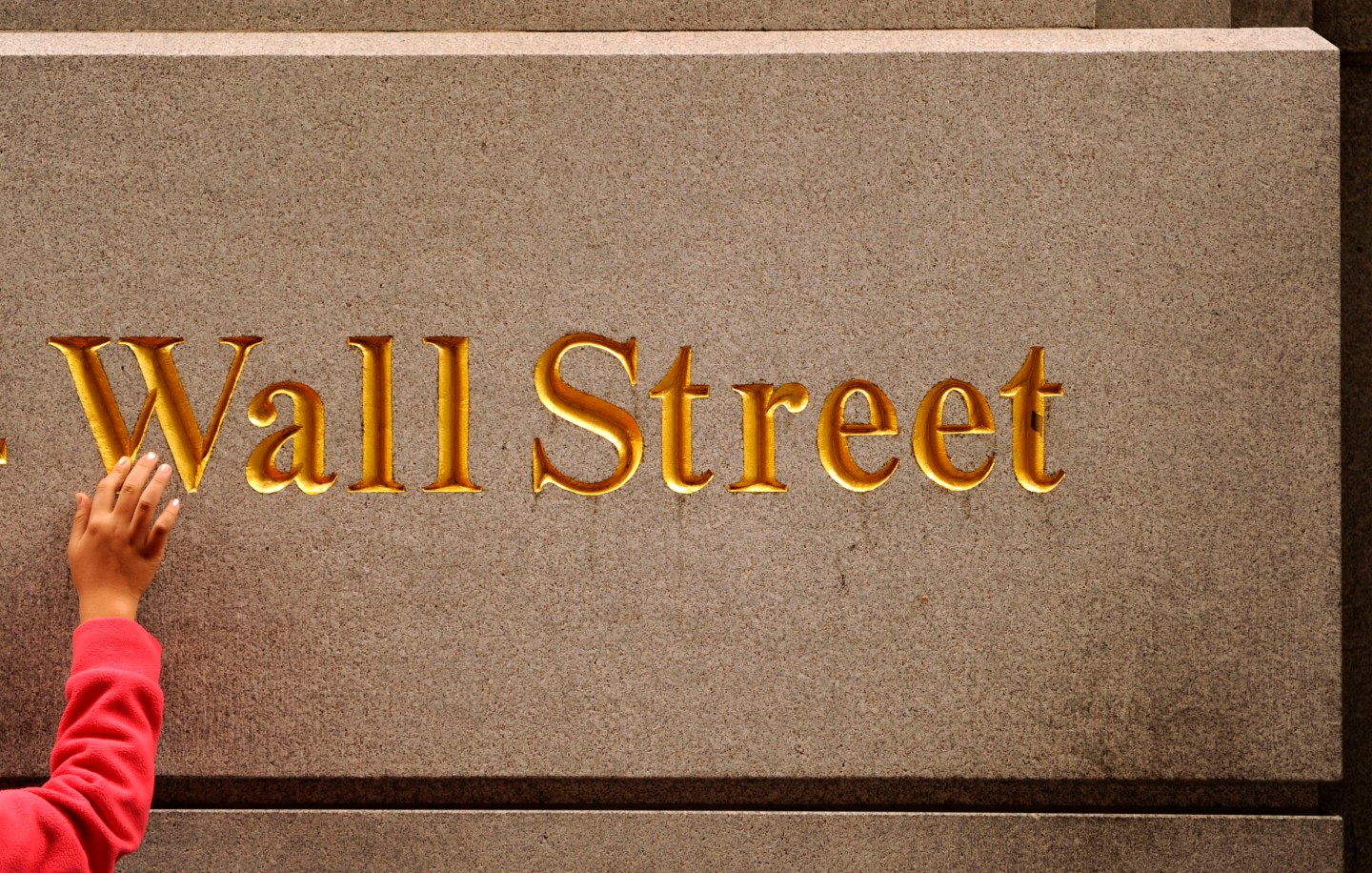
Bloomberg — Getty Images

Just last month, retired U.S. Congressman Barney Frank was back on Capitol Hill to defend his signature Dodd-Frank legislation. Republicans charged that the four-year-old financial reform law has failed to eliminate the much-reviled policy of “Too Big to Fail.” Journalists on the left and on the right jumped on the bandwagon as well.

Are the critics right? Do we still live in the era of “Too big to fail?” All I can say is: I sincerely hope so.

Ever since the bank bailouts of 2008 and early 2009, Americans have scarcely paused in their non-stop demonization of the policies that halted the country’s frightening slide into a near-depression.

Tea-partiers on the right hate the bailouts because they hate any intrusion by the federal government. Populists on the left hate the bailouts because they assisted banks, now and forever reviled as the enemy.

Apparently unnoticed by these commentators is a tiny fact: the bailouts worked. The economy just completed the fifth straight year of positive growth. America has more people working than ever. Unemployment is down to 6.2%, a number only slightly above what may fairly be viewed as “normal.” Long-term, or chronic, joblessness is also reduced. Banks are better capitalized and safer. Government deficits have plunged. The stock market is well above its pre-crash level.

Although government bailouts were hardly responsible for all of that, they clearly stopped the market carnage, permitting private sector growth to eventually resume. Of course, they can still be criticized on the basis that their cost was too great, or that they set a harmful precedent. Critics have overstated both of these claims.

The bailouts themselves were profitable to the taxpayers. Commentators have pointed out that government costs associated with the Great Recession included many items outside the calculus of the Troubled Asset Relief Program (TARP) and other federal rescue programs—such as foregone tax revenues and higher expenses for unemployment insurance. But these were costs caused by the recession—not by the bailouts that helped end it. Had there been no bailouts, the government’s expenses would have been more prolonged, and far greater.

The moral hazard precedent of the bailouts has also been both misunderstood and overstated. First, there is no “policy” of “too big to fail.” It is not written down and is not ordained by any law. Rather, “too big to fail” is an appropriate political response to an unanticipated calamity. When society is faced with a potential or actual disaster that swamps the power of individual relief efforts, it is proper and right for government to intervene. That is a big reason why we have government.

Since there was no formal bailout policy, the bailouts that occurred in 2008 and 2009 were haphazard and inconsistent. We should be thankful for this, because the off-on pattern of rescues created a muddled precedent for any would-be gambler of the future. Consider a capsulized version of the prominent failures: dozens of mortgage lenders (the epicenter of the bubble) failed and their creditors were not assisted. Bear Stearns’ creditors were bailed out in full but its stock was mostly wiped out. Fannie Mae and Freddie Mac’s debt was bailed out but its preferred stock, and its equity, value collapsed. Lehman’s stock was wiped out and its creditors got no assistance. AIG’s creditors were rescued but its stock was destroyed. This was also the pattern with many weaker banks.

No investor taking a flyer now can know whether his or her chosen vehicle will be the next AIG (AIG) or, contrariwise, the next Lehman. A speculator can certainly draw the inference that bank credit is safer than equity so, at the margin, investors will be more likely to lend to banks. But banks also need equity—more so than ever thanks to the new capital rules.

And equity investors in banks that got rescued paid, as is proper, a severe price. For instance, from year-end 2006 (before the bubble burst) to today, stock in Citigroup (C), which got more help than any other bank, is down about 90%. That does not sound like a free ride to me. Even investors in most banks that did not fail, but did get TARP investment, have underperformed the market averages.

It is true, and very regrettable, that many bank executives (including at Citi) were rewarded for failure with rather outrageous parachutes. But those were awarded well before any bailouts, and taxpayers did not pay for them.

It is also true that bank stockholders would have fared worse had no bailouts occurred. But retribution is a poor basis for public policy. Only vengeance can justify the view that society should suffer so that banks will feel it even worse. In any case, we have good experience of what happens when the government permits waves of successive bank failures. It is called the Great Depression.

One can certainly argue that the bailouts could have been designed better, or been distributed more equitably. They were conceived under extreme duress, and were hardly perfect. And bailouts should never be more than a last resort.

But we should not forget that the source of the severe economic hardship that Americans experienced was reckless lending and borrowing, on Wall Street and on Main Street, often enabled by lax regulation. The bailouts didn’t cause that pain—they attenuated it. Should another crisis develop, someday, we will want government to have every possible remedy at its disposal. Just as it had in 2008.

Roger Lowenstein is the author, most recently, of The End of Wall Street. He is writing a book on the origins of the U.S. Federal Reserve.

About the Author
By Roger Lowenstein
See full bioRight Arrow Button Icon

Latest in Finance

Finance
Lorem ipsum dolor sit amet, consectetur adipiscing elit, sed do eiusmod tempor incididunt ut labore et dolore magna aliqua. Ut enim ad minim veniam
By Fortune Editors
October 20, 2025
Finance
Lorem ipsum dolor sit amet, consectetur adipiscing elit, sed do eiusmod tempor incididunt ut labore et dolore magna aliqua. Ut enim ad minim veniam
By Fortune Editors
October 20, 2025
Finance
Lorem ipsum dolor sit amet, consectetur adipiscing elit, sed do eiusmod tempor incididunt ut labore et dolore magna aliqua. Ut enim ad minim veniam
By Fortune Editors
October 20, 2025
Finance
Lorem ipsum dolor sit amet, consectetur adipiscing elit, sed do eiusmod tempor incididunt ut labore et dolore magna aliqua. Ut enim ad minim veniam
By Fortune Editors
October 20, 2025
Finance
Lorem ipsum dolor sit amet, consectetur adipiscing elit, sed do eiusmod tempor incididunt ut labore et dolore magna aliqua. Ut enim ad minim veniam
By Fortune Editors
October 20, 2025
Finance
Lorem ipsum dolor sit amet, consectetur adipiscing elit, sed do eiusmod tempor incididunt ut labore et dolore magna aliqua. Ut enim ad minim veniam
By Fortune Editors
October 20, 2025

Most Popular

Finance
Lorem ipsum dolor sit amet, consectetur adipiscing elit, sed do eiusmod tempor incididunt ut labore et dolore magna aliqua. Ut enim ad minim veniam
By Fortune Editors
October 20, 2025
Finance
Lorem ipsum dolor sit amet, consectetur adipiscing elit, sed do eiusmod tempor incididunt ut labore et dolore magna aliqua. Ut enim ad minim veniam
By Fortune Editors
October 20, 2025
Finance
Lorem ipsum dolor sit amet, consectetur adipiscing elit, sed do eiusmod tempor incididunt ut labore et dolore magna aliqua. Ut enim ad minim veniam
By Fortune Editors
October 20, 2025
Finance
Lorem ipsum dolor sit amet, consectetur adipiscing elit, sed do eiusmod tempor incididunt ut labore et dolore magna aliqua. Ut enim ad minim veniam
By Fortune Editors
October 20, 2025
Finance
Lorem ipsum dolor sit amet, consectetur adipiscing elit, sed do eiusmod tempor incididunt ut labore et dolore magna aliqua. Ut enim ad minim veniam
By Fortune Editors
October 20, 2025
Finance
Lorem ipsum dolor sit amet, consectetur adipiscing elit, sed do eiusmod tempor incididunt ut labore et dolore magna aliqua. Ut enim ad minim veniam
By Fortune Editors
October 20, 2025
Rankings
  • 100 Best Companies
  • Fortune 500
  • Global 500
  • Fortune 500 Europe
  • Most Powerful Women
  • Future 50
  • World’s Most Admired Companies
  • See All Rankings
Sections
  • Finance
  • Leadership
  • Success
  • Tech
  • Asia
  • Europe
  • Environment
  • Fortune Crypto
  • Health
  • Retail
  • Lifestyle
  • Politics
  • Newsletters
  • Magazine
  • Features
  • Commentary
  • Mpw
  • CEO Initiative
  • Conferences
  • Personal Finance
  • Education
Customer Support
  • Frequently Asked Questions
  • Customer Service Portal
  • Privacy Policy
  • Terms Of Use
  • Single Issues For Purchase
  • International Print
Commercial Services
  • Advertising
  • Fortune Brand Studio
  • Fortune Analytics
  • Fortune Conferences
  • Business Development
About Us
  • About Us
  • Editorial Calendar
  • Press Center
  • Work At Fortune
  • Diversity And Inclusion
  • Terms And Conditions
  • Site Map
  • Facebook icon
  • Twitter icon
  • LinkedIn icon
  • Instagram icon
  • Pinterest icon

© 2026 Fortune Media IP Limited. All Rights Reserved. Use of this site constitutes acceptance of our Terms of Use and Privacy Policy | CA Notice at Collection and Privacy Notice | Do Not Sell/Share My Personal Information
FORTUNE is a trademark of Fortune Media IP Limited, registered in the U.S. and other countries. FORTUNE may receive compensation for some links to products and services on this website. Offers may be subject to change without notice.


Most Popular

placeholder alt text
Success
In 2026, many employers are ditching merit-based pay bumps in favor of ‘peanut butter raises’
By Emma BurleighFebruary 2, 2026
2 days ago
placeholder alt text
Cybersecurity
Top AI leaders are begging people not to use Moltbook, a social media platform for AI agents: It’s a ‘disaster waiting to happen’
By Eva RoytburgFebruary 2, 2026
2 days ago
placeholder alt text
Politics
Meet the Palm Beach billionaire who paid $2 million for a private White House visit with Trump
By Tristan BoveFebruary 3, 2026
1 day ago
placeholder alt text
Investing
Tech stocks go into free fall as it dawns on traders that AI has the ability to cut revenues across the board
By Jim EdwardsFebruary 4, 2026
10 hours ago
placeholder alt text
North America
Gates Foundation doubles down on foreign aid as U.S. government largely withdraws
By Thalia Beaty and The Associated PressFebruary 3, 2026
1 day ago
placeholder alt text
AI
Elon Musk’s SpaceX buys xAI in stunning deal valued at $1.25 trillion ahead of looming IPO
By Amanda GerutFebruary 2, 2026
2 days ago

Latest in Finance

bessent
EconomyTariffs and trade
Scott Bessent’s ‘gotcha’ moment on Trump’s tariffs and inflation: He denies writing ‘tariffs are inflationary’ in letter to hedge fund investors
By Nick LichtenbergFebruary 4, 2026
6 minutes ago
AIData centers
Meta’s Hyperion AI data center will sprawl to four times the size of Manhattan’s Central Park
By Sharon GoldmanFebruary 4, 2026
13 minutes ago
Ray Dalio, wearing a suit and sitting in a beige chair, speaks and gestures with his hand.
Investinggeopolitics
Ray Dalio warns the world is ‘on the brink’ of a capital war of weaponizing money—and gold is the best way for people to protect themselves
By Sasha RogelbergFebruary 4, 2026
1 hour ago
bezos
North AmericaMedia
Jeff Bezos’ mass layoffs at the Washington Post a ‘case study in near-instant, self-inflicted brand destruction,’ former editor says
By David Bauder and The Associated PressFebruary 4, 2026
1 hour ago
broker
AIMarkets
The tech stocks free fall doesn’t make any sense, BofA says in rebuke to investors while doubling down on the sector’s longevity
By Nick LichtenbergFebruary 4, 2026
1 hour ago
RetailPepsiCo
PepsiCo is cutting prices for snacks like Doritos by ‘up to 15%’ to appease customers pinched by the K-shaped economy
By Dave Lozo and Morning BrewFebruary 4, 2026
2 hours ago