
• Home
  • Latest
  • Fortune 500
  • Finance
  • Tech
  • Leadership
  • Lifestyle
  • Rankings
  • Multimedia
First Amendment

Corporations have free speech rights, except when it comes to meat

Claire Zillman
By
Claire Zillman
Claire Zillman
Editor, Leadership
Down Arrow Button Icon
July 31, 2014, 10:22 AM ET
185251506
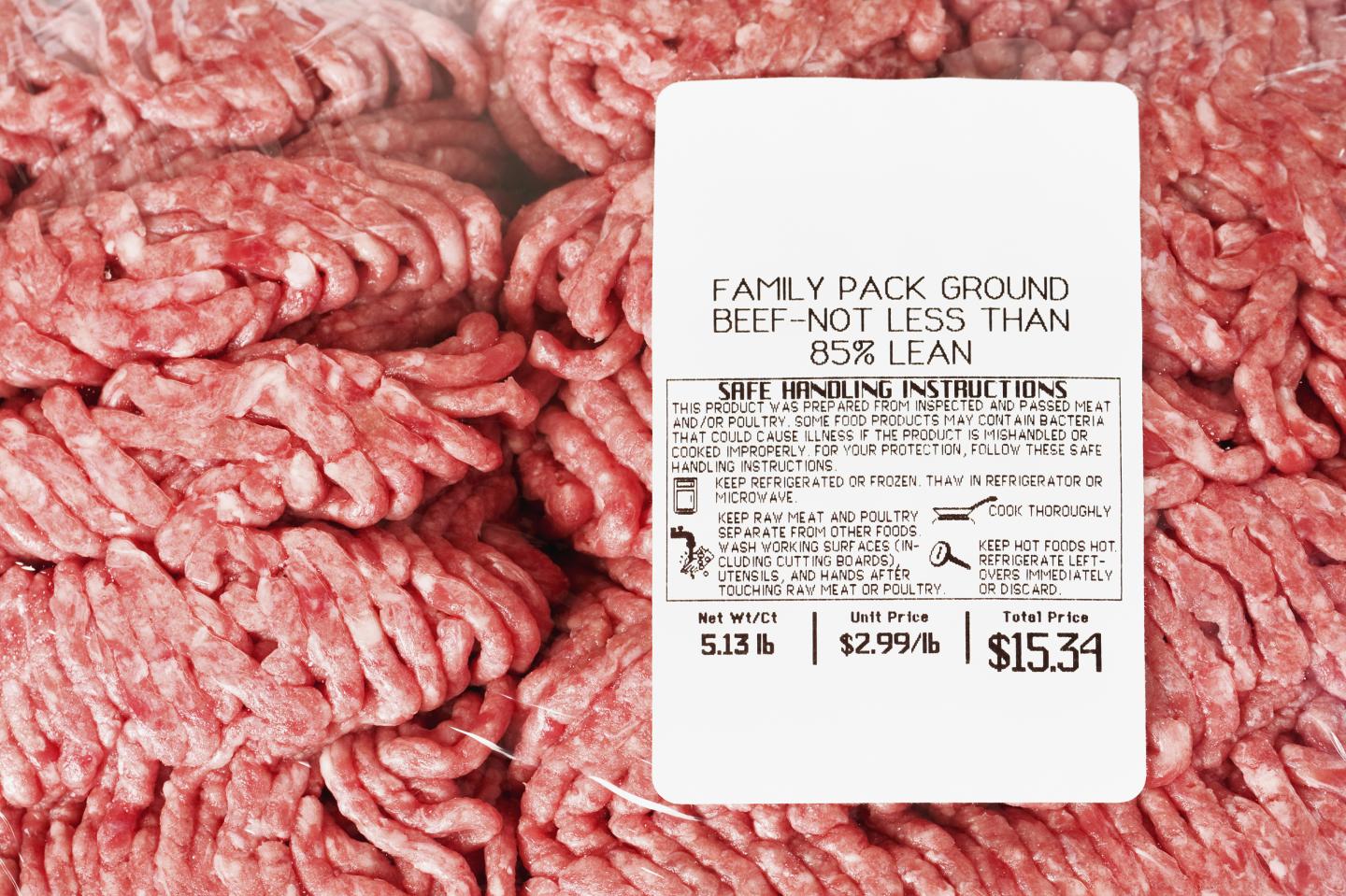
Family Pack of Raw Ground Beef with LabelSkhoward—Getty Images

Corporations have a penchant for using the First Amendment to slip through the grasp of new regulations.

R.J. Reynolds Tobacco Company (RAI), for instance, used it to argue against a Food and Drug Administration requirement that would have plastered grisly images of smoking’s side effects on cigarette packages. Such labels constituted compelled speech, Reynolds argued—successfully.

Likewise, ratings agencies Standard and Poor’s and Fitch hid behind the First Amendment when it was criticized for giving high ratings to worthless securities in the run up to the financial crisis. They said that the ratings were based on opinion and therefore constituted protected speech.

So when Congress passed legislation imposing new rules requiring meat producers to attach country of origin labels to their products, the First Amendment defense must have looked like an attractive method for the industry to wiggle out of the regulation. In July 2013, industry groups representing livestock producers, feedlot operators, and meat packers gave it a shot.

Led by the American Meat Institute, the groups filed a lawsuit against the United States Department of Agriculture that claimed that requiring producers to use labels that identified the countries in which its animals were born, raised, and slaughtered, and to specify if meat in a single package was “co-mingled” from different countries of origin represented compelled speech and violated the First Amendment. The meat industry argued in its complaint that because there was no “legitimate justification” for the born, raised, and slaughtered labels, and because the new rules would “impose significant burdens on and radically restructure the way meat is produced and packaged in this country,” the regulation violated the First Amendment, which prohibits compelled speech in the absence of substantial governmental interest.

The government, meanwhile, said its interest in allowing consumers to know the origin of the food they eat should be “beyond dispute.” The meat industry “cannot and do[es] not provide any basis for second-guessing the considered judgment of Congress … that country-of-origin labeling is warranted.”

Despite what seems like a long line of corporations winning such cases, a divided panel of 11 judges in the United States Court of Appeals for the District of Columbia Circuit this week ruled against the meat producers after finding that the government interest in informing consumers and isolating potential food contamination superseded the industry’s First Amendment claims.

“Simply because the agency believes [the meat industry] has other, superior means to protect food safety doesn’t delegitimize a congressional decision to empower consumers to take possible country-specific differences in safety practices into account,” the court majority said. Nor does such a belief “undercut the economy-wide benefits of confining the market impact of a [potential] disease outbreak.”

The court majority acknowledged that its decision seemed to fly in the face of previous rulings—specifically the Reynolds Tobacco case over the graphic cigarette warnings labels, which was decided by a three-judge panel in the same circuit court in 2012. The deciding judges in that case sided with Reynolds by ruling that the government interest didn’t trump Reynolds’ First Amendment rights since the labeling requirements weren’t aimed at preventing deception.

The court majority in the meat label case, meanwhile, provided more leeway in what sorts of government interest took precedence over a corporation’s First Amendment rights; they ruled that government interest could reach beyond the prevention of deception to such objectives as consumer knowledge and containment of food-borne illness outbreaks.

The court majority in the meat label case explained its decision bluntly: “To the extent that other cases in this circuit may be read as holding to the contrary…we now overrule them.”

That combative language could embolden regulators to require similar disclosures, says Joshua Turner, an attorney at Wiley Rein who specializes in federal and state regulation. At the very least, he says, it sets the stage for a federal regulation-versus-corporate free speech showdown in the Supreme Court.

About the Author
Claire Zillman
By Claire ZillmanEditor, Leadership
LinkedIn iconTwitter icon

Claire Zillman is a senior editor at Fortune, overseeing leadership stories. 

See full bioRight Arrow Button Icon
0

Most Popular

Finance
Lorem ipsum dolor sit amet, consectetur adipiscing elit, sed do eiusmod tempor incididunt ut labore et dolore magna aliqua. Ut enim ad minim veniam
By Fortune Editors
October 20, 2025
Finance
Lorem ipsum dolor sit amet, consectetur adipiscing elit, sed do eiusmod tempor incididunt ut labore et dolore magna aliqua. Ut enim ad minim veniam
By Fortune Editors
October 20, 2025
Finance
Lorem ipsum dolor sit amet, consectetur adipiscing elit, sed do eiusmod tempor incididunt ut labore et dolore magna aliqua. Ut enim ad minim veniam
By Fortune Editors
October 20, 2025
Finance
Lorem ipsum dolor sit amet, consectetur adipiscing elit, sed do eiusmod tempor incididunt ut labore et dolore magna aliqua. Ut enim ad minim veniam
By Fortune Editors
October 20, 2025
Finance
Lorem ipsum dolor sit amet, consectetur adipiscing elit, sed do eiusmod tempor incididunt ut labore et dolore magna aliqua. Ut enim ad minim veniam
By Fortune Editors
October 20, 2025
Finance
Lorem ipsum dolor sit amet, consectetur adipiscing elit, sed do eiusmod tempor incididunt ut labore et dolore magna aliqua. Ut enim ad minim veniam
By Fortune Editors
October 20, 2025
Rankings
  • 100 Best Companies
  • Fortune 500
  • Global 500
  • Fortune 500 Europe
  • Most Powerful Women
  • Future 50
  • World’s Most Admired Companies
  • See All Rankings
Sections
  • Finance
  • Leadership
  • Success
  • Tech
  • Asia
  • Europe
  • Environment
  • Fortune Crypto
  • Health
  • Retail
  • Lifestyle
  • Politics
  • Newsletters
  • Magazine
  • Features
  • Commentary
  • Mpw
  • CEO Initiative
  • Conferences
  • Personal Finance
  • Education
Customer Support
  • Frequently Asked Questions
  • Customer Service Portal
  • Privacy Policy
  • Terms Of Use
  • Single Issues For Purchase
  • International Print
Commercial Services
  • Advertising
  • Fortune Brand Studio
  • Fortune Analytics
  • Fortune Conferences
  • Business Development
About Us
  • About Us
  • Editorial Calendar
  • Press Center
  • Work At Fortune
  • Diversity And Inclusion
  • Terms And Conditions
  • Site Map

Most Popular

placeholder alt text
Success
Billionaire philanthropy's growing divide: Mark Zuckerberg stops funding immigration reform as MacKenzie Scott doubles down on DEI
By Ashley LutzDecember 22, 2025
22 hours ago
placeholder alt text
Success
Former U.S. Secret Service agent says bringing your authentic self to work stifles teamwork: 'You don’t get high performers, you get sloppiness'
By Sydney LakeDecember 22, 2025
1 day ago
placeholder alt text
Travel & Leisure
After pouring $450 million into Florida real estate, Larry Ellison plans to lure the ultrarich to an exclusive town just minutes from Mar-a-Lago
By Marco Quiroz-GutierrezDecember 22, 2025
1 day ago
placeholder alt text
Future of Work
Meet a 55-year-old automotive technician in Arkansas who didn’t care if his kids went to college: ‘There are options’
By Muskaan ArshadDecember 21, 2025
2 days ago
placeholder alt text
Economy
Mitt Romney says the U.S. is on a cliff—and taxing the rich is now necessary 'given the magnitude of our national debt'
By Dave SmithDecember 22, 2025
23 hours ago
placeholder alt text
Success
Multimillionaire musician Will.i.am says work-life balance is for people ‘working on someone else’s dream’ and not for visionaries—he grinds from 5-to-9 after his 9-to-5
By Orianna Rosa RoyleDecember 21, 2025
2 days ago

© 2025 Fortune Media IP Limited. All Rights Reserved. Use of this site constitutes acceptance of our Terms of Use and Privacy Policy | CA Notice at Collection and Privacy Notice | Do Not Sell/Share My Personal Information
FORTUNE is a trademark of Fortune Media IP Limited, registered in the U.S. and other countries. FORTUNE may receive compensation for some links to products and services on this website. Offers may be subject to change without notice.