• Home
  • Latest
  • Fortune 500
  • Finance
  • Tech
  • Leadership
  • Lifestyle
  • Rankings
  • Multimedia
FinanceFederal Reserve

Big banks made $650 million off of Fed’s QE program

By
Stephen Gandel
Stephen Gandel
Down Arrow Button Icon
By
Stephen Gandel
Stephen Gandel
Down Arrow Button Icon
July 23, 2014, 10:33 AM ET
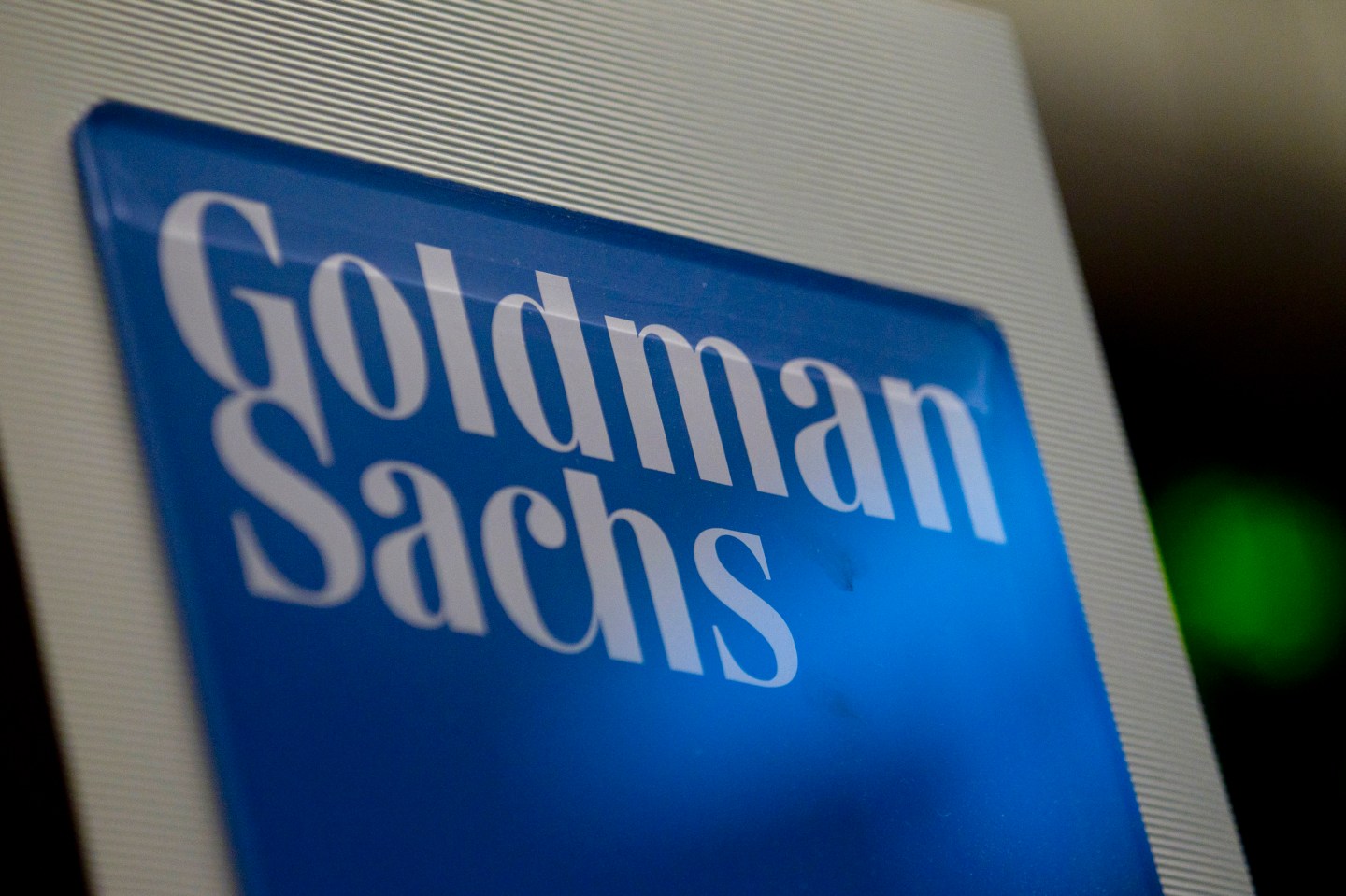
Goldman Sachs Group Inc. signage.
Goldman Sachs Group Inc. signage.Photograph by Jin Lee—Bloomberg/Getty Images

Wall Street may end up being sorry to see QE go.

The Federal Reserve recently announced that its bond buying program will likely end in October. That’s elicited cheers from some parts of Wall Street. Many credit the bond-purchasing stimulus program with lowering volatility. That’s good for the economy, but bad for bond traders. So many think the end of quantitative easing will be good for bank profits. Maybe not.

A recent study by a Fed economist and one from MIT estimate that Wall Street firms may have made as much as $653 million in fees selling bonds to the Fed. The economists, Zhaogang Song and Haoziang Zhu, conclude that, while that is a lot of money, it was probably a good deal for the Fed. Since QE has started, the Fed has bought $3.7 trillion in U.S. Treasury and mortgage bonds. The $653 million that the banks collected amounts to a commission of just under 0.02%, or 0.02 cents for every $100 in bonds that the Fed bought.

What’s more, QE started in early 2009. So Wall Street collected those fees over five years. And they are spread over a number of different firms. But the economists found that the fees were not spread evenly. Indeed, 70% of the fees the Fed paid Wall Street firms during the period that the professors examined—10 months from November 2010 to September 2011—went to five firms. And you can probably guess who got the most: Goldman Sachs (GS).

“Certain institutions have better access to the Fed and to the markets,” says Bob Eisenbeis, an economist and long-time Fed watcher at Cumberland Advisors. “We have an archaic system that needs to be reformed.”

The Fed buys its bonds in QE through a reverse auction process. It says it wants to buy bonds and then the firms shout out the prices they are willing to sell them at. The Fed picks the lowest price. But just 20 firms, so-called primary dealers, are allowed to compete in that auction, selling bonds to the Fed and receiving cash from the U.S. central bank.

The Fed has traditionally limited the number of primary dealers to create an incentive to trade Treasuries, hopefully driving down prices. But Eisenbeis thinks the current system may have limited the success of the QE program. Lending did not rise as much from QE as many thought it would. “We might have had a different result if the market was open to smaller banks,” says Eisenbeis.

Along with Goldman, the banks that profited the most from QE trading during the period in question were Morgan Stanley (MS), Barclays (BSC), BNP Paribas (BNP.PA), and JPMorgan Chase (JPM). While Goldman raked in the most from the program, it was not the most profitable. That title went to JPMorgan, which appears to have made nearly $0.04 on every $100 in bonds it sold to the Fed. That’s a penny more than Goldman earned from these deals and the largest profit of all the primary dealers.

The banks probably would have made some of this money trading bonds with others if they hadn’t spent so much time trading with the Fed. Factor those missed opportunities in, and the excess fees the banks made from QE might drop to just $250 million.

The study says it’s not clear why some banks made more money than others selling bonds to the Fed. Like Eisenbeis, Song and Zhu attribute some of difference to that some banks had access to better information than others. But the study doesn’t say whether that information came from privileged access or just a better guess of what the Fed would be willing to trade for. Song and Zhu also say the firms that had better access to harder-to-reach bonds were likely able to charge the Fed more money for those bonds. That may explain JPMorgan’s outsize profits from the program. As the largest bank in the U.S., it has better access to bonds than others.

But here’s another explanation for JPMorgan’s higher QE profits: it was a fluke, or rather a Whale.

The authors looked at the period that spanned from late 2010 late 2011. You know who else was buying a lot of bonds right around the same time? JPMorgan’s London Whale. In 2011, JPMorgan’s risk team was nervous about the economy. Part of the London Whale’s trade was to make money if bond yields dropped and prices rose. So, in general, the bank was positioning itself to be betting on Treasury bonds. If you are also buying Treasury bonds, then you would likely only sell to the Fed if you were going to get a good price, more than you were willing to pay.

In the end, the London Whale was a disaster. JPMorgan lost $6 billion dollars. But it also appears to have made the bank some excess cash—around $30 million—from QE. Put in that context, even the most profitable QE trades don’t look all that great.
About the Author
By Stephen Gandel
See full bioRight Arrow Button Icon

Latest in Finance

Finance
Lorem ipsum dolor sit amet, consectetur adipiscing elit, sed do eiusmod tempor incididunt ut labore et dolore magna aliqua. Ut enim ad minim veniam
By Fortune Editors
October 20, 2025
Finance
Lorem ipsum dolor sit amet, consectetur adipiscing elit, sed do eiusmod tempor incididunt ut labore et dolore magna aliqua. Ut enim ad minim veniam
By Fortune Editors
October 20, 2025
Finance
Lorem ipsum dolor sit amet, consectetur adipiscing elit, sed do eiusmod tempor incididunt ut labore et dolore magna aliqua. Ut enim ad minim veniam
By Fortune Editors
October 20, 2025
Finance
Lorem ipsum dolor sit amet, consectetur adipiscing elit, sed do eiusmod tempor incididunt ut labore et dolore magna aliqua. Ut enim ad minim veniam
By Fortune Editors
October 20, 2025
Finance
Lorem ipsum dolor sit amet, consectetur adipiscing elit, sed do eiusmod tempor incididunt ut labore et dolore magna aliqua. Ut enim ad minim veniam
By Fortune Editors
October 20, 2025
Finance
Lorem ipsum dolor sit amet, consectetur adipiscing elit, sed do eiusmod tempor incididunt ut labore et dolore magna aliqua. Ut enim ad minim veniam
By Fortune Editors
October 20, 2025

Most Popular

Finance
Lorem ipsum dolor sit amet, consectetur adipiscing elit, sed do eiusmod tempor incididunt ut labore et dolore magna aliqua. Ut enim ad minim veniam
By Fortune Editors
October 20, 2025
Finance
Lorem ipsum dolor sit amet, consectetur adipiscing elit, sed do eiusmod tempor incididunt ut labore et dolore magna aliqua. Ut enim ad minim veniam
By Fortune Editors
October 20, 2025
Finance
Lorem ipsum dolor sit amet, consectetur adipiscing elit, sed do eiusmod tempor incididunt ut labore et dolore magna aliqua. Ut enim ad minim veniam
By Fortune Editors
October 20, 2025
Finance
Lorem ipsum dolor sit amet, consectetur adipiscing elit, sed do eiusmod tempor incididunt ut labore et dolore magna aliqua. Ut enim ad minim veniam
By Fortune Editors
October 20, 2025
Finance
Lorem ipsum dolor sit amet, consectetur adipiscing elit, sed do eiusmod tempor incididunt ut labore et dolore magna aliqua. Ut enim ad minim veniam
By Fortune Editors
October 20, 2025
Finance
Lorem ipsum dolor sit amet, consectetur adipiscing elit, sed do eiusmod tempor incididunt ut labore et dolore magna aliqua. Ut enim ad minim veniam
By Fortune Editors
October 20, 2025
Rankings
  • 100 Best Companies
  • Fortune 500
  • Global 500
  • Fortune 500 Europe
  • Most Powerful Women
  • Future 50
  • World’s Most Admired Companies
  • See All Rankings
Sections
  • Finance
  • Leadership
  • Success
  • Tech
  • Asia
  • Europe
  • Environment
  • Fortune Crypto
  • Health
  • Retail
  • Lifestyle
  • Politics
  • Newsletters
  • Magazine
  • Features
  • Commentary
  • Mpw
  • CEO Initiative
  • Conferences
  • Personal Finance
  • Education
Customer Support
  • Frequently Asked Questions
  • Customer Service Portal
  • Privacy Policy
  • Terms Of Use
  • Single Issues For Purchase
  • International Print
Commercial Services
  • Advertising
  • Fortune Brand Studio
  • Fortune Analytics
  • Fortune Conferences
  • Business Development
About Us
  • About Us
  • Editorial Calendar
  • Press Center
  • Work At Fortune
  • Diversity And Inclusion
  • Terms And Conditions
  • Site Map
  • Facebook icon
  • Twitter icon
  • LinkedIn icon
  • Instagram icon
  • Pinterest icon

Most Popular

placeholder alt text
Economy
Right before Trump named Warsh to lead the Fed, Powell seemed to respond to some of his biggest complaints about the central bank
By Jason MaJanuary 30, 2026
21 hours ago
placeholder alt text
Politics
The American taxpayer spent nearly half a billion dollars deploying federal troops to U.S. cities in 2025, CBO finds
By Nick LichtenbergJanuary 28, 2026
3 days ago
placeholder alt text
Economy
'I just don't have a good feeling about this': Top economist Claudia Sahm says the economy quietly shifted and everyone's now looking at the wrong alarm
By Eleanor PringleJanuary 31, 2026
6 hours ago
placeholder alt text
North America
'I meant what I said in Davos': Carney says he really is planning a Canada split with the U.S. along with 12 new trade deals
By Rob Gillies and The Associated PressJanuary 28, 2026
3 days ago
placeholder alt text
AI
Top engineers at Anthropic, OpenAI say AI now writes 100% of their code—with big implications for the future of software development jobs
By Beatrice NolanJanuary 29, 2026
2 days ago
placeholder alt text
Big Tech
Microsoft’s $440 billion wipeout, and investors angry about OpenAI’s debt, explained
By Eva RoytburgJanuary 29, 2026
2 days ago

© 2026 Fortune Media IP Limited. All Rights Reserved. Use of this site constitutes acceptance of our Terms of Use and Privacy Policy | CA Notice at Collection and Privacy Notice | Do Not Sell/Share My Personal Information
FORTUNE is a trademark of Fortune Media IP Limited, registered in the U.S. and other countries. FORTUNE may receive compensation for some links to products and services on this website. Offers may be subject to change without notice.


Latest in Finance

Netflix
Big TechMarkets
Netflix may be turning into an ‘entertainment giant,’ but its stock looks like ‘dead money’ to investors
By Nick LichtenbergJanuary 31, 2026
1 hour ago
Theranos founder Elizabeth Holmes and her husband Billy Evans.
LawTheranos
The mystery behind Elizabeth Holmes’ tweeting spree from prison
By Jessica MathewsJanuary 31, 2026
2 hours ago
EconomyFederal Government
Meet the first CEO of the IRS: A Jamie Dimon protege facing a $5 trillion test this tax season
By Shawn TullyJanuary 31, 2026
3 hours ago
EconomyU.S. economy
Kevin Warsh will inherit a challenge no Fed chief has faced since post-World War II regarding the spiraling $31 trillion national debt
By Shawn TullyJanuary 31, 2026
3 hours ago
Jerome Powell leaving the Fed is a key concern for Claudia Sahm.
EconomyLabor
‘I just don’t have a good feeling about this’: Top economist Claudia Sahm says the economy quietly shifted and everyone’s now looking at the wrong alarm
By Eleanor PringleJanuary 31, 2026
6 hours ago
United States President Donald Trump
EconomyInflation
Trump’s unlikely promise to ‘end inflation’ still saw families paying an extra $2,120 for goods and services in 2025
By Eleanor PringleJanuary 30, 2026
17 hours ago