• Home
  • Latest
  • Fortune 500
  • Finance
  • Tech
  • Leadership
  • Lifestyle
  • Rankings
  • Multimedia
FinanceTerm Sheet

Why homebuilders are still cautious

By
Nin-Hai Tseng
Nin-Hai Tseng
Down Arrow Button Icon
By
Nin-Hai Tseng
Nin-Hai Tseng
Down Arrow Button Icon
December 18, 2013, 7:48 PM ET
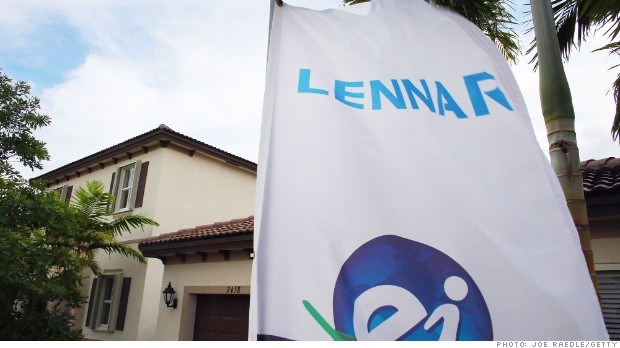
Joe Raedle / Getty Images

The latest earnings from the nation’s biggest homebuilders would suggest the housing market is recovering nicely. While some of that’s true, the healing process from years of record foreclosures and spiraling home prices are far from perfect. A critical piece is missing: home construction.

That might sound odd, given the recent strong earnings reported by the likes of Toll Brothers, D.R. Horton, Lennar Homes, and Pulte Groupe.

On Wednesday, Lennar (LEN), considered by some analysts to be the industry’s biggest player, reported its earnings climbed 32% as the homebuilder sold more homes at higher prices. This follows positive earnings from luxury homebuilder Toll Brothers (TOL), which reported earlier this month that its earnings rose to $411.4 million, or $2.35 per share during the fourth quarter, compared with $15 million, or 9 cents per share, a year earlier. D.R. Horton (DHI) last month reported that profits during its final quarter rose 39% as higher closing costs boosted revenue; in October, PulteGroup Inc. (PHM) reported third quarter profits that beat analysts’ estimates with revenue rising to $1.58 billion from $1.3 billion a year earlier.

True, builders are building more today than they were six years ago. In November, home construction is at its fastest pace in over five years; housing starts jumped by 22.7% to a 1.09 million annualized rate, the Commerce Department reported Wednesday. Most in the financial media have been reporting that the strong data suggests builders are optimistic in the face of higher mortgage rates. That’s likely true, but November’s data is only one month’s worth. And unlike home prices and foreclosures, the pace of home construction is far from returning to normal.

The government’s latest report on housing starts represents the first time in eight months, and only the second time since 2009, that starts have been above 1 million. Since the housing market crashed at the end of 2007, starts have averaged about 723,000 a month. Historically, housing starts have averaged 1.5 million a month, which means the current pace of home construction isn’t even halfway back to normal, says Jed Kolko, chief economist at Trulia, a San Francisco-based real estate website.

Given the markedly slow pace of building, it’s surprising that investors were excited about homebuilders stocks last year. Altogether, shares of DR Horton, Lennar, and PulteGroup, all of which are listed on the Standard and Poor’s 500 index, were up 102.8% in 2012 — surpassing the overall index, which was up 13.4%, according to FactSet. Super low interest rates combined with a tight supply of homes for sale gave investors the green light to buy homebuilder stocks, but they probably didn’t consider that construction, at least these days, is driven less by those factors than the pace at which new households are formed.

In other words, U.S. home prices might have risen more than 12% this year, but that hasn’t led builders to build that many more homes because a big chunk of unemployed young adults can’t afford to get their own place, Kolko says. Today, only 74.9% of adults ages 25 to 34 have jobs, an improvement from the 73.6% rate during the worst moments of the recession but still lower than the normal rate of 79.3% prior to the downturn. This has held homebuilders back, Kolko adds.

And while the latest earnings of homebuilders look positive, investors have generally turned bearish this year. Homebuilders stocks listed on the S&P are down 4.8% so far this year, while the overall index is up 24.9%, according to FactSet.

What 2014 will bring is anyone’s guess. But if investors are looking to buy into homebuilders stock, look not to home prices or interest rates. Rather, it’s best to keep a close eye on how many young adults will have decent jobs in the coming year.


About the Author
By Nin-Hai Tseng
See full bioRight Arrow Button Icon

Latest in Finance

InvestingStock
There have been head fakes before, but this time may be different as the latest stock rotation out of AI is just getting started, analysts say
By Jason MaDecember 13, 2025
2 hours ago
Politicsdavid sacks
Can there be competency without conflict in Washington?
By Alyson ShontellDecember 13, 2025
3 hours ago
Investingspace
SpaceX sets $800 billion valuation, confirms 2026 IPO plans
By Loren Grush, Edward Ludlow and BloombergDecember 13, 2025
4 hours ago
PoliticsAffordable Care Act (ACA)
With just days to go before ACA subsidies expire, Congress is about to wrap up its work with no consensus solution in sight
By Kevin Freking, Lisa Mascaro and The Associated PressDecember 13, 2025
4 hours ago
InnovationRobots
Even in Silicon Valley, skepticism looms over robots, while ‘China has certainly a lot more momentum on humanoids’
By Matt O'Brien and The Associated PressDecember 13, 2025
5 hours ago
HealthAffordable Care Act (ACA)
A Wisconsin couple was paying $2 a month for an ACA health plan. But as subsidies expire, it’s soaring to $1,600, forcing them to downgrade
By Ali Swenson and The Associated PressDecember 13, 2025
5 hours ago

Most Popular

placeholder alt text
Economy
Tariffs are taxes and they were used to finance the federal government until the 1913 income tax. A top economist breaks it down
By Kent JonesDecember 12, 2025
1 day ago
placeholder alt text
Success
Apple cofounder Ronald Wayne sold his 10% stake for $800 in 1976—today it’d be worth up to $400 billion
By Preston ForeDecember 12, 2025
1 day ago
placeholder alt text
Success
40% of Stanford undergrads receive disability accommodations—but it’s become a college-wide phenomenon as Gen Z try to succeed in the current climate
By Preston ForeDecember 12, 2025
1 day ago
placeholder alt text
Economy
The Fed just ‘Trump-proofed’ itself with a unanimous move to preempt a potential leadership shake-up
By Jason MaDecember 12, 2025
23 hours ago
placeholder alt text
Economy
For the first time since Trump’s tariff rollout, import tax revenue has fallen, threatening his lofty plans to slash the $38 trillion national debt
By Sasha RogelbergDecember 12, 2025
1 day ago
placeholder alt text
Success
Apple CEO Tim Cook out-earns the average American’s salary in just 7 hours—to put that into context, he could buy a new $439,000 home in just 2 days
By Emma BurleighDecember 12, 2025
1 day ago
Rankings
  • 100 Best Companies
  • Fortune 500
  • Global 500
  • Fortune 500 Europe
  • Most Powerful Women
  • Future 50
  • World’s Most Admired Companies
  • See All Rankings
Sections
  • Finance
  • Leadership
  • Success
  • Tech
  • Asia
  • Europe
  • Environment
  • Fortune Crypto
  • Health
  • Retail
  • Lifestyle
  • Politics
  • Newsletters
  • Magazine
  • Features
  • Commentary
  • Mpw
  • CEO Initiative
  • Conferences
  • Personal Finance
  • Education
Customer Support
  • Frequently Asked Questions
  • Customer Service Portal
  • Privacy Policy
  • Terms Of Use
  • Single Issues For Purchase
  • International Print
Commercial Services
  • Advertising
  • Fortune Brand Studio
  • Fortune Analytics
  • Fortune Conferences
  • Business Development
About Us
  • About Us
  • Editorial Calendar
  • Press Center
  • Work At Fortune
  • Diversity And Inclusion
  • Terms And Conditions
  • Site Map

© 2025 Fortune Media IP Limited. All Rights Reserved. Use of this site constitutes acceptance of our Terms of Use and Privacy Policy | CA Notice at Collection and Privacy Notice | Do Not Sell/Share My Personal Information
FORTUNE is a trademark of Fortune Media IP Limited, registered in the U.S. and other countries. FORTUNE may receive compensation for some links to products and services on this website. Offers may be subject to change without notice.