• Home
  • Latest
  • Fortune 500
  • Finance
  • Tech
  • Leadership
  • Lifestyle
  • Rankings
  • Multimedia

Trendingnow

1

Mark Cuban says he has the solution to growing income inequality, and it's to reward every employee—from CEO to janitor—with company stock

2

‘I want to die broke’: Billionaire philanthropist Denny Sanford dies after giving away $4 billion

3

'Dr. Doom' Nouriel Roubini says we're headed for universal basic income or 'some form of socialism' as AI revolutionizes work—He calls that optimistic

1

Mark Cuban says he has the solution to growing income inequality, and it's to reward every employee—from CEO to janitor—with company stock

2

‘I want to die broke’: Billionaire philanthropist Denny Sanford dies after giving away $4 billion

3

'Dr. Doom' Nouriel Roubini says we're headed for universal basic income or 'some form of socialism' as AI revolutionizes work—He calls that optimistic

How one hospital is thriving in the age of Obamacare

Shawn Tully
By
Shawn Tully
Shawn Tully
Senior Editor-at-Large
Down Arrow Button Icon
Shawn Tully
By
Shawn Tully
Shawn Tully
Senior Editor-at-Large
Down Arrow Button Icon
November 18, 2013, 6:25 PM ET
Add Fortune on Google for similar content.
In addition to its main facility, CHOP operates a regional network which generates a large volume of medical procedures.

FORTUNE — It’s well known that America’s hospitals are hurting. And that’s before the Affordable Care Act starts clamping tight limits on their fees. But hospitals can still thrive if they can apply classic practices from the private sector—everything from offering high-margin, specialized services that attract customers from around the globe to creating full-blown new ventures from the seeds of their own research.

And there’s no better model of how a venerable institution can operate as a highly successful business in the era of Obamacare than The Children’s Hospital of Philadelphia, known (infelicitously) as CHOP.

Founded in 1855, CHOP is one of the world’s leading facilities specializing in care for children. It combines a top-flight research branch with a broad patient-care network. CHOP serves as the pediatric teaching hospital for the Perelman School of Medicine at the University of Pennsylvania. And its research unit manages a $300 million a year budget and employs 2,000 people, including 1,000 physicians and researchers. The main hospital in Philadelphia admits 29,000 patients a year, and its outpatient network hosts 1.2 million visits a year from children.

Though it’s a non-profit, CHOP posts numbers that would be the envy of many a private provider. It generates annual revenues of around $2 billion, about 85% from patients and another 8% or so from federal funds for research. From that $2 billion, it’s able to cover not only all of its salaries, rents, and materials costs, but $74 million in uncompensated care, and a $55 million contribution to the research budget. Amazingly, it typically books a surplus of around $150 million that it divides between boosting its investment portfolio and building new facilities.

MORE: Exec learns firsthand how the homeless live

CHOP maintains its robust health by pursuing three strategies. While other hospitals may not be able to replicate these strategies exactly, the thinking behind them provides a useful model for how hospital companies can adapt.

The first strategy is that CHOP has expanded well beyond its main facility and operates a regional network which generate large volumes of tests and procedures. CHOP’s branches are chiefly in the suburbs of Philadelphia, both in Pennsylvania and central New Jersey. It operates 30 satellite offices for primary care, and another 9 specialty care centers that perform same-day procedures and surgery. (The most common is installing special tubes for ear infections.)

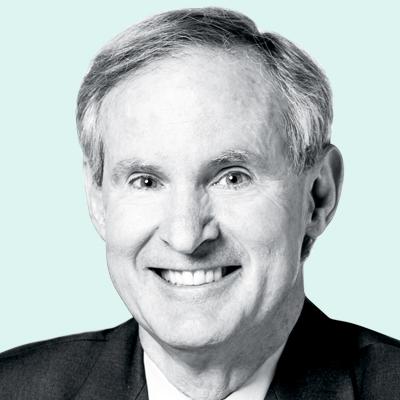
“Having a broad network diversifies our base of payers,” says CHOP’s CEO, Dr. Steven Altschuler. He explains that for most children’s hospitals, at least 50%, and as many as 80%, of the kids are covered by Medicaid. For CHOP, the figure is just 40%. That’s because the suburbs, in general, are more affluent than the cities where most children’s hospitals concentrate.

Since the payments flow largely from private plans, CHOP collects more per procedure than hospitals that rely heavily on Medicaid. Altschuler also finds that productivity is far higher in suburban specialty care centers than for the same routine procedures in a teaching hospital. “We find a surgeon can do 20 procedures a day in a care center versus around 10 in our main complex, which is run as a teaching facility,” he says. Even parking is easier.

All told, the same procedure costs 30% less in the outlying centers, reflecting lower rents and staffing expense. “The reimbursements are about the same,” says Altschuler, “so we get better margins in those facilities.”

MORE: Why Paul Krugman is wrong about France

A second core strategy is that CHOP doesn’t perform routine deliveries of newborns at its main hospital. Rather, it specializes in highly sophisticated procedures where its physicians and equipment rank among the best in the world. Altschuler calls them “luminary programs.”

CHOP has developed a new cell therapy that reengineers the immune system to fight cancer. Its surgeons have performed 1,000 fetal interventions for children who’ve contracted spina bifida and other congenital conditions. Spina bifida is a condition contracted during pregnancy where the structures that protect the spinal cord fail to fuse and the fetus is left with a hole in the spine that can cause paralysis and other complications in a newborn. The surgeon makes an incision in the uterus and removes the fetus, then performs on the operation, with the placenta still attached. The operation completed, then the surgeon places the fetus back in the uterus. The pregnancy then follows its normal course. Many of the children are born without any deformity as a result of the procedure. Such complex cases cost tens of thousands of dollars for the surgery alone, then the babies require weeks of neonatal intensive care.

Thanks to its array of specialties, CHOP benefits handsomely from medical tourism. About 15% of its revenue now comes from U.S. patients outside its home market, and another 5% from patients from abroad, around 80% of whom arrive from the Middle East. The foreign revenues are growing fast. And though CHOP also treats poor children from abroad, most of its non-U.S. patients are treated at a modest discount from the full fees. Still, on average, the children visiting from abroad pay about twice as much as the reimbursements from local kids, many of whom are on Medicaid or whose families lack insurance.

CHOP wants to become the world’s biggest center for DNA testing. It recently formed a partnership with BGI, formerly the Beijing Genomics Institute of China, to create a library of two million DNA samples accessed by robot and stored at minus 30 degrees Celsius in a facility at its main campus. BGI supplies the computing power; CHOP provides the samples and the clinical expertise. The idea is to use DNA sequencing to discover the underpinnings of pediatric diseases, from cancer to diabetes. “It will be a data center that other hospitals will use in the future,” says Altschuler. “We’re creating a new genomics service, and a new business.”

MORE: Disaster relief’s chicken-egg problem

The third strategy is that CHOP is exploiting its own innovations by doubling as a venture capitalist. In 2008, it sold the royalty stream from its rotavirus vaccine, which combats a condition that’s potentially deadly for children, to investors for $180 million. The next stop is the startup. It recently transformed its gene therapy research unit into an independent company, funded with $10 million, and fully owned, by CHOP.

The new venture, Sparks Therapeutics, has two drugs in clinical trials, one for blindness and the other for hemophilia. The blindness treatment is the only gene therapy ever to win FDA approval through Phase 1 and Phase 2 clinical trials in the U.S., and is now in Phase 3 trials. “Most hospitals license drugs to pharmaceutical companies in exchange for an upfront payment and a royalty,” says CFO Tom Todorow. “We literally had a core competency in manufacturing and regulation, and a pipeline, worthy of an independent company. So we did a spinoff as opposed to licensing.”

For Todorow and Altschuler, it’s all part of getting ready for a future of Obamacare. “We need to diversify our revenue sources,” says Todorow. “With the Affordable Care Act, revenues may decrease. So we took a fantastic opportunity to spin off a company, and at the end of the day to maximize our future return.”  That’s the kind of creative thinking that may point the way to satisfying America’s greatest need: better, cheaper healthcare.

About the Author
Shawn Tully
By Shawn TullySenior Editor-at-Large

Shawn Tully is a senior editor-at-large at Fortune, covering the biggest trends in business, aviation, politics, and leadership.

See full bioRight Arrow Button Icon
Add Fortune on Google for similar content.

Latest in

Finance
Lorem ipsum dolor sit amet, consectetur adipiscing elit, sed do eiusmod tempor incididunt ut labore et dolore magna aliqua. Ut enim ad minim veniam
By Fortune Editors
October 20, 2025
Finance
Lorem ipsum dolor sit amet, consectetur adipiscing elit, sed do eiusmod tempor incididunt ut labore et dolore magna aliqua. Ut enim ad minim veniam
By Fortune Editors
October 20, 2025
Finance
Lorem ipsum dolor sit amet, consectetur adipiscing elit, sed do eiusmod tempor incididunt ut labore et dolore magna aliqua. Ut enim ad minim veniam
By Fortune Editors
October 20, 2025
Finance
Lorem ipsum dolor sit amet, consectetur adipiscing elit, sed do eiusmod tempor incididunt ut labore et dolore magna aliqua. Ut enim ad minim veniam
By Fortune Editors
October 20, 2025
Finance
Lorem ipsum dolor sit amet, consectetur adipiscing elit, sed do eiusmod tempor incididunt ut labore et dolore magna aliqua. Ut enim ad minim veniam
By Fortune Editors
October 20, 2025
Finance
Lorem ipsum dolor sit amet, consectetur adipiscing elit, sed do eiusmod tempor incididunt ut labore et dolore magna aliqua. Ut enim ad minim veniam
By Fortune Editors
October 20, 2025

Most Popular

Finance
Lorem ipsum dolor sit amet, consectetur adipiscing elit, sed do eiusmod tempor incididunt ut labore et dolore magna aliqua. Ut enim ad minim veniam
By Fortune Editors
October 20, 2025
Finance
Lorem ipsum dolor sit amet, consectetur adipiscing elit, sed do eiusmod tempor incididunt ut labore et dolore magna aliqua. Ut enim ad minim veniam
By Fortune Editors
October 20, 2025
Finance
Lorem ipsum dolor sit amet, consectetur adipiscing elit, sed do eiusmod tempor incididunt ut labore et dolore magna aliqua. Ut enim ad minim veniam
By Fortune Editors
October 20, 2025
Finance
Lorem ipsum dolor sit amet, consectetur adipiscing elit, sed do eiusmod tempor incididunt ut labore et dolore magna aliqua. Ut enim ad minim veniam
By Fortune Editors
October 20, 2025
Finance
Lorem ipsum dolor sit amet, consectetur adipiscing elit, sed do eiusmod tempor incididunt ut labore et dolore magna aliqua. Ut enim ad minim veniam
By Fortune Editors
October 20, 2025
Finance
Lorem ipsum dolor sit amet, consectetur adipiscing elit, sed do eiusmod tempor incididunt ut labore et dolore magna aliqua. Ut enim ad minim veniam
By Fortune Editors
October 20, 2025
Fortune Secondary Logo
Rankings
  • 100 Best Companies
  • Fortune 500
  • Global 500
  • Fortune 500 Europe
  • Most Powerful Women
  • World's Most Admired Companies
  • See All Rankings
  • Lists Calendar
Sections
  • Finance
  • Fortune Crypto
  • Features
  • Leadership
  • Health
  • Commentary
  • Success
  • Retail
  • Mpw
  • Tech
  • Lifestyle
  • CEO Initiative
  • Asia
  • Politics
  • Conferences
  • Europe
  • Newsletters
  • Personal Finance
  • Environment
  • Magazine
  • Education
Customer Support
  • Frequently Asked Questions
  • Customer Service Portal
  • Privacy Policy
  • Terms Of Use
  • Single Issues For Purchase
  • International Print
Commercial Services
  • Advertising
  • Fortune Brand Studio
  • Fortune Analytics
  • Fortune Conferences
  • Business Development
  • Group Subscriptions
About Us
  • About Us
  • Press Center
  • Work At Fortune
  • Terms And Conditions
  • Site Map
  • About Us
  • Press Center
  • Work At Fortune
  • Terms And Conditions
  • Site Map
  • Facebook icon
  • Twitter icon
  • LinkedIn icon
  • Instagram icon
  • Pinterest icon

Latest in

Top CD rates from major banks on July 21, 2026: Chase CDs, Bank of America CDs, Citibank CDs, and more
Personal FinanceCertificates of Deposit (CDs)
Top CD rates from major banks on July 21, 2026: Chase CDs, Bank of America CDs, Citibank CDs, and more
By Joseph HostetlerJuly 21, 2026
1 hour ago
Current price of Bitcoin for July 21, 2026
Personal FinanceCryptocurrency
Current price of Bitcoin for July 21, 2026
By Joseph HostetlerJuly 21, 2026
1 hour ago
Current price of Ethereum for July 21, 2026
Personal FinanceEthereum
Current price of Ethereum for July 21, 2026
By Joseph HostetlerJuly 21, 2026
1 hour ago
Jamie Dimon, chief executive officer of JPMorgan Chase & Co.
Economynational debt
Jamie Dimon won’t put more of his own money into the long end of the bond market right now—thanks to the $39 trillion national debt
By Eleanor PringleJuly 21, 2026
1 hour ago
Current price of oil as of July 21, 2026
Personal FinanceOil
Current price of oil as of July 21, 2026
By Joseph HostetlerJuly 21, 2026
2 hours ago
Current price of silver as of Tuesday, July 21, 2026
Personal Financesilver
Current price of silver as of Tuesday, July 21, 2026
By Joseph HostetlerJuly 21, 2026
2 hours ago

Most Popular

Mark Cuban says he has the solution to growing income inequality, and it's to reward every employee—from CEO to janitor—with company stock
Success
Mark Cuban says he has the solution to growing income inequality, and it's to reward every employee—from CEO to janitor—with company stock
By Sasha RogelbergJuly 20, 2026
18 hours ago
‘I want to die broke’: Billionaire philanthropist Denny Sanford dies after giving away $4 billion
Success
‘I want to die broke’: Billionaire philanthropist Denny Sanford dies after giving away $4 billion
By Sydney LakeJuly 20, 2026
22 hours ago
'Dr. Doom' Nouriel Roubini says we're headed for universal basic income or 'some form of socialism' as AI revolutionizes work—He calls that optimistic
AI
'Dr. Doom' Nouriel Roubini says we're headed for universal basic income or 'some form of socialism' as AI revolutionizes work—He calls that optimistic
By Jason MaJuly 18, 2026
3 days ago
Current price of silver as of Monday, July 20, 2026
Personal Finance
Current price of silver as of Monday, July 20, 2026
By Joseph HostetlerJuly 20, 2026
1 day ago
Warren Buffett says his $147 billion investing career was an accident: ‘I may be one of the 10 luckiest in the world’
Future of Work
Warren Buffett says his $147 billion investing career was an accident: ‘I may be one of the 10 luckiest in the world’
By Sarah GlodekJuly 20, 2026
1 day ago
It’s not just Taco Bell lettuce and possible glass in Pillsbury rolls: Food and drink recall events reached a 6-year year-over-year high
Retail
It’s not just Taco Bell lettuce and possible glass in Pillsbury rolls: Food and drink recall events reached a 6-year year-over-year high
By Sasha RogelbergJuly 20, 2026
1 day ago

© 2026 Fortune Media IP Limited. All Rights Reserved. Use of this site constitutes acceptance of our Terms of Use and Privacy Policy | CA Notice at Collection and Privacy Notice | Do Not Sell/Share My Personal Information
FORTUNE is a trademark of Fortune Media IP Limited, registered in the U.S. and other countries. FORTUNE may receive compensation for some links to products and services on this website. Offers may be subject to change without notice.