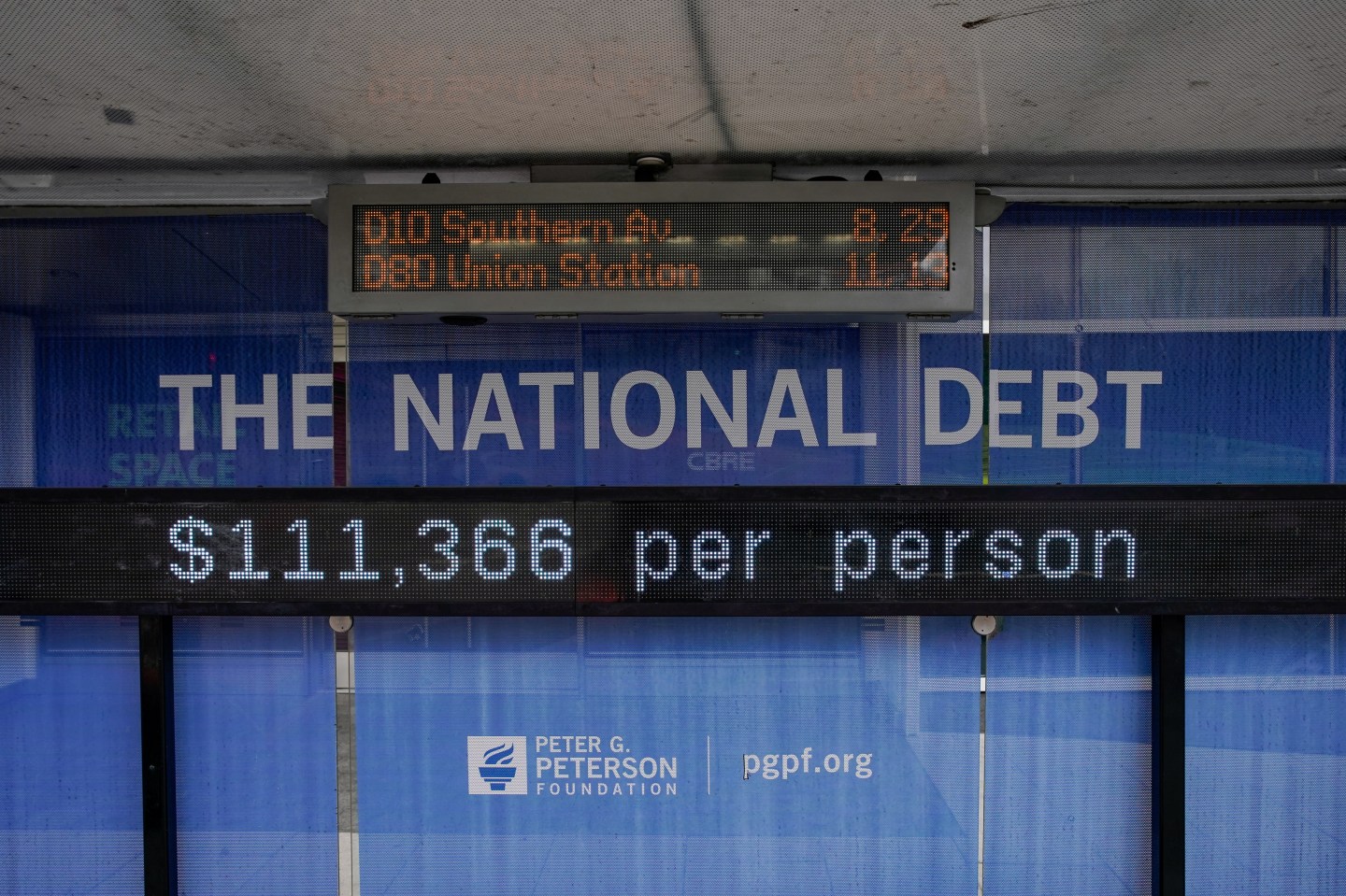
FORTUNE — In a long-awaited breakthrough, Congress is inching closer to a deal that would increase the nation’s borrowing limit and end a two-week-old government shutdown. The U.S. may just barely miss a default days before the U.S. Treasury exhausts its ability to borrow, but the sigh of relief could be short lived.
As the Washington Post reports, the Senate’s Republican caucus is scheduled to meet at 11 a.m. Tuesday to consider an emerging deal, which if finalized, could extend the Treasury’s borrowing power until Feb. 7, reopen the government, and fund federal agencies through mid-January. Months from now, it wouldn’t be surprising if Congress stalls over the debt ceiling again. Only next time the U.S. may not be so lucky, and the latest debt ceiling debacle offers a good glimpse as to why.
Unlike the political gridlock in 2011 when the U.S. lost its stellar credit rating from Standard & Poor’s, some lawmakers (Republicans, in particular) have been downright blasé about it all this time around.
They’ve been playing down the significance of hitting the debt limit — Sen. Rand Paul of Kentucky says the U.S. can avoid default by putting aside funds to pay bondholders. That may sound fine at first, but it effectively suggests other expenses, such as payments to Social Security recipients, could take a back seat. That would be scary because not paying your bills obviously isn’t a good way to get yourself in good financial condition.
MORE: Default would be catastrophic for big banks
And for the U.S. government to skip its financial obligations would be catastrophic for the U.S. dollar.
In an article in Project Syndicate, University of California economist Barry Eichengreen lays out the implications of a default on the world’s reserve currency. The result would be a sharp drop in the dollar combined with huge losses for financial institutions.
“Even if the Treasury paid bondholders first — choosing to stiff, say, contractors or Social Security recipients — the idea that the U.S. government always pays its bills would no longer be taken for granted,” says Eichengreen, who writes frequently about the demise of the dollar. “Holders of U.S. Treasury bonds would begin to think twice.”
Already, the world’s central banks are losing faith in the world’s richest country; officials are preparing for a U.S. default some say could happen at any time. The dollar’s decline would be felt across the world, causing the value of smaller currencies to spike. It would also hurt emerging market economies, causing currencies from South Korea to Mexico to shoot up and therefore make whatever they sell abroad more expensive and much less competitive.
This sounds pretty awful, but it’s easy to see why some folks in Washington aren’t convinced. When the subprime-mortgage crisis hit, it was widely forecast that the greenback would tank, but that never happened. Eichengreen notes the dollar actually strengthened as investors scrambled for safety in U.S. Treasury bonds. That also happened a year later when Lehman Brothers went under.
MORE: El-Erian: Kicking the can down the road is not enough
But a default would be different, he argues. There would be a serious shortage of cash circulating the economy, as the electronic network operated by the U.S. Federal Reserve to transfer funds between financial institutions isn’t set up to settle transactions in defaulted securities. The repo market, loans offered against Treasury bonds, would freeze up.
And mutual funds prohibited by covenant from holding defaulted securities would have to dump their Treasuries in a fire sale. And all this could threaten the health of commercial banks and undermine confidence in the Federal Deposit Insurance Corporation, which insures deposits. “Beyond the immediate financial costs, the dollar’s global safe-haven status would be lost,” Eichengreen writes.
To be sure, the dollar has already been unraveling. In recent years, China, the world’s second-largest economy, has been trying to diversify away from U.S. government debt to seek higher returns and reduce risk. As of June, about 35% of the foreign-exchange funds held by China’s State Administration of Foreign Exchange were in U.S. government debt, compared with 45% in June 2010.
U.S. political gridlock doesn’t help. The nation may barely miss default this week, but another showdown over the debt ceiling puts Americans closer to the fall of the mighty greenback.