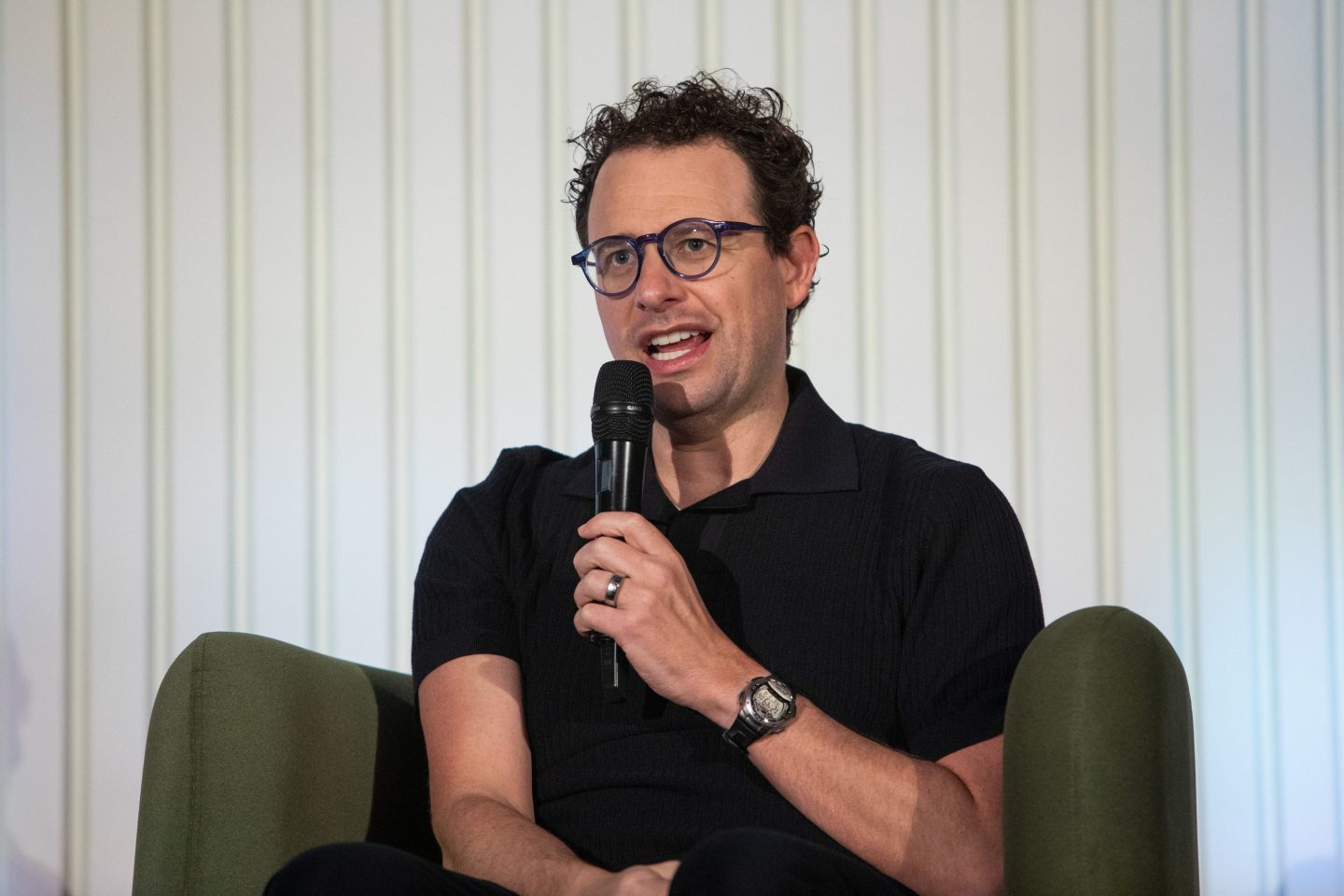
Jamie and Ben Heywood, trained as mechanical engineers at MIT, learned their brother Stephen was diagnosed with ALS (Lou Gehrig’s disease) in 1999. They grew frustrated by the lack of reliable information and support online and, in 2004, launched PatientsLikeMe, a destination for visitors to share personal stories, medical histories, and responses to online questionnaires. Today the site has about 200,000 users and covers more than 1,500 diseases. A condensed and edited conversation follows:
Would you call your website a social network?
Jamie: I struggle with this definition. We do have social-networking components, but it’s not the core of what we do. The Internet has sparked a technological shift to allow greater collaboration across diverse populations with common goals. There are new methods of crowd collaboration. Wikipedia, for example, is a winning method for group editing a particular style of article. For pithy, tight answers you have Quora or Yahoo Answers (YHOO). Then you have Facebook (FB) or MySpace for social entertainment. In the end, though, these are all just ways of enhancing collaboration. What PatientsLikeMe does is combine these with the actual measurement of medicine, which amplifies the value of the networking. Yes, we are a patient network, but we are also a real-time research platform.
You’ve asked my next question: How effectively do you deploy those tools?
Jamie: Again, it’s a bit complicated. Let’s look at three “social networks” that have people with MS on them. There are about 400,000 people with the condition in the U.S. Roughly 300,000 of them are likely on Facebook. Roughly 30,000 of them are on PatientsLikeMe. Large clinical trials have 2,000 people. Each network has a different social architecture. Facebook, if it put its mind to it, could probably identify roughly half the population (with errors) based on their behavior. So Facebook, in some ways, is the largest registry of MS patients in the world. We’re the second. A trial is the third. Each involves a different social contract for participants and a different set of tools. Our tools allow people to manage their health, compare where they are to others like them, learn about new treatments, and contribute data directly to research.
And how valuable are these networks?
Jamie: A clinical-trial year’s worth of data is very valuable, and pharma pays tens of thousands for each one. On PatientsLikeMe, we call these patient-outcome years defined as the duration of how well you can confidently assert that you know the health of a patient; each data point from each patient over time adds to this measurement. The question this answers is, How well do you confidently know someone’s health status? The patient contributing data to her own measurement of health is not just helping herself, but allowing others to learn from what she does.
Ben: Our goal ultimately is that every patient’s decision is informed by every patient before them. It works because we’re radically open about it. We tell our members exactly what we do with their data, where it’s going, and for what purpose.
That has to do with selling patient data to drug companies. How would you guys describe your business?
Jamie: What we’re really trying to do is launch the beginning of personalized discovery in the same way personalized computing has revolutionized so much of our lives. I lived through the beginning of the computer age, and I’ve owned pretty much every PC ever built. At the beginning of this era, the mainframe computer people would sort of laugh at those of us using the personal computers — they thought it was cute. I remember at the time thinking these people just didn’t get it. It’s just like that now in personalized discovery.
So there’s going to be an explosion in this industry soon, a revolution, is what you’re saying?
Jamie: My sense of déjà vu in terms of what happened in personal computing and what is happening in biology is so screamingly strong. Biology is a mainframe business: It takes big labs, big budgets, and big teams, and the age of personalized biology is booting up now. The American Gut Project, 23andMe, the Personal Genome Project — you can see it in this small minority of people beginning to engage in lightweight research. What people often miss, though, is if you look at the cost curves in biology they’re going faster than Moore’s law. People need to understand how little we know about health care and biology. Today, the person who can tell you something actionable is the doctor. That’s not going to last much longer because data is going to change from observations to big data that’s evaluated in real time. How is that going to affect the medical space? Who will be best able to interpret your MRI? The radiologist? Or a computer? It’s just a question of time.
MORE: Social media comes to health care
Ben: It’s an innovator’s dilemma. Right now, we are all creating what is considered lower quality medical evidence. It’s getting better and better. Look at the last three years at PatientsLikeMe: Three years ago the world saw us as just a social network for patients. Now we’re a viable clinical-research platform that has published 30 peer-reviewed research studies. We have a much broader population of early adopters, and we’re helping clinicians and researchers and patients to develop better and better tools to measure health.
So what does all this change mean for you, for PatientsLikeMe, right now?
Jamie: We’re starting to do work with a lot of nonprofits, and they’re migrating some of their work to us. We’re building a set of platforms for rare diseases, with their registries on our system. All of this partially comes back to and extends from what we offer pharma — building disease-based communities — to learn from patients whether their drugs work or not, and for whom. There are other people who need that insight, namely clinicians, researchers, nonprofits, and payers (including government). So we’re starting to look at this as clusters — once you know and you care about a disease and you want to measure it well, you can activate a network, a global registry where patients and the entire research industry (including pharma) are collaborating. The next question is, What’s the best path to get there?
Do you have that path mapped out?
Ben: This is not Web 2.0, unfortunately. I don’t think two kids in a garage are going to solve health care. Health care is not so simple — there are very complex issues to be solved.
Jamie: Innovation in health care is extremely hard. If you have an idea, and not a device, you have to prove it to Nature or the New England Journal of Medicine for it to begin to be accepted. It’s a completely inhospitable environment for engineers or inventors. There is this mistaken assumption that if you make people better, you’ll get paid for it. That’s only true for patented devices and drugs. In health care information services, you have to be both innovative around a business model and be able to meet the standards of medicine. That’s in addition to having a good idea. It’s an almost impossible set of barriers that are very hard to navigate.
Why is that?
Jamie: It’s the consequence of a broken market. As I said, this is not a market where if you make people better you get paid for it. If health care bought cars, it would go to a factory, look at the machines, and pay the operators as much as they wanted without checking to see if they’re putting the parts together correctly. How many hospitals in this country know the percentage of the patients they gave hip replacements to five years ago who can walk today, or even if they’re still alive? The answer is close to none. I bet Ford knows 90% of the cars they made five years are okay.
Ben: Information is fundamentally different if it comes from a patient. If they bring it into the health care and medical research system, it will drive change faster. Patient value should drive the market value of products and services. What we’re trying to do is understand patient value, and this is something no one understands well. We are a long way from getting where we want to go, but you have got to start by measuring what you want to understand — which is what it is that patient value.