• Home
  • Latest
  • Fortune 500
  • Finance
  • Tech
  • Leadership
  • Lifestyle
  • Rankings
  • Multimedia

The day Apple’s Steve Jobs got serious about patents

By
Philip Elmer-DeWitt
Philip Elmer-DeWitt
Down Arrow Button Icon
By
Philip Elmer-DeWitt
Philip Elmer-DeWitt
Down Arrow Button Icon
October 8, 2012, 7:26 AM ET

“Patented!” Click to view the video.

FORTUNE — “And boy have we patented it,” Steve Jobs declared to laughter and applause when he unveiled the iPhone in January 2007.

The back story behind that declaration, according to The Patent, Used as a Sword, a front-page article in Monday’s New York Times, was a decision Jobs made five months earlier after Apple (AAPL) was forced to settled a patent infringement suit filed by Creative Technology.

Creative, a Singapore-based multinational that made several early MP3 players, including the NOMAD and the ZEN, had in 2001 submitted a U.S. patent application for a portable media player user interface. The patent was awarded in 2005 and in May 2006, Creative sued Apple for patent infringement in the iPod.

“Creative is very fortunate to have been granted this early patent,” Jobs said after settling with Creative for $100 million.

Based on interviews with former Apple lawyers, including Nancy Heinen, the Apple (and before that, NeXT) general counsel who was thrown under the bus in the 2006 stock option backdating scandal, the Times‘ Charles Duhigg and Steve Lohr tell the story of what happened next:

It was 2006, and Apple was preparing to unveil the first iPhone. Life inside company headquarters, former executives said, had become a frenzy of programming sessions and meetings between engineers and executives. And, increasingly, patent lawyers.

Just months earlier, Apple reluctantly agreed to pay $100 million to Creative Technology…

Privately, Mr. Jobs gathered his senior managers. While Apple had long been adept at filing patents, when it came to the new iPhone, “we’re going to patent it all,” he declared, according to a former executive who, like other former employees, requested anonymity because of confidentiality agreements.

“His attitude was that if someone at Apple can dream it up, then we should apply for a patent, because even if we never build it, it’s a defensive tool,” said Nancy R. Heinen, Apple’s general counsel until 2006.

Soon, Apple’s engineers were asked to participate in monthly “invention disclosure sessions.” One day, a group of software engineers met with three patent lawyers, according to a former Apple patent lawyer who was at the meeting.

The first engineer discussed a piece of software that studied users’ preferences as they browsed the Web.

“That’s a patent,” a lawyer said, scribbling notes.

Another engineer described a slight modification to a popular application.

“That’s a patent,” the lawyer said.

Another engineer mentioned that his team had streamlined some software.

“That’s another one,” the lawyer said.

“Even if we knew it wouldn’t get approved, we would file the application anyway,” the former Apple lawyer said in an interview. “If nothing else, it prevents another company from trying to patent the idea.”

The disclosure session had yielded more than a dozen potential patents when an engineer, an Apple veteran, spoke up. “I would like to decline to participate,” he said, according to the lawyer who was at the meeting. The engineer explained that he didn’t believe companies should be allowed to own basic software concepts.

It’s a major story that looks at software patents from both sides. You can read it here.

The article is Part 7 in the Times‘ ongoing iEconomy series. Four of the earlier pieces singled out Apple — some think unfairly — for outsourcing jobs, for exploiting cheap Chinese labor, for avoiding U.S. taxes and for how little it pays employees in its retail stores.


About the Author
By Philip Elmer-DeWitt
See full bioRight Arrow Button Icon

Latest in

Middle EastMilitary
2 U.S. service members and one American civilian killed in Islamic State ambush in Syria, Central Command says
By Samar Kassabali, Bassem Mroue and The Associated PressDecember 13, 2025
24 minutes ago
InvestingStock
There have been head fakes before, but this time may be different as the latest stock rotation out of AI is just getting started, analysts say
By Jason MaDecember 13, 2025
37 minutes ago
Politicsdavid sacks
Can there be competency without conflict in Washington?
By Alyson ShontellDecember 13, 2025
1 hour ago
Investingspace
SpaceX sets $800 billion valuation, confirms 2026 IPO plans
By Loren Grush, Edward Ludlow and BloombergDecember 13, 2025
2 hours ago
PoliticsAffordable Care Act (ACA)
With just days to go before ACA subsidies expire, Congress is about to wrap up its work with no consensus solution in sight
By Kevin Freking, Lisa Mascaro and The Associated PressDecember 13, 2025
2 hours ago
PoliticsDonald Trump
Trump couldn’t insult his way to victory in Indiana redistricting battle. ‘Folks in our state don’t react well to being bullied’
By Thomas Beaumont, Isabella Volmert and The Associated PressDecember 13, 2025
3 hours ago

Most Popular

placeholder alt text
Economy
Tariffs are taxes and they were used to finance the federal government until the 1913 income tax. A top economist breaks it down
By Kent JonesDecember 12, 2025
1 day ago
placeholder alt text
Success
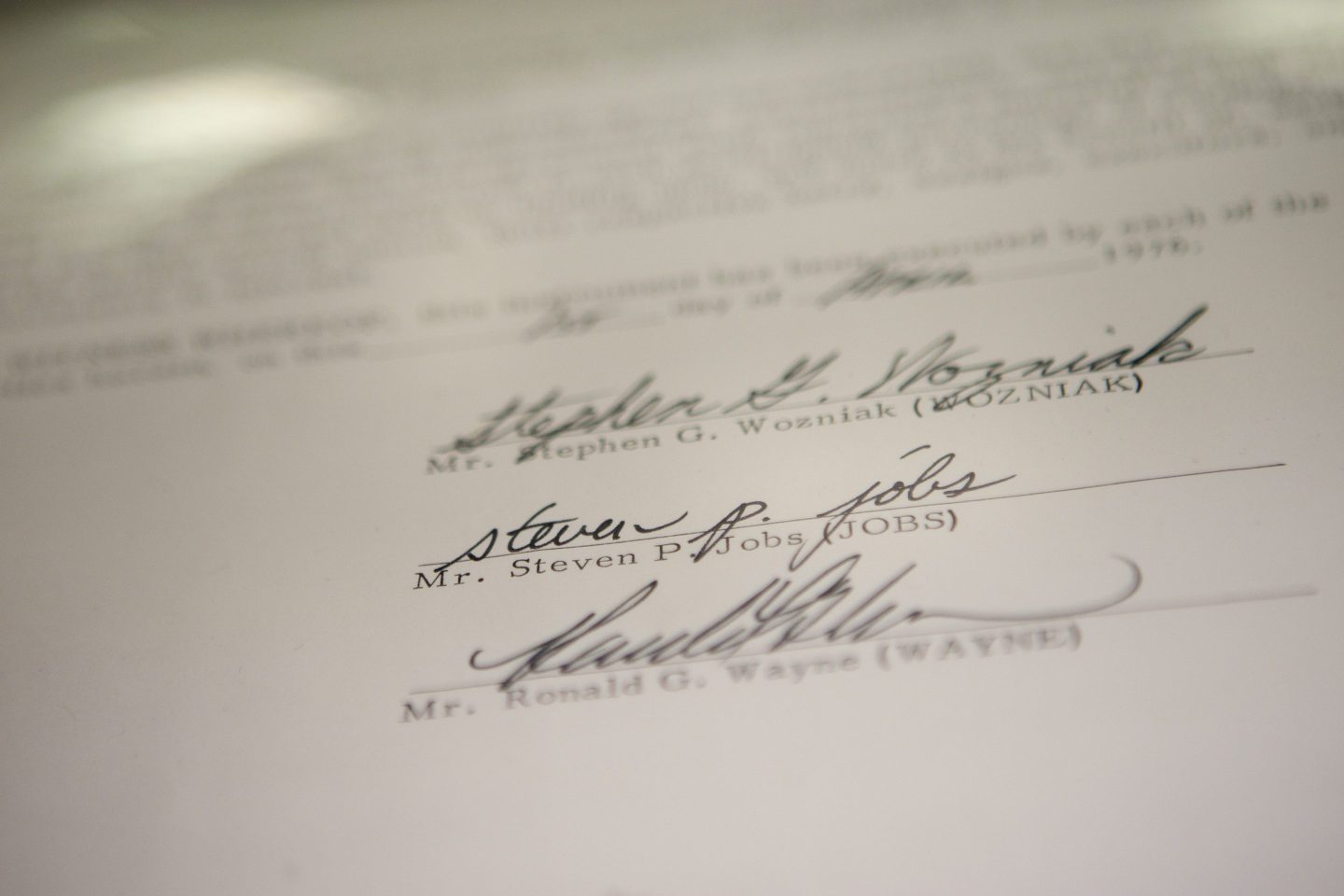
Apple cofounder Ronald Wayne sold his 10% stake for $800 in 1976—today it’d be worth up to $400 billion
By Preston ForeDecember 12, 2025
1 day ago
placeholder alt text
Success
40% of Stanford undergrads receive disability accommodations—but it’s become a college-wide phenomenon as Gen Z try to succeed in the current climate
By Preston ForeDecember 12, 2025
1 day ago
placeholder alt text
Economy
For the first time since Trump’s tariff rollout, import tax revenue has fallen, threatening his lofty plans to slash the $38 trillion national debt
By Sasha RogelbergDecember 12, 2025
23 hours ago
placeholder alt text
Economy
The Fed just ‘Trump-proofed’ itself with a unanimous move to preempt a potential leadership shake-up
By Jason MaDecember 12, 2025
21 hours ago
placeholder alt text
Success
At 18, doctors gave him three hours to live. He played video games from his hospital bed—and now, he’s built a $10 million-a-year video game studio
By Preston ForeDecember 10, 2025
3 days ago
Rankings
  • 100 Best Companies
  • Fortune 500
  • Global 500
  • Fortune 500 Europe
  • Most Powerful Women
  • Future 50
  • World’s Most Admired Companies
  • See All Rankings
Sections
  • Finance
  • Leadership
  • Success
  • Tech
  • Asia
  • Europe
  • Environment
  • Fortune Crypto
  • Health
  • Retail
  • Lifestyle
  • Politics
  • Newsletters
  • Magazine
  • Features
  • Commentary
  • Mpw
  • CEO Initiative
  • Conferences
  • Personal Finance
  • Education
Customer Support
  • Frequently Asked Questions
  • Customer Service Portal
  • Privacy Policy
  • Terms Of Use
  • Single Issues For Purchase
  • International Print
Commercial Services
  • Advertising
  • Fortune Brand Studio
  • Fortune Analytics
  • Fortune Conferences
  • Business Development
About Us
  • About Us
  • Editorial Calendar
  • Press Center
  • Work At Fortune
  • Diversity And Inclusion
  • Terms And Conditions
  • Site Map

© 2025 Fortune Media IP Limited. All Rights Reserved. Use of this site constitutes acceptance of our Terms of Use and Privacy Policy | CA Notice at Collection and Privacy Notice | Do Not Sell/Share My Personal Information
FORTUNE is a trademark of Fortune Media IP Limited, registered in the U.S. and other countries. FORTUNE may receive compensation for some links to products and services on this website. Offers may be subject to change without notice.