• Home
  • Latest
  • Fortune 500
  • Finance
  • Tech
  • Leadership
  • Lifestyle
  • Rankings
  • Multimedia
FinanceTerm Sheet

What happens after a Greek default

By
Cyrus Sanati
Cyrus Sanati
Down Arrow Button Icon
By
Cyrus Sanati
Cyrus Sanati
Down Arrow Button Icon
September 13, 2011, 2:33 PM ET


A Greek default has already occurred in the eyes of investors, even though it technically hasn’t happened yet. The market is now forcing European leaders to quickly decide how they want the rest of the sovereign debt crisis to play out. While the technical default of Greece — inevitable as it is — took around 18 months, similar defaults in other peripheral eurozone members will probably come much faster.

A lack of leadership on the part of the core members of the eurozone, namely Germany, could very well bring a swift end to the common currency, setting off an economic meltdown that few would want to imagine. The time has now come for Europeans to either move much closer or break apart.

Tomorrow is the deadline for owners of Greek debt to agree to a haircut on their debt by extending the repayment schedule out a few years. The plan required 90% of existing bondholders to sign on to the plan. But traders say that only 50% to 70% have signed on, complicating Greece’s attempts to head off a default.

The restructuring of Greek debt may still occur by the deadline, but the market seems to be fed up with all the dancing around. Even if Greece is able to convince debt holders to effectively take a large haircut on their debt, the country would still ultimately have to pay back, or refinance, 135 billion euro by 2020. To do that, Greece needs to take in more money than it spends – a lot more money.

That will be a problem, considering that all the austerity cuts the government has been forced to make have decimated Greece’s fragile economy. The country’s GDP contracted 7.3% in the second quarter of the year, far worse than expected. The resulting decrease in tax revenue caused the country’s budget deficit to widen to around 10% of GDP. Greece would need to run a primary surplus of around 5% of GDP to stabilize its debt burden at 180% of GDP by 2014 and would have to run almost a 9% primary surplus to reduce its debt to 90% by 2031, according to Citigroup.


Will Europe come tumbling down?

Running those kinds of surpluses is almost impossible for Greece given its economic outlook. So instead of waiting for Greece to miss a payment in the coming years, the market took matters into its own hands over the last few days. Credit default swaps on five-year Greek bonds this morning were trading at rates implying a nearly 100% chance of default by the government. French banks that hold Greek debt have seen their market values fall in the last few days, which imply a total loss on all their Greek debt holdings.

Panic selling

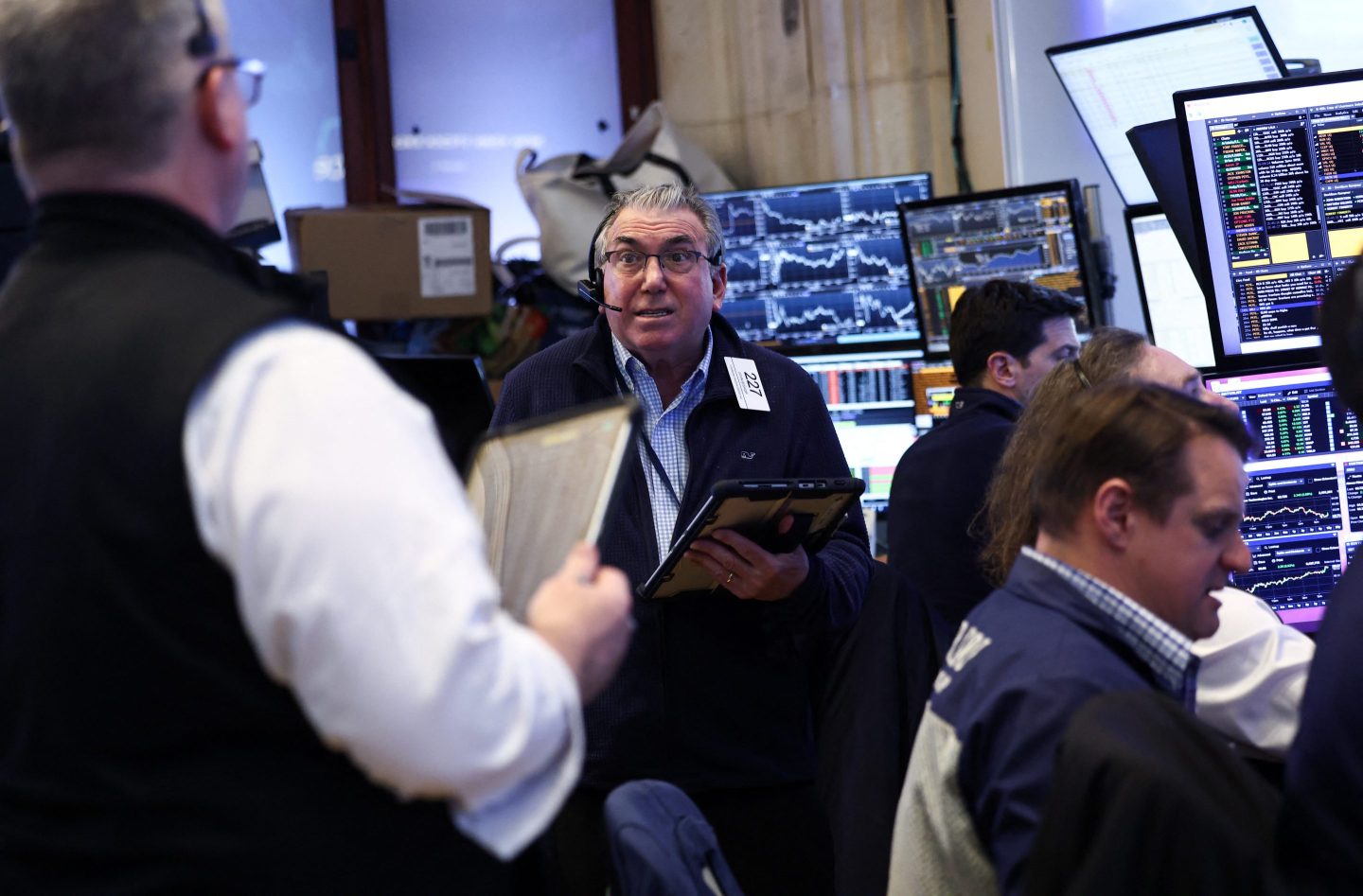
Score one for the market. Unfortunately, the market has a habit of going overboard. Panic is spreading across trading desks at speeds not seen since the dark days of 2008. The European slow motion crisis has now moved into overdrive, threatening to take down banks, businesses, nations and the European common currency. This is the contagion the media has warned about for months – it is already here.

While the technical Greek default isn’t causing fireworks like the fall of Lehman Brothers in 2008, the flames are growing. To be sure, this crisis was never really all about Greece’s current debt woes anyway. The amount it owed was always too small to move the needle, accounting for just 3% of eurozone’s total debt load. The real trouble comes after the default, when Greece has to make a choice about whether it stays in the euro or it takes its chances and moves back to the drachma.

Moving back to its former currency would allow Greek exports to be competitive again with its neighbors, especially those that cater to tourists. Across the Aegean in Turkey, GDP grew by 8.8% in the second quarter. There is no reason why Greece couldn’t capture some of that tourist market if it returns to a cheap currency.

But leaving the common currency would also lead to some nasty results. It would force Greece to raise cash to plug its budget shortfall and potentially pay yields that could run as high as 25% over German bonds, something that would probably be impossible. That would force Greece to make even larger cuts in government spending, further exacerbating its economic woes. The Greek banking system would almost certainly collapse in the changeover as the ECB would stop payments currently keeping them afloat. Without that cash infusion from the ECB, the Greek banks would be left with a massive funding gap equal to around 20% of their assets or 100 billion euros, according to an analysis by Citigroup.


Germany’s historic dilemma

A run on the Greek banking sector would result bringing economic activity in the country to a grinding halt. Imported products would be in short supply, creating serious political and social unrest throughout the country. The ensuing collapse in the Greek banking system would send shockwaves throughout Europe. Goldman Sachs (GS) estimates that banks in the peripheral eurozone would be hit the hardest, resulting in 38 banks requiring between 30 billion and 92 billion euros. Citigroup (C) estimates that losses in Greece, Ireland, Portugal and Spain would trigger direct and indirect losses of $480 billion.

By then, the ECB would need to make a hard decision. Would it wait for the politicians to get their act together or would it be the lender of last resort to all of Europe? The last time the euro debt crisis flared up earlier in the summer, threatening Italy’s 1.9 trillion euro debt market, the ECB stepped in and started buying Italian and Spanish bonds. So far the purchases have been moderate, not enough to bring Italian bond yields down to where they were before the latest crisis. The ensuing melee will force the ECB to buy a massive amount of bonds to stabilize the market, tying the fate of the peripheral countries with that of the richer core members.

This is, of course, what the core members were hoping to avoid all along. But if the euro is to survive it is clear that it needs to have a more unified economic policy. Much of the cost of this closer union will be borne by Germany, where the current government seems reluctant to take charge. That will need to change if it hopes to finally put a lid on this long-running sovereign debt crisis and move forward.
About the Author
By Cyrus Sanati
See full bioRight Arrow Button Icon

Latest in Finance

Finance
Lorem ipsum dolor sit amet, consectetur adipiscing elit, sed do eiusmod tempor incididunt ut labore et dolore magna aliqua. Ut enim ad minim veniam
By Fortune Editors
October 20, 2025
Finance
Lorem ipsum dolor sit amet, consectetur adipiscing elit, sed do eiusmod tempor incididunt ut labore et dolore magna aliqua. Ut enim ad minim veniam
By Fortune Editors
October 20, 2025
Finance
Lorem ipsum dolor sit amet, consectetur adipiscing elit, sed do eiusmod tempor incididunt ut labore et dolore magna aliqua. Ut enim ad minim veniam
By Fortune Editors
October 20, 2025
Finance
Lorem ipsum dolor sit amet, consectetur adipiscing elit, sed do eiusmod tempor incididunt ut labore et dolore magna aliqua. Ut enim ad minim veniam
By Fortune Editors
October 20, 2025
Finance
Lorem ipsum dolor sit amet, consectetur adipiscing elit, sed do eiusmod tempor incididunt ut labore et dolore magna aliqua. Ut enim ad minim veniam
By Fortune Editors
October 20, 2025
Finance
Lorem ipsum dolor sit amet, consectetur adipiscing elit, sed do eiusmod tempor incididunt ut labore et dolore magna aliqua. Ut enim ad minim veniam
By Fortune Editors
October 20, 2025

Most Popular

Finance
Lorem ipsum dolor sit amet, consectetur adipiscing elit, sed do eiusmod tempor incididunt ut labore et dolore magna aliqua. Ut enim ad minim veniam
By Fortune Editors
October 20, 2025
Finance
Lorem ipsum dolor sit amet, consectetur adipiscing elit, sed do eiusmod tempor incididunt ut labore et dolore magna aliqua. Ut enim ad minim veniam
By Fortune Editors
October 20, 2025
Finance
Lorem ipsum dolor sit amet, consectetur adipiscing elit, sed do eiusmod tempor incididunt ut labore et dolore magna aliqua. Ut enim ad minim veniam
By Fortune Editors
October 20, 2025
Finance
Lorem ipsum dolor sit amet, consectetur adipiscing elit, sed do eiusmod tempor incididunt ut labore et dolore magna aliqua. Ut enim ad minim veniam
By Fortune Editors
October 20, 2025
Finance
Lorem ipsum dolor sit amet, consectetur adipiscing elit, sed do eiusmod tempor incididunt ut labore et dolore magna aliqua. Ut enim ad minim veniam
By Fortune Editors
October 20, 2025
Finance
Lorem ipsum dolor sit amet, consectetur adipiscing elit, sed do eiusmod tempor incididunt ut labore et dolore magna aliqua. Ut enim ad minim veniam
By Fortune Editors
October 20, 2025
Fortune Secondary Logo
Rankings
  • 100 Best Companies
  • Fortune 500
  • Global 500
  • Fortune 500 Europe
  • Most Powerful Women
  • Future 50
  • World’s Most Admired Companies
  • See All Rankings
Sections
  • Finance
  • Fortune Crypto
  • Features
  • Leadership
  • Health
  • Commentary
  • Success
  • Retail
  • Mpw
  • Tech
  • Lifestyle
  • CEO Initiative
  • Asia
  • Politics
  • Conferences
  • Europe
  • Newsletters
  • Personal Finance
  • Environment
  • Magazine
  • Education
Customer Support
  • Frequently Asked Questions
  • Customer Service Portal
  • Privacy Policy
  • Terms Of Use
  • Single Issues For Purchase
  • International Print
Commercial Services
  • Advertising
  • Fortune Brand Studio
  • Fortune Analytics
  • Fortune Conferences
  • Business Development
  • Group Subscriptions
About Us
  • About Us
  • Editorial Calendar
  • Press Center
  • Work At Fortune
  • Diversity And Inclusion
  • Terms And Conditions
  • Site Map
  • About Us
  • Editorial Calendar
  • Press Center
  • Work At Fortune
  • Diversity And Inclusion
  • Terms And Conditions
  • Site Map
  • Facebook icon
  • Twitter icon
  • LinkedIn icon
  • Instagram icon
  • Pinterest icon

Latest in Finance

 The world’s 500 richest people made more than a quarter trillion yesterday as volatile markets react to fragile Iran war ceasefire
EconomyBillionaires
 The world’s 500 richest people made more than a quarter trillion yesterday as volatile markets react to fragile Iran war ceasefire
By Jacqueline MunisApril 9, 2026
7 hours ago
Only five ships crossed the Strait of Hormuz Thursday, far below Iran’s pledge as negotiations begin
EnergyIran
Only five ships crossed the Strait of Hormuz Thursday, far below Iran’s pledge as negotiations begin
By Eva RoytburgApril 9, 2026
9 hours ago
7 best debt relief companies 2026
Personal FinanceLoans
7 best debt relief companies 2026
By Joseph HostetlerApril 9, 2026
9 hours ago
iran
EnergyFood and drink
A global food emergency: Why the closed Strait of Hormuz puts half the world’s calories at risk
By Aya S. Chacar and The ConversationApril 9, 2026
11 hours ago
Willie Walsh, wearing a blue suit, looks to his right with his mouth slightly open.
EnergyAviation
Jet fuel supply disruptions are comparable to 9/11 and could take months to replenish even if Hormuz Strait is reopening, airline trade group warns
By Sasha RogelbergApril 9, 2026
11 hours ago
erewhon
EconomyFood and drink
Americans hate the economy so much, they’re buying $22 smoothies
By Yuanyuan (Gina) Cui, Patrick Van Esch and The ConversationApril 9, 2026
11 hours ago

Most Popular

The U.S. government is spending $88 billion a month in interest on national debt—equal to spending on defense and education combined
Economy
The U.S. government is spending $88 billion a month in interest on national debt—equal to spending on defense and education combined
By Fortune EditorsApril 9, 2026
17 hours ago
Gen Z doesn't want your full-time job. They want several part-time roles, and it's reshaping the entire workforce
Success
Gen Z doesn't want your full-time job. They want several part-time roles, and it's reshaping the entire workforce
By Fortune EditorsApril 9, 2026
20 hours ago
A Meta employee created a dashboard so coworkers can compete to be the company's No. 1 AI token user—and Zuckerberg doesn't even rank in the top 250
AI
A Meta employee created a dashboard so coworkers can compete to be the company's No. 1 AI token user—and Zuckerberg doesn't even rank in the top 250
By Fortune EditorsApril 9, 2026
19 hours ago
2 years ago, Saudi Arabia quietly canceled the ‘petrodollar’ deal with America that wired the world economy for 50 years. Then war broke out in Iran
Energy
2 years ago, Saudi Arabia quietly canceled the ‘petrodollar’ deal with America that wired the world economy for 50 years. Then war broke out in Iran
By Fortune EditorsApril 7, 2026
2 days ago
White-collar workers are quietly rebelling against AI as 80% outright refuse adoption mandates
AI
White-collar workers are quietly rebelling against AI as 80% outright refuse adoption mandates
By Fortune EditorsApril 9, 2026
18 hours ago
Gen Z workers are so fearful AI will take their job they’re intentionally sabotaging their company’s AI rollout
AI
Gen Z workers are so fearful AI will take their job they’re intentionally sabotaging their company’s AI rollout
By Fortune EditorsApril 8, 2026
2 days ago

© 2026 Fortune Media IP Limited. All Rights Reserved. Use of this site constitutes acceptance of our Terms of Use and Privacy Policy | CA Notice at Collection and Privacy Notice | Do Not Sell/Share My Personal Information
FORTUNE is a trademark of Fortune Media IP Limited, registered in the U.S. and other countries. FORTUNE may receive compensation for some links to products and services on this website. Offers may be subject to change without notice.