Two Bay Area billionaires are squaring off in the battle over how to fix the city’s benefits mess. It’s a liberals-only version of the national debate.

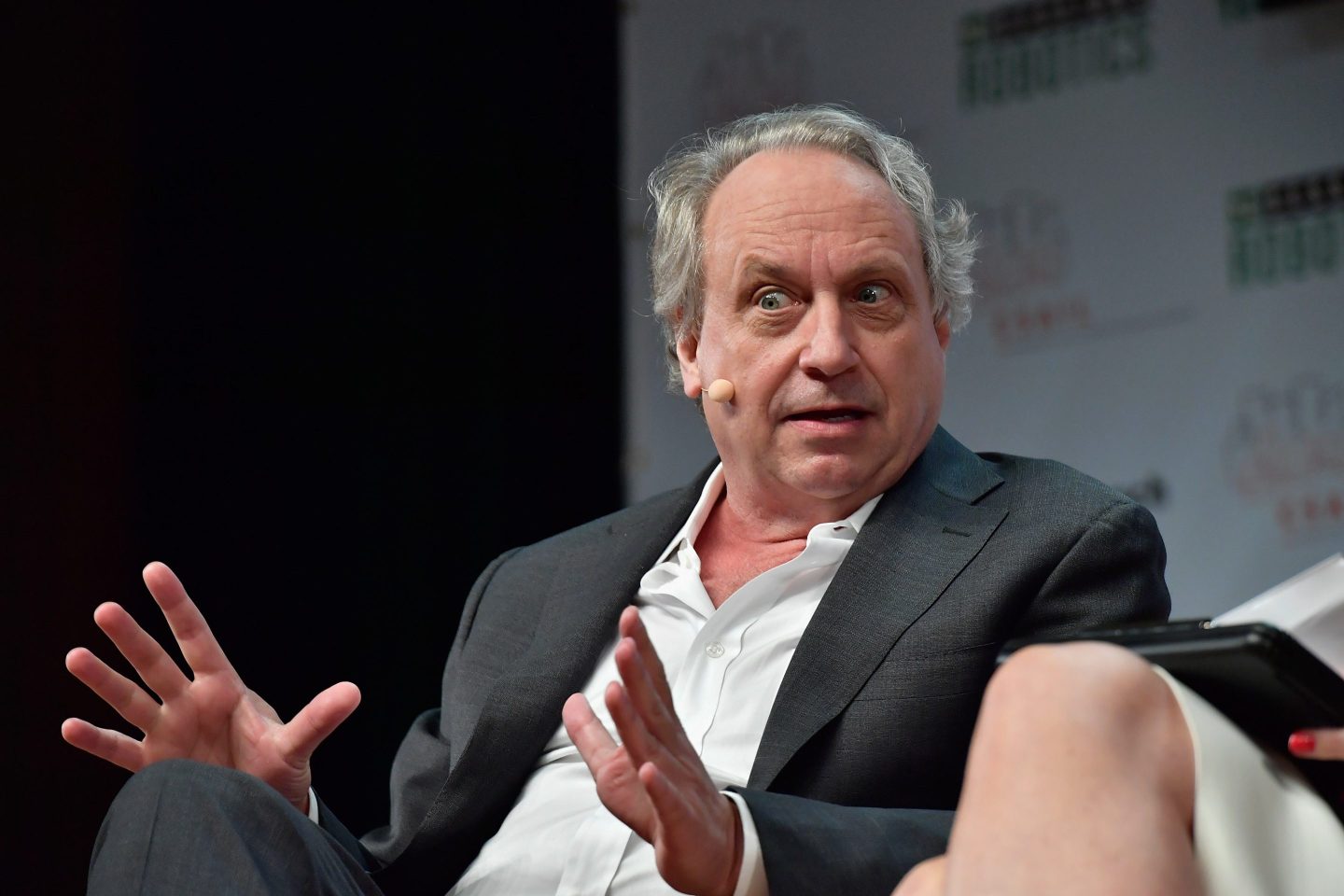
Michael Moritz and I are sipping dry white wine on a mild spring evening at his palatial home in the tony Pacific Heights neighborhood of San Francisco. As I take in the expansive view of the city and the gorgeous contents of his living room — walls chock full of contemporary art, a grand piano anchoring the space — I’m trying to work out why the famed Silicon Valley venture capitalist is engaged in a public-policy fight not only with the city’s labor unions but also with a fellow San Francisco billionaire, private equity big shot Warren Hellman.
Last year Moritz, 56, was the main financial backer of a failed citywide ballot initiative that would have drastically increased what city workers — from janitors, police officers, and firefighters to City Hall bureaucrats — pay into their ailing pension plan. Hellman, a longtime civic leader and the co-founder of buyout shop Hellman & Friedman, supported a union effort to defeat the proposal. “Warren had promised a solution before Election Day last year,” says Moritz, who took up the issue because he thinks the current system is “brutally unfair” to San Francisco’s taxpayers. “I told Warren he was tilting at windmills, and that a deal wasn’t going to happen. And it didn’t happen. They’ve been busy ever since engaging in fact-finding research.”
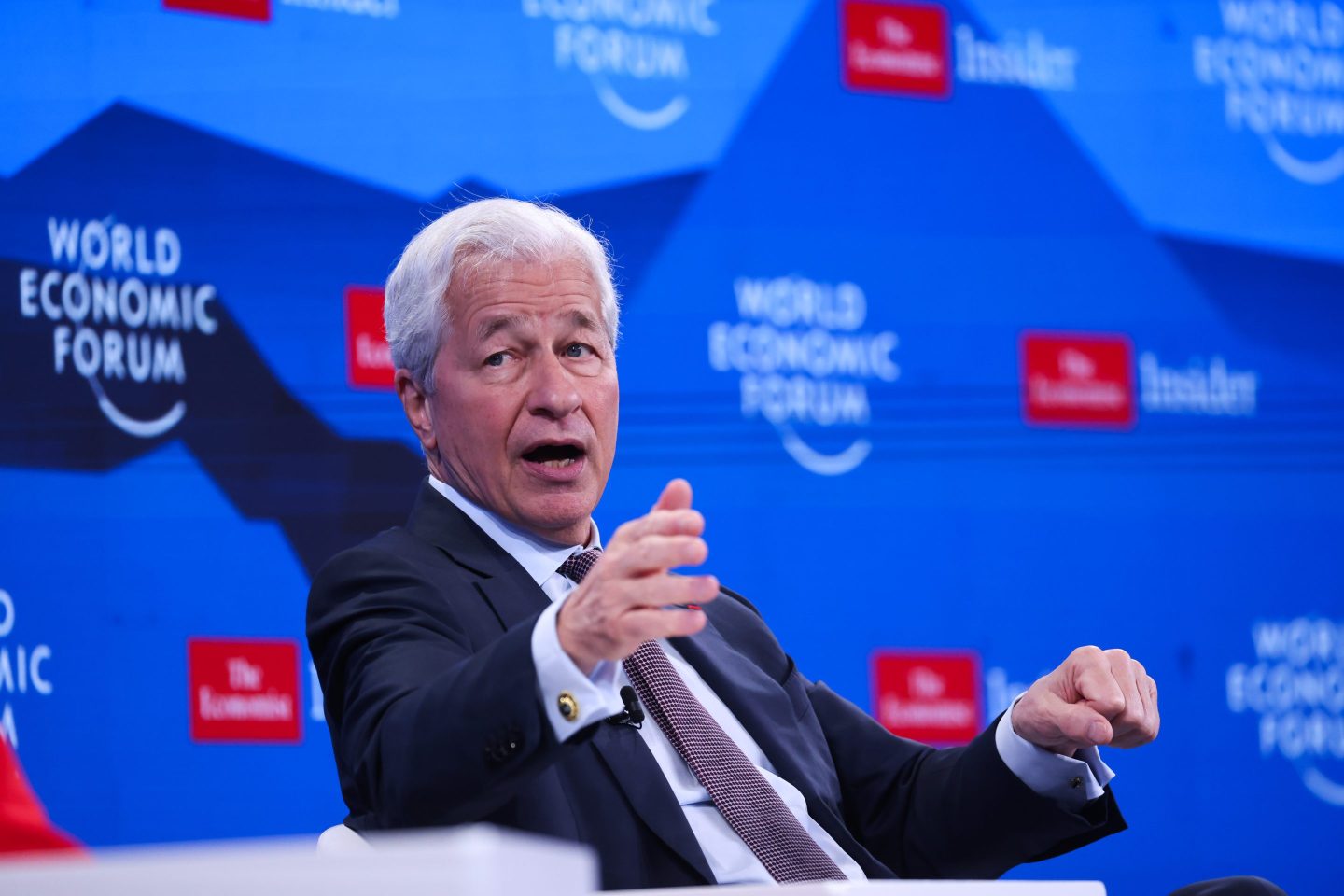
A few weeks later I visit Hellman, 76, at his office in San Francisco’s financial district. Surrounded by banjos — Hellman fronts a bluegrass band, the Wronglers, and forks over hundreds of thousands of dollars each year to host the Hardly Strictly Bluegrass Festival in Golden Gate Park — the investor and philanthropist is unrepentant. “Mike said to me, ‘If it wasn’t for you, we would have won,’ ” says Hellman, who points out that Moritz’s initiative fell 18,000 votes short. “That’s a landslide by any other measure.” In the world of ultra-rich, highly civilized financiers, you can count that as smack talk.
The gloves may not exactly be off for Moritz and Hellman. But the debate over how to reform San Francisco’s municipal-employee pension system is only getting more heated — and the stakes are high. The financial crisis of 2008 zapped a once-healthy fund, exposing extremely well-off retired cops and the ballooning pension bills funded by taxpayers to public scrutiny. Because of investment shortfalls and worker-friendly provisions in the current plan, the $16 billion San Francisco Employees’ Retirement System is about $1.5 billion short of what it needs to honor future commitments. Annual city outlays to cover pension costs have nearly tripled, to $357 million, since 2000. Without dramatic changes, that figure is projected to double again in a few years.
[cnnmoney-video vid=/video/technology/2011/06/01/ctd_sf_mayor_pension.fortune]
This battle over benefits isn’t exclusive to San Francisco, of course. Governments across the country are grappling with busted budgets and underfunded plans. The total shortfall for state and local pension funds nationwide is estimated to be as much as $1 trillion.

But the dynamics in San Francisco are unique thanks to the city’s ultra-left political orientation. Unlike New Jersey or Wisconsin, to choose two particularly nasty pension-reform venues, there are no Republicans at the table here to fight with Democrats. Tea Party activists don’t even bother with San Francisco, where members of the city’s Board of Supervisors, who might be labeled “liberals” in Chicago or St. Louis, are considered to be right-wing. Because the combatants inhabit the same end of the political spectrum, pure party-vs.-party rancor isn’t a factor. Or as Moritz, who was a Time magazine writer in his twenties, puts it, “This is not a group of NRA-loving, anti-abortion-rights activists on a crusade against a group of dope-growing, aging hippies.”
Seen in this light, the debate in San Francisco is almost a controlled experiment within the conflict that is rocking the nation — a true discussion about the social contract between a government’s citizens and the people who work for them. And with Moritz and Hellman helping to lead the way, it’s just possible that far-out San Francisco might come up with real solutions, which continue to elude combatants elsewhere in the U.S.
The fight starts
Pension reform has been on the political agenda in San Francisco since 2008, when an earlier ballot initiative altered the way city employees receive benefits. Then, in 2009, a civil grand jury issued a report titled “Pension Tsunami” that detailed shortfalls to come. That study caught the attention of Jeff Adachi, the elected public defender of San Francisco, who was frustrated over cuts in his office’s budget as the city’s commitments to pension and health care costs grew. As a side project, he studied the issue and decided to draft a ballot measure for the 2010 election that would increase employee contributions to their pension and medical benefits.
Despite a relatively low profile in the city before the pension fight, Adachi, 51, is a camera-ready activist. A self-described “progressive” from Sacramento whose Japanese-American parents were interned as children during World War II, he sports slicked-back hair and ’80s-style suspenders. A career public defender, he produced and directed a documentary film about the late Barney Miller TV star Jack Soo titled You Don’t Know Jack, which premiered recently on PBS. Adachi has kept his name in the media for another reason of late, having released videotapes of San Francisco police officers allegedly stealing property from suspects in custody.
Adachi has been coming at the police from two directions. “I know a cop making $500,000 at a time the city is cutting summer-school programs,” he says. “I just see that as wrong. I care about services for the most vulnerable.” To fund a signature-gathering drive, however, he turned to the least vulnerable. Through a friend, he approached Moritz, who seized on the opportunity to fund a campaign in which his money could make a difference.
Moritz is a certified Silicon Valley legend, having led investments for Sequoia Capital in mega-winners such as Yahoo (YHOO) and Google (GOOG). He’s on the board of LinkedIn (LNKD), whose shockingly successful IPO in May represents another giant return for Sequoia, the largest investor in the online professional network. Moritz says he and his wife have given regularly to various politicians from both political parties yet had grown disillusioned with their lack of impact. Calling himself a “Schwarzenegger Democrat” (in an interview before the revelation of the former California governor’s secret love child), Moritz says his upbringing in Britain left him with a sour taste for entitled unions. “We’ve got lots of friends around the city who don’t have that much money and are struggling to make ends meet,” he says. “Their entire quality of life has eroded as year by year city services have been cut back because of the need to fulfill obligations that generations of politicians have made.”
Moritz has paid a price for opposing organized labor. At a particularly heated moment of the debate last year, unions put together a protest in front of his home. They also urged an investigation to ensure that none of their funds were invested with Sequoia. (They weren’t, nor, Moritz assures me, will they ever be.) Moritz’s reaction to having his house picketed? “It only hardened my resolve.”
With Moritz onboard, Adachi’s efforts picked up steam as pension reform became a battle cry throughout the country. Adachi even attracted the attention of Warren Hellman, who wrote a check for $50,000 in August 2010 to support the pension-reform campaign.
The two sides square off
Word of Hellman’s support for Adachi was a blow to the firefighters of San Francisco, who considered the down-to-earth billionaire a friend. Hellman was practically born into the role of civic leader — his forebear I.W. Hellman was a prominent San Francisco banker in the 1890s — and has long cultivated his relationship with city employees. For years he has counted on support from public-safety workers to make his music festival go smoothly. Firefighters union president Tom O’Connor, a onetime political science graduate student turned hook-and-ladder man, arranged a breakfast with Hellman and pleaded with him to withdraw his support from Adachi. Hellman agreed on one condition: Once the unions beat Adachi, they would begin working on a reform measure of their own.
That’s in essence what happened. The unions turned out in force to beat the Adachi-Moritz proposal and almost immediately began meeting in Hellman’s offices to craft a counterproposal for this year’s ballot. Between November and March the “Hellman Group” met for about 60 hours total, before San Francisco’s interim mayor, Edwin Lee, suggested that the coalition shift its meetings to City Hall. One person excluded from organized labor’s deliberations was Jeff Adachi. “In what world would you say, ‘We’ve got a pension problem. Let’s call in the public defender?’ ” sniffs O’Connor of the firefighters union.

Hellman is considerably more charitable to Adachi, whom Mayor Lee has invited to certain meetings. “Without Jeff Adachi, I’m a little dubious that any of this would be happening,” says Hellman. Even while taking sides, Hellman has strived to stay statesmanlike, above the fray. He’s particularly proud of Bay Citizen, a nonprofit online journalism outfit focused on local politics that he seed-funded with $5 million. (It has covered the pension-reform issue aggressively, dutifully noting Hellman’s role in the debate.)
As Fortune went to press in late May, the political situation in San Francisco remained fluid. Hellman and the unions were trying to craft a compromise proposal that includes upping employee contributions to the pension plan to as much as 11% or more of their salaries, compared with 7.5% today. They were embracing a controversial actuarial technique calling “smoothing” that spreads out investment losses over 10 years and has the effect of lowering pension costs in the near term. Labor’s investment-return assumptions also model a 7.75% annual return, an aggressive target. (An Adachi consultant notes that Berkshire Hathaway (BRKA) assumes 6.2% for similar funds.)
Adachi blasts smoothing as a burden to taxpayers in future years. His proposal calls for employee contributions as high as 16%, but it addresses only pension issues, a change from his 2010 attempt to cut medical expenses as well. For his part, Mayor Lee was preparing a ballot measure said to run past 100 pages that will be scrutinized by the city’s Board of Supervisors before being put before voters.
It’s theoretically possible that all the warring factions could agree on one reform plan before November. “If there’s a consensus proposal that offers real reform, I will withdraw my measure,” says Adachi. But no one much believes him, and Moritz pugnaciously promises to fight on. One piece of good news is that the San Francisco pension fund, like investment pools everywhere recently, is having a banner year: It’s up 23% since its fiscal year began last June.
The best news of all, though, is that so much effort has gone into the various proposals that San Francisco appears ready to repair its pension system no matter what happens in the stock market or among its warring progressives. If that happens, we should all raise a glass of dry white wine in their honor — and follow their example.