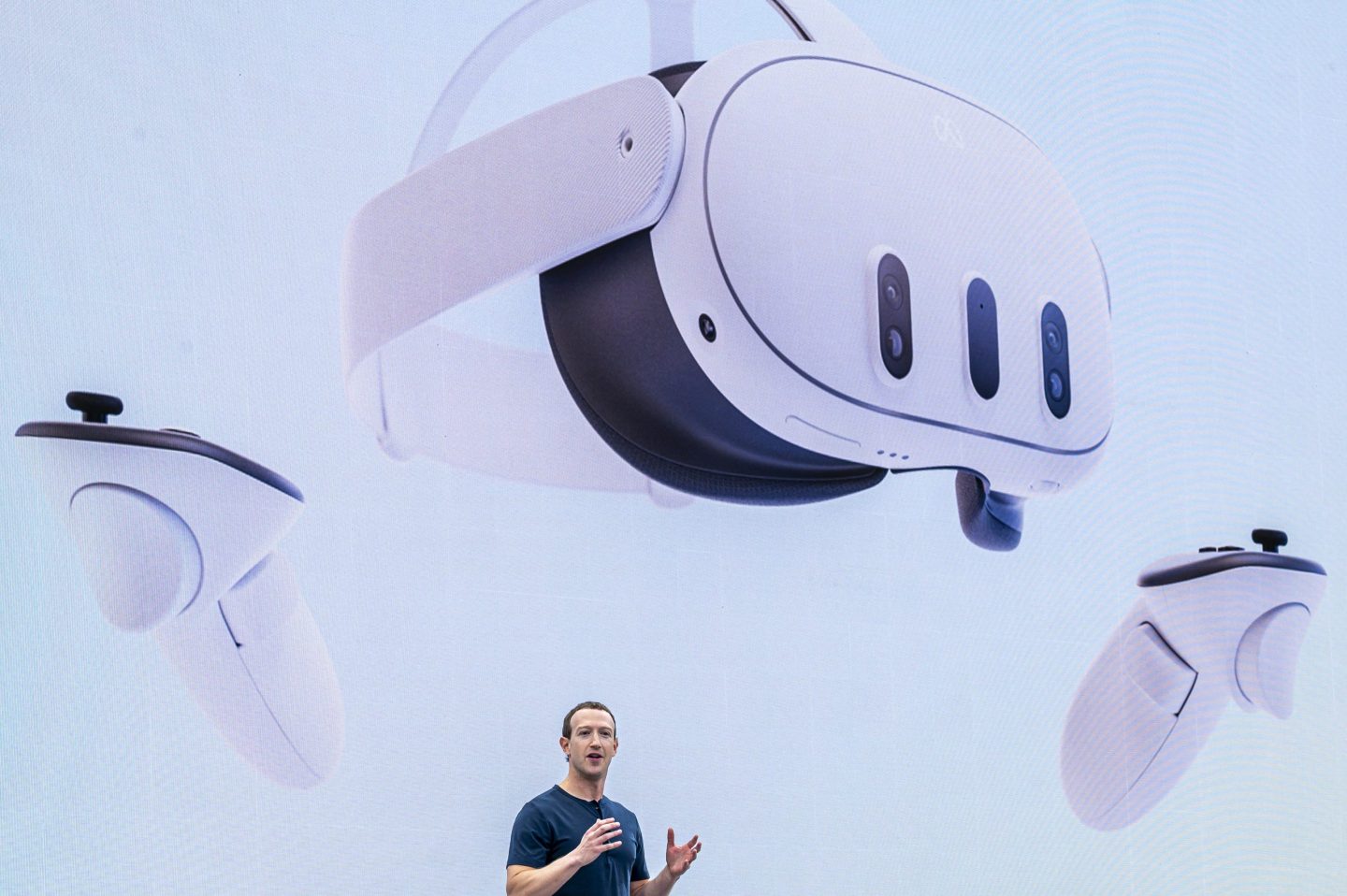
If Mark Zuckerberg wants in on the biggest boom country in Asia, the social networking champ will have to make some tough choices about what kind of company he wants Facebook to be.

“Like” it, hate it, or just plain don’t care, there’s no denying the Facebook effect. In six years, the social networking site has usurped both Friendster and MySpace and amassed nearly 600 million registered users who access it in more than 200 countries across six continents, from Tunisia to Qatar.
But there’s one huge country where the site has failed to make headway — China. Where America represented the land of opportunity to immigrants during the first half of the 20th century, China now represents the country with the most untapped potential for Mark Zuckerberg and Facebook. Facebook used to have a presence there, but for the better part of two years, the site has been mostly inaccessible, thanks to government censorship. And given Facebook’s incredible penetration statistics in the U.S., China’s 420 million Internet users represent a pretty large pool for a company still in an aggressive growth stage to have to pass up.
That’s probably why the idea of a Chinese Facebook presence is so tantalizing for Zuckerberg, who visited the country last December. Though vacationing with his girlfriend, the CEO also found time to meet with tech companies, including Robin Li, CEO of Chinese search engine giant Baidu.
“Obviously this is one of the big dark spots for Facebook because it is blocked here,” Baidu spokesman Kaiser Kuo said recently. “I’m sure [Zuckerberg] wants to get the advice of someone who knows the Internet landscape well here.”
Zuckerberg himself has all-but-admitted his own interest.
“Our theory is that if we can show that we as a Western company can succeed in a place where no other country has, then we can start to figure out the right partnerships we would need to succeed in China on our terms,” Zuckerberg said during a speech at Stanford University last year. “How can you connect the whole world if you leave out 1.6 billion people?”
The Great Firewall
When it comes to Internet access, Chinese citizens don’t have a whole lot of say in the matter. Facebook remains off-limits to them, though that wasn’t always the case. The social network launched a remotely hosted, Chinese language version in June 2008, but extremely slow access plagued the service until 2009.
Then in July of that year, riots erupted in Urumqi, the capital of China’s Xinjiang region. Some 1,400 protesters were arrested, and among the media, the situation was dubbed “the next Tiananmen.” Soon after, Chinese Facebook users who tried to log in ran up against a “Network Timeout” error message. The government had been officially blocked the social network, pushing it beyond “The Great Firewall of China” to, according to Li Zhi, the Communist Party of China’s Urumqi police chief, “quench the riots quickly and prevent violence from spreading to other places.”
Facebook has remained blocked ever since, forcing some loyal users to get creative. Search the Internet long enough, and you’ll find underground forums populated by disgruntled Chinese users discussing ways to get around the firewall, including web-based proxies like SecuriTales, a plug-in-free, installation-free paid service, or a Virtual Private Network (VPN) like GoTrusted, that accesses the Internet through an Internet Service Provider (ISP) in another country.
“When Facebook was blocked, everyone was devastated,” an American expatriate in China who runs his own business told Fortune. A regular Facebook user since 2008, he now uses a VPN to access the social network. He views censorship as a necessary evil.
“Before the [Shanghai] World Expo started, they shut down a whole server farm for three days without warning so police could go through and look at each and every server and see if there was content they didn’t like,” he said, one of many such anecdotes emanating from the country that gives credence to the government’s commitment to censorship.
As free speech advocates argue, the government shouldn’t wield such power. But to succeed over there, a foreign product like Facebook would have to tolerate it. If Facebook grows large enough, it will, like Google (GOOG), have to face down a set of tough choices about how much it is willing to let the Chinese government peer into its server farms, in exchange for the ability to do business in the country.
Facebook’s gameplan
So far, Facebook has managed to stay mum on a market entry strategy.
“We are interested in China and are just starting to study and learn about the country, as part of evaluating various possible approaches to China that would most benefit our users, developers and advertisers,” Debbie Frost, Facebook’s Director of Global Communications, told Fortune.
The challenges for when Facebook does enter though are formidable. At the very least, it must confront the following issues:
Work locally. First and foremost, Facebook should be prepared to work with the Chinese government at an unprecedented level. If it wants to bypass the “Great Firewall,” which affects all sites outside the country, it needs to be hosted locally. To do that, Facebook will need a business license, a difficult thing to get unless it partners with a local company. It’s possible Facebook could position acquiring this license as a partnership, possibly by pairing up with a large, established Chinese player like Baidu. Doing so, whether it’s a serious joint venture or just a formality, will help Facebook cut through many layers of red tape and bureaucracy and expedite the process.
Censor. China is renowned for its strict supervision of Internet content. Currently, YouTube, Human Rights Watch, Voice of America, and a number of other sites remain inaccessible, and sites that are locally hosted find themselves policed by the government on a day-to-day basis. Chinese Internet companies like Baidu get by because they cooperate, deleting content in response to phone calls and instant messages from authorities requesting that they do, with far less protection of speech than U.S. law provides to Internet companies and users.
The issue most recently came to a head last year, when Google made history and withdrew from China, sacrificing billions of dollars in future revenues in the process, all based on co-founder Sergey Brin’s business and personal principles. (As Fortunereported, Brin was uncomfortable doing business with a stifling regime that resembled his native Soviet Union.)
If Facebook wants to run on local servers, it must be prepared to censor, though even then, it runs into the problem of just how it should censor content, and how far it should go. Should users be banned from “Friend”-ing others who “Like” taboo pages about say, Tibet or Tiananmen Square? Will status updates with verboten keywords, subjects, or links from banned sites be automatically deleted from News Feeds? Facebook must figure out how to address those issues and more. It’s arguable that censoring an interconnected social network will be far more challenging than simply deleting certain search results or links to website. Censorship on a Facebook page would likely look much more obvious, unless Facebook made a big committment to developing a version of its service that could mask that censorship from its users. And that’s probably a a must, because if Facebook doesn’t censor to the government’s satisfaction, it would probably be right back on the outside of China looking in before long.
Create a new Facebook? The social network could go down a different route entirely, creating a China-exclusive section or network that adheres to government regulations but operates separately from Facebook proper. Such a Facebook Great Firewall might be a somewhat easier undertaking. By balkanizing Chinese users and putting them in a sort of bubble, it’ll be much easier to control what content they can and can’t see, rather than trying to figure out a way for them to interact with international members.
Challenge local competition. Ever heard of Orkut? Launched in 2004 by Google, the social network ultimately failed to gain traction in markets like the U.S., but became a surprising hit in Brazil, so much so that the company’s offices are headquartered there now. According to Forrester analyst Nate Elliot, Orkut’s success was largely due to the fact that there wasn’t much in the way of local competition.
China is a different story. There are several locally-established players already, including popular Facebook copycats Renren and Kaixin001. Facebook may be champ in the U.S. and in other countries, but in China, it would need to start from scratch. Social networks at their core are about the people — after all, who really populates the News Feed with status updates, videos, photos, and links?
Local partnerships could benefit Facebook in terms of wider visibility and drawing potential users. Of course, the whole exercise could be irrelevant. China has made an economy out of copying and customizing the world’s ideas for its own customers and exportation– from handbags to cars to Japanese bullet trains, it’s simply part of the way the country does business and those local players aren’t waiting around for Facebook to get its operating license. That’s why one Chinese Internet company is already promising to learn from and adapt Facebook — ie, copy it — for Chinese users.
In the end, Facebook will have to ask itself, given all the financial, moral, and political sacrifices, if it’s willing to go this far for new users. It will have to ask if the very idea of a social network is undermined if the content on it is limited not by users’ imaginations or interests, but government interference. For the world, the question then becomes whether the Chinese Facebook will resemble the experience current users take for granted, or whether it will be an unrecognizable product that goes too far towards appeasement to be legitimate.
If it’s the latter, new users in China — and politically minded users worldwide — could find themselves pushing the “dislike” button on Facebook — by not logging on at all — pretty quickly.
More from Fortune:
Google vs China: Search giant blinks
What Google in China shows: It’s never about shareholders
Broken China