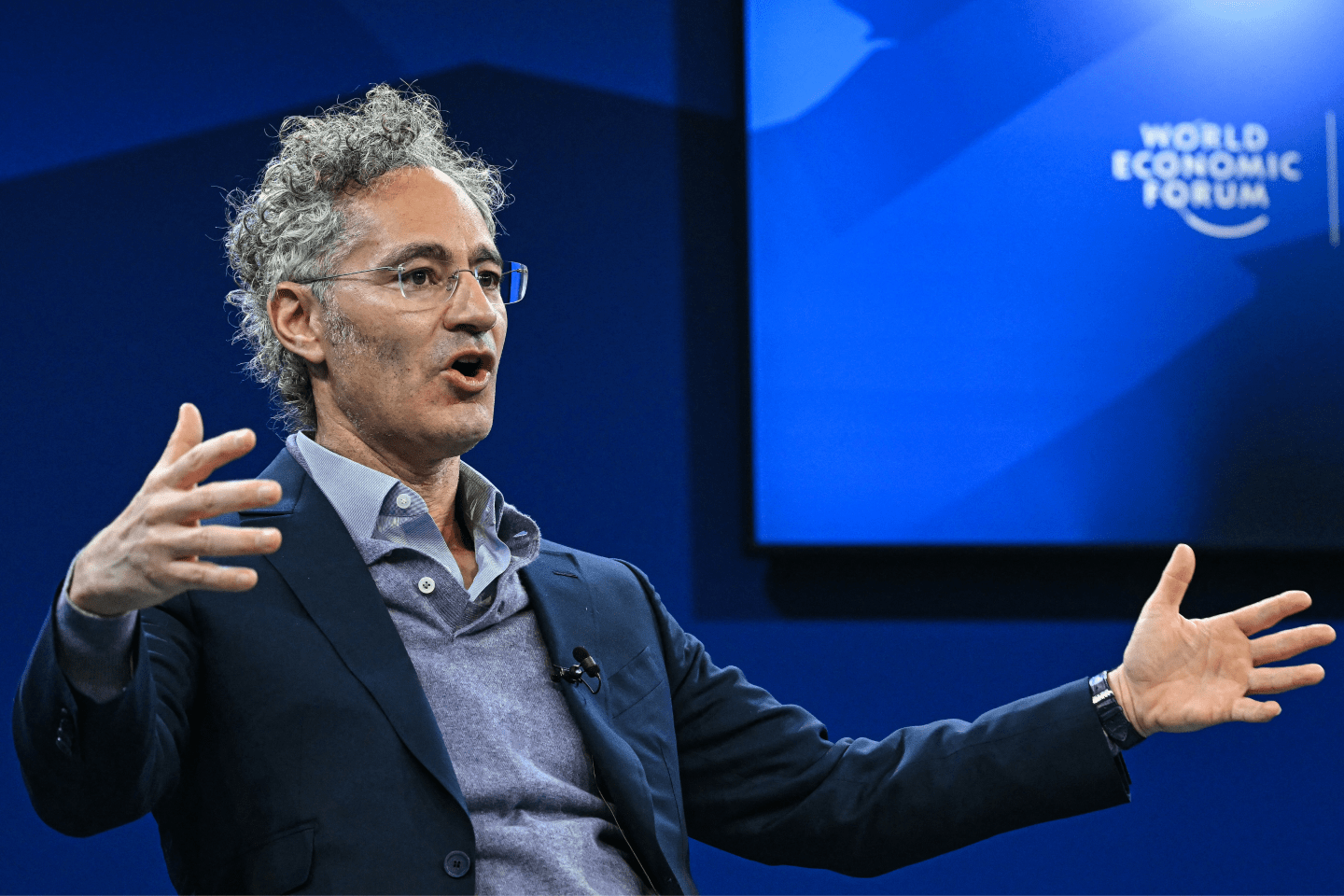
Kevin Johnson joined networking gear maker Juniper (JNPR) two years ago as CEO. A former senior executive at Microsoft (MSFT) who worked at IBM (IBM) before that, Johnson is Juniper’s first outsider to run the company. I spoke with him recently about Juniper’s disproportionate bet on research and development, how Juniper competes against Cisco (CSCO) and whether or not he still uses Microsoft products. An edited transcript follows.
Fortune: If the business world at large has any impression of Juniper, it’s that it has long had a profitable and successful role as the No. 2 to Cisco. Fair?
Kevin Johnson: Well, certainly we compete in the domain of networking, as does Cisco. Juniper is a 14-year-old company, and it’s made a lot of progress in that 14 years, but Cisco still remains a very large competitor.
F: What’s the difference in approach between Juniper and Cisco?
KJ: First of all, if you look at the industry dynamics, there’s a couple of key things that are happening. Number one, the network has become more and more relevant to the socioeconomic fabric that we all live in. There’s more traffic. There’s more digital devices. There’s more content consumption. And so the challenge for large customers is how to carry that traffic efficiently, and that’s where we take a slightly different approach than Cisco. The approach that we’re taking is one that says, we invent our own silicon, but we also have created a single operating system called Junos that does all the networking functions in one operating system. We’ve opened up a set of application programming interfaces so that we have third parties that also innovate on top of Junos. That’s a very different approach than the one that Cisco has taken.
[cnnmoney-video vid=/video/technology/2010/12/07/f_ctd_juniper_ceo.fortune/]
F: Okay. What does Cisco do that’s different?
KJ: If you look at the legacy network providers, over the last 10 years the approach that they have taken is a very hardware box-oriented approach. There have been over 150 acquisitions in the networking space over the last 10 years, and each one of those acquisitions has involved a different box, if you will. And each box runs proprietary software, and some type of silicon. And what that’s created for customers is huge complexity. Our Junos operating system works seamlessly with industry standards, and it simplifies the process of managing these large-scale networks.
F: So in order for you to succeed, do you need to get these existing customers with lots of boxes to rip those boxes out and to put your box in?
KJ: Certainly that’s what we’ve seen as market share has shifted, and as Juniper introduced the first core router, we rapidly took market share in core routing. We introduced edge routers, and we rapidly took market share in edge routing. We just introduced our switching, and we’re taking some share in switching. Now our products interoperate with all of our competitors based on industry standards. So customers don’t have to rip out all the old stuff. We can interoperate with it. But what you see customers doing over time is shifting the priority to a more efficient solution, which involves a single operating system. That’s really the differentiation at the core of our thesis that we have as a company.
F: How tied is Juniper to the macroeconomic environment?
KJ: Like everyone we have some relationship to capital spending by our large service providers, and IT spending by enterprise customers. And a lot of time that spending is driven by growth in GDP. So, clearly in 2009 we hit a recession, and our spending by service providers declined. We continue to grow in the enterprise. But we compete in a very large addressable market. The fact that we’re taking market share, and the fact that we still have a lot of up-sided market share to take means that we are less affected by GDP than others.
F: What are your share of the markets that are key to Juniper?
KJ: We’re about a 30% -share player in routing. If you take high-end security, we’re a 40%-share player. If you take Ethernet switching, a market we just entered six quarters ago, we’re about a 2 to 3%-market share player.
F: Networking from a business and a consumer perspective is kind of a funny business right now because consumers and business users alike are using more and more of the network. That’s good for equipment suppliers, I would think. It’s not necessarily so good for all of the service providers. Take YouTube, for example, which uses a ton of bandwidth, and doesn’t necessarily monetize it all the time as well as it would like to. Where does that hit equilibrium, and how does that affect Juniper?
KJ: Certainly if you map the economics of networking, and you map different business models, service providers that sell broadband access, or mobile Internet data access, they have a business model of charging a subscription fee. And obviously they have to have efficient infrastructure to carry that traffic and drive profitability. Others operate on online advertising. And certainly you’ve seen this rapid growth of online advertising as a business model. But at the core of it is two market trends: mobile Internet and cloud computing. Mobile Internet is the explosion of these smart phone devices, and more consumers with more digital devices consuming more data, more traffic, more applications, more services. Those services are being delivered out of massive data centers. You can take YouTube for example. Being able to store all that video, and distribute all that video requires massive data centers. Cloud computing is how you virtualize those data centers, and basically how you bring a new network fabric to connecting all those devices.
F: What are the risks? Is it too simplistic to say, well, this equipment market almost has to grow, and so, as long as you’re in the game, you’re going to grow as well?
KJ: Clearly with or without a recession Internet traffic is just growing exponentially. There are more and more users on the planet that have more digital devices consuming more digital content. And that trend, we predict, is going to continue for the next couple of decades at least. That means there’s going to be long-term economic fundamentals in the business of networking. Our job is to really innovate in new ways that provides economic benefit, and better experiences in a differentiated way.
F: Obviously we’re seeing massive disruption in those markets. Apple (AAPL) was not a major cell-phone player a very few number of years ago. Now it is. Salesforce.com was not a major player in software just a few years ago. Now it is. So, the question is, you want to be disruptive on the one hand to the market leader, Cisco. On the other hand, you’re not exactly a small player yourself, and you could get disrupted as well in these developments, right?
KJ: No question. We operate in a very competitive market. And whenever you have disruptions taking place in the market, those are inflection points for new competitors and new entrants. And in these two trends, mobile Internet and cloud computing, you see that. Our opportunity as a company is to make sure that, number one, we identify the disruptions that are happening in the marketplace, and, number two, that we innovate. Also that we invest. This last year we invested a little bit over 20% of revenue in R&D. In fact, in 2009, in the recession, instead of laying off employees and cutting R&D, we increased R&D.
F: That’s a multiple of the industry average.
KJ: That’s right. That investment in R&D combined with the disruptions around mobile Internet and cloud computing is the fundamental premise for our multi-year growth agenda.
F: From an investor perspective, when an investor has conviction about a certain kind of investment, they over-weight it. And if they’re right, they reap big rewards. If they’re wrong, they under-perform the market, and they fail. That’s what you’re doing with R&D.
KJ: That’s right. And that’s why when you look at the investments we make in R&D, and the output of new products, whether it’s our high-end security products that are now securing the vast majority of all mobile Internet traffic on the planet, or our new edge routers that are now the basis for fixed mobile convergence in the mobile Internet, those are key elements of our investments in R&D.
F: Cisco has made some unusual investments in consumer products companies, the Flip video camera, Linksys home routers, for example. You have not gone directly into any consumer markets. Who has the right approach?
KJ: We see significant upside in the domain of networking. Clearly Cisco has moved into other markets. I’m sure there are good reasons for them. We feel very good about our strategic focus.
[cnnmoney-video vid=/video/technology/2010/12/07/f_ctd_ceo_juniper_disrupt.fortune/]
F: Have you investigated selling directly to consumers?
KJ: We recently launched a new product called Junos Pulse which provides mobile security for smartphones. This software provides antivirus, anti-malware and parental controls. In many ways, this is a software basis that we’ve had with enterprise customers, and now for the first time it’s a software service that we can deliver to consumers.
F: But you’re not asking the consumer to write a check or put in their credit card number?
KJ: No. We’ partnering with large service providers.
F: I want to ask you a business culture and career question. You spent many years at Microsoft ultimately as a senior executive. Now, you’ve come over to be CEO of Juniper, two very different kinds of companies. What would you say is the single biggest change, other than being the boss, of shifting from Microsoft to Juniper?
KJ: What both Juniper and Microsoft have in common is they are companies that at their core are about technology innovation. And coming to Juniper, half of the employees in the company are engineers, and over 75 percent of those engineers at Juniper write software. That’s one thing in common. An interesting difference, though, I think culturally Microsoft was much more conflict-oriented. There was a lot more sort of challenging and conflict to get to an answer and Juniper is much more collaborative.
F: One last thing. I have this vision that everyone who leaves Microsoft now has the ability to go buy Apple products and does so. True?
KJ: First of all, at Microsoft I would use Microsoft and non-Microsoft products. It’s the only way you can get perspective on what competitors do. Now I use an iPhone. My wife uses an Android device and I try different things. I’ve got an iPad. I enjoy that. I also continue to use a laptop running Windows 7. So, I tend to use a range of things.