What happens when a generation is raised on economic promises that never materialize? Gen Z may want to ask their older siblings, the millennials, how that turned out, as the Great Recession of 2008—and the ensuing “jobless recovery”—left millions of altered lives, if not dashed dreams, in its wake.
But as the oldest Gen Zers approach the 30-year-old benchmark, the economic habits of a generation who was born during a financial regime change are looking increasingly different from those of the generation that lived through it.
The zoomers double as the so-called “doom spenders,” dishing out hundreds of dollars on concert tickets or international travel, entrenching the “YOLO economy” that emerged in 2021 amid the meme-stock craze. Gen Zers average $94,101 in personal debt, the highest of any generation and far more than millennials ($59,181) and Gen X ($53,255).
This could be easily written off as the financial mismanagement of youth, but taken as a whole, Gen Z’s outlook on the economy is at once a rejection of conventional wisdom and a deep, almost subconscious absorption of the commodification of everything. Economist and author Alice Lassman, a (British) Gen Zer herself, has written for Business Insider about her personal disillusionment after her stint at Columbia led to a verbal, later rescinded offer to be an economist at USAID. She calls Gen Z’s approach to economic life “disillusionomics,” or a way to cope with an uncertain and mystifying financial future.
Lassman wrote about her theory for the Guardian in October 2025, and told Fortune that she came up with the term herself. “I actually was sitting for a while with trying to understand this broad trend, or this broad glue that was connecting together a lot of the disparate Gen Z trends that we were seeing.” She said she thinks much of the way people relate to her generation has to do with this underlying economic phenomenon.
Gen Z’s rejection of traditional financial prudence is deeper than coming of age during an economic crisis, like their millennial counterparts, she told Fortune in an interview. With some members still in middle school, they are much younger than millennials were in 2008 and are more skeptical about their financial futures, according to the Institute of Politics at Harvard Kennedy School.
“The economic system their parents are talking to them about isn’t really going to work out for them in the same way,” Lassman explained. Her first taste of economics was the 2008 financial crisis, which hit when she was in what the British call primary school. “Since then it’s been kind of a perpetual crisis,” she said. Gen Z has internalized a mismatch between what they were told about how the economy works and what they’ve experienced much more deeply than is often appreciated, she argued.
“I think there’s this general sense of kids at school and … the content that they’re being exposed to, that things aren’t fitting, that like the economic system they think their parents are talking to them about isn’t really going to work out for them in the same way,” Lassman said.
Lack of faith in the future promised to them
Familiar markers of stability, such as homeownership, family and retirement feel unattainable. The unemployment rate for 16-to-24-year-olds reached 10.8% last year compared to 4.3% overall. One-third of Gen Z says they believe they’ll never own a home, and many are planning to forgo having children. Disillusionment, to Lassman, explains why Gen Z is no longer playing by the rules as they grow in their distrust of institutions like government, media, and business.
While alluding to “economic nihilism,” the term coined by entrepreneur Demetri Kofinas and made famous by the influential Substacker Kyla Scanlon, Lassman said her theory of disillusionomics has to do with the “late-stage commodification of anything.” Riffing off how Airbnb pushed a model of turning a spare room into more income, she said “Gen Z has taken that logic to the max” with their habit of “house hacking,” or renting an apartment larger than they need, chopping it up, and renting out rooms. She sees a generation constantly looking to diversify their sources of income, and seeing content creation as a kind of passive income.
“When every conventional path narrows, people start to look for alternatives. And in practice, that has meant turning toward the few places where a real upside still appears possible, even if the risks are high.” Scanlon recently wrote in the Wall Street Journal. “When people start treating the economy like a game, it’s a sign that the traditional ways of winning no longer feel real.”
JD Power has noted that Gen Z is more likely to use buy-now-pay-later services than traditional credit cards, affording them flexibility as they commodify their lives. Despite their affinity towards BNPL, Gen Z seems to be, in line with Lassman’s theory, spending less in general and spending differently than older generations.
“You know, Gen Z’s so interesting,” PwC’s global retail leader Kelly Pedersen told Fortune, expressing surprise at how little they’re spending as they age. He estimated that Gen Z spent 10% to 12% less in the recent holiday season than the previous year. “For their spend to decrease as much as they say it was going to decrease is pretty significant,” she said.
“That generation should be increasing spending more than anybody,” Pedersen said, “because they have the highest income growth out of any generation,” but it’s just not happening. He added that while it was “pretty surprising” to see this, any close watcher of Gen Z would expect it as this approach to spending is “pretty pervasive in terms of that generation and some of their habits … what we found overall is that the generation is very, very value-conscious.”
Pederson alluded to “dupe culture,” or Gen Z’s love of cheaper alternatives to luxury goods. “We find that if that generation doesn’t see the value there very quickly, they will very quickly trade down into a dupe, right, or into something that is like what they want, but maybe isn’t as expensive. So it’s all about value, value, value to that generation.” Gen Z disillusionomics, in other words, means they quite literally see past the illusion of luxury fashion into the value they can get from an object. Sustainability and longevity also play a big role in how Gen Z spends their money, he added.
Trouble in paradise
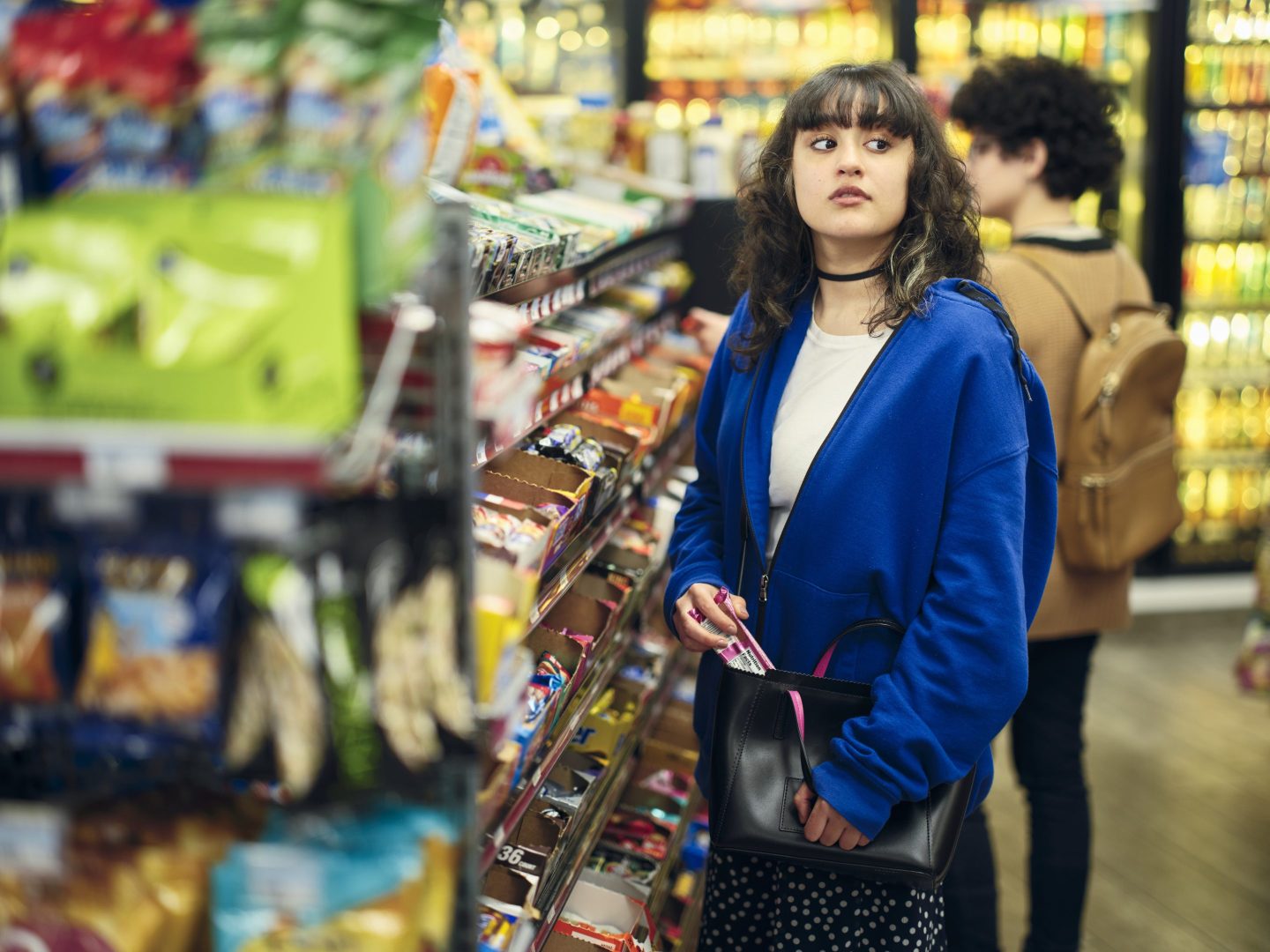
Gen Z also displays some “hostile” attitudes, Lassman said, being increasingly prone to shoplift in person or online because they feel like it is justified to steal from corporations that can absorb the loss. Others fall into zero-sum thinking about resources and an increasingly competitive labor market.
They are also more likely to experience age and money dysmorphia, Lassman said, a need to feel like they are always catching up. Short-lived financial trends and coping mechanisms such as treat culture and fast-yield dividend investments are material and psychological “survival strategies” to manage life in an affordability crisis.
“People are thinking that they’ve lost time, so we’re all kind of panicked about where things are going, also living in a very, very volatile world, politically, socially, economically,” she said.
Economic nihilism has been another strong reaction to an economy some say does not reward long-term planning. By gamifying their finances with prediction markets, sports betting and cryptocurrency, Gen Z is creating new opportunities to build lives for themselves in the system they don’t believe serves them.
Lassman told Fortune that she doesn’t think Gen Z is even really aware of how it’s acting, economically, but they are shaping the 21st century as they grow up. “A lot of it is just kind of reactive,” she said. “And so they’re kind of defining their own income streams.”
[This article has been updated to clarify that JD Power associates Gen Z with an increased reliance on BNPL.]
Are you a Gen Zer with a firsthand experience of “disillusionomics?” Get in touch with Jacqueline.munis@fortune.com.