• Home
  • Latest
  • Fortune 500
  • Finance
  • Tech
  • Leadership
  • Lifestyle
  • Rankings
  • Multimedia

EC says Intel influenced bids for computer projects

By
Roger Parloff
Roger Parloff
Down Arrow Button Icon
By
Roger Parloff
Roger Parloff
Down Arrow Button Icon
August 3, 2007, 11:42 AM ET

Last Thursday, when the European Commission preliminarily accused Intel (INTC) of having engaged in three categories of wrongdoing in violation of European competition law, the first two categories were old-hat, but the third was new.

The first two types of allegation were that (1) Intel used “loyalty rebates” to force computer makers to limit their use of Advanced Micro Devices (AMD) chips (see earlier post explaining those, here) and (2) that it dissuaded computer makers from promoting AMD’s product launches either through payments or threats. These allegations were familiar, as both had been leveled by AMD in its June 2005 federal antitrust suit against Intel in Delaware and the rebate allegation had also been made by the Japanese Fair Trade Commission in its March 2005 finding that Intel violated Japanese competition law.

The third type of allegation, however, was new, and sounded like a variety of predatory pricing. “In the context of bids against AMD-based products for strategic customers in the server segment of the market,” the commission press release said, “Intel has offered CPUs on average below cost.” (The document itself, known as a statement of objections, remains confidential, and has only been seen by Intel; but the EC released a press release Friday, available here, briefly summarizing its contents.)

In an interview yesterday, AMD executive vice president for legal affairs Tom McCoy told me that the third claim relates to Intel’s use of so-called “bid buckets” to enable a favored computer maker, who uses Intel chips, to win contracts for very large, prestigious, server computing projects. Basically, he claims, Intel would give a bucketful of money to one bidder so that it could easily underbid all rival bid participants, thereby ensuring that the showcase project would ultimately choose Intel-powered machines. AMD claims that Intel did this to mislead consumers. “You have a demanding, rigorous, end-user making a decision about technology,” McCoy says, “so the world wants to know what they choose. It says something about the technology.” McCoy claims that the practice, used between 2003 and 2006 when AMD’s Opteron server chip is widely acknowledged to have had a technological advantage over Intel’s offerings, infuriated all the bidders other than the annointed favorite. “It rigs the bid for everybody participating, even those using Intel technology.”

Intel spokesman Chuck Mulloy confirms that the EC’s third category of charge was something new, but he “won’t comment one way or another” on AMD’s characterization or any other specifics, saying the “statement of objections is a confidential document. I’m not going to violate those rules, which it sounds like AMD did.”

Of the general allegation that the EC did make public — that “Intel has offered CPUs on average below cost” — Mulloy said, “We think they’ve made some mistakes on their assumptions about our cost structure. They don’t have our data, view, or statement on that [yet] because we did not know that’s where they were going.” (Intel has until October 8, 2007, to supply a written response to the EC trying to allay its concerns.)

Asked for an example of a specific such project where a “bid bucket” might have been used, AMD’s McCoy refers to a previously reported 2005 incident, recounted in the British trade weekly MicroScopehere, in which a CompuSys official complained to the EC about a bid Dell (DELL) made for a high-performance computing contract offered by the Manchester University Computer Centre. The university had £650,000 to spend and hoped to buy a minimum of 550 servers; Dell won the deal by offering to provide up to 1,000 units. Dell and the EC both declined to comment to MicroScope at the time.


About the Author
By Roger Parloff
See full bioRight Arrow Button Icon

Latest in

Julian Braithwaite is the Director General of the International Alliance for Responsible Drinking
CommentaryProductivity
Gen Z is drinking 20% less than Millennials. Productivity is rising. Coincidence? Not quite
By Julian BraithwaiteDecember 13, 2025
1 hour ago
carbon
Commentaryclimate change
Banking on carbon markets 2.0: why financial institutions should engage with carbon credits
By Usha Rao-MonariDecember 13, 2025
2 hours ago
Nicholas Thompson
C-SuiteBook Excerpt
I took over one of the most prestigious media firms while training for an ultramarathon. Here’s what I learned becoming CEO of The Atlantic
By Nicholas ThompsonDecember 13, 2025
3 hours ago
Sarandos
Arts & EntertainmentM&A
It’s a sequel, it’s a remake, it’s a reboot: Lawyers grow wistful for old corporate rumbles as Paramount, Netflix fight for Warner
By Nick LichtenbergDecember 13, 2025
4 hours ago
Lauren Antonoff
SuccessCareers
Once a college dropout, this CEO went back to school at 52—but she still says the Gen Zers who will succeed are those who ‘forge their own path’
By Preston ForeDecember 13, 2025
5 hours ago
Oracle chairman of the board and chief technology officer Larry Ellison delivers a keynote address during the 2019 Oracle OpenWorld on September 16, 2019 in San Francisco, California.
AIOracle
Oracle’s collapsing stock shows the AI boom is running into two hard limits: physics and debt markets
By Eva RoytburgDecember 13, 2025
5 hours ago

Most Popular

placeholder alt text
Economy
Tariffs are taxes and they were used to finance the federal government until the 1913 income tax. A top economist breaks it down
By Kent JonesDecember 12, 2025
1 day ago
placeholder alt text
Success
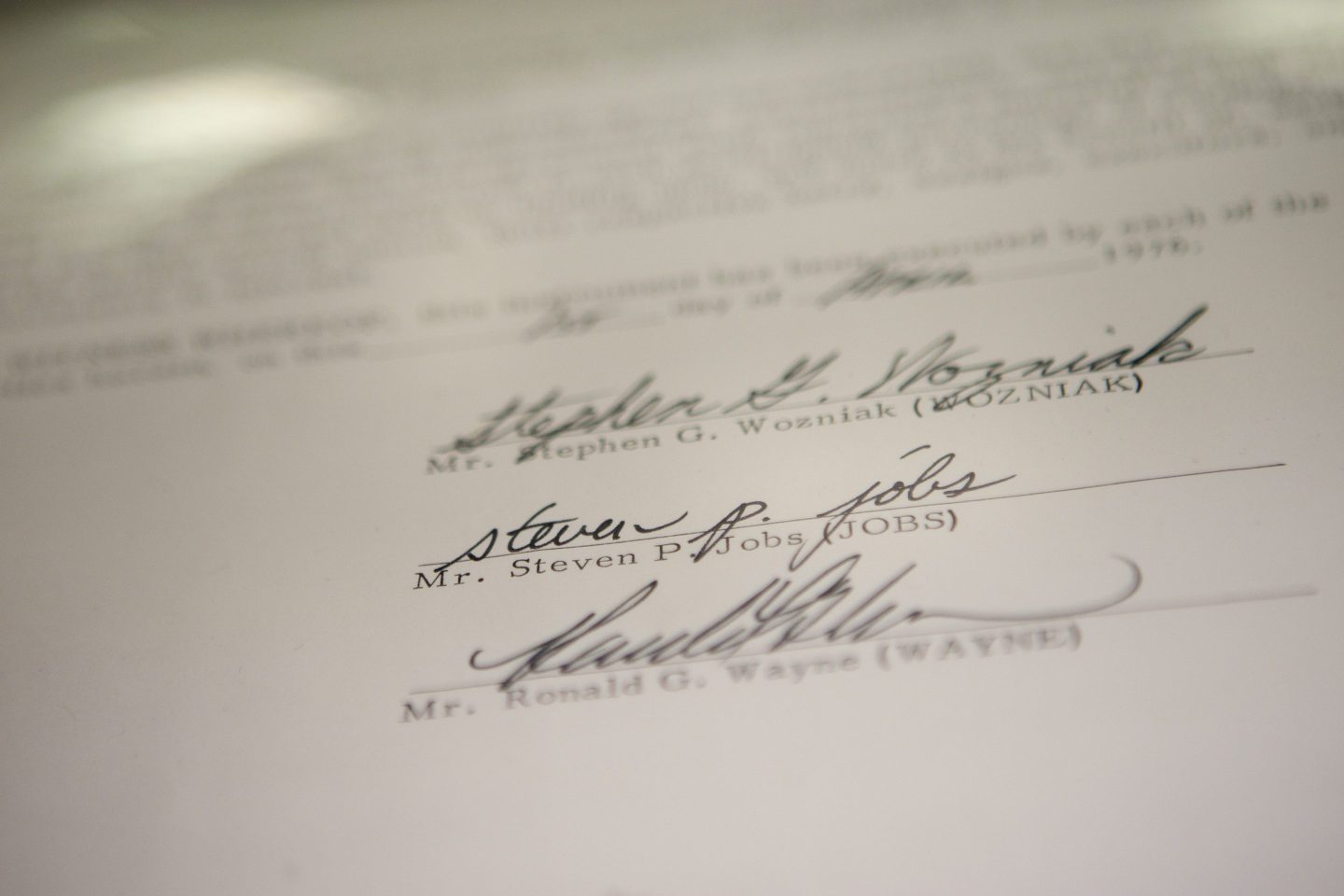
Apple cofounder Ronald Wayne sold his 10% stake for $800 in 1976—today it’d be worth up to $400 billion
By Preston ForeDecember 12, 2025
1 day ago
placeholder alt text
Success
40% of Stanford undergrads receive disability accommodations—but it’s become a college-wide phenomenon as Gen Z try to succeed in the current climate
By Preston ForeDecember 12, 2025
24 hours ago
placeholder alt text
Economy
For the first time since Trump’s tariff rollout, import tax revenue has fallen, threatening his lofty plans to slash the $38 trillion national debt
By Sasha RogelbergDecember 12, 2025
20 hours ago
placeholder alt text
Economy
The Fed just ‘Trump-proofed’ itself with a unanimous move to preempt a potential leadership shake-up
By Jason MaDecember 12, 2025
18 hours ago
placeholder alt text
Success
At 18, doctors gave him three hours to live. He played video games from his hospital bed—and now, he’s built a $10 million-a-year video game studio
By Preston ForeDecember 10, 2025
3 days ago
Rankings
  • 100 Best Companies
  • Fortune 500
  • Global 500
  • Fortune 500 Europe
  • Most Powerful Women
  • Future 50
  • World’s Most Admired Companies
  • See All Rankings
Sections
  • Finance
  • Leadership
  • Success
  • Tech
  • Asia
  • Europe
  • Environment
  • Fortune Crypto
  • Health
  • Retail
  • Lifestyle
  • Politics
  • Newsletters
  • Magazine
  • Features
  • Commentary
  • Mpw
  • CEO Initiative
  • Conferences
  • Personal Finance
  • Education
Customer Support
  • Frequently Asked Questions
  • Customer Service Portal
  • Privacy Policy
  • Terms Of Use
  • Single Issues For Purchase
  • International Print
Commercial Services
  • Advertising
  • Fortune Brand Studio
  • Fortune Analytics
  • Fortune Conferences
  • Business Development
About Us
  • About Us
  • Editorial Calendar
  • Press Center
  • Work At Fortune
  • Diversity And Inclusion
  • Terms And Conditions
  • Site Map

© 2025 Fortune Media IP Limited. All Rights Reserved. Use of this site constitutes acceptance of our Terms of Use and Privacy Policy | CA Notice at Collection and Privacy Notice | Do Not Sell/Share My Personal Information
FORTUNE is a trademark of Fortune Media IP Limited, registered in the U.S. and other countries. FORTUNE may receive compensation for some links to products and services on this website. Offers may be subject to change without notice.