• Home
  • News
  • Fortune 500
  • Tech
  • Finance
  • Leadership
  • Lifestyle
  • Rankings
  • Multimedia

Seagate CEO: Google, Web service giants upgrade storage almost yearly

By
Jon Fortt
Jon Fortt
Down Arrow Button Icon
By
Jon Fortt
Jon Fortt
Down Arrow Button Icon
November 15, 2006, 9:00 PM ET

Seagatewatkins

Google (GOOG) buys a lot of hard drives. Consider that every time you do a search, Google stores information about things such as what you searched for, at what time, and how long it took you to find it. Increasingly in the Web 2.0 age, service providers also store our e-mail, documents, spreadsheets, Web pages, books, music, video and more.

Google’s not alone in this storage-buying bonanza; MySpace (NWS), Yahoo (YHOO) and Microsoft (MSFT) also digitally warehouse dizzying amounts of information every second, and have plans to store even more. In a way, the story of the mobile revolution is the story of both communication and storage – storage “in the hand,” through devices like Apple Computer’s (AAPL) iPod, and storage “in the cloud” on remote servers, through the likes of Yahoo Mail, Google Docs & Spreadsheets, and YouTube.

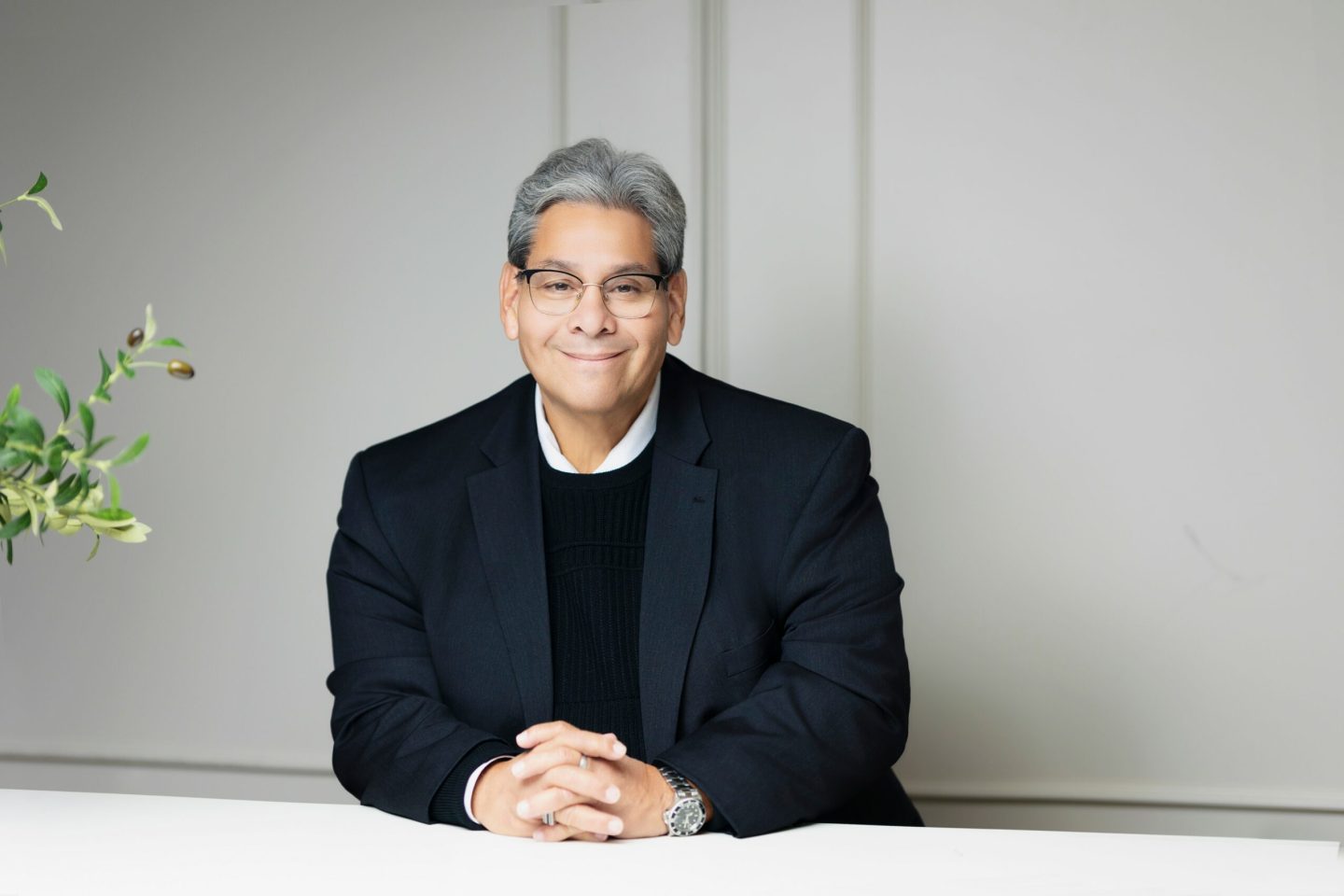
So when I talked to Seagate (STX) CEO Bill Watkins (pictured above) recently, I had a lot of questions about storage in the cloud. Mainly I wanted to get some sense of how excited the world’s largest hard drive maker is about the market opportunity in Web services, how frequently huge customers like Google buy more storage, and what kinds of advances Web services providers are demanding from the hard drive industry. Here’s a flavor of what Watkins told me:

Fortt: How big is Google for Seagate’s business?

Watkins: I’m not allowed to talk about it, but they’re big. They buy storage unbelievably. The more MySpace, the more stuff, the more content that gets on the Web, the more that’s got to be stored. … It’s not just how much content, it’s how much of the same content. And that’s what people are misunderstanding. We can calculate all the books and movies in the world, and we come up with this much. What they don’t realize is all those books and movies are being stored in a half a dozen different places.

Fortt:What is Google telling Seagate it wants in future storage products?

Watkins: Cost per gigabyte. I need as much capacity as I can get for as cheap as I can get it. And give me power savings. They’re buying hundreds of thousands of drives. Massive amounts of storage. So they’re really concerned about the cost of that storage, and obviously reliability – obviously you’ve got to meet the reliability and quality issues. But it’s really about cost.

Fortt:How often do the big Web services providers replace their storage drives?

Watkins: Right now we know that when you do a 50 percent increase in capacity per drive, every time you increase the capacity for a 3.5- or 2.5-inch drive, the power savings almost compensate for replacing the unit. A lot of people just say fine, I don’t want to spend that much cash.

Fortt:But if you’re as big as a Google or a Microsoft, it’s pretty much a simple calculation?

Watkins: Exactly. Just cost. They figure it out, and they say OK, I’ll do this.

Fortt:You told me that right now Seagate is increasing capacity about 40 percent a year. So roughly every 15 months, you can make the case to the big players to upgrade their storage. What does the future hold?

Watkins: We’ll be out with a terabyte next year. Probably in the springtime, something like that, we’ll be out with the terabyte drives. They’ll start hitting the market, and it’ll be interesting to see how the people who are just using 400- and 500-gigabyte drives are going to go. We just morphed into 750GB, and we’re going to morph into terabytes.
About the Author
By Jon Fortt
See full bioRight Arrow Button Icon

Latest in

Tamera Fenske, chief supply chain officer at Kimberly-Clark
SuccessCareers
Kimberly-Clark exec is one of 76 women in the Fortune 500 with her title—she says bosses used to compare her to their daughters when she got promoted
By Emma BurleighDecember 7, 2025
58 minutes ago
PoliticsDonald Trump
National Park Service drops free admission on Martin Luther King Jr. Day and Juneteenth while adding Trump’s birthday
By David Klepper and The Associated PressDecember 6, 2025
11 hours ago
EconomyEurope
JPMorgan CEO Jamie Dimon says Europe has a ‘real problem’
By Katherine Chiglinsky and BloombergDecember 6, 2025
12 hours ago
PoliticsMilitary
Hegseth likens strikes on alleged drug boats to post-9/11 war on terror, saying Trump can order use of force ‘as he sees fit’
By David Klepper and The Associated PressDecember 6, 2025
12 hours ago
Elon Musk
Big TechSpaceX
SpaceX to offer insider shares at record-setting $800 billion valuation
By Edward Ludlow, Loren Grush, Lizette Chapman, Eric Johnson and BloombergDecember 6, 2025
12 hours ago
EconomyDebt
The most likely solution to the U.S. debt crisis is severe austerity triggered by a fiscal calamity, former White House economic adviser says
By Jason MaDecember 6, 2025
12 hours ago

Most Popular

placeholder alt text
AI
Nvidia CEO says data centers take about 3 years to construct in the U.S., while in China 'they can build a hospital in a weekend'
By Nino PaoliDecember 6, 2025
17 hours ago
placeholder alt text
Big Tech
Mark Zuckerberg rebranded Facebook for the metaverse. Four years and $70 billion in losses later, he’s moving on
By Eva RoytburgDecember 5, 2025
2 days ago
placeholder alt text
Real Estate
The 'Great Housing Reset' is coming: Income growth will outpace home-price growth in 2026, Redfin forecasts
By Nino PaoliDecember 6, 2025
22 hours ago
placeholder alt text
Economy
The most likely solution to the U.S. debt crisis is severe austerity triggered by a fiscal calamity, former White House economic adviser says
By Jason MaDecember 6, 2025
12 hours ago
placeholder alt text
Success
Nvidia CEO Jensen Huang admits he works 7 days a week, including holidays, in a constant 'state of anxiety' out of fear of going bankrupt
By Jessica CoacciDecember 4, 2025
3 days ago
placeholder alt text
Asia
Despite their ‘no limits’ friendship, Russia is paying a nearly 90% markup on sanctioned goods from China—compared with 9% from other countries
By Jason MaNovember 29, 2025
7 days ago
Rankings
  • 100 Best Companies
  • Fortune 500
  • Global 500
  • Fortune 500 Europe
  • Most Powerful Women
  • Future 50
  • World’s Most Admired Companies
  • See All Rankings
Sections
  • Finance
  • Leadership
  • Success
  • Tech
  • Asia
  • Europe
  • Environment
  • Fortune Crypto
  • Health
  • Retail
  • Lifestyle
  • Politics
  • Newsletters
  • Magazine
  • Features
  • Commentary
  • Mpw
  • CEO Initiative
  • Conferences
  • Personal Finance
  • Education
Customer Support
  • Frequently Asked Questions
  • Customer Service Portal
  • Privacy Policy
  • Terms Of Use
  • Single Issues For Purchase
  • International Print
Commercial Services
  • Advertising
  • Fortune Brand Studio
  • Fortune Analytics
  • Fortune Conferences
  • Business Development
About Us
  • About Us
  • Editorial Calendar
  • Press Center
  • Work At Fortune
  • Diversity And Inclusion
  • Terms And Conditions
  • Site Map

© 2025 Fortune Media IP Limited. All Rights Reserved. Use of this site constitutes acceptance of our Terms of Use and Privacy Policy | CA Notice at Collection and Privacy Notice | Do Not Sell/Share My Personal Information
FORTUNE is a trademark of Fortune Media IP Limited, registered in the U.S. and other countries. FORTUNE may receive compensation for some links to products and services on this website. Offers may be subject to change without notice.