If more companies are turning to software, they are going to need someplace to store all that code.
Enter GitHub, the hot startup behind the popular online source code repository used by thousands of individual developers as well as big-name companies like John Deere, SAP, and Microsoft. These coders and companies store their so-called open source software projects onto GitHub’s service, which means the software code is available for free for others to download or modify.
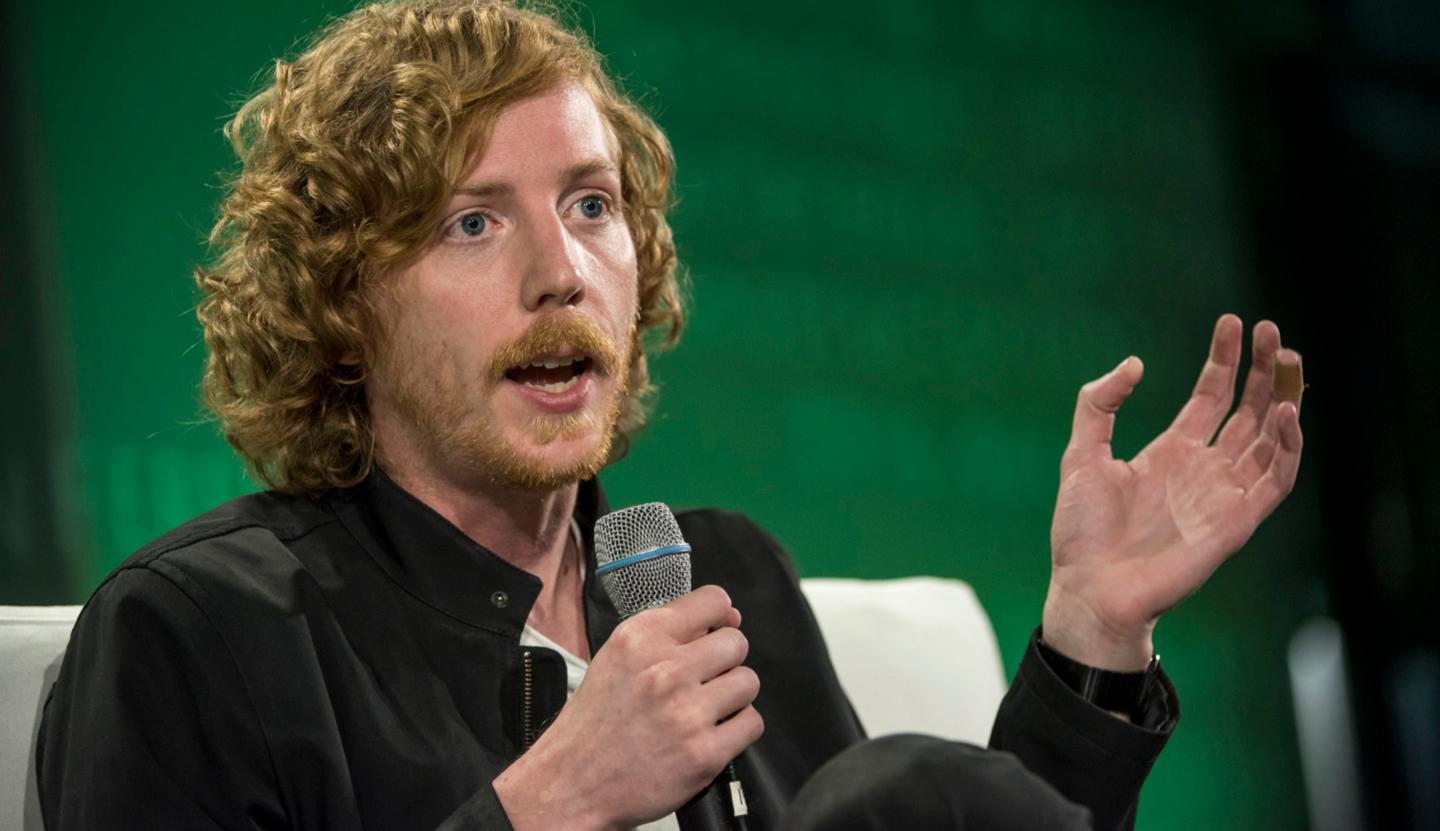
The company held its annual developer conference on Wednesday in San Francisco where CEO Chris Wanstrath debuted new features for its code storing service, like an easier way to leave reviews and comments on software projects, as well as new tools to help developers manage those projects.
In this edited interview with Fortune, Wanstrath talks about how companies like Microsoft are no longer opposed to open-source software, the challenges of appeasing both business and developers, and how GitHub (GITHUB) is trying to improve diversity and equality issues after a 2014 harassment scandal rocked the company and led to former CEO Tom Preston-Werner leaving.
Get Data Sheet, Fortune’s technology newsletter.
Fortune: Microsoft, under CEO Satya Nadella, has been catering to open-source coders and has released several of its own once-proprietary tools as open source. What do you make of what Microsoft is doing?
Wanstrath: I started programming on Microsoft technologies, but I switched early on to Linux, all open-source. I didn’t want Microsoft to touch any of my stuff. They have an ecosystem and I was pledging my allegiance to a completely different ecosystem.
To see that all change has been pretty remarkable. It’s real. I think a lot of people were skeptical of Microsoft at first, but they’re real.
You would project onto Microsoft, “Oh one of their pillars is that they’re against open source.” And to see them embrace open source in a real way, my understanding of this company is now different.
What other companies have caused you to change your perspective like Microsoft has?
Apple with Swift [Apple’s open-source programming language]. They are getting a lot more involved with helping people to code and getting kids involved with coding. Apple is famously opaque, but they’ve contributed a lot to open source, it’s just been in pockets.
For [Apple CEO] Tim Cook to get on a keynote stage and say Swift is the number one programming language on GitHub, that’s an extreme shift.
Is there a misconception that people have over open-source projects that because everyone can freely access them, they aren’t run as disciplined or as efficiently as more conventional software projects?
In GitHub, the biggest open-source projects still are run by the maintainers [the people who first contribute the software] and they have contributing guidelines. So the big .Net project [one of Microsoft’s biggest tools it released to open source] has more people outside of Microsoft contributing to it than people who work at Microsoft. But every one of the changes was approved by Microsoft. It’s not out of Microsoft’s control, and the quality can still be maintained. It’s still a real software project.
The big thing for open source [during its early days getting attention] was that the code was open. But that’s just the bare minimum. It’s really about running a community, running a project, inviting people in, maintaining quality, and giving a roadmap. A lot of what goes into an open-source projects is not just coding.
Most open source is done by paid professionals. Companies like Microsoft, John Deere, Ford (F), Walmart (WMT)—these are some of the biggest companies in the world—they are embracing open source and are running great projects.
How can you tell if a company is serious about open sourcing software or if it’s just a marketing attempt?
Developers are great at detecting BS. It happens and companies certainly get into open source for marketing, which can be a good thing because you can market yourself and share your engineering culture with the world. But at the end of the day it’s about walking the walk, and if your code doesn’t say what it’s going to do, no one is going to support it. In fact it can backfire.
Is GitHub profitable?
We don’t share financials. But we had no investors for the first four years and a lot of customers, so we have a business model. If there were time in our history that we weren’t profitable, it wouldn’t be because we were searching for how to be profitable.
How do you make sure you don’t step on the toes of open-source coders? There were reports earlier this year that suggested the divide between catering to open-source coders and selling to businesses led to some executives leaving your company.
Sure, yeah. At GitHub, we have a responsibility to the open-source community and we need to defend it, and we need to protect it. I agree with all of that. But I take a different direction. We have a responsibility and I don’t think we just need to defend and protect it, I think we need to do everything we can to make it awesome. I don’t think we should tip-toe around it, I think we should do everything we can to make it better. I think we should try to grow it and try to bring people in. I think we should play a role, not solely, but in a group of trying to form the future of open source.
So you are going to step on some toes, sometimes, when you do stuff like that. But ultimately I think the fact that the open-source community is growing so rapidly, that there are so many companies is a testament to the fact that we are in a big ecosystem and it’s going in the right direction.
What’s an example of something that you did to step on someone’s toes?
I will say that for a period of time our emphasis was heavily on enterprise [GitHub sells a paid version of its product to companies], and I think the open-source community felt neglected. But we were really trying to lay a foundation to build a great business on. And we never really forgot about open source and stopped caring, we just really had a focus.
When was this period of time?
The end of 2014.
Another one we get is that GitHub itself [the core GitHub technology] is not open-source and people accuse us of being hypocritical. Our whole thing is that it’s not black and white. You can have closed-source companies that are benefiting from open source. We release hundreds of open source just as an organization. I get the criticism, but ultimately what I want to do is focus on the long run and I think the business model we have is going to benefit this community the most overall.
Let’s talk about diversity. How much are you incorporating diversity these days at GitHub? You had a representative from the non-profit educational group Black Girls Who Code talk at your conference.
I think if you are going to connect people in the world, you have to be inclusive. If it were easy, it would have already been done. You need to actually work towards it. A lot of great developers have great jobs because they were given opportunities early in life.
For more about GitHub, watch:
Personally for me, that’s a really strong goal to work with underrepresented communities and people that don’t have opportunities, to give them the opportunities we had. We partnered with Connect Home (a non-profit), which is awesome. Black Girls Who Code is another great organization. It’s so inspiring and it takes hard work.
It’s great you are doing this for the community. How about for hiring and the actual business itself?
I think we have to walk the walk. It’s certainly tough and it’s something the tech industry has been dinged for before, but it’s something that we’re working on. A lot of what got released today is a lot work from teams who have come from different environments and have seen different things. I think that as many different ideas, perspectives, and trains of thought that we can get into on a product development process, into the community building process, the better it is for the company and the better it is for the world.