• Home
  • Latest
  • Fortune 500
  • Finance
  • Tech
  • Leadership
  • Lifestyle
  • Rankings
  • Multimedia
Tech

Why Elon Musk Wants to Merge His Electric Car and Solar Companies

By
Katie Fehrenbacher
Katie Fehrenbacher
Down Arrow Button Icon
By
Katie Fehrenbacher
Katie Fehrenbacher
Down Arrow Button Icon
June 22, 2016, 9:00 AM ET
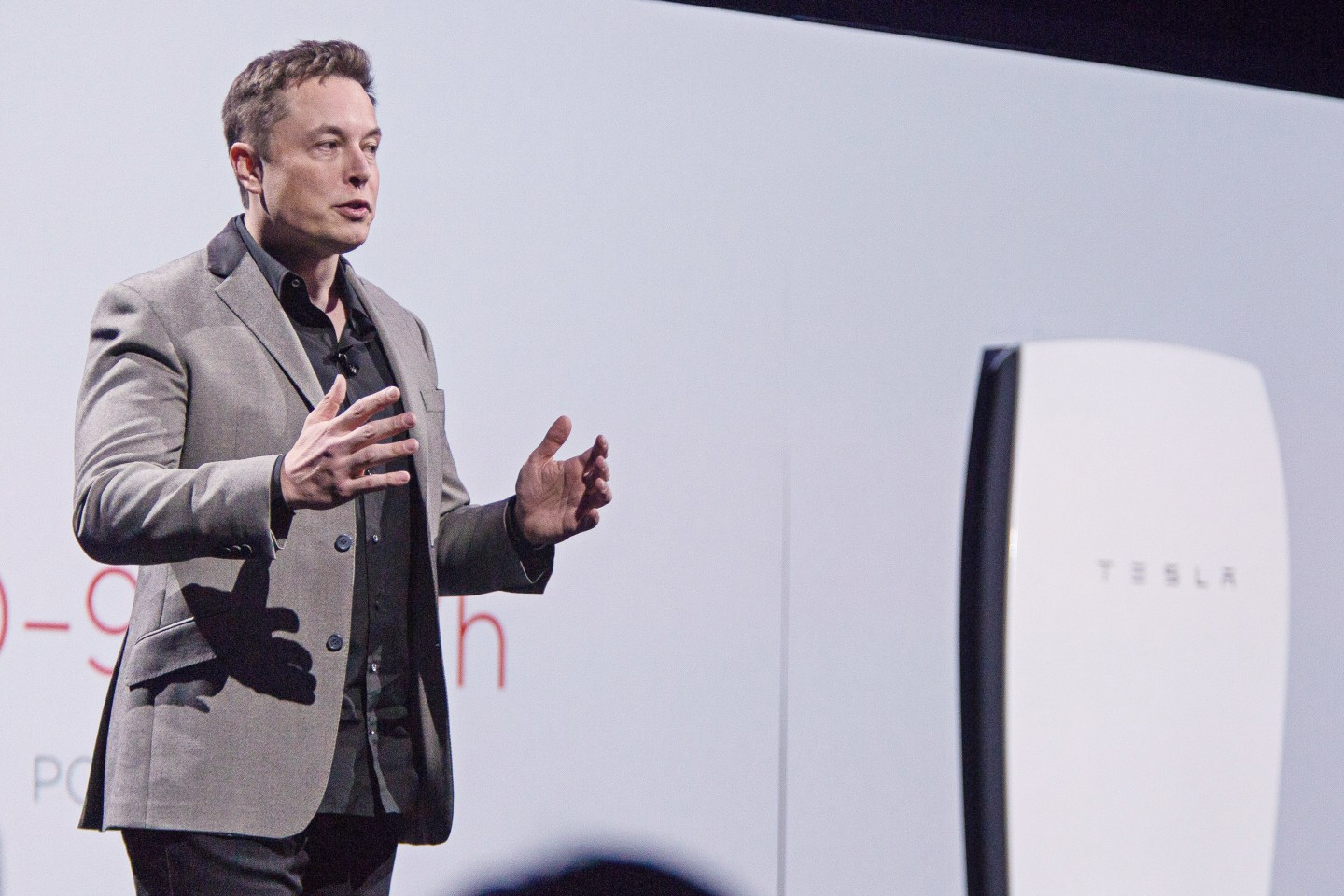
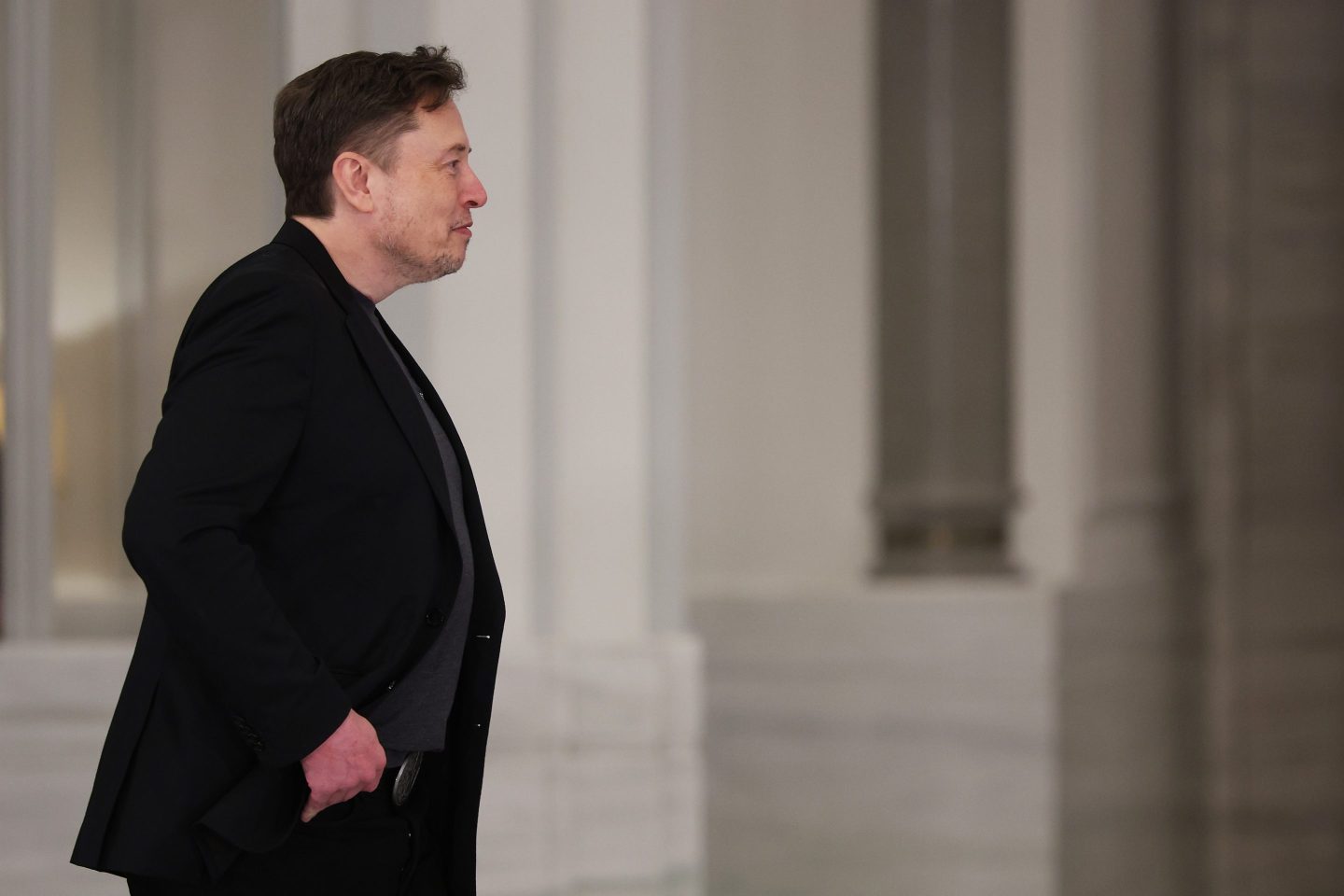
Tesla Motors Inc. Chief Executive Officer Elon Musk Unveils New Generation Of Batteries
Elon Musk, co-founder and chief executive officer of Tesla Motors Inc., speaks during the unveiling of the company's "Powerwall' at an event in Hawthorne, California, U.S., on Thursday, April 30, 2015. Musk unveiled a suite of batteries to store electricity for homes, businesses and utilities, saying a greener power grid furthers the company's mission to provide pollution-free energy. Photographer: Tim Rue/Bloomberg via Getty ImagesPhotograph by Tim Rue— Bloomberg via Getty Images

Even if you’re well-versed with the business chess moves of entrepreneur Elon Musk, you still might be surprised by his decision on Tuesday for his electric carmaker, Tesla, try to buy his solar company, SolarCity.

Tesla shareholders, on first blush, didn’t seem to be expecting it. And they certainly don’t seem to like it, at least initially.

Tesla’s (TSLA) shares dropped over 11% in after hours trading, temporarily knocking billions of dollars from Tesla’s market value. The deal, if approved, would only be worth $2.5 billion to $3 billion.

After the volatility caused by the news settles down, we’ll be able to see how investors really feel about it. And it still might not be good.

But in the bigger picture, the move is classic Musk. He’s partly doubling down on the slumping solar company, and is willing to pile SolarCity’s risk onto the already risky, but temporarily stable, electric car maker.

At the same time, the companies have been operating from the same playbook for years, with a laser focus on vertical integration, or when a company owns various stages of its own production, and a willingness to build huge factories to achieve those goals. Albeit Tesla has seemed to have made more progress on both these fronts.

In the short term, talk about “synergies” might be the stuff of press releases, but in the long term a fully vertically integrated energy company—from energy generation to installation to storage to application—could create a massive Elon Musk Energy Empire. It would be a company that generates power from the sun, stores energy in batteries, and uses those batteries to power cars and buildings.

And it would all be provided by a brand that consumers increasingly know and are excited about. Tesla’s brand is starting to be so powerful that it’s as if Apple decided it wanted to be a full-fledged power company (oh wait, it’s kind of doing that). But never before has the energy industry had such a player that so was so attractive to consumers and also so willing to act disruptively.

The immediate question is how easily could two energy upstarts be combined into one colossal energy powerhouse? And will Tesla’s non-interested board—ie. directors not named Musk—approve of a deal that could hurt Tesla’s share price? (Yeah, probably).

Here’s why I think Musk wants to combine the companies:

For a review of Tesla’s Model X SUV electric car, watch our video.

1). SolarCity’s struggles:

The solar installer has been hammered by investors over the last year. The company’s shares have dropped from a high of over $60 a year ago, to a low of just over $20 earlier this year. The solar installation business is difficult, cut throat, and dependent on state regulations that fluctuate.

There have been rumors over the past few months that SolarCity might even be considering going private. If so, it would be able to duck the pressure of public investors. Whatever it takes to get out of the stock slump it’s been in.

SolarCity also seems to have bitten off more than it can chew when it comes to its plan to build a massive solar panel factory in upstate New York. The company delayed its factory production plans a couple of months ago.

Building a huge solar factory sounded like an excellent plan when shares were high and cash was more readily available, but when times are tougher it’s a far riskier move. Just ask SunEdison, which had clean energy domination plans before it dramatically crashed into bankruptcy as its stock plummeted.

SolarCity could find some much-needed shelter within Tesla. Tesla’s brand is far stronger, and it has been able to raise funds much more easily. SolarCity’s shares jumped by over 15% in after hours trading after the takeover offer became public.

Get Data Sheet, Fortune’s technology newsletter.

2). The Elon Musk Playbook for Energy:

SolarCity and Tesla, both heavily influenced by Musk, are trying to be as vertically integrated as possible by building substantial factory production to achieve that goal.

Tesla has brought many of its development needs in house, moving away from suppliers as much as possible. With the Gigafactory, its massive battery factory under construction outside of Reno, Nev., Tesla will soon be making its own batteries, too, by bringing that core technology in house.

Likewise, SolarCity, which built a business off of installing rooftop solar panels, surprised the energy industry two years ago by announcing it had bought a solar startup and would make its own solar panels. The company has long bought panels from third parties. But now SolarCity is building a factory in Buffalo, N.Y. to make those solar panels itself.

SolarCity and Tesla have long worked together on energy projects. The two companies have developed battery and solar panel projects, and have worked on deals with utilities that use SolarCity solar panels and Tesla batteries. There’s actually been significant collaboration and cost-sharing between the two companies working on energy storage and solar deals.

But over the long term, merging SolarCity and Tesla would a make a single energy company that would be even more vertically integrated. That company would generate power using solar panels, using a team of employees that could quickly and easily sell and install those panels for homes, businesses, and utilities.

That company could also store energy with Tesla batteries, and develop applications for those batteries, like working with utilities, companies and home owners, and using those batteries to power cars. Who knows what applications a combined energy powerhouse could envision for both solar panels and low-cost batteries.

A combined company could more easily sell batteries to go with the solar panels. Tesla has said its existing energy storage business, introduced last year, has seen massive demand.

Utilities can use Tesla’s batteries with solar farms and to better manage the power grid. Corporate customers can use Tesla batteries to lower their monthly energy bills by shifting their energy use onto batteries when grid power gets expensive.

On a call on Wednesday morning, Musk said that the cost of sales for SolarCity and Tesla could drop by potentially half, or perhaps by 30% to 40%. We’d be basically selling twice as much in a single transaction as we would otherwise, said Musk. On the solar installation set up side, there would be one crew instead of two to three visits. For ongoing maintenance, there would be one point of contact instead of two to three, said Musk. The cost of hardware would also be lower. “I think that all makes a lot of sense. The fundamental cost of both companies would go down materially,” said Musk.

3). Because he can:

Musk has worked to maintain an unusual amount of control over the companies he’s built. As this article describes, Musk invests much of his own money into his businesses, and at the same time encourages friends, and even family, to join the boards.

Investors who backed Musk early on mostly seem to buy into his energy vision of vertical integration and investment in “the machine behind the machine.” In other words, if Musk thinks this is a good idea—which he does—it’s likely his investors will be on board, too.

Updated on Wednesday morning at 7AM PST, with comment from Tesla’s call.
About the Author
By Katie Fehrenbacher
See full bioRight Arrow Button Icon

Latest in Tech

Finance
Lorem ipsum dolor sit amet, consectetur adipiscing elit, sed do eiusmod tempor incididunt ut labore et dolore magna aliqua. Ut enim ad minim veniam
By Fortune Editors
October 20, 2025
Finance
Lorem ipsum dolor sit amet, consectetur adipiscing elit, sed do eiusmod tempor incididunt ut labore et dolore magna aliqua. Ut enim ad minim veniam
By Fortune Editors
October 20, 2025
Finance
Lorem ipsum dolor sit amet, consectetur adipiscing elit, sed do eiusmod tempor incididunt ut labore et dolore magna aliqua. Ut enim ad minim veniam
By Fortune Editors
October 20, 2025
Finance
Lorem ipsum dolor sit amet, consectetur adipiscing elit, sed do eiusmod tempor incididunt ut labore et dolore magna aliqua. Ut enim ad minim veniam
By Fortune Editors
October 20, 2025
Finance
Lorem ipsum dolor sit amet, consectetur adipiscing elit, sed do eiusmod tempor incididunt ut labore et dolore magna aliqua. Ut enim ad minim veniam
By Fortune Editors
October 20, 2025
Finance
Lorem ipsum dolor sit amet, consectetur adipiscing elit, sed do eiusmod tempor incididunt ut labore et dolore magna aliqua. Ut enim ad minim veniam
By Fortune Editors
October 20, 2025

Most Popular

Finance
Lorem ipsum dolor sit amet, consectetur adipiscing elit, sed do eiusmod tempor incididunt ut labore et dolore magna aliqua. Ut enim ad minim veniam
By Fortune Editors
October 20, 2025
Finance
Lorem ipsum dolor sit amet, consectetur adipiscing elit, sed do eiusmod tempor incididunt ut labore et dolore magna aliqua. Ut enim ad minim veniam
By Fortune Editors
October 20, 2025
Finance
Lorem ipsum dolor sit amet, consectetur adipiscing elit, sed do eiusmod tempor incididunt ut labore et dolore magna aliqua. Ut enim ad minim veniam
By Fortune Editors
October 20, 2025
Finance
Lorem ipsum dolor sit amet, consectetur adipiscing elit, sed do eiusmod tempor incididunt ut labore et dolore magna aliqua. Ut enim ad minim veniam
By Fortune Editors
October 20, 2025
Finance
Lorem ipsum dolor sit amet, consectetur adipiscing elit, sed do eiusmod tempor incididunt ut labore et dolore magna aliqua. Ut enim ad minim veniam
By Fortune Editors
October 20, 2025
Finance
Lorem ipsum dolor sit amet, consectetur adipiscing elit, sed do eiusmod tempor incididunt ut labore et dolore magna aliqua. Ut enim ad minim veniam
By Fortune Editors
October 20, 2025
Rankings
  • 100 Best Companies
  • Fortune 500
  • Global 500
  • Fortune 500 Europe
  • Most Powerful Women
  • Future 50
  • World’s Most Admired Companies
  • See All Rankings
Sections
  • Finance
  • Leadership
  • Success
  • Tech
  • Asia
  • Europe
  • Environment
  • Fortune Crypto
  • Health
  • Retail
  • Lifestyle
  • Politics
  • Newsletters
  • Magazine
  • Features
  • Commentary
  • Mpw
  • CEO Initiative
  • Conferences
  • Personal Finance
  • Education
Customer Support
  • Frequently Asked Questions
  • Customer Service Portal
  • Privacy Policy
  • Terms Of Use
  • Single Issues For Purchase
  • International Print
Commercial Services
  • Advertising
  • Fortune Brand Studio
  • Fortune Analytics
  • Fortune Conferences
  • Business Development
About Us
  • About Us
  • Editorial Calendar
  • Press Center
  • Work At Fortune
  • Diversity And Inclusion
  • Terms And Conditions
  • Site Map
  • Facebook icon
  • Twitter icon
  • LinkedIn icon
  • Instagram icon
  • Pinterest icon

© 2026 Fortune Media IP Limited. All Rights Reserved. Use of this site constitutes acceptance of our Terms of Use and Privacy Policy | CA Notice at Collection and Privacy Notice | Do Not Sell/Share My Personal Information
FORTUNE is a trademark of Fortune Media IP Limited, registered in the U.S. and other countries. FORTUNE may receive compensation for some links to products and services on this website. Offers may be subject to change without notice.


Most Popular

placeholder alt text
Economy
Elon Musk warns the U.S. is '1,000% going to go bankrupt' unless AI and robotics save the economy from crushing debt
By Jason MaFebruary 7, 2026
1 day ago
placeholder alt text
Success
Gen Z Patriots quarterback Drake Maye still drives a 2015 pickup truck even after it broke down on the highway—despite his $37 million contract
By Sasha RogelbergFebruary 7, 2026
2 days ago
placeholder alt text
Success
Even with $850 billion to his name, Elon Musk admits ‘money can’t buy happiness.’ But billionaire Mark Cuban says it’s not so simple
By Preston ForeFebruary 6, 2026
2 days ago
placeholder alt text
Future of Work
Anthropic cofounder says studying the humanities will be 'more important than ever' and reveals what the AI company looks for when hiring
By Jason MaFebruary 7, 2026
1 day ago
placeholder alt text
Real Estate
We may be looking at the housing affordability crisis all wrong. Higher earners are driving home prices, not lack of supply, researchers say
By Jason MaFebruary 7, 2026
1 day ago
placeholder alt text
AI
AI can make anyone rich: Mark Cuban says it could turn 'just one dude in a basement' into a trillionaire
By Sydney LakeFebruary 7, 2026
1 day ago

Latest in Tech

InvestingVenture Capital
NFL legend Joe Montana lived around top VC execs as a 49er, then leveraged those ties to launch his second career as an investor
By Jason MaFebruary 8, 2026
8 hours ago
CybersecurityJeffrey Epstein
FBI found little evidence Epstein ran a sex trafficking ring for powerful men and concluded a ‘client list’ doesn’t exist
By Michael R. Sisak, David B. Caruso, Larry Neumeister and The Associated PressFebruary 8, 2026
9 hours ago
RetailEurope
Trump’s Greenland crisis triggered a surge in apps designed to help shoppers boycott U.S. goods, though few American imports are on store shelves
By James Brooks and The Associated PressFebruary 8, 2026
10 hours ago
nfl
CommentaryTV
The Super Bowl was made for TV and instant replay was made for visual AI. Here’s how it could be better and what it would look like
By Jason CorsoFebruary 8, 2026
11 hours ago
monkey
CybersecurityAnimals
One way AI won’t ruin the world: tools to crack down on the $23 billion animal trafficking trade
By Eve Bohnett and The ConversationFebruary 8, 2026
12 hours ago
heacock
CommentaryLeadership
I’m a CEO who grew a ‘boring’ air filter business into a $260 million company, and AI is going to help blue-collar, everyday people just like me
By David HeacockFebruary 8, 2026
13 hours ago