• Home
  • News
  • Fortune 500
  • Tech
  • Finance
  • Leadership
  • Lifestyle
  • Rankings
  • Multimedia
Tech

To Grow, Mobile Operators Must Look Beyond Phones

By
Stacey Higginbotham
Stacey Higginbotham
Down Arrow Button Icon
By
Stacey Higginbotham
Stacey Higginbotham
Down Arrow Button Icon
November 23, 2015, 12:34 PM ET
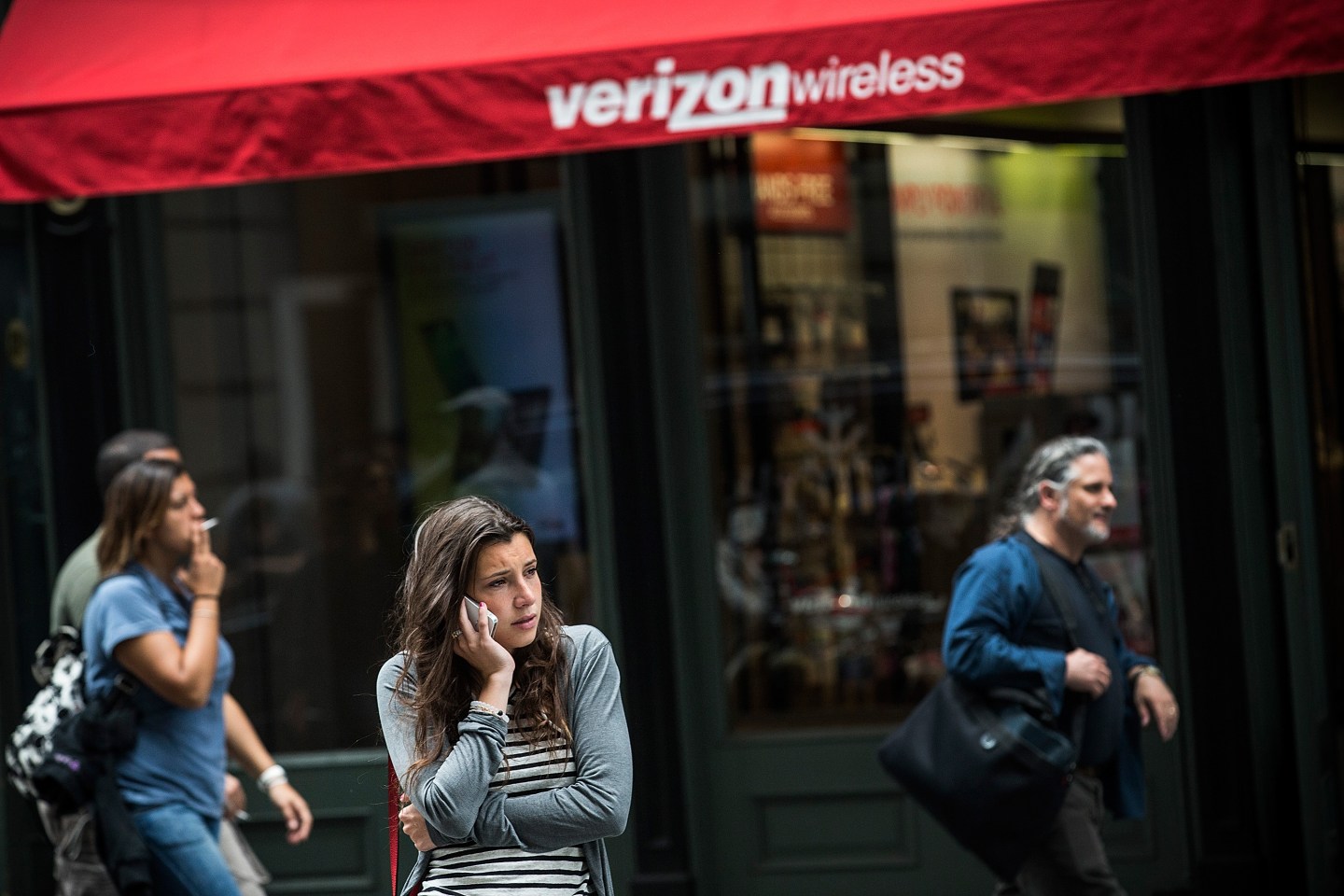
A woman uses her phone while walking past a Verizon Store in the SoHo neighborhood of New York City.
A woman uses her phone while walking past a Verizon Store in the SoHo neighborhood of New York City.Photograph by Andrew Burton —Getty Images

So far this year, for every wireless subscription they have, AT&T and Verizon made $17 per month while T-Mobile and Sprint have collectively lost 39 cents per month on their wireless subscriptions. This is according to data from Chetan Sharma, a wireless analyst who crunched the numbers for his third quarter report on the U.S. wireless market.

revzero

Sharma’s data also showed that the growth in new subscriptions for mobile operators was going to have to come from some category other than people adding more phones. Wireless providers in the U.S. are dealing with a saturated market. The percent of revenue from new customers is approaching zero, as almost everyone in the U.S. is paired off with a wireless carrier and 81% of the population has a smartphone. This means, according to Sharma, that net adds in the wireless industry will have to come from connected devices.

Yes, customers are gobbling up more and more data (3.9 gigabytes per month), but they aren’t actually paying as much as they used to for it, says Sharma, so mobile operators are turning to other devices to get their growth.

devicegrowth

These other devices may be tablets, cars, or even wearables, but in 2015, so far, they’ve accounted for a 26% increase in revenue and 60% of net device adds. This is all well and good for AT&T (T) and Verizon (VZ), which have both been emphasizing their strategy around connected devices. AT&T has been focused on connecting cars for the last few years, since it connected its first Tesla, and has reported more than $1 billion in connected device sales in 2015. Verizon should hit that number next year, according to Sharma.

MORE: Ignore The Internet of Things at Your Own Risk

Meanwhile, T-Mobile and Sprint (S) are lagging on the connected device front without any clearly defined strategy other than delivering data packages for sensors for customers who ask for it. Contrast that with AT&T and Verizon which have both built a strategy around building sensors, cloud offerings, and the realization that connectivity is only about 15% of the revenue opportunity around the Internet of things.

As for consumers, this emphasis on connected devices will increase the total amount they spend on communications each year. Sharma’s research and consumer surveys puts the total spent on connectivity and devices each year at $3,800, with $1,000 of that going to cellular providers annually for mobile data. About $800 of that is spent on the physical devices. As for those devices, Sharma estimates that the number of connected devices per U.S. household is now 5.3, with over 37% of the households in the 4-8 device range and almost 6% of households having 15 or more connected devices.

Subscribe to Data Sheet, Fortune’s daily newsletter on the business of technology.

For more on the Internet of things, watch this Fortune video:

About the Author
By Stacey Higginbotham
See full bioRight Arrow Button Icon

Latest in Tech

Facebook CEO Mark Zuckerberg adjusts an avatar of himself during a company event in New York City on Thursday, Oct. 28, 2021. (Photo: Michael Nagle/Bloomberg/Getty Images)
NewslettersFortune Tech
Meta may unwind metaverse initiatives with layoffs
By Andrew NuscaDecember 5, 2025
54 minutes ago
C-SuiteFortune 500 CEO Interview
Bristol Myers Squibb CEO Chris Boerner says company culture was the missing piece of his ‘patent cliff’ plan
By Diane BradyDecember 5, 2025
2 hours ago
Co-founder and chief executive officer of Nvidia Corp., Jensen Huang attends the 9th edition of the VivaTech trade show at the Parc des Expositions de la Porte de Versailles on June 11, 2025, in Paris.
C-SuiteNvidia
Before running the world’s most valuable company, Jensen Huang was a 9-year-old janitor in Kentucky
By Eva RoytburgDecember 5, 2025
2 hours ago
Future of WorkBrainstorm Design
The workplace needs to be designed like an ‘experience,’ says Gensler’s Ray Yuen, as employees resist the return to office
By Angelica AngDecember 5, 2025
4 hours ago
Four years ago, BKV started buying up the two Temple power plants in Texas—located between Austin and Dallas—which now total 1.5 gigawatts of electricity generation capacity—enough to power more than 1.1 million homes, or a major data center campus. There is room to expand.
Energypower
How a Texas gas producer plans to exploit the ‘mega trend’ of power plants for AI hyperscalers
By Jordan BlumDecember 5, 2025
4 hours ago
Big TechSpotify
Spotify users lamented Wrapped in 2024. This year, the company brought back an old favorite and made it less about AI
By Dave Lozo and Morning BrewDecember 4, 2025
14 hours ago

Most Popular

placeholder alt text
Economy
Two months into the new fiscal year and the U.S. government is already spending more than $10 billion a week servicing national debt
By Eleanor PringleDecember 4, 2025
1 day ago
placeholder alt text
Success
‘Godfather of AI’ says Bill Gates and Elon Musk are right about the future of work—but he predicts mass unemployment is on its way
By Preston ForeDecember 4, 2025
20 hours ago
placeholder alt text
Success
Nvidia CEO Jensen Huang admits he works 7 days a week, including holidays, in a constant 'state of anxiety' out of fear of going bankrupt
By Jessica CoacciDecember 4, 2025
19 hours ago
placeholder alt text
Success
Nearly 4 million new manufacturing jobs are coming to America as boomers retire—but it's the one trade job Gen Z doesn't want
By Emma BurleighDecember 4, 2025
20 hours ago
placeholder alt text
North America
Jeff Bezos and Lauren Sánchez Bezos commit $102.5 million to organizations combating homelessness across the U.S.: ‘This is just the beginning’
By Sydney LakeDecember 2, 2025
3 days ago
placeholder alt text
Economy
Tariffs and the $38 trillion national debt: Kevin Hassett sees ’big reductions’ in deficit while Scott Bessent sees a ‘shrinking ice cube’
By Nick LichtenbergDecember 4, 2025
18 hours ago
Rankings
  • 100 Best Companies
  • Fortune 500
  • Global 500
  • Fortune 500 Europe
  • Most Powerful Women
  • Future 50
  • World’s Most Admired Companies
  • See All Rankings
Sections
  • Finance
  • Leadership
  • Success
  • Tech
  • Asia
  • Europe
  • Environment
  • Fortune Crypto
  • Health
  • Retail
  • Lifestyle
  • Politics
  • Newsletters
  • Magazine
  • Features
  • Commentary
  • Mpw
  • CEO Initiative
  • Conferences
  • Personal Finance
  • Education
Customer Support
  • Frequently Asked Questions
  • Customer Service Portal
  • Privacy Policy
  • Terms Of Use
  • Single Issues For Purchase
  • International Print
Commercial Services
  • Advertising
  • Fortune Brand Studio
  • Fortune Analytics
  • Fortune Conferences
  • Business Development
About Us
  • About Us
  • Editorial Calendar
  • Press Center
  • Work At Fortune
  • Diversity And Inclusion
  • Terms And Conditions
  • Site Map

© 2025 Fortune Media IP Limited. All Rights Reserved. Use of this site constitutes acceptance of our Terms of Use and Privacy Policy | CA Notice at Collection and Privacy Notice | Do Not Sell/Share My Personal Information
FORTUNE is a trademark of Fortune Media IP Limited, registered in the U.S. and other countries. FORTUNE may receive compensation for some links to products and services on this website. Offers may be subject to change without notice.