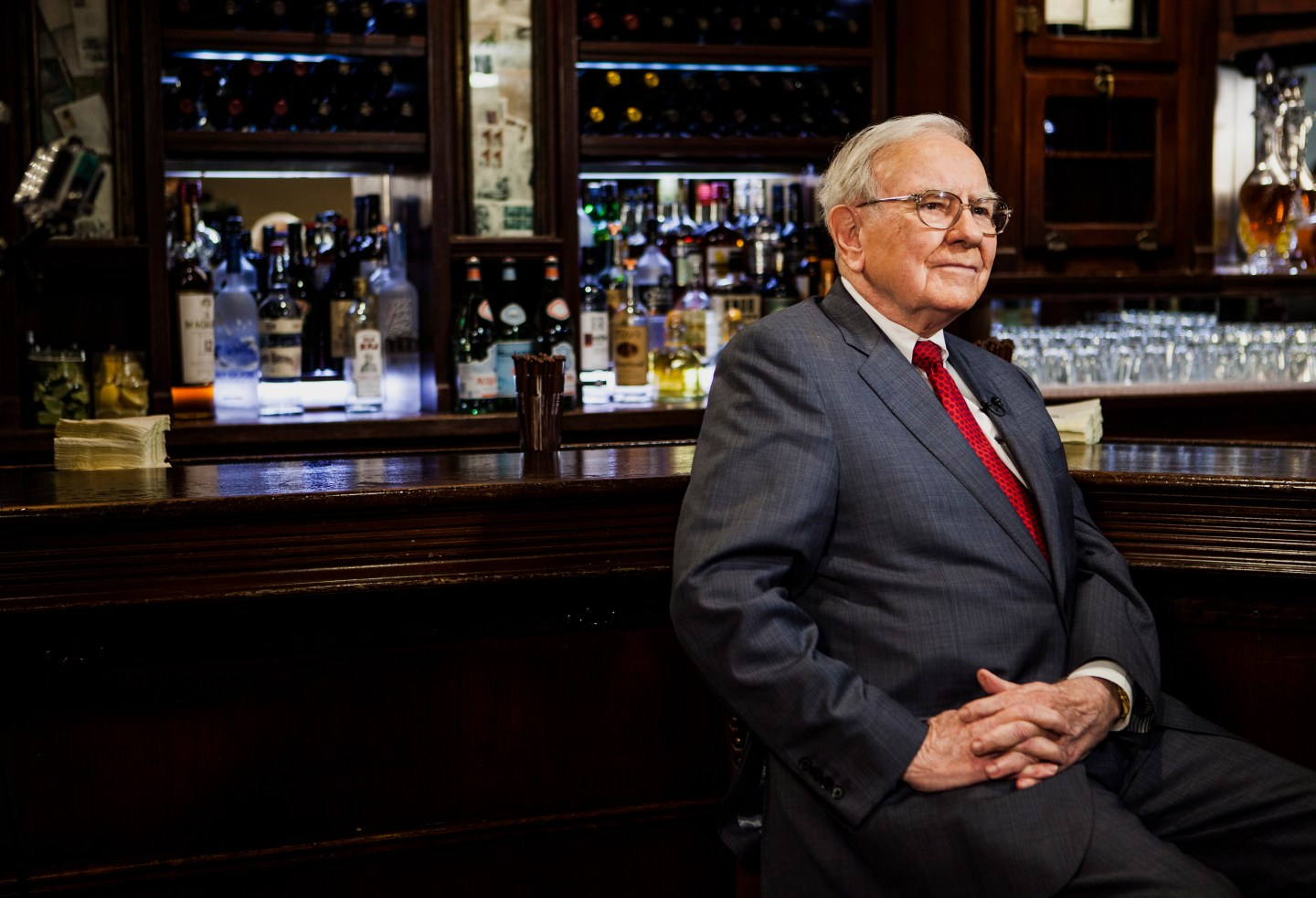
Warren Buffett is regarded as the best investor of our time; arguably, his management record is just as singular. He took over as head of Berkshire Hathaway (BRK-A) in May 1965 — 50 years ago. And he is still at it. Think about that. Alfred P. Sloan, perhaps the most storied CEO in American business, ran General Motors (GM) for 23 years. John D. Rockefeller ran Standard Oil for 27. In recent times, Bill Gates was CEO of Microsoft (MSFT) for 25.
But here’s the thing. Investors around the world avidly mimic Buffett’s investment approach, yet it’s fair to say his managerial model has had zero impact on the corporate culture. Charlie Munger, Buffett’s longtime partner and Berkshire’s vice chairman, says the “Berkshire system” is essential to its success. Nonetheless, Munger wrote in this year’s annual shareholders letter, “No other large corporation I know of has half of such elements in place.”
One hallmark of Buffett’s management is unusual attention to capital allocation (for Buffett, adding a company to Berkshire is akin to adding a stock to an investment portfolio). But once he makes an acquisition, he almost never sells, and gives managers extreme autonomy. Another is shunning of bureaucracy. Berkshire has no processes to standardize the more than 60 operating units it owns, no companywide budgeting for a conglomerate with 340,000 employees. A third hallmark is renunciation of familiar rituals that in Buffett’s view promote short-term thinking. Thus, no earnings guidance, no regular stock splits, no stock options.
Admittedly, not every aspect of Buffett’s style would fit every business, and you can argue that elements of his approach can lead to problems. (More on that later.) But over the half-century of his management, Berkshire’s stock is up 12,000 times, while the Dow Jones industrial average is up 18 times. Berkshire’s market cap is $350 billion, the third highest in America. You’d think some manager would find something worth imitating.
(A disclosure: I’m invested in Berkshire, I sit on the board of a mutual fund that owns the stock, and I’m the author of a Buffett biography. So don’t look here for a disinterested forecast of Berkshire’s future.)
Oddly enough, Buffett’s signature tactic—friendly acquisitions of strong, well-led companies—was violated when he bought Berkshire itself. As Buffett tells it in his most recent shareholders letter, his takeover of Berkshire, a textile manufacturer besieged by low-cost rivals, came about almost impulsively. After his investment partnership bought a stake, Buffett grew disenchanted with the company’s management strategy. He eventually bought a controlling interest and ousted the CEO. That was in 1965, when Buffett was all of 34 (he is 84 today).
Buffett’s first lesson came from observing the former CEO’s errors—don’t put good money into a bad business, even if it’s the business you are in. Berkshire struggled in textiles for 20 more years; all along, Buffett deployed its meager profits into greener pastures. By the time he closed the mill in 1985, Berkshire owned major interests in insurance, newspapers, candy, and manufacturing, along with a large portfolio of common stocks.
By then, Buffett’s investment partnership had liquidated: Its investors received stakes in Berkshire, and Buffett became the largest individual owner. The partnership legacy is important because the company is still run like a partnership. Berkshire’s directors get only token compensation; they don’t get liability insurance either. And they have purchased large amounts of stock. This arrangement—almost unheard of in corporate America—means the directors must truly believe in their mission.
The partnership ethos is also visible in Buffett’s relations with stockholders. Buffett does not do things to buoy the stock in the short term (such as issue earnings guidance), because he seeks to encourage long-term ownership. He rarely uses shares to pay for acquisitions, because he does not want to dilute the stock.
[fortune-brightcove videoid=4089101938001]
Buffett also shuns stock options because they could unhitch the interests of executives from those of ordinary investors. Indeed, in executive pay, Berkshire staggeringly departs from convention. Buffett and Munger collect salaries of $100,000 each; neither receives a bonus. (Many CEOs haul in $100,000 every day or so.)
If greed dissuades rivals from adopting Buffett’s pay model, something else—call it managerial insecurity—inhibits them from replicating his indifference to short-term results. Many CEOs live in mortal fear of disappointing Wall Street, and often settle for the appearance of value as distinct from the substance. Stock splits to increase liquidity are a sign of this mentality, as are spin-offs of corporate assets to “unlock” value.
Lawrence Cunningham, a professor at George Washington University and the author of Berkshire Beyond Buffett, says Buffett learned much of his management style from Tom Murphy, the retired Capital Cities/ABC CEO. (Buffett was a big Cap Cities investor, and Murphy now sits on Berkshire’s board.) But Cunningham notes that public companies that try to imitate Buffett face obvious hurdles. Witness GM, where short-term shareholders recently demanded that the company distribute billions in cash (even though GM is only a few years removed from bankruptcy). Anxious to avoid a proxy battle, managers caved; Buffett’s controlling position, like that of a private operator, insulates him from such pressures.
Still, Berkshire is public, and its style violates some governance norms. As Buffett recently wrote, “We trust our managers to run their operations.” That honor system slipped in 2011, when David Sokol, head of Berkshire’s energy business, was revealed to have invested $10 million in a company and then recommended that Berkshire acquire it. While that affair tarnished Berkshire, Cunningham depicts it as the downside of a worthwhile tradeoff. If Berkshire beefed up its governance bureaucracy, he says, “it would slow decisions, you would miss opportunities, and there is no guarantee you would not have problems.”
Is it possible that Berkshire works—and this is the question that causes agony for shareholders—only because Buffett runs it? Arguably, had a rules-bound, less cozy board (one stuffed with fewer of Buffett’s associates, friends, and family) sent Buffett to pasture at, say, age 65, its shareholders would now be poorer. “How many people do you think could do what Warren does?” Munger asks rhetorically.
Yet letting other companies off the hook because Buffett is special seems too pat. His and Munger’s basic complaint—that corporate America is too bureaucratic and too obsessed with the short term—is absolutely correct. Munger, in his letter, argues that “versions of the Berkshire system should be tried more often elsewhere, and the worst attributes of bureaucracy should much more often be treated like the cancers they so much resemble.” It is hard to think of another company where the vice chairman would violate protocol by lecturing his peers and employing such an insensitive metaphor. Other executives should try it.
How to run your company the way Buffett does
Three management takeaways from Warren Buffett’s 50 years at Berkshire Hathaway
1. Leave your managers alone — Managers at the 60-plus business units owned by Berkshire have a lot of autonomy, and that encourages them to stick around.
2. Bureaucracy must die — Extra layers of corporate decision-makers in budgeting, legal affairs, and public relations mean you’ll miss opportunities.
3. Don’t massage the stock price — Earnings guidance, stock splits, and spin-offs are short-term moves that do little or nothing for your shareholders in the long run.
Roger Lowenstein is the author of America’s Bank: The Epic Struggle to Create the Federal Reserve (to be published in October 2015).
This story is from the May 1, 2015 issue of Fortune magazine.