Recently a friend I consider tech-savvy was trying to figure out how to share an audio file with his colleague. The file, an hour-long recording of a business meeting, was too large to attach to an email or text message, the only options his Apple iPhone presented to him. So he plugged his phone into his laptop, loaded up iTunes, and tried to drag and drop the file from his phone to his desktop. No dice. He right-clicked in search of a “Save to …” or “Export” function and came up empty-handed. After 10 minutes of ducking in and out of labyrinthine menus and byzantine screens in search of — well, anything of relevance — he finally gave up and searched the web. “iTunes automatically syncs voice memos to your iTunes library when you connect iPhone to your computer,” someone cheerily wrote on a message board. Not that anyone would be able to find them. “It was ridiculous,” my friend said. “I’ve been using iTunes for 10 years. It shouldn’t be this hard.”
Historically, Apple (AAPL) products just worked. If you installed a printer, you didn’t need to worry about drivers to make it function. If you wanted to back up your files, you didn’t need to worry about when or how; Time Machine would automate the entire process. And perhaps most important, you didn’t need to read an instruction manual to use an Apple product. A seamless out-of-the-box experience was the company’s signature. Exhibit A: The “Get a Mac” ad campaign in the late 2000s. That simplicity allowed it to charge premiums for devices that largely used the same components as its peers. Apple’s late co-founder and chief executive, Steve Jobs, deserves credit for much of this uniformity. Without his singular vision and autocratic rule Apple might well have devolved into Microsoft-like internecine warfare.
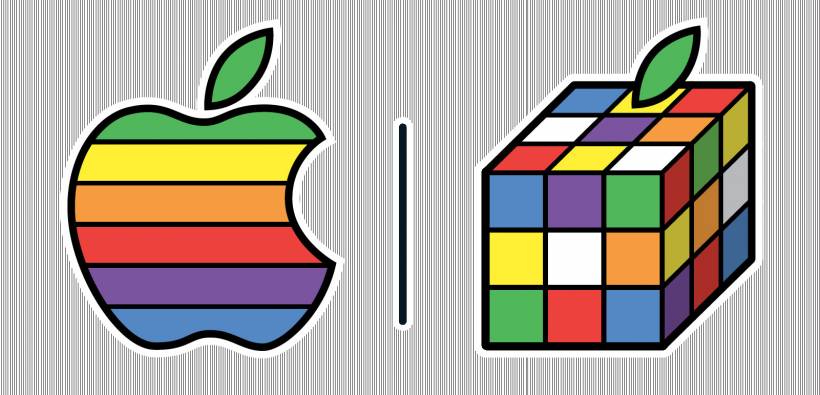
Today Apple still doesn’t include an instruction manual with its devices, and its user interfaces have less clutter than the competition. But its products are beginning to show that they come from one of the largest technology companies in the world, one with 80,000 employees. iTunes, iPhoto, iCloud, and other Apple software and services have grown confusingly complex, woefully outdated, or both. If you try to add a device made by another company to the mix, things can get a little hairy. (Woe to the benighted customers of devices running Google’s Android mobile operating system hoping that their Apple and non-Apple products will happily commingle.) Even Apple’s corporate structures mirror the increased complexity on the user experience side. Though its tax havens in Ireland and treasury operations in Nevada are not new, they now have the sheen of opacity that formerly held the allure of mystery. Apple, once the epitome of simplicity, is becoming the unlikely poster child for complexity.
Trying to understand an Apple product today calls to mind the confusion of using Microsoft’s (MSFT) complicated fare at the height of that company’s popularity. Microsoft’s customers long understood, for example, that Word had far more word-processing features than they would ever use. Apple’s software is a lot like that today.

Despite the company’s carefully honed image as the most streamlined of modern corporations, Apple has reached this point once before. In the mid-1990s its product line was a grab bag that included the Newton handheld organizer, printers of various quality levels and price points, and even an early Apple-branded digital camera. Its divisions and factories were spread out across the globe, with multiple fiefdoms, budgets, and strategies. Steve Jobs changed all that with his triumphant return as CEO in 1997, famously slashing the company’s offerings to two desktops and two laptops, closing factories and consolidating the empire into one fief — his.
That Apple would backslide into complexity again is, on some level, understandable. The company now enjoys a market capitalization of half a trillion dollars, making it the most valuable technology company in the world. It is exceedingly global, with 424 brick-and-mortar stores in 16 countries and online sales in 39. It offers apps in more than 150 countries and 40 languages. Because smartphones must work on telecommunications networks the world round, Apple interacts with regulators everywhere — a factor certain to distract even the most focused of companies.
At the same time, Apple remains remarkably straightforward. It currently sells just three models of iPhone and two models of iPad, with limited component customization. Its supply chain, built by current CEO Tim Cook in the 2000s, is revered for its efficiency. And it continues to be the best company in the world at integrating hardware and software.
Online services are another matter. Apple has proved less effective at the services that tie together its devices. Apple never was an Internet company per se. And it shows. In multiple online categories Apple has lost a beat — no pun intended, given the rumors of its intention to acquire popular headphone maker Beats Electronics — to nimbler competitors. Spotify and Pandora (P) captured online music streaming customers that should have been Apple’s birthright, much in the same way Apple’s iPod snatched the market Sony’s (SNE) Walkman owned. And cloud storage company Dropbox has a photo storage service that is widely acknowledged to be superior to Apple’s iPhoto offering. Apple’s ease-of-use is “legendary,” a company spokeswoman said. “We continue to make desktop, mobile, and cloud services work together powerfully and seamlessly for users.”
One conundrum for Apple is that it is grafting new services on top of old. This is the vaunted legacy problem that mature technology companies face: Make existing products more capable yet keep them simple. Bruce Tognazzini, an early Apple employee and a principal at the user-experience firm Nielsen Norman, uses iPhoto as an example. “By two years ago, iPhoto’s functionality was in desperate need of being increased as users collected more and more photos,” he says. “Instead, they tore out key pieces of functionality already there, reducing the program’s usability even further. As a result, people struggle to find workarounds and face insurmountable memory burdens as their photo collections grow larger.”
It’s important to note that Apple’s competition is no less complicated: Google (GOOG), Amazon (AMZN), Samsung, and Microsoft each grapple with complexity. All are enormous companies at which it is difficult for a chief executive to shun delegation and actively manage product development from the top. But none of those companies have equated their brand with simplicity quite like Apple. It is not supposed to be an Apple product if it doesn’t just work.
Will Apple become less complicated? Doubtful. It still does what it does so much better than everyone else, and makes so much money doing it, that it’s impossible to say Apple’s complexity represents a crisis. Not yet, anyway.
This story is from the June 16, 2014 issue of Fortune.