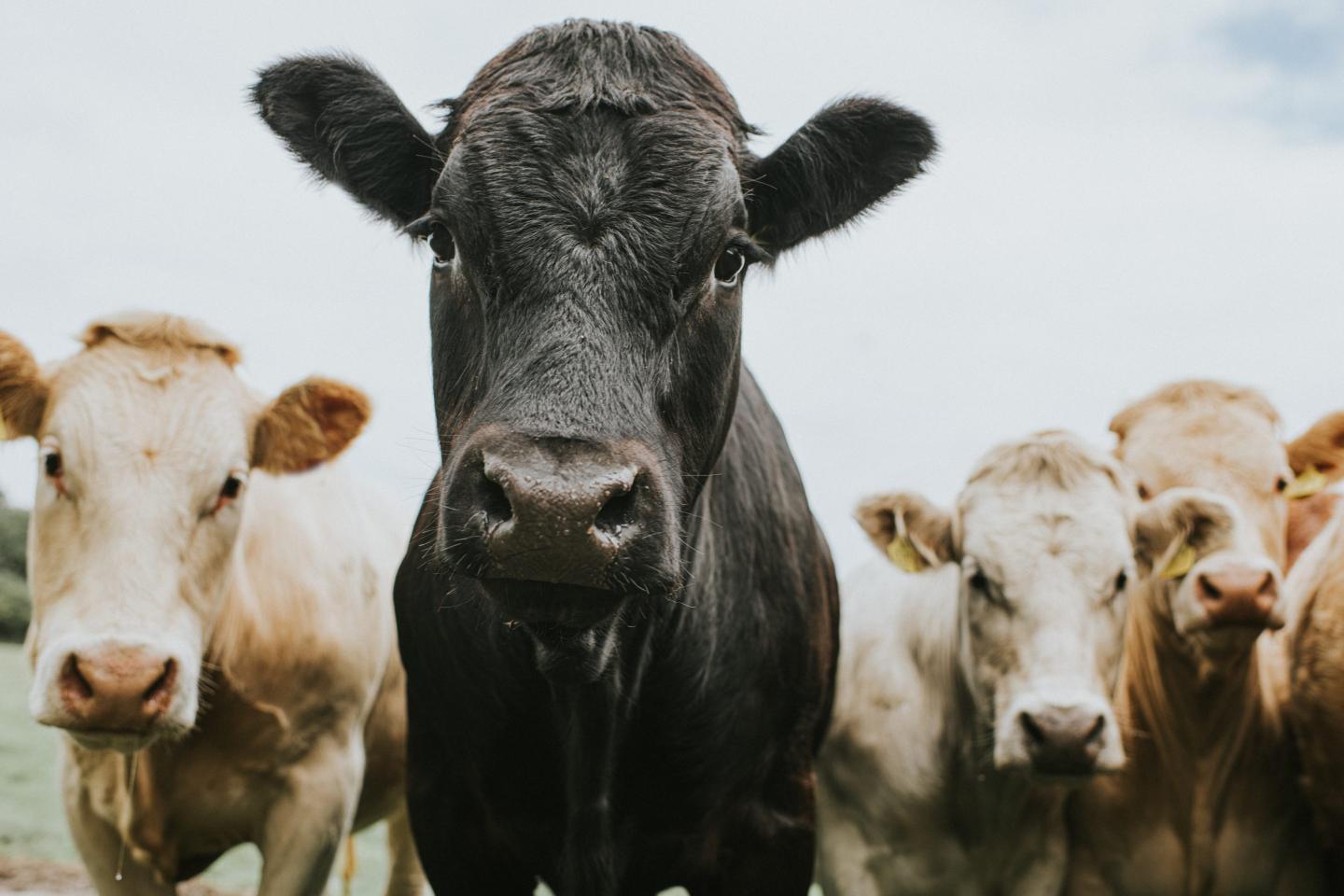
The disclosure that dairy herds in Nevada have been infected by a version of the H5N1 bird flu not previously seen in cows has put virologists and researchers on high alert. Among other things, the news from the Nevada Department of Agriculture suggests that driving the virus out of the U.S. cattle population won’t be nearly as simple as federal officials once suggested—or perhaps hoped.
On Friday came a second and potentially more serious blow: A technical brief by the U.S. Department of Agriculture reported that the genotype, known as D1.1, contains a genetic mutation that may help the virus more easily copy itself in mammals—including humans.
And Monday, a spokesperson for the federal Centers for Disease Control and Prevention (CDC) confirmed to Fortune that a dairy worker in Nevada has been diagnosed with the D1.1 variant—and that it’s the same strain of the virus that likely infected 15 people across Iowa, Louisiana, Oregon, Washington and Wisconsin in 2024.
Most of the human cases were mild, the CDC says, although the D1.1 version of the virus has killed one man in Louisiana and left a Canadian teen hospitalized in critical condition. It is not the B3.13 genotype that has caused most dairy cow outbreaks or the majority of human infections to date in the U.S.
“This can be of significant concern if this virus continues to spread among cows and infects more people,” immunologist and former federal health official Rick Bright tells Fortune. “This mutation has not been associated with improved human transmission, so there are no telling signs of enhanced spread yet. But when this virus gets into people, it is ready to cause a much more serious disease than the (B3.13) virus that has been circulating in cows before now.
“We have never been closer to a pandemic from this virus,” Bright adds. “And we still are not doing everything possible to prevent it or reduce the impact if it hits.”
The D1.1 genotype has been detected in wild birds in all North American flyways, as well as mammals and poultry, so it isn’t surprising that it’s made the leap to cows. But its newfound presence in the Nevada dairy herds is considered by many virologists to mark a sort of inflection point in the spread of H5N1, and it could spell more trouble for humans going forward.
“Given the fact that D1.1 seems to be more virulent in humans, this could indicate a major change in terms of public health risks from the earlier scenario with the B3.13 strain,” veterinary science pioneer Jürgen Richt, director of the National Institutes of Health Center for Emerging and Zoonotic Infectious Diseases, tells Fortune.
In response to an emailed series of questions, a spokesperson for the federal CDC said the agency still deems the risk to human health for the general public to be low. “However, people with close, prolonged, or unprotected exposures to infected birds or other animals (including livestock), or to environments contaminated by infected birds or other animals, are at greater risk of infection,” the spokesperson said.
The USDA on Friday noted that although the Nevada cattle did not display clinical signs of infection prior to its detection via testing, such signs have since been reported, along with die-offs of a large number of wild birds near the affected dairies.
Should humans be taking more precautions? What is the scope of the risk? And are there mitigating actions that should already be in place on America’s farms and dairies?
The urgency of those questions suggests that in the coming weeks, an absolute premium should be placed upon the timely dissemination of information and testing updates from the federal sources upon which researchers and health officials often rely. But that information flow is no longer to be taken for granted.
On Jan. 21, under orders from the Trump administration, the U.S. Department of Health and Human Services (HHS) placed a freeze on almost all external communications, including documents and health guidance, until a Trump-appointed official could be installed and approve them. Such a move is not unprecedented, but when the information freeze blew past its Feb. 1 deadline without being fully lifted, Democratic leaders began crying foul.
One important casualty of that action was the CDC’s Morbidity and Mortality Weekly Report. The MMWR, as it’s known, is a critical source of information on public health issues. The MMWR failed to publish for the first time in more than 60 years on Jan. 23 and again on Jan. 30. Publication did resume on Feb. 6, but there was no mention of bird flu nor any information about the three H5N1 studies that were scheduled to be published in January according to the Washington Post.
Further, per the Wall Street Journal, the Trump administration is reportedly planning to eliminate the jobs of thousands of U.S. Department of Health and Human Services (HHS) employees. Senior public health officials are reportedly being told to rank employees based on how critical their roles are.
Depending upon where those cuts land across the various agencies of the department, practices like tracing bird-flu outbreaks and approving new drugs could be affected. And Trump’s nominee to run HHS, Robert F. Kennedy Jr., in 2023 said he’d tell federal health scientists, “Thank you for your public service. We’re going to give [studying] infectious diseases a break for about eight years.”
These developments have ramped up the concern of scientists and researchers tracking the spread of H5N1, which, according to the CDC, has now infected 959 dairy herds in the U.S. and been responsible for the death of 156 million poultry, sending the price of eggs to record highs because of scarce supply.
Researchers are also loudly asking whether dairy workers should be vaccinated using existing supplies from the federal stock of bird flu vaccine, and whether personal protective equipment should become mandatory on dairy farms and egg-laying facilities for frontline workers.
This all comes back to the timely flow of information and communication—and, experts say, it is being throttled at a critical moment.
“This is chilling but not at all surprising, given the gag put on scientists and the manipulation of scientific communication in 2020 at the start of the COVID pandemic,” says Bright, a vaccine researcher who filed a whistleblower complaint against the Trump administration in 2020 and has been urging health officials for months to ramp up testing and precautions around bird flu.
“When it happened in 2020,” Bright says, “it slowed the response, sowed distrust in science and public health, and as a consequence many more people died during that time. It is horrifying that lessons were not learned, and we find ourselves in the same or worse situation—not only on H5N1, but on numerous ongoing outbreaks in the U.S.”
A Nevada official tells Fortune that the new cases of D1.1 in cows were traced to dairy farms in Churchill County, with six herds placed under quarantine. Previously, the state’s agriculture director, J.J. Goicoechea, told Reuters, “We obviously aren’t doing everything we can and everything we should, or the virus wouldn’t be getting in.” Goicoechea said Nevada farmers needed to follow “good animal health safety practices and bolster biosecurity measures” for their animals.
Where does this all leave humans? According to University of Saskatchewan virologist Angela Rasmussen, the development in Nevada doesn’t directly increase the likelihood of human-to-human transmission, but rather “increases risk of zoonotic human cases—that is, from cows to farmworkers. Beyond that, it is D1.1’s ability to mutate (perhaps in ways B3.13 has not mutated) that concerns researchers. That adaptability may allow the virus to more easily spread from person to person.
“This new genotype of H5N1 virus, D1.1, was associated with more severe illness and death in the few known human infections,” Bright says. “It [the Nevada case] is a significant event, because we now know how easily H5N1 viruses can spread among dairy cows, from farm to farm, jump from milk to other mammals, including mice and cats, and even infect people.”
Federal health agencies have taken “some positive steps” in recent months to increase testing via a National Milk Testing Strategy, and of testing and subtyping influenza in people, says James Lawler, director of the University of Nebraska’s Global Center for Health Security.
Read more from Fortune
“To better control risk, however, we should aggressively ramp up testing and isolation of affected dairy herds and animals, facilitate more widespread surveillance and testing in people, and accelerate vaccine development and production,” Lawler says. Clinicians also need to know that the virus is circulating, Bright says, and to “test for influenza, not guess.”
Scott Hensley, a viral immunologist at the University of Pennsylvania, agrees. “We need to closely monitor D1.1 viruses because they have already shown the ability to adapt and cause severe disease in humans,” Hensley says. “Our H5N1 vaccine stocks are well matched to the D1.1 viruses and would likely provide high levels of protection. We need to ramp up H5N1 vaccine production in case these viruses evolve to spread from human to human.”
In the meantime, Richt says, people need to avoid drinking raw milk, which might contain live virus from infected dairy cows, wash their hands often, and report influenza-like illnesses, presumably so that tests can be run. States may follow the lead of California, where the governor declared a bird flu emergency and health officials have facilitated the distribution of millions of pieces of personal protective equipment to farmworkers.
Every effort to contain the virus, though, ultimately will depend to a tremendous extent on the distribution of accurate and timely information—and a government and health community that commits to fighting bird flu and its concerning strains.
“There is a lot that we do not know about D1.1 viruses, and we will all be working overtime to learn more in the coming days and weeks,” Hensley says. It is the mass sharing of what experts learn that will be most critical in the fight.
More on bird flu:
- Bird flu could merge with seasonal flu to make mutated virus that could spread among humans, CDC warns
- Can you get bird flu from eating eggs? Milk? Poultry? What to know about staying safe
- New York City is shutting down all its live bird markets after discovering 7 cases of avian flu