• Home
  • Latest
  • Fortune 500
  • Finance
  • Tech
  • Leadership
  • Lifestyle
  • Rankings
  • Multimedia
Familymental health

Gorillas show us how we can overcome childhood trauma

By
Stacy Rosenbaum
Stacy Rosenbaum
,
Robin Morrison
Robin Morrison
, and
The Conversation
The Conversation
Down Arrow Button Icon
By
Stacy Rosenbaum
Stacy Rosenbaum
,
Robin Morrison
Robin Morrison
, and
The Conversation
The Conversation
Down Arrow Button Icon
May 15, 2023, 2:54 PM ET
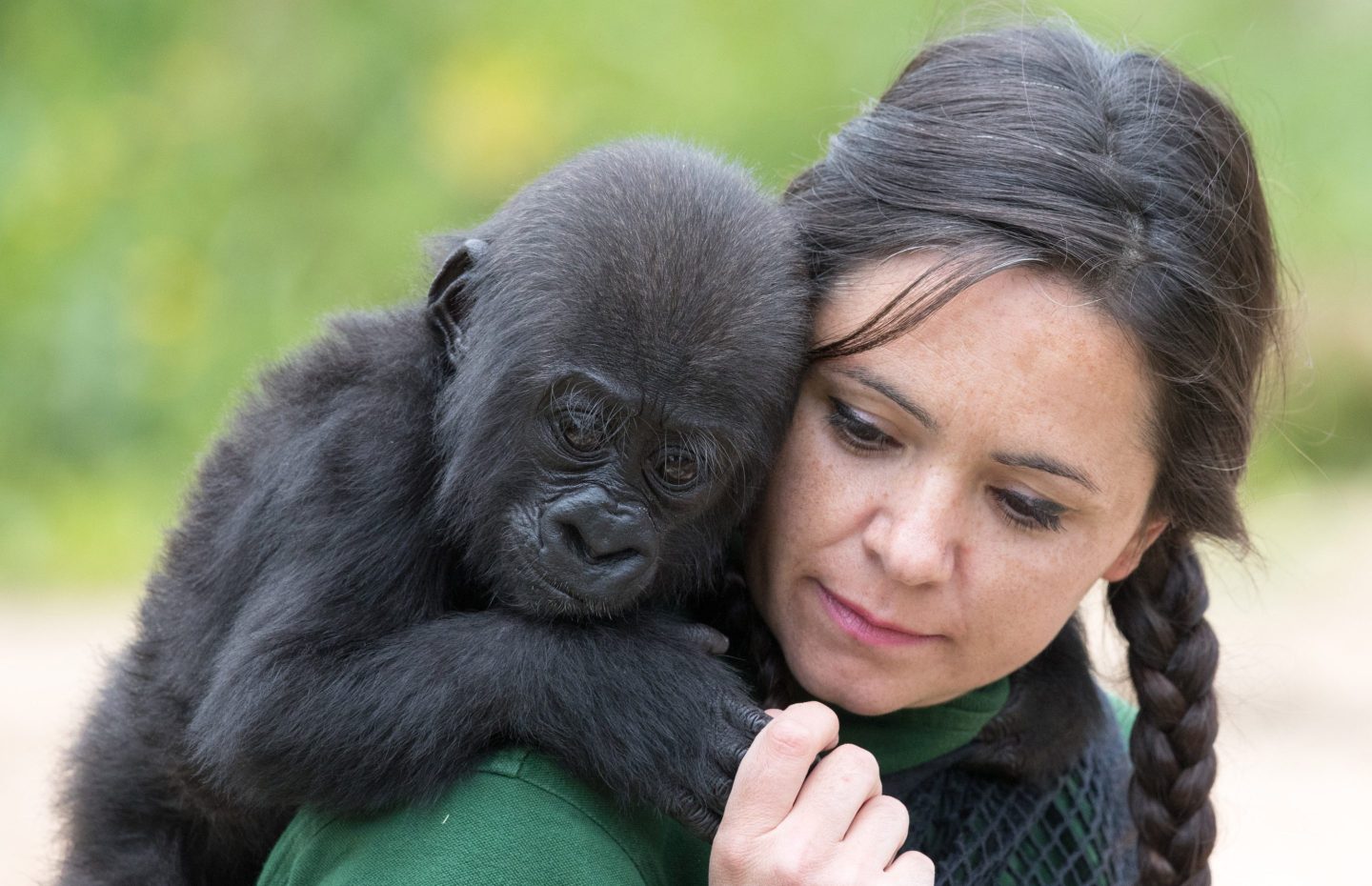
Baby gorilla
Baby gorilla Afia interacts with her keeper Joanne Rudd on 'Gorilla Island' at Bristol Zoo on August 10, 2016 in Bristol, England.Matt Cardy/Getty Images

In 1974, an infant mountain gorilla was born in Volcanoes National Park in Rwanda. Researchers named him Titus. As is typical for young gorillas in the wild, Titus spent the first years of his life surrounded by his mother, father and siblings, as well as more distant relatives and unrelated gorillas that made up his social group.

Recommended Video

In 1978, however, tragedy struck. Poachers killed Titus’ father and brother. In the chaos that followed, his younger sister was killed by another gorilla, and his mother and older sister fled the group. Juvenile Titus, who was at a developmental stage similar to that of an 8- or 9-year-old human, experienced more tragedy in his first four years of life than many animals do in a lifetime.

In people, a rough start in life is often associated with significant problems later on. Early life adversity can take a wide variety of forms, including malnutrition, war and abuse. People who experience these kinds of traumas, assuming they survive the initial event, are more likely to suffer health problems and social dysfunction in adulthood and to have shorter life spans. Often, these outcomes trace back at least in part to what public health researchers call health risk behaviors – things like smoking, poor eating habits and a sedentary lifestyle.

But researchers have documented the same kinds of problems in adulthood in nonhuman animals that experienced early life adversity. For example, female baboons who have the hardest childhoods have life spans that are on average only half as long as their peers that have the easiest. Activities like smoking and unhealthy food choices can’t be the whole story, then, since animals don’t engage in typical human health risk behaviors.

Given the connection between adverse events while young and poor health later in life, one might expect that Titus’ unlucky early years would predict a short, unhealthy adulthood for him. However, there are interesting hints that things might work differently in mountain gorillas, which are one of humans’ closest living relatives.

Decades of gorilla observations

As scientists who have spent many years studying wild gorillas, we have observed a wide variety of early life experiences and an equally wide variety of adult health outcomes in these great apes. Unlike other primates, mountain gorillas don’t appear to suffer any long-term negative effects of losing their mothers at an early age, provided that they reach the age at which they are old enough to have finished nursing.

Losing your mother is only one of many bad things that can happen to a young gorilla, though. We wanted to investigate whether a pattern of resilience was more generalized. If so, could we gather any insight into the fundamental question of how early life experiences can have long-lasting effects?

To do this, we needed exceptionally detailed long-term data on wild gorillas across their lifetimes. This is no mean feat, given gorillas’ long life spans. Primatologists know that males can survive into their late 30s and females into their mid-40s.

The best data in the world to conduct such a study comes from the Dian Fossey Gorilla Fund, which has been following individual mountain gorillas in Rwanda almost daily for 55 years. We conducted doctoral and postdoctoral research with the Fossey Fund and have collaborated with other scientists there for more than 20 years.

From their database, which stretches back to 1967, we extracted information on more than 250 gorillas tracked from the day they were born to the day they died or left the study area.

We used this data to identify six adverse events that gorillas younger than age 6 can endure: maternal loss, paternal loss, extreme violence, social isolation, social instability and sibling competition. These experiences are the gorilla equivalent of some kinds of adversity that are linked with long-term negative effects in humans and other animals.

Many young gorillas didn’t survive these challenges. This is a strong indication that these experiences were indeed adverse from the perspective of a gorilla.

We were surprised to discover, however, that most of the repercussions of these hardships were confined to early life: animals that survived past the age of 6 did not have the shorter life spans commonly associated with early life adversity in other species.

In fact, gorillas that experienced three or more forms of adversity actually had better survival outcomes, with a 70% reduction in the risk of death across their adult years. Part of this hardiness, especially for males, may be due to a phenomenon called viability selection: Only the strongest animals survive early adversity, and thus they are also the animals with the longest life spans.

While viability selection may be part of the story, the patterns in our data strongly suggest that as a species, mountain gorillas are also remarkably resilient to early adversity.

Where do gorillas get their resilience?

Although our findings corroborate previous research on maternal loss in gorillas, they contrast with other studies on early adversity in humans and other long-lived mammals. Our study indicates that the negative later-life consequences of early adversity are not universal.

The absence of this connection in one of our closest relatives suggests there might be protective mechanisms that help build resiliency to early-life knocks. Gorillas may provide valuable clues to understand how early life experiences have such far-reaching effects and how people can potentially overcome them.

While there is still much left to explore, we suspect that gorillas’ food-rich habitat and cohesive social groups could underpin their resiliency. When young gorillas lose their mothers, other social group members fill in the companionship hole she leaves behind. Something similar may happen for other types of early adversity as well. A supportive social network combined with plentiful food may help a young gorilla push through challenges.

This possibility underscores the importance of ensuring that human children who experience early adversity are supported in multiple ways: socially, but also economically, especially since early adversity is particularly prevalent among children living in poverty – itself a form of adversity.

And what became of Titus? Despite his difficult start in life, Titus went on to lead his group for two decades, siring at least 13 offspring and surviving to his 35th birthday, making him one of the most successful gorillas the Dian Fossey Gorilla Fund has ever studied.

Though Titus’ story is only a single anecdote, it turns out that his resilience is not so unusual for a member of his species.

Stacy Rosenbaum is Assistant Professor of Anthropology, University of Michigan and Robin Morrison is Postdoctoral Fellow in Animal Behavior, University of Exeter.

This article is republished from The Conversation under a Creative Commons license. Read the original article.


Join us at the Fortune Workplace Innovation Summit May 19–20, 2026, in Atlanta. The next era of workplace innovation is here—and the old playbook is being rewritten. At this exclusive, high-energy event, the world’s most innovative leaders will convene to explore how AI, humanity, and strategy converge to redefine, again, the future of work. Register now.
About the Authors
By Stacy Rosenbaum
See full bioRight Arrow Button Icon
By Robin Morrison
See full bioRight Arrow Button Icon
By The Conversation
See full bioRight Arrow Button Icon

Latest in Family

Finance
Lorem ipsum dolor sit amet, consectetur adipiscing elit, sed do eiusmod tempor incididunt ut labore et dolore magna aliqua. Ut enim ad minim veniam
By Fortune Editors
October 20, 2025
Finance
Lorem ipsum dolor sit amet, consectetur adipiscing elit, sed do eiusmod tempor incididunt ut labore et dolore magna aliqua. Ut enim ad minim veniam
By Fortune Editors
October 20, 2025
Finance
Lorem ipsum dolor sit amet, consectetur adipiscing elit, sed do eiusmod tempor incididunt ut labore et dolore magna aliqua. Ut enim ad minim veniam
By Fortune Editors
October 20, 2025
Finance
Lorem ipsum dolor sit amet, consectetur adipiscing elit, sed do eiusmod tempor incididunt ut labore et dolore magna aliqua. Ut enim ad minim veniam
By Fortune Editors
October 20, 2025
Finance
Lorem ipsum dolor sit amet, consectetur adipiscing elit, sed do eiusmod tempor incididunt ut labore et dolore magna aliqua. Ut enim ad minim veniam
By Fortune Editors
October 20, 2025
Finance
Lorem ipsum dolor sit amet, consectetur adipiscing elit, sed do eiusmod tempor incididunt ut labore et dolore magna aliqua. Ut enim ad minim veniam
By Fortune Editors
October 20, 2025

Most Popular

Finance
Lorem ipsum dolor sit amet, consectetur adipiscing elit, sed do eiusmod tempor incididunt ut labore et dolore magna aliqua. Ut enim ad minim veniam
By Fortune Editors
October 20, 2025
Finance
Lorem ipsum dolor sit amet, consectetur adipiscing elit, sed do eiusmod tempor incididunt ut labore et dolore magna aliqua. Ut enim ad minim veniam
By Fortune Editors
October 20, 2025
Finance
Lorem ipsum dolor sit amet, consectetur adipiscing elit, sed do eiusmod tempor incididunt ut labore et dolore magna aliqua. Ut enim ad minim veniam
By Fortune Editors
October 20, 2025
Finance
Lorem ipsum dolor sit amet, consectetur adipiscing elit, sed do eiusmod tempor incididunt ut labore et dolore magna aliqua. Ut enim ad minim veniam
By Fortune Editors
October 20, 2025
Finance
Lorem ipsum dolor sit amet, consectetur adipiscing elit, sed do eiusmod tempor incididunt ut labore et dolore magna aliqua. Ut enim ad minim veniam
By Fortune Editors
October 20, 2025
Finance
Lorem ipsum dolor sit amet, consectetur adipiscing elit, sed do eiusmod tempor incididunt ut labore et dolore magna aliqua. Ut enim ad minim veniam
By Fortune Editors
October 20, 2025
Rankings
  • 100 Best Companies
  • Fortune 500
  • Global 500
  • Fortune 500 Europe
  • Most Powerful Women
  • Future 50
  • World’s Most Admired Companies
  • See All Rankings
Sections
  • Finance
  • Leadership
  • Success
  • Tech
  • Asia
  • Europe
  • Environment
  • Fortune Crypto
  • Health
  • Retail
  • Lifestyle
  • Politics
  • Newsletters
  • Magazine
  • Features
  • Commentary
  • Mpw
  • CEO Initiative
  • Conferences
  • Personal Finance
  • Education
Customer Support
  • Frequently Asked Questions
  • Customer Service Portal
  • Privacy Policy
  • Terms Of Use
  • Single Issues For Purchase
  • International Print
Commercial Services
  • Advertising
  • Fortune Brand Studio
  • Fortune Analytics
  • Fortune Conferences
  • Business Development
About Us
  • About Us
  • Editorial Calendar
  • Press Center
  • Work At Fortune
  • Diversity And Inclusion
  • Terms And Conditions
  • Site Map
  • Facebook icon
  • Twitter icon
  • LinkedIn icon
  • Instagram icon
  • Pinterest icon

Most Popular

placeholder alt text
AI
Thousands of CEOs just admitted AI had no impact on employment or productivity—and it has economists resurrecting a paradox from 40 years ago
By Sasha RogelbergFebruary 17, 2026
19 hours ago
placeholder alt text
Economy
$56 trillion national debt leading to a spiraling crisis: Budget watchdog warns the U.S. is walking a crumbling path
By Nick LichtenbergFebruary 17, 2026
20 hours ago
placeholder alt text
Personal Finance
Current price of silver as of Tuesday, February 17, 2026
By Joseph HostetlerFebruary 17, 2026
23 hours ago
placeholder alt text
Personal Finance
You need $2 million to retire and 'almost no one is close,' BlackRock CEO warns, a problem that Gen X will make 'harder and nastier'
By Sydney LakeFebruary 17, 2026
19 hours ago
placeholder alt text
Economy
Trump crackdown drives 80% plunge in immigrant employment, reshaping labor market, Goldman says
By Nick LichtenbergFebruary 17, 2026
15 hours ago
placeholder alt text
Real Estate
A billionaire and an A-list actor found refuge in a 37-home Florida neighborhood with armed guards—proof that privacy is now the ultimate luxury
By Marco Quiroz-GutierrezFebruary 15, 2026
3 days ago

© 2026 Fortune Media IP Limited. All Rights Reserved. Use of this site constitutes acceptance of our Terms of Use and Privacy Policy | CA Notice at Collection and Privacy Notice | Do Not Sell/Share My Personal Information
FORTUNE is a trademark of Fortune Media IP Limited, registered in the U.S. and other countries. FORTUNE may receive compensation for some links to products and services on this website. Offers may be subject to change without notice.


Latest in Family

FamilyParenting
OpenAI CEO says his kids will ‘never be smarter than AI’— and that his parenting style relies on ChatGPT
By Ani FreedmanJune 20, 2025
8 months ago
Child clinging to the leg of an unseen parent
FamilyParenting
Here’s why giving your kid the silent treatment is ‘one of the worst types of punishment’
By Beth GreenfieldJune 4, 2025
9 months ago
RFK Jr. speaks into a microphone
HealthBabies
RFK Jr. has ordered the FDA to review baby formula. Here’s what you should know
By Jonel Aleccia and The Associated PressJune 3, 2025
9 months ago
Child getting a vaccine
HealthCOVID-19 vaccines
What you need to know about Moderna’s new COVID vaccine, just approved by the FDA
By Beth GreenfieldJune 2, 2025
9 months ago
An adolescent boy on a smartphone
LifestyleParenting
Parents are worried about their kids’ smartphone use—but less than half fully utilize parental controls, research finds
By Beth GreenfieldMay 29, 2025
9 months ago
Young mom holding baby
LifestyleParenting
Clues into Gen Z parenting styles can be found in their approach to these two powerful elements
By Beth GreenfieldMay 9, 2025
9 months ago