The lack of diversity in health care is driving inequality—and leading to troubling results for many patients.
Because of inequality, Black, Latinx, American Indian, Alaska Native, Asian, Native Hawaiian and Pacific Islander, and other non-white racial groups in the U.S., women, and others suffer from unnecessary chronic conditions, take longer to recover from common illnesses, and can have a harder time getting the care they need.
“The rich get richer and the poor get poorer. The same is true for health,” said Cathi Ahearn, senior vice president for worldwide commercial portfolio strategy at Bristol Myers Squibb. “The underserved get sicker”
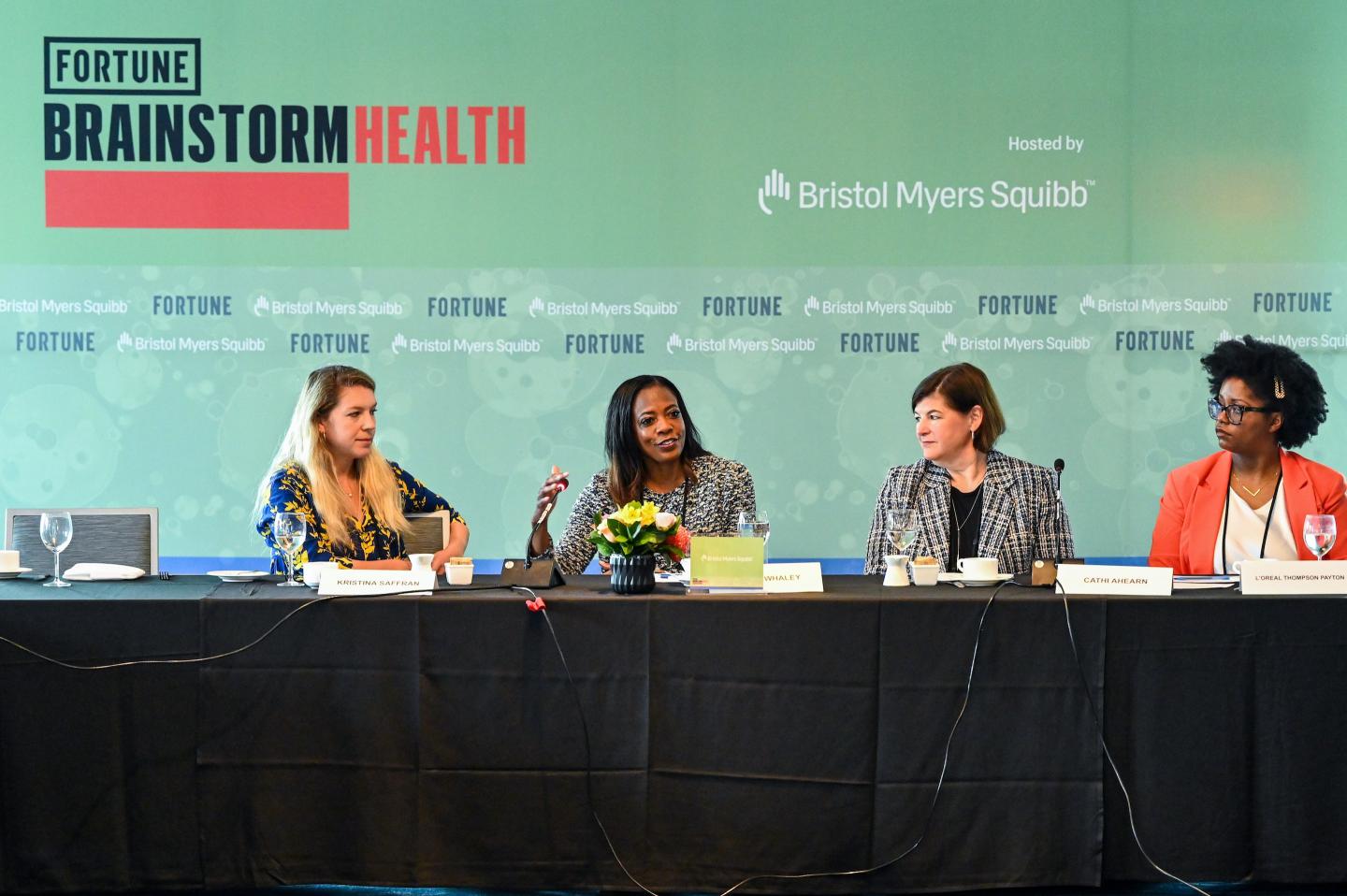
Fortune reporter L’Oreal Thompson Payton spoke with Ahearn and other experts about the root causes of inequality and potential solutions at Fortune‘s Brainstorm Health conference in Marina del Rey, Calif, on Wednesday during a panel conversation hosted by global biopharmaceutical company Bristol Myers Squibb.
Here are some of the top culprits driving inequality in health care—and ideas for overcoming them.
Clinical trials often lack diversity
When clinical trials fail to represent communities, treatments may not be as effective in diagnosing and treating their illnesses, Ahearn said.
“What goes into the drug label only reflects the clinical trial and people served. People not tested in clinical trials won’t be reflected,” she stressed.
Bristol Myers Squibb has earmarked $150 million toward training physicians and clinical trial investigators to work in diverse communities. Ahearn says the results are encouraging, and led to better diagnostic rates and health care. Approximately 58% of its clinical trial sites are now in racially and ethnically diverse areas.
The next hurdle the company faces is reaching diverse patients and recruiting them to actually participate in clinical trials.
Stigmas and misconceptions persist
Because diverse communities have been underrepresented, some may believe that an issue doesn’t affect them, and resist seeking help.
This is especially true when it comes to mental health disorders like anorexia, said Kristina Saffran, co-founder and CEO of Equip, which provides treatment to people with eating disorders.
Saffran told the story of a patient who waited more than a decade to get treatment because she believed that “Black girls don’t get eating disorders.”
This experience is common and costly, as early intervention is key for treatment. Eating disorders are the second-deadliest mental health disorder behind opioid abuse because of the high suicide rates associated with the condition, she said.
“We need to be having these conversations, we need to be including folks with lived experience at the table,” Saffran said.
Reducing stigma will increase participation in family-based treatment, which is shown to be most effective in treating eating disorders, Saffran said.
Distrust in health care
Stories like those of Henrietta Lacks, a Black woman with cervical cancer whose cells were studied and publicly discussed for decades without her family’s knowledge or consent, drive a lack of trust among diverse communities, Thompson noted.
The research done with HeLa cells created from Lacks drives much of modern scientific research, yet none of the resulting pharmaceutical profits were passed on to her family.
One notable consequence of this lack of trust is that people of color are often hesitant to donate organs, said Janice Whaley, president and CEO of Donor Network West, an organ and tissue procurement nonprofit serving California and Nevada.
One of the biggest drivers of distrust is the lack of representation at health care companies, Whaley said.
“If we’re not able to be in front of families who prefer talking to people who look like them, we will not be able to cut back on disparities that exist,” Whaley said.
Having a diverse staff can make the difference in whether diverse communities trust that company.
Donor Network West is now 60% diverse—better representing the community it serves, Whaley said. As a result, she says the network has seen an improvement in the number of organ donors in those communities.