
• Home
  • Latest
  • Fortune 500
  • Finance
  • Tech
  • Leadership
  • Lifestyle
  • Rankings
  • Multimedia
RetailNestle
Europe

Price hikes help Unilever and Nestlé beat analyst estimates—but tariffs could push consumers to their limits

Prarthana Prakash
By
Prarthana Prakash
Prarthana Prakash
Europe Business News Reporter
Down Arrow Button Icon
Prarthana Prakash
By
Prarthana Prakash
Prarthana Prakash
Europe Business News Reporter
Down Arrow Button Icon
April 24, 2025, 9:52 AM ET
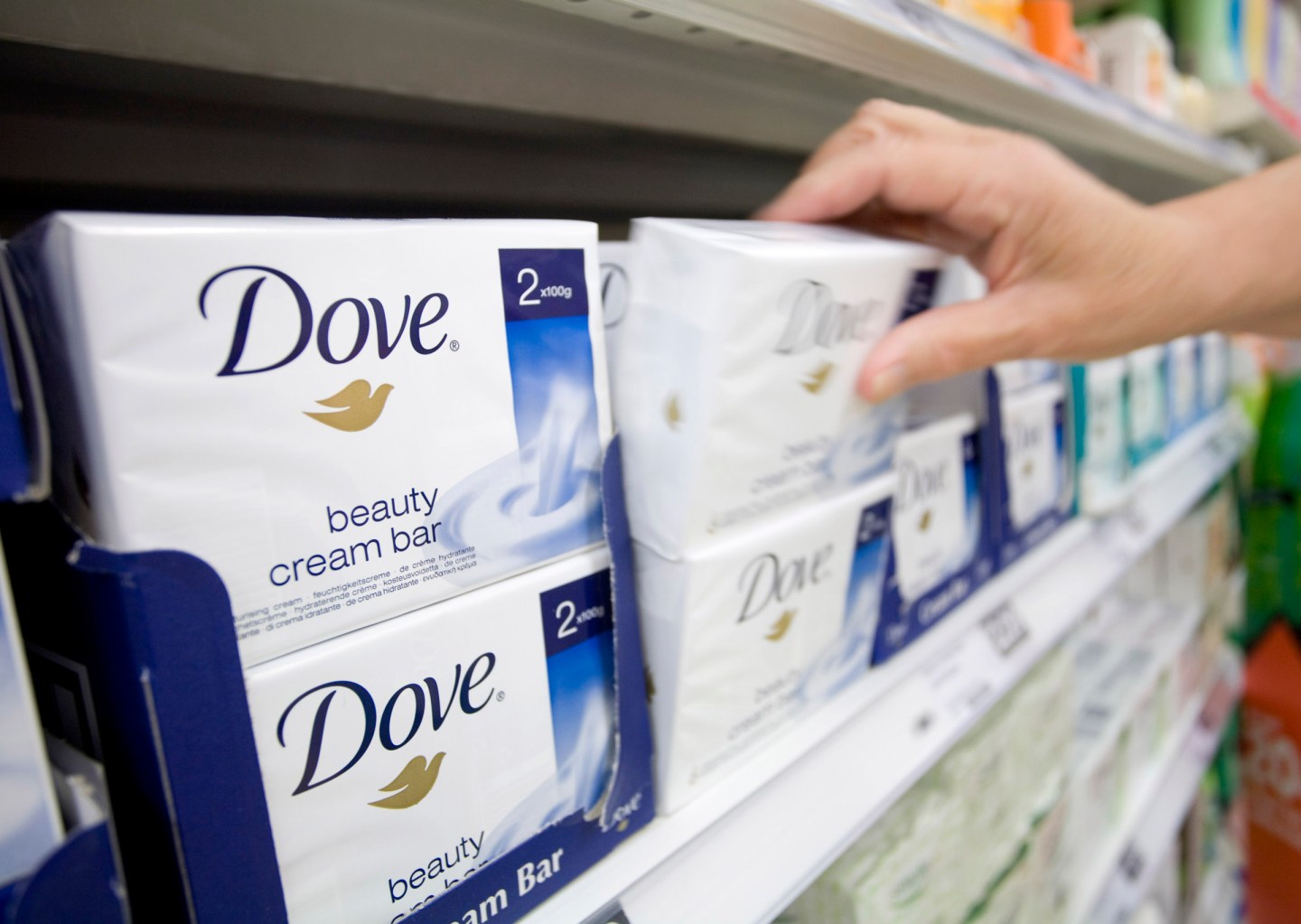
A customer selects a packet of Dove soap at a grocery store
Unilever is the London-listed consumer giant behind Dove soap.Chris Ratcliffe—Bloomberg/Getty Images

Unilever and Nestlé, some of the world’s largest consumer companies, saw strong sales growth in the first three months of 2025 despite the looming threat of tariffs.   

Recommended Video

The rivals’ growth came from higher demand for some premium products and price hikes to offset soaring cocoa and coffee prices. 

Unilever’s underlying sales were up 3% during the first quarter, with its personal care category bringing in the most business. The London-listed company’s so-called power brands, contributing to 75% of the group’s turnover, saw sales jump by 3%. 

Unilever is in the middle of a shake-up that’s seen key leadership changes and an overhaul in its business focused on streamlining and gaining market share from rivals. During the pandemic, Unilever began to lose shoppers amid price increases to offset costs.

Earlier this month, the company ousted its CEO Hein Schumacher, and put CFO Fernando Fernandez in charge. 

Fernandez has had a single resounding message since taking on the top job: to make big changes at the consumer brand behind Dove soap and Vaseline cream.

Fernandez said the company’s new direction would mean “a ruthless obsession with the consumer” during Thursday’s earnings call.

“We have a resilient portfolio, good momentum and, above all, a very clear sense of what we need to do,” the new CEO said. 

Nestlé has faced similar struggles. The Swiss company behind KitKat and Nespresso also reacted to surging raw materials costs by jacking up the price tags on its products, which its chair, Paul Bulcke, said Nestlé “went a bit too far with.”    

However, as demand for its coffee and confectionery, such as Smarties and Quality Street, boomed in the first quarter, the company reported a 2.8% organic revenue increase, beating analyst estimates of 2.6%. 

“We are trying to take as much price as we can to cover our costs while being mindful of the consumer response in a competitive environment,” CEO Laurent Freixe said, Reuters reported. “Some political decisions, economic decisions taken have rather undermined already soft consumer confidence.”

Nestlé, too, is undergoing a shift in its business to focus on “billionaire brands,” or its strong-performing suite of brands that can become engines of growth. The Vevey-based company plans to slash $2.8 billion in costs by 2027. 

Consumer companies like Unilever and Nestlé constantly jostle over pricing to deliver strong top-line figures without upsetting shoppers. The subject became sensitive in the economic aftermath of the pandemic when cash-strapped consumers alienated big brands amid high inflation in favor of the best deals.

Tariff talk in the U.S. threatens to bring some of those pressures back, as experts worry about the medium-term impact of additional levies on broader consumer sentiment. This is set against the backdrop of eye-popping cocoa and coffee prices, the key ingredients in some of Unilever’s and Nestlé’s top products. 

Given that their products are sold worldwide, Unilever and Nestlé have expansive manufacturing presences across regions. Nestlé, for instance, makes roughly 90% of its U.S. products within the country, shielding it from the worst impact of tariffs. 

However, the companies also count the U.S. as their biggest market in most product categories, making demand from the country critical to their financial health.

How consumers cope with a changing global order will determine demand for the consumer goods the two companies make. Unilever noted “declining consumer sentiment,” while Nestlé said political and economic decisions dented “already soft consumer confidence.” 

On Wednesday, British consumer company Reckitt Benckiser, which makes Dettol cleaning liquids and Strepsils lozenges, also warned of wavering consumer confidence. These challenges could determine demand in the competitive market for consumer goods through 2025.  

“While the full picture on tariffs is still unfolding, our analysis suggests that, at this stage, the direct impact on our business will be limited,” Fernandez said. 

Meanwhile, Nestlé’s CFO Anna Manz warned that tariffs may hurt select parts of its business, such as bottled water and Nespresso capsules. The Swiss giant said it would cut prices by 1% in the U.S. to maintain its appeal with American shoppers.

While Nestlé and Unilever’s size and scale provide ample cushioning, they’ll still have to watch for private labels offering the same products at lower prices. 

“The number of retailers that have developed the capabilities of the multinational consumer companies has increased quite significantly,” Aftab Hussain, managing director and senior partner in BCG’s consumer and retail team, told Reuters. “You’re seeing innovations come through from retailers on private brands that’s actually ahead of the (bigger) brands.”

Join us at the Fortune Workplace Innovation Summit May 19–20, 2026, in Atlanta. The next era of workplace innovation is here—and the old playbook is being rewritten. At this exclusive, high-energy event, the world’s most innovative leaders will convene to explore how AI, humanity, and strategy converge to redefine, again, the future of work. Register now.
About the Author
Prarthana Prakash
By Prarthana PrakashEurope Business News Reporter
LinkedIn icon

Prarthana Prakash was a Europe business reporter at Fortune.

See full bioRight Arrow Button Icon

Latest in Retail

millennial
CommentaryConsumer Spending
Meet the 2025 holiday white whale: the millennial dad spending $500+ per kid
By Phillip GoerickeDecember 12, 2025
2 days ago
McDonald
RetailRetail
Lululemon CEO Calvin McDonald to step down as quarterly profit dips 13%
By Anne D'Innocenzio and The Associated PressDecember 12, 2025
2 days ago
Sarandos
CommentaryAntitrust
Netflix, Warner, Paramount and antitrust: Entertainment megadeal’s outcome must follow the evidence, not politics or fear of integration
By Satya MararDecember 12, 2025
2 days ago
InvestingMarkets
Retail investors drive stocks to a pre-Christmas all-time high—and Wall Street sees a moment to sell
By Jim EdwardsDecember 12, 2025
2 days ago
Five panelists seated; two women and five men.
AIBrainstorm AI
The race to deploy an AI workforce faces one important trust gap: What happens when an agent goes rogue?
By Amanda GerutDecember 11, 2025
2 days ago
Oreo
RetailFood and drink
Zero-sugar Oreos headed to America for first time
By Dee-Ann Durbin and The Associated PressDecember 11, 2025
3 days ago

Most Popular

placeholder alt text
Success
Apple cofounder Ronald Wayne sold his 10% stake for $800 in 1976—today it’d be worth up to $400 billion
By Preston ForeDecember 12, 2025
2 days ago
placeholder alt text
Economy
Tariffs are taxes and they were used to finance the federal government until the 1913 income tax. A top economist breaks it down
By Kent JonesDecember 12, 2025
2 days ago
placeholder alt text
Success
40% of Stanford undergrads receive disability accommodations—but it’s become a college-wide phenomenon as Gen Z try to succeed in the current climate
By Preston ForeDecember 12, 2025
2 days ago
placeholder alt text
Economy
The Fed just ‘Trump-proofed’ itself with a unanimous move to preempt a potential leadership shake-up
By Jason MaDecember 12, 2025
1 day ago
placeholder alt text
Economy
For the first time since Trump’s tariff rollout, import tax revenue has fallen, threatening his lofty plans to slash the $38 trillion national debt
By Sasha RogelbergDecember 12, 2025
1 day ago
placeholder alt text
Success
Apple CEO Tim Cook out-earns the average American’s salary in just 7 hours—to put that into context, he could buy a new $439,000 home in just 2 days
By Emma BurleighDecember 12, 2025
2 days ago
Rankings
  • 100 Best Companies
  • Fortune 500
  • Global 500
  • Fortune 500 Europe
  • Most Powerful Women
  • Future 50
  • World’s Most Admired Companies
  • See All Rankings
Sections
  • Finance
  • Leadership
  • Success
  • Tech
  • Asia
  • Europe
  • Environment
  • Fortune Crypto
  • Health
  • Retail
  • Lifestyle
  • Politics
  • Newsletters
  • Magazine
  • Features
  • Commentary
  • Mpw
  • CEO Initiative
  • Conferences
  • Personal Finance
  • Education
Customer Support
  • Frequently Asked Questions
  • Customer Service Portal
  • Privacy Policy
  • Terms Of Use
  • Single Issues For Purchase
  • International Print
Commercial Services
  • Advertising
  • Fortune Brand Studio
  • Fortune Analytics
  • Fortune Conferences
  • Business Development
About Us
  • About Us
  • Editorial Calendar
  • Press Center
  • Work At Fortune
  • Diversity And Inclusion
  • Terms And Conditions
  • Site Map

© 2025 Fortune Media IP Limited. All Rights Reserved. Use of this site constitutes acceptance of our Terms of Use and Privacy Policy | CA Notice at Collection and Privacy Notice | Do Not Sell/Share My Personal Information
FORTUNE is a trademark of Fortune Media IP Limited, registered in the U.S. and other countries. FORTUNE may receive compensation for some links to products and services on this website. Offers may be subject to change without notice.