Europe is home to some of the world’s most iconic companies. Many started small to quell a single person’s curiosity before exploding into a global phenomenon. As a new resident, big, successful European brands have piqued my interest. What’s their story? How did they transform into the giants they are today? How have they sustained their legacy over time? Those are some of the questions I explore in this new series.
It’s the 1980s, and the Swiss watch industry, Switzerland’s lifeblood, was battling extinction.
An innovation by Japanese watchmaker Seiko—a battery-operated quartz watch—kept time more accurately than its mechanical counterparts. While the new instrument was only a few millimeters long, it was enough to obliterate the acclaimed Swiss watchmaking industry.
Switzerland had dominated the craft of horology for its entire history, supplying 50% of the world’s watches until that point. Its watches became tokens of wealth, power, and affluence.
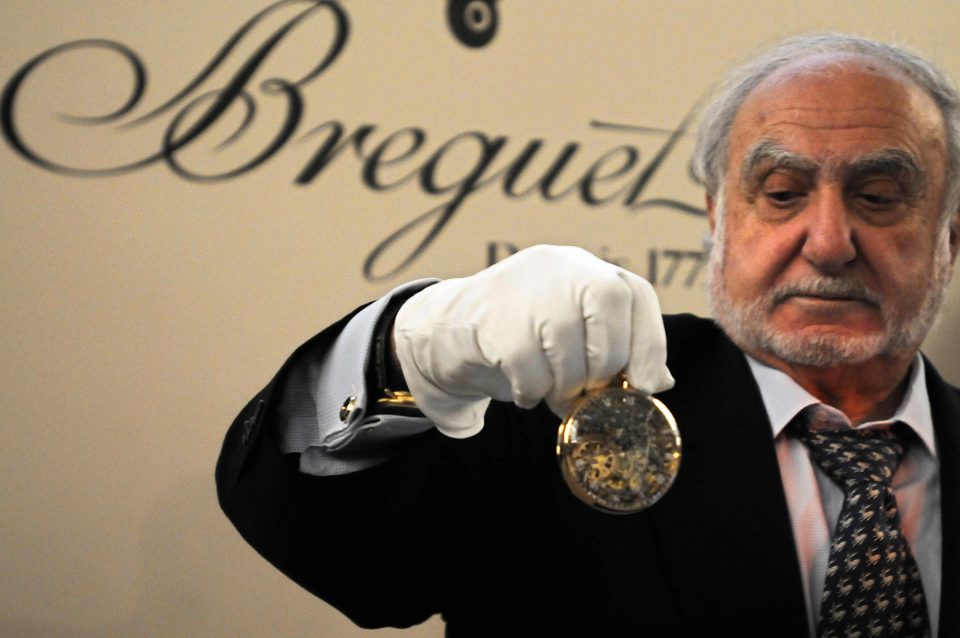
Take Swiss watchmaker Breguet, for instance. Established in 1775, it made a watch for the infamous French queen Marie-Antoinette. Deeply nuanced and incorporating every complication known then, the pocket watch remains one of the most expensive timepieces to this day.
404
Swatch Group’s rank on the Fortune 500 Europe.
The arrival of quartz, coupled with a global recession and a strong Swiss franc, left many such Swiss companies in a bind. Unemployment in the industry soared, and experts speculated that entire watchmaking communities would cease to exist as Japan eclipsed Switzerland as the world’s largest watch manufacturer.
That’s when Nicolas G. Hayek came to the rescue. In the spring of 1982, the banks that kept watch companies from going bust tasked the Lebanese-born consultant with writing a report that could’ve essentially spelled the end of Swiss watchmaking.
Instead, Hayek proposed combining several Swiss watch labels under one roof as Société Suisse de Microélectronique et d’Horlogerie, or SMH.
He also insisted on setting up a funkier watch brand to let the average person buy inexpensive timepieces. Instead of limiting people to one high-end watch, Swatch would be their second watch (hence the name), which would be more artistic and imaginative. It would also be made with plastic, easier to buy, and mass-manufactured rather than individually hand-crafted.
Although an outlier among its elite peers, Swatch is now widely regarded as the anchor for the entire Swiss watch industry’s revival.
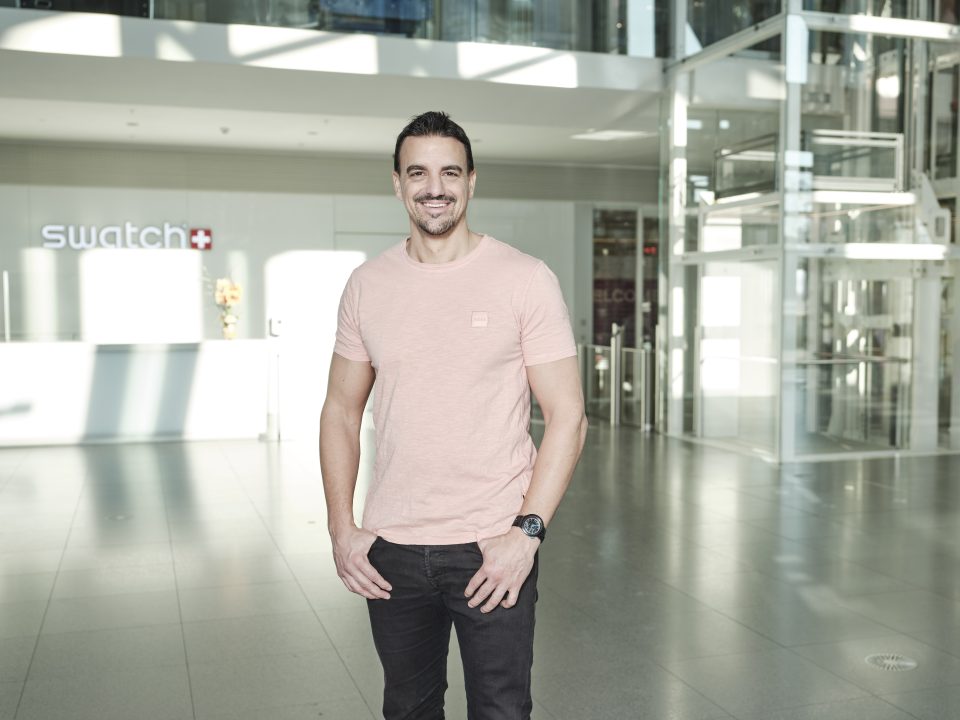
“The idea was simple but revolutionary: a high-quality, attainable, colorful, and fun watch that broke all the conventions,” Alain Villard, CEO of the Swatch brand, told Fortune. He grew up in Biel, where Swatch Group is headquartered, and says he vividly remembers the company's impact on the town.
Swatch sold some 100 million watches by the early 1990s, as Hayek’s efforts started to pay off. Like a rising tide lifting all ships, Swiss watches regained their allure, albeit in a very different way from the pre-quartz era.
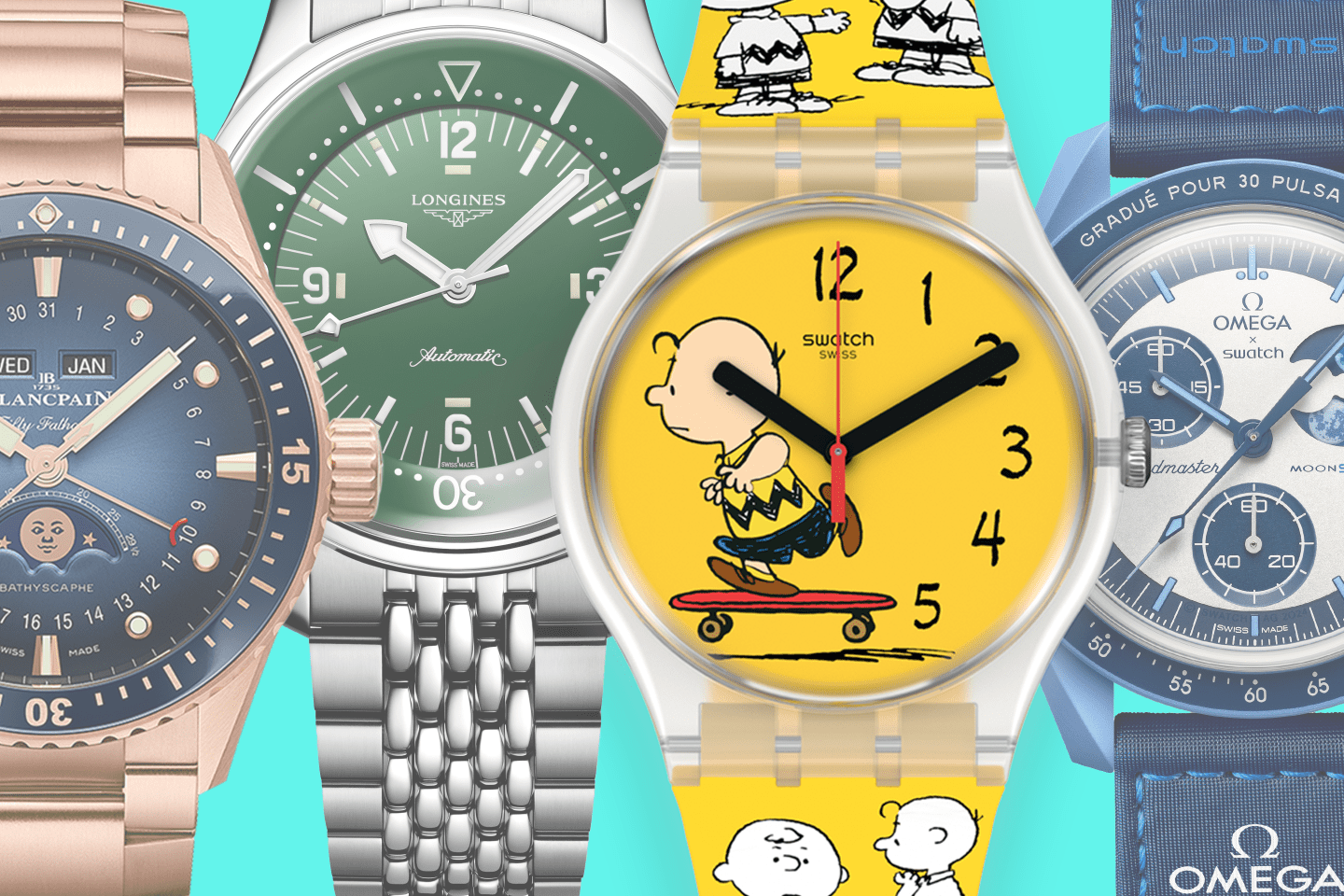
In addition, Hayek streamlined big Swiss brands like Tissot and Omega under SMH, which officially became Swatch Group in 1998. The Swatch brand, with its $60 watches, now operates under the same parent company that sells a $30,000 Blancpain.
“Since 2000, the Swiss watch industry has undergone a profound transformation, becoming a luxury industry,” Pierre-Yves Donzé, a professor of business history at Osaka University, told Fortune. He also authored the book The Business of Time: a global history of the watch industry.
Donzé pointed out that the gulf between the volume and value of watches helps demonstrate the industry's sea change. While Swiss watch exports have halved since 2000 to about 15 million, the value has increased two and a half times from CHF 10 billion ($11 billion in today’s exchange rate) in 2000 to CHF 25 billion ($28 billion) in 2024.
There’s no doubt potential to be tapped—but can Swatch still hold a winning share of it?
While the Zurich-listed company made itself indispensable to an industry once verging on extinction, that spiel alone won’t be enough to sustain it forever.
Swatch Group, now led by Nick Hayek (son of Nicholas G. Hayek), reported a 75% drop in operating profits last month owing to weak consumer spending in China. The company has also recently sparred with some shareholders over corporate governance and trailing share price performance.
However, Swatch has defended its results, expecting a stronger 2025 as it deliberately postponed redundancies and saw an uptick in demand across other regions outside China. It’s still fighting to win market share that will help it stay the undisputed watchmaking juggernaut.
3 things that helped Swatch conquer the world:
1. Marketing for the right audience
When Swatch was still SMH, the company had to convey a sharp, impactful message that thrust timepieces back into the public consciousness.
To achieve this, when the group launched the Swatch brand, it decided to do things differently by making watches a fashion collectible. As styles change with seasons and trends, watch designs could, too.
The first batch of Swatch designs featured muted colors in the hopes that the watches could be given to the Swiss military if their unconventional bet didn’t take off. Fortunately, that didn’t happen, and every year since its launch in 1983, Swatch has introduced more audacious designs.
Swatch began making limited-edition watches to capture cultural zeitgeists. This created an artificial shortage that had only been seen for luxury watches (for entirely different reasons, mainly owing to the time each craftsperson took to make them).
“In an industry known for its traditionalism and luxury, Swatch watches embodied attainability, creativity, and fun, without compromising on quality,” said Villard.
Its Jellyfish watch with a transparent case and straps became all the rage for its unusual look, as did the widely sought-after Kiki Picasso watch created in collaboration with French artist Christian Chapiron in 1985. Each of Chapiron’s 140 designs followed the same template but looked distinct, making them a coveted addition for Swatch collectors, commanding over $20,000 even today.
That set off a slew of artistic designs Swatch would go on to launch, each uniquely flamboyant and becoming wildly popular. It created timepieces around childhood favorites like Snoopy, movies like James Bond’s Casino Royale, significant places like New York's Museum of Modern Art, and personalities like the late Queen Elizabeth II (the watch is one of Swatch’s best-selling models).
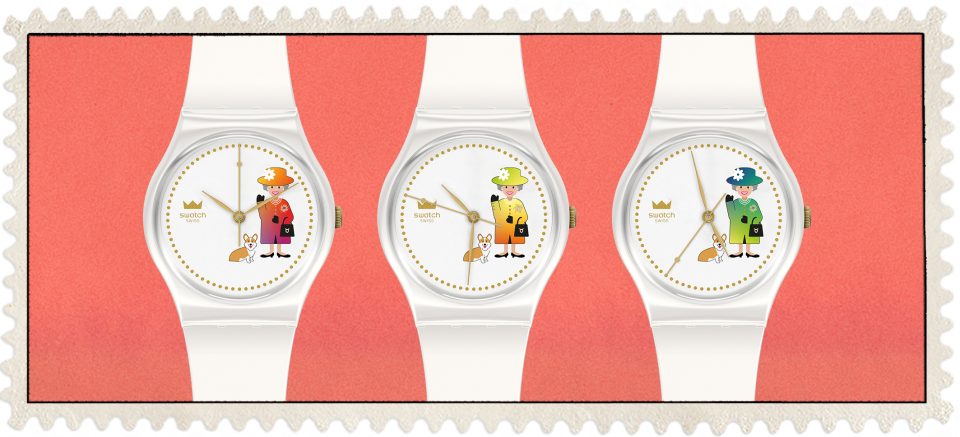
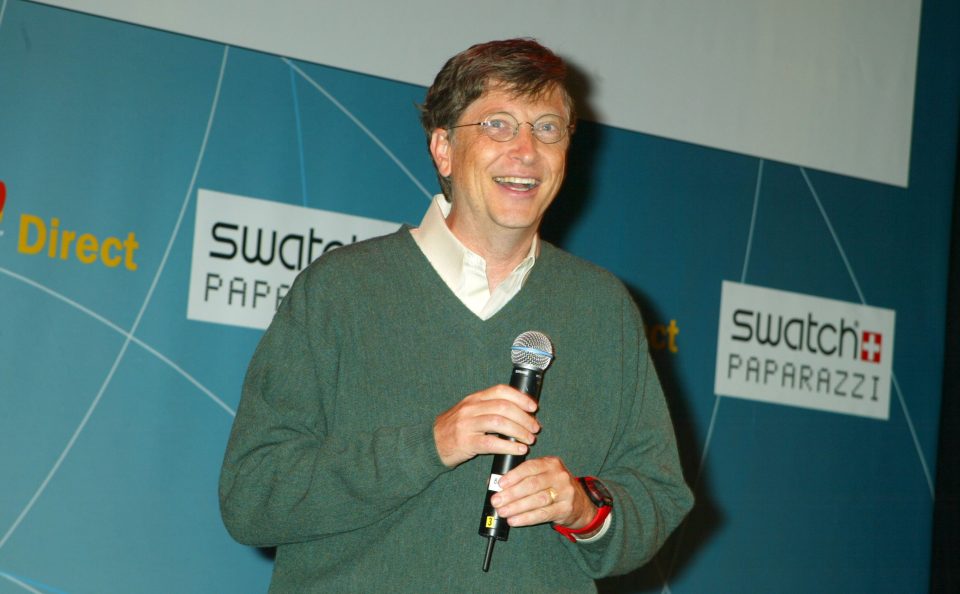
Swatch’s bet could’ve gone gravely wrong since no watchmaker had done it before. Instead, it spawned a whole new market. They were so hot through the 2000s that they kept hitting record highs in sales (even Bill Gates couldn’t resist wearing one).
Scholars who’ve studied the Swiss watch market credit the industry’s post-quartz success to non-technical innovation, as brand positioning through marketing became front-and-center.
For instance, Omega became the luxury marque to compete with Rolex and Richemont’s Cartier. It’s Swatch Group’s most lucrative brand, accounting for 35% of its sales, according to Morgan Stanley estimates. The brand’s roots go back to 1848, and it earned a reputation through its many milestones, including being the first watch in space and the first watchmaker to time the Olympic Games in 1932.
Breguet and Blancpain are ultra-exclusive watchmakers, while Longines is in the medium-priced range.
Shoppers received this strategy well, and the group expanded its presence globally. Swatch Group’s revenues hit a high of CHF 8.7 billion ($9.7 billion in today’s conversion) in 2014, helped by higher traction in physical stores for its key brands.
It has since had a few bumpy years as demand for some watches eased while its brands went head-to-head with independents (such as Rolex and Patek Philippe) and conglomerate-backed watchmakers (such as Richemont’s IWC and LVMH’s Tag Heuer).
“In an industry known for its traditionalism and luxury, Swatch watches embodied attainability, creativity, and fun, without compromising on quality.”
CEO of Swatch brand Alain Villard, told Fortune.
Its market share has plunged considerably versus private watchmakers, which could result in the underperformance of the entire Swiss watch market in 2025, according to a report published earlier this month by Morgan Stanley and LuxeConsult. Still, it remains a key player, with four of its brands featured in the world’s top 20 watchmakers (slightly lower than Richemont, which owns five brands).
2. Ownership in every right
When Swatch was established in response to the 1980s quartz crisis, its brands had several contemporaries, many of whom had been in the watchmaking business for decades (if not centuries). But if Swatch had to deliver profits and become the backbone of the industry, it had to fortify itself in more ways.
From pre-quartz crisis days and before Swatch Group was formally established, movement parts supplier ETA had been the core of its previous entities' watchmaking business. Today, ETA designs and produces movements, which are the engines that power mechanical, quartz, and Swatch watches.
The company once employed the watch group’s founding fathers, Ernst Thomke, Elmar Mock, and Jacques Müller, who found a way to make cheap, flat timepieces that became Swatch’s foundation.
The ETA segment is also behind the SISTEM51 mechanical movement, a fully automated, self-winding process that assembles the insides of watches in just 51 parts (which could otherwise be 130 or more).
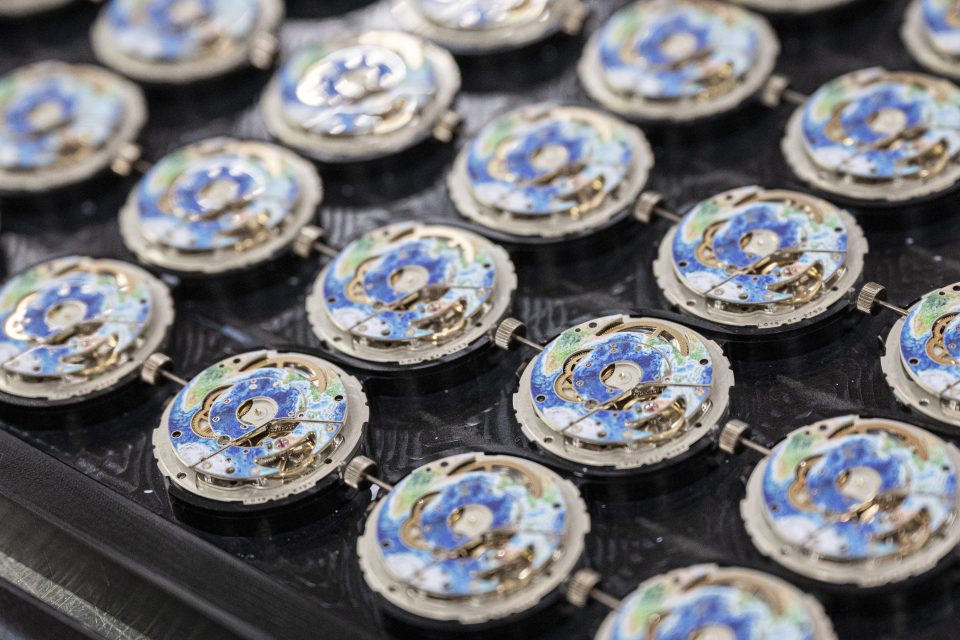
Its innovation means Swatch watches can keep running for 90 hours even when not on the wrist without losing accuracy.
This has been critical to the Switzerland-based company’s dominance in low- to medium-priced watches and to driving cross-brand collaborations, such as those between Swatch and sister brands Blancpain and Omega.
“Swatch Group produces just about everything internally which is only logical for a company exclusively devoted to watchmaking, with large volumes and a wide range of complementary products,” ETA’s CEO Damiano Casafina, who is also on Swatch Group’s executive board, told Swiss news outlet SWI swissinfo.ch last June.
He added that Swatch had “no competition” in its segment and “stands alone due to its technological innovations and unique performance.”
Swatch houses every step of the watch-making value chain today, including the nuances that give its pieces an edge. The group controls companies that make watch cases and batteries for timepieces. It owns and operates its own foundry for gold and other alloys. Swatch also owns Micro Crystal, which manufactures tiny quartz crystals that help with precise timekeeping and are also used in smartphones and medical tools.
It’s no small feat that Swatch Group can make nearly all the components for the watches made by its 16 different brands. It was even more significant, though, that it held a virtual monopoly by supplying parts to 80% of its Swiss contemporaries.

By 2010, the company wanted to stop making components for anyone but its own brands as it made the “entry-level far too low,” Nick Hayek said. However, given its formidable presence in the market, the Swiss competition commission only allowed Swatch Group to gradually wean off rivals—big and small—from its supplies in a 2013 deal.
Today, big watchmakers are also vertically integrated, just like the Swatch Group did. However, they only make components for their own watches rather than supply them to the rest of the industry.
3. Innovation at the core
With ETA and legacy watchmakers like Omega all under the Swatch Group umbrella, innovation became the main driver for the Biel-headquartered company.
It has roughly 1,800 patents, with 196 new patent applications in 2024 alone. Its patents protect essential parts of its contribution to watch technology, such as how its internal watch case measures humidity.
Swatch Group’s pioneering approach has made its watches a microcosm of engineering innovation.
There’s no dearth of resources for those steeped in Swatches. Scores of collectors worldwide are dedicated to curating the rarest and oldest Swatches, helped by a thriving eBay and secondhand market. The company even publishes a £350 encyclopedia documenting 40 years of design breakthroughs.
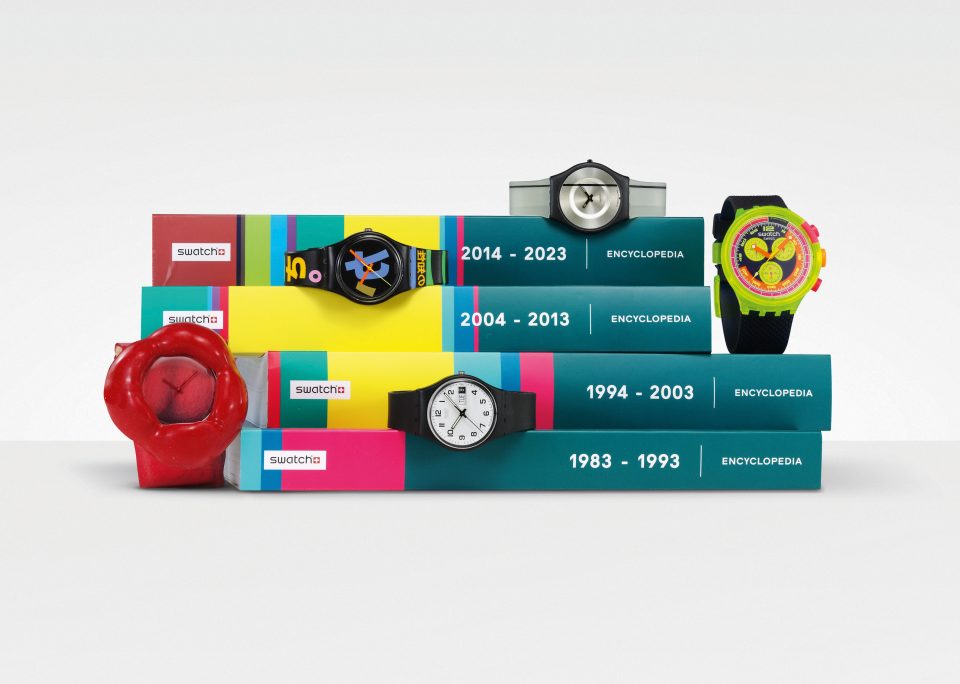
That’s probably what has kept Swatch’s appeal alive even as smartwatches have occupied wrist space in recent years.
“The idea of expressing yourself through your watch goes far from the values represented by smartwatches,” Villard said, adding that contrary to belief, smartwatches have drawn new business to Swatch’s watches.
“Especially in markets like the U.S. where there is an increasing demand for smartwatches, customers also have the growing tendency to be interested in a traditional watch for the first time in their life as an accessory reflecting their personality and their individuality.”
Therefore, Swatch Group's message, with its arsenal of patents, is that it will continue to be on the cutting edge of innovations in its own right.
The Swatch brand has recently relaunched a few of its early designs with a new “bioceramic” watch. Touting it as “one of the most innovative in the watchmaking industry,” Swatch’s use of the eco-friendly material could mark a new paradigm for the company.
One of Swatch Group’s most celebrated moments in recent memory was its MoonSwatch line launched in 2022. The wristwatch collection was a collaboration between Swatch and Omega—a David and Goliath tie-up never been seen before. MoonSwatch, priced at about $260, incorporates the traits of Omega’s Speedmaster Moonwatch (the same line approved for space by NASA in 1965) and Swatch’s playful colors in bioceramic.
MoonSwatch’s unprecedented popularity meant people were queuing outside stores unlike ever before. The launch wasn’t free of criticism, but it bumped Swatch to elite status purely based on its scarcity (the millionth MoonSwatch sold for $80,000 in an auction last year).
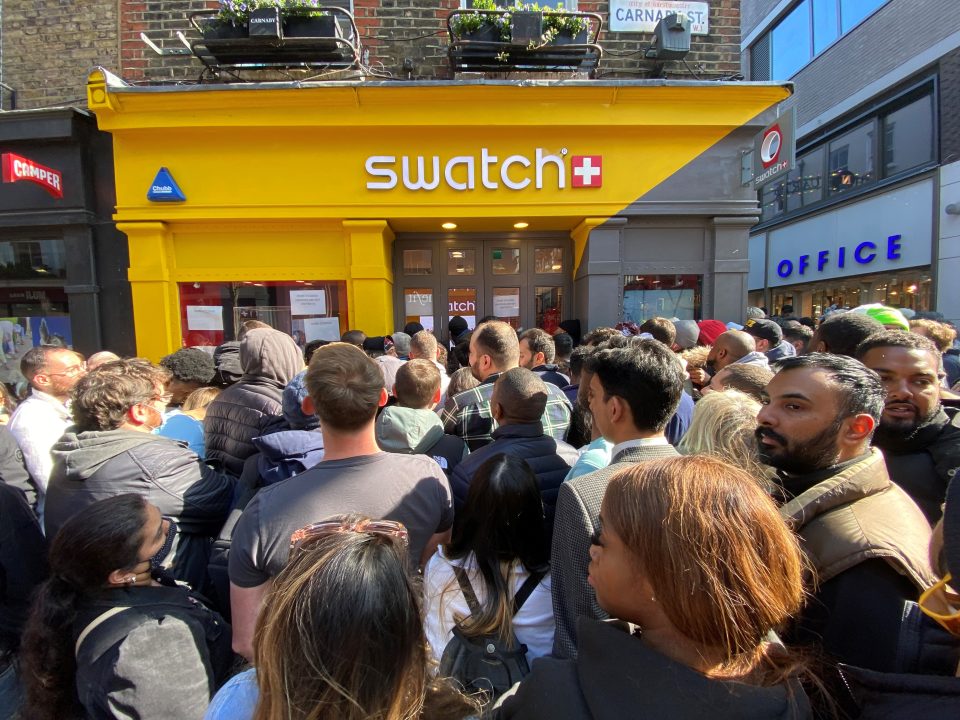
The company subsequently reported record sales of CHF 9 billion ($10 billion) for 2022 as the pandemic boom overlapped with the MoonSwatch’s craze.
“We’ve also connected with a new audience. It’s opened the door to younger customers gaining an interest in watches in general as well as being excited specifically about our innovative designs,” Villard says of the impact MoonSwatch has had.
The Hayek-led company took a page from its MoonSwatch success to unveil another collaboration between Swatch and Blancpain of a colorful scuba diving watch called the Scuba Fifty Fathoms.
Only time will tell
Swatch Group’s story and contribution to the watch industry can best be summarized in Charles Dickens’ famous, as it’s seen the best and worst of times. It was birthed out of a crisis that it took in its stride, emerging as a trailblazer.
However, its sales growth has fallen to rock bottom in recent years as the business’s reliance on China has left it, and much of the Swiss watch industry, languishing. The group is also contending with shareholder pressure and rumors of being taken private (which Hayek said would be a “nice thing to do” but is unlikely).
It begs the question: Does Swatch have what it takes for the next century of watchmaking?
Swatch’s shares have fallen 15% in the last year while its operating profits slid by alarming levels in 2024. The group undeniably has its weaknesses, Donzé pointed out.
Read more from Fortune
“The big problem for Swatch Group is its inability to manage modern luxury brands,” he said. Independent luxury watchmakers control 47% of the Swiss watch market, according to the Morgan Stanley and LuxeConsult report.
Vontobel analyst Jean-Philippe Bertschy also echoed that Swatch Group’s bespoke brands aren’t pulling their weight.
For instance, Breguet and Blancpain sales are “similar to those of Patek Philippe or Audemars Piguet 20 years ago, they remained virtually unchanged at around CHF 200-300 million each, while the other independent brands exploded to CHF 2 billion each.”
Those two brands were the most affected by macroeconomic challenges, Swatch said in its 2024 annual report.
Swatch Group investors have been resoundingly pressuring the company to change its corporate governance and management practices. The Hayek family owns 25% of the company’s share capital and controls roughly 43% of its voting rights.
“We believe that a management reshuffle is needed to bring in new initiatives, new ideas to develop a new, strong relationship with consumers,” Bertschy said. Expanding its presence in the U.S., which has proved a bright spot for luxury players recently, could be one way for the company to grow, he noted.
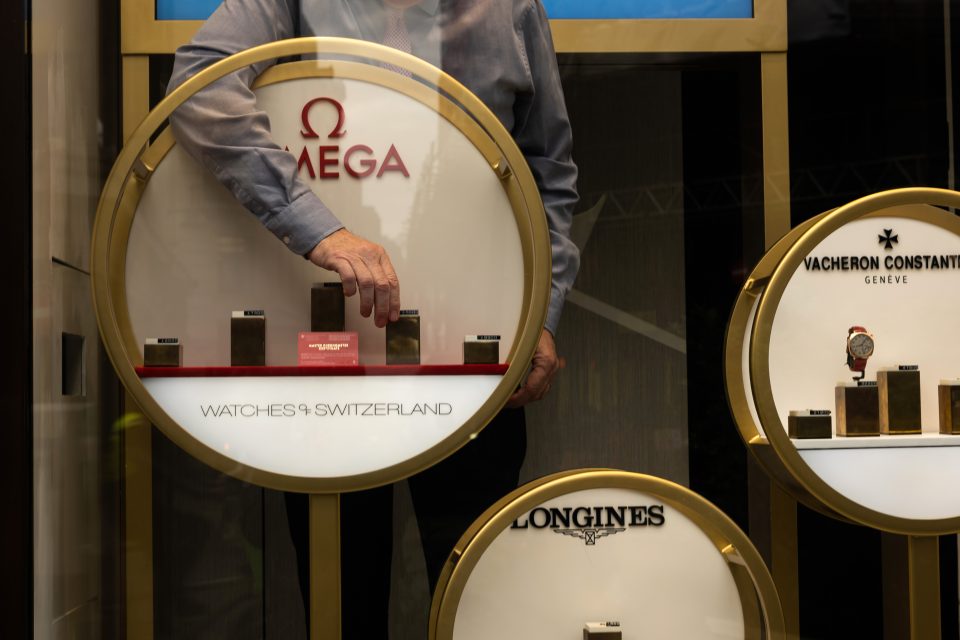
The ebbs and flows of the watch market could mean that different segments of Swatch Group perform well at different times. In recent years, as consumers were under financial pressure and turned away from luxury spending, entry- and mid-level brands helped drive Swatch’s sales volumes.
That restores a natural balance following the boom in higher-end watches experienced during the COVID-19 pandemic. Swatch is confident demand will pick up, so it didn’t lay off staff at its production unit even as orders from third parties and its own brands were down.
In a market where the most complicated timepieces won the business and praise of watch connoisseurs, Swatch succeeded with simple, low-cost, sophisticated, low-cost alternatives. This characteristic and the company’s strong leadership in innovative horology could keep the Swiss giant relevant for years to come.
Ultimately, Swatch has always found a place for itself in the market, even when the landscape around it shifts drastically. So when Fortune asked Villard what he thinks a world without Swatch might look like, he laughed, saying that’s hard to imagine.
“Since the brand was founded 40 years ago, our main aim is to satisfy a wide audience with our offering, but at the same time, we’ve always taken risks, which I think is key to the success of Swatch today,” he said.
Fortune wants to hear the stories of European companies with a global footprint that's touching the lives of millions of consumers worldwide. Get in touch: prarthana.prakash@fortune.com