• Home
  • Latest
  • Fortune 500
  • Finance
  • Tech
  • Leadership
  • Lifestyle
  • Rankings
  • Multimedia
EnvironmentEnergy
Europe

The small German village of Mühlrose is facing extinction from opencast mining, despite Germany’s 2030 pledge to leave coal behind

By
Petra Sorge
Petra Sorge
and
Bloomberg
Bloomberg
Down Arrow Button Icon
By
Petra Sorge
Petra Sorge
and
Bloomberg
Bloomberg
Down Arrow Button Icon
July 9, 2024, 4:56 AM ET
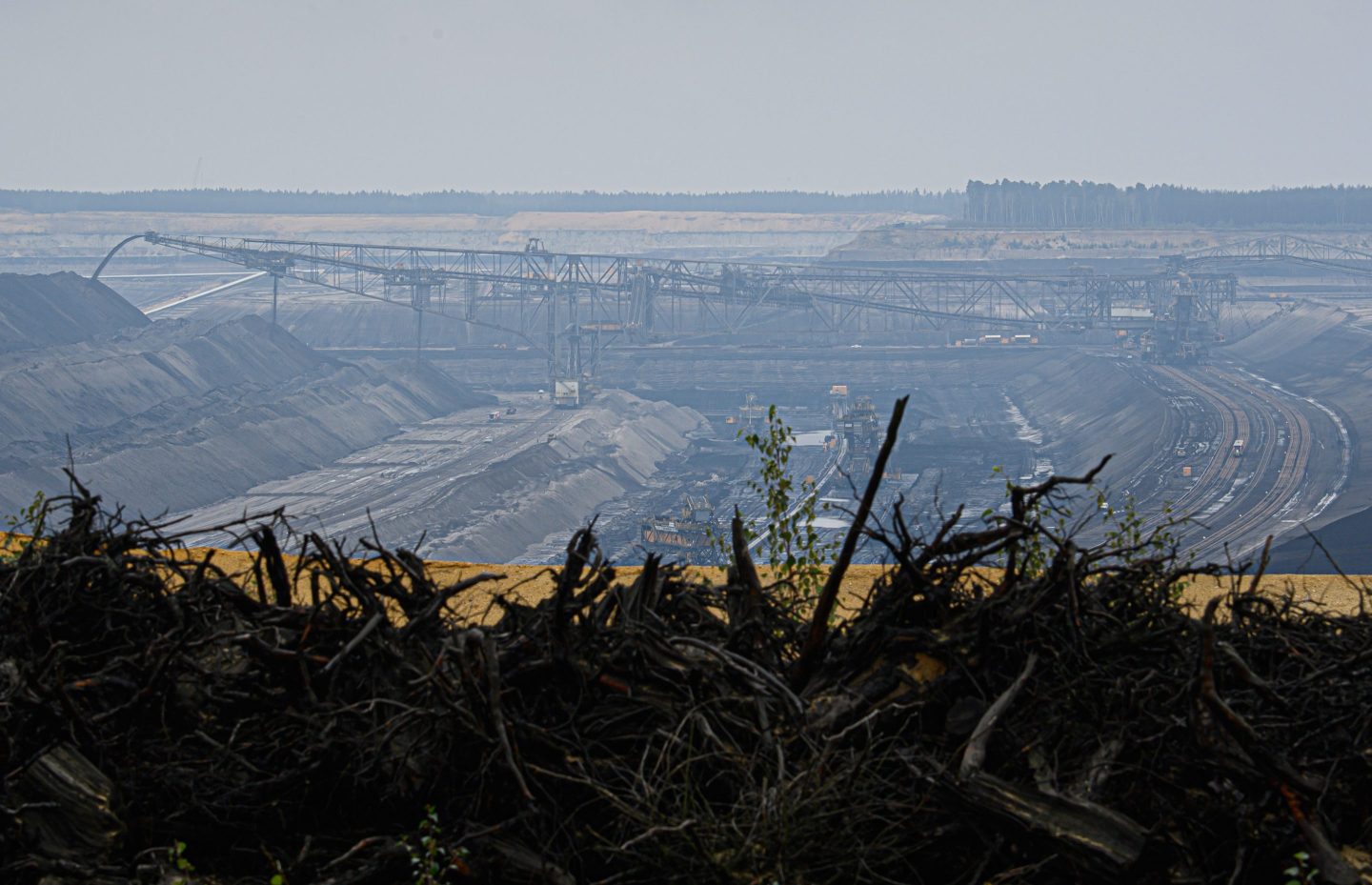
The Nochten open-cast mine is planned to grow to the point where it swallows nearby Mühlrose.
The Nochten open-cast mine is planned to grow to the point where it swallows nearby Mühlrose.Robert Michael/picture alliance via Getty Images

The village of Mühlrose in Germany’s far east has stood since the 13th century through wars, fires, unscrupulous lords, the division of the country and its reunification. Now its 200 people are packing up and leaving because of an industry they thought was also being consigned to history. Mühlrose will be wiped off the map to make way for a coal mine. 

Recommended Video

Only a few signs of the village’s once-fierce resistance remain. “Rescue our beautiful Mühlrose,” reads a flyer on a red brick home, its windows closed and shuttered.

One of the town’s last residents, Detlef Hottas, lives in a farmhouse with his wife, plus a few sheep and chickens. At 64, he rides along the deserted streets in an electric wheelchair before he, too, must relocate by yearend. “I didn’t want to resettle, because I was born here,” he says. “This is my home.”

Mühlrose lies in the region where the Czech Republic, Poland and former East Germany come together, the center of communist Europe’s coal mining. Rather than a symbol of a bygone era, though, it’s the latest example of how the continent is struggling to ditch the dirty fuel after Russia’s war in Ukraine upended energy supplies.

Germany, whose governing coalition includes the environmentalist Green Party, wants to speed up plans to abandon coal altogether as more renewable energy sources are added to the mix. But Europe’s biggest economy has relied heavily on the fuel for electricity production after gas from Russia was halted and it stuck with a plan to switch off its nuclear reactors.

The result is that a giant, opencast coal mine is closing in on Mühlrose as power generation company Lausitz Energie Bergbau AG, or LEAG, expands. It will excavate lignite, low-grade so-called brown coal. 
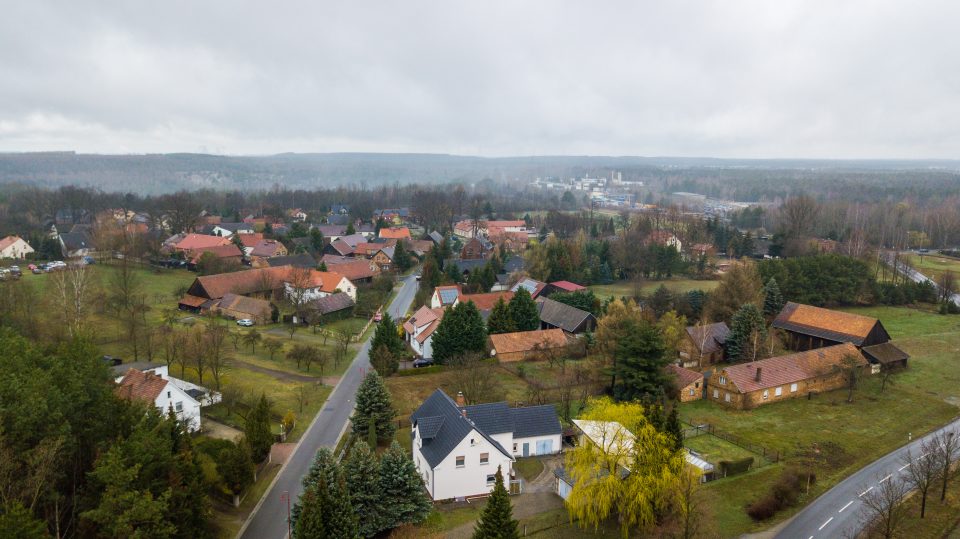
Aerial view of the village Mühlrose in the Lausitz
In 2019 an agreement was signed to build Neu-Mühlrose, and resettle the existing population.
Oliver Killig/picture alliance via Getty Images

Demolition work was in full swing in late June. The digging has eliminated more than two-thirds of the buildings. Only a few houses remain amid “no trespassing” signs. The steam from the cooling towers of the power plant that the coal feeds rises on the horizon.

“For me, it’s simply unbelievable,” says Jadwiga Mahling, a Protestant pastor who’s lived in the parish for about a decade. “Everyone speaks about the energy transition, but here we are purely deciding in the interest of business.”

Martin Klausch, the LEAG official in charge of the resettlement, says the company has done all it can to ease the transition for those in the town. “We don’t want anyone to be financially worse off as a result of the relocation,” Klausch says. 

Countries do want to get rid of coal, especially the more polluting lignite variety. Even in Poland, the European Union’s most coal-reliant economy, the government has agreed to a transition with powerful mining unions, albeit a slow move to a total phaseout by 2049.

The issue is timing, especially when far-right parties are gaining ground by amplifying popular fear over the cost of the EU’s package of green initiatives.

The German government reached a deal with coal giant RWE AG to stop using the fuel by 2030, eight years ahead of schedule, which will save more villages from the excavator.

But LEAG, part of Czech billionaire Daniel Kretinsky’s empire, wants access to the coal under Mühlrose before it gets out of the industry. The company submitted its mining application in March, and the state regional authority says it’s assessing it.

Germany’s economy and climate action minister, Robert Habeck of the Green Party, told a press conference in Berlin in early June that lignite had secured the country’s wealth in the past but its time is coming to an end. Yet there’s little he can do because of contracts signed by the previous government with mining companies that now hamper political efforts to get rid of coal.

Instead, Habeck announced an aid package for LEAG in line with an earlier agreement: at least €1.2 billion ($1.3 billion) to cover the cost of job losses and the restoration of the land after mining ends, but by the original target year of 2038.

Habeck is hoping market forces will spur an earlier exit, as falling power prices and rising costs for polluting the environment make it increasingly unprofitable to burn the fossil fuel in Germany. Josephine Semb, a researcher at Europe University Flensburg who co-authored a study on lignite mining published in late June, says mining under Mühlrose would be uneconomical.

LEAG says otherwise. The company is calculating with different scenarios for its lignite business, according to Chief Executive Officer Thorsten Kramer. “We assume that we will continue to generate income until 2038,” he says.
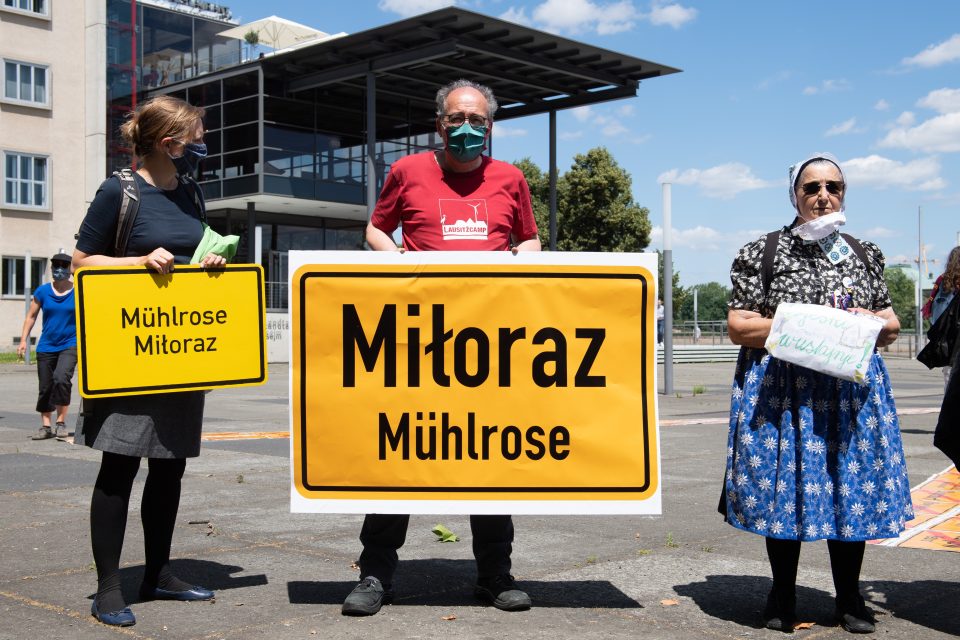
Environmentalists are standing in front of the state parliament of Saxony during a rally.
Environmentalists in Germany have long demonstrated against the dredging of more villages for lignite mining.
Sebastian Kahnert/picture alliance via Getty Images.

There have been few protests like those that flared up last year in other parts of Germany. RWE drew the wrath of activists when it decided to raze a final village in the Rhineland. A high-profile standoff ensued involving Swedish environmental activist Greta Thunberg.

Mühlrose, which once housed 600, will be the last village to be swept away. It was a long time coming. After World War II, the communist government in the former East Germany decided to build almost its entire energy program on lignite. First, Mühlrose’s cemetery had to make way for mining in the 1960s, then more of the village succumbed to it.

The last of the brown coal exited that pit in 1997. Residents thought the days of mining were over. But a decade later, Swedish utility Vattenfall—the owner of the mining operations at the time—decided otherwise and announced plans for an expansion.

Five years ago, a majority of Mühlrose residents voted to move away, after almost three decades of struggle over lignite expansion, according to Robert Sprejz, the mayor. “It was their wish to resettle,” he says. “They simply had enough of the noise and dust. At the height of operations, our windows had to be cleaned almost daily.”

About half of the inhabitants have moved to a resettlement site, called Mühlrose-neu, a short drive away, part of the village of Schleife.

LEAG expects to take ownership of all the land by the end of this year and start digging in 2029. Should the mining authority approve the destruction plans, the forest owners will lodge a legal complaint, says René Schuster, an activist with the environmental group Green League.

While there were court victories against lignite plans in the past, “the rulings often came too late,” Mahling, the pastor, says. “Then we would know that what was done was illegal. But the village and forest are anyway gone.” 

At the end of June, Mahling, in her flowing black clerical robe, held a makeshift outdoor church service in the last strip of trees near the lignite mine, next to the road that will bear mining trucks by yearend.

Environmentalists joined to honor a few holdout forest owners seeking to challenge LEAG. A small table draped with a white cloth served as an altar on the grass. The churchgoers, some in shorts and T-shirts, sat on benches once used in a beer hall. The trees around them were already gone, with machines hacking through the stumps and roots.

Villagers are now resigned to the loss of Mühlrose, a stronghold of the ethnic Sorb minority in Germany. Numbering only 60,000, Sorbs are descendants of Slavic tribes that lived in this region of Lusatia, sometimes called Sorbia. 

A Sorb herself and the daughter of a Protestant pastor, Mahling speaks Sorbic and offers bilingual services. She officiated at the funerals of the last Sorb women to wear traditional dresses, white lace adorned with bright-colored flowers. It reminded her of a local saying: “God created Lusatia, but the devil made the coal underneath.”

Join us at the Fortune Workplace Innovation Summit May 19–20, 2026, in Atlanta. The next era of workplace innovation is here—and the old playbook is being rewritten. At this exclusive, high-energy event, the world’s most innovative leaders will convene to explore how AI, humanity, and strategy converge to redefine, again, the future of work. Register now.
About the Authors
By Petra Sorge
See full bioRight Arrow Button Icon
By Bloomberg
See full bioRight Arrow Button Icon

Latest in Environment

Finance
Lorem ipsum dolor sit amet, consectetur adipiscing elit, sed do eiusmod tempor incididunt ut labore et dolore magna aliqua. Ut enim ad minim veniam
By Fortune Editors
October 20, 2025
Finance
Lorem ipsum dolor sit amet, consectetur adipiscing elit, sed do eiusmod tempor incididunt ut labore et dolore magna aliqua. Ut enim ad minim veniam
By Fortune Editors
October 20, 2025
Finance
Lorem ipsum dolor sit amet, consectetur adipiscing elit, sed do eiusmod tempor incididunt ut labore et dolore magna aliqua. Ut enim ad minim veniam
By Fortune Editors
October 20, 2025
Finance
Lorem ipsum dolor sit amet, consectetur adipiscing elit, sed do eiusmod tempor incididunt ut labore et dolore magna aliqua. Ut enim ad minim veniam
By Fortune Editors
October 20, 2025
Finance
Lorem ipsum dolor sit amet, consectetur adipiscing elit, sed do eiusmod tempor incididunt ut labore et dolore magna aliqua. Ut enim ad minim veniam
By Fortune Editors
October 20, 2025
Finance
Lorem ipsum dolor sit amet, consectetur adipiscing elit, sed do eiusmod tempor incididunt ut labore et dolore magna aliqua. Ut enim ad minim veniam
By Fortune Editors
October 20, 2025

Most Popular

Finance
Lorem ipsum dolor sit amet, consectetur adipiscing elit, sed do eiusmod tempor incididunt ut labore et dolore magna aliqua. Ut enim ad minim veniam
By Fortune Editors
October 20, 2025
Finance
Lorem ipsum dolor sit amet, consectetur adipiscing elit, sed do eiusmod tempor incididunt ut labore et dolore magna aliqua. Ut enim ad minim veniam
By Fortune Editors
October 20, 2025
Finance
Lorem ipsum dolor sit amet, consectetur adipiscing elit, sed do eiusmod tempor incididunt ut labore et dolore magna aliqua. Ut enim ad minim veniam
By Fortune Editors
October 20, 2025
Finance
Lorem ipsum dolor sit amet, consectetur adipiscing elit, sed do eiusmod tempor incididunt ut labore et dolore magna aliqua. Ut enim ad minim veniam
By Fortune Editors
October 20, 2025
Finance
Lorem ipsum dolor sit amet, consectetur adipiscing elit, sed do eiusmod tempor incididunt ut labore et dolore magna aliqua. Ut enim ad minim veniam
By Fortune Editors
October 20, 2025
Finance
Lorem ipsum dolor sit amet, consectetur adipiscing elit, sed do eiusmod tempor incididunt ut labore et dolore magna aliqua. Ut enim ad minim veniam
By Fortune Editors
October 20, 2025
Rankings
  • 100 Best Companies
  • Fortune 500
  • Global 500
  • Fortune 500 Europe
  • Most Powerful Women
  • Future 50
  • World’s Most Admired Companies
  • See All Rankings
Sections
  • Finance
  • Leadership
  • Success
  • Tech
  • Asia
  • Europe
  • Environment
  • Fortune Crypto
  • Health
  • Retail
  • Lifestyle
  • Politics
  • Newsletters
  • Magazine
  • Features
  • Commentary
  • Mpw
  • CEO Initiative
  • Conferences
  • Personal Finance
  • Education
Customer Support
  • Frequently Asked Questions
  • Customer Service Portal
  • Privacy Policy
  • Terms Of Use
  • Single Issues For Purchase
  • International Print
Commercial Services
  • Advertising
  • Fortune Brand Studio
  • Fortune Analytics
  • Fortune Conferences
  • Business Development
About Us
  • About Us
  • Editorial Calendar
  • Press Center
  • Work At Fortune
  • Diversity And Inclusion
  • Terms And Conditions
  • Site Map
  • Facebook icon
  • Twitter icon
  • LinkedIn icon
  • Instagram icon
  • Pinterest icon

Latest in Environment

EnvironmentColorado
Vail Resorts is having a very dry year: It reported a record‑low snowpack, forcing the company to lower its 2026 earnings outlook
By Matty Merritt and Morning BrewJanuary 16, 2026
1 day ago
greenland
EuropeGreenland
Americans have been quietly plundering Greenland for over 100 years, since a Navy officer chipped fragments off the Cape York iron meteorite
By Paul Bierman and The ConversationJanuary 14, 2026
3 days ago
Greenland
PoliticsGreenland
Greenland’s 1.5 million tons of rare earths might never get mined because there just aren’t any roads to them
By Josh Funk, Suman Naishadham and The Associated PressJanuary 11, 2026
6 days ago
Elicker
LawCrime
New Haven mayor says police chief admitted to stealing money from department, accepts retirement
By The Associated PressJanuary 6, 2026
11 days ago
trump
PoliticsRare Earth Metal
Why Greenland appeals to Trump’s real-estate investor heart: location, location, location
By Danica Kirka and The Associated PressJanuary 6, 2026
11 days ago
data center
AIData centers
Angry town halls nationwide find a new villain: the data center driving up your electricity bill while fueling job-killing AI
By Marc Levy and The Associated PressJanuary 3, 2026
14 days ago

Most Popular

placeholder alt text
Economy
America’s $38 trillion national debt is so big the nearly $1 trillion interest payment will be larger than Medicare soon
By Shawn TullyJanuary 15, 2026
3 days ago
placeholder alt text
Politics
The Nobel Prize committee doesn't want Trump getting one, even as a gift—but they treated Obama very differently
By Nick LichtenbergJanuary 16, 2026
1 day ago
placeholder alt text
Europe
Americans have been quietly plundering Greenland for over 100 years, since a Navy officer chipped fragments off the Cape York iron meteorite
By Paul Bierman and The ConversationJanuary 14, 2026
3 days ago
placeholder alt text
Politics
Anthony Scaramucci thinks Trump's 'hard-left' move to cap credit-card fees is because he's 'texting back and forth with Mayor Mamdani'
By Nick Lichtenberg and Eva RoytburgJanuary 16, 2026
1 day ago
placeholder alt text
Success
Jensen Huang tells Stanford students their high expectations may make it hard for them to succeed: 'I wish upon you ample doses of pain and suffering'
By Orianna Rosa RoyleJanuary 16, 2026
1 day ago
placeholder alt text
Banking
'Absolutely, positively no chance, no way, no how, for any reason': Dimon says he'd never run the Fed but 'would take the call' to lead Treasury
By Jacqueline MunisJanuary 16, 2026
1 day ago

© 2025 Fortune Media IP Limited. All Rights Reserved. Use of this site constitutes acceptance of our Terms of Use and Privacy Policy | CA Notice at Collection and Privacy Notice | Do Not Sell/Share My Personal Information
FORTUNE is a trademark of Fortune Media IP Limited, registered in the U.S. and other countries. FORTUNE may receive compensation for some links to products and services on this website. Offers may be subject to change without notice.