
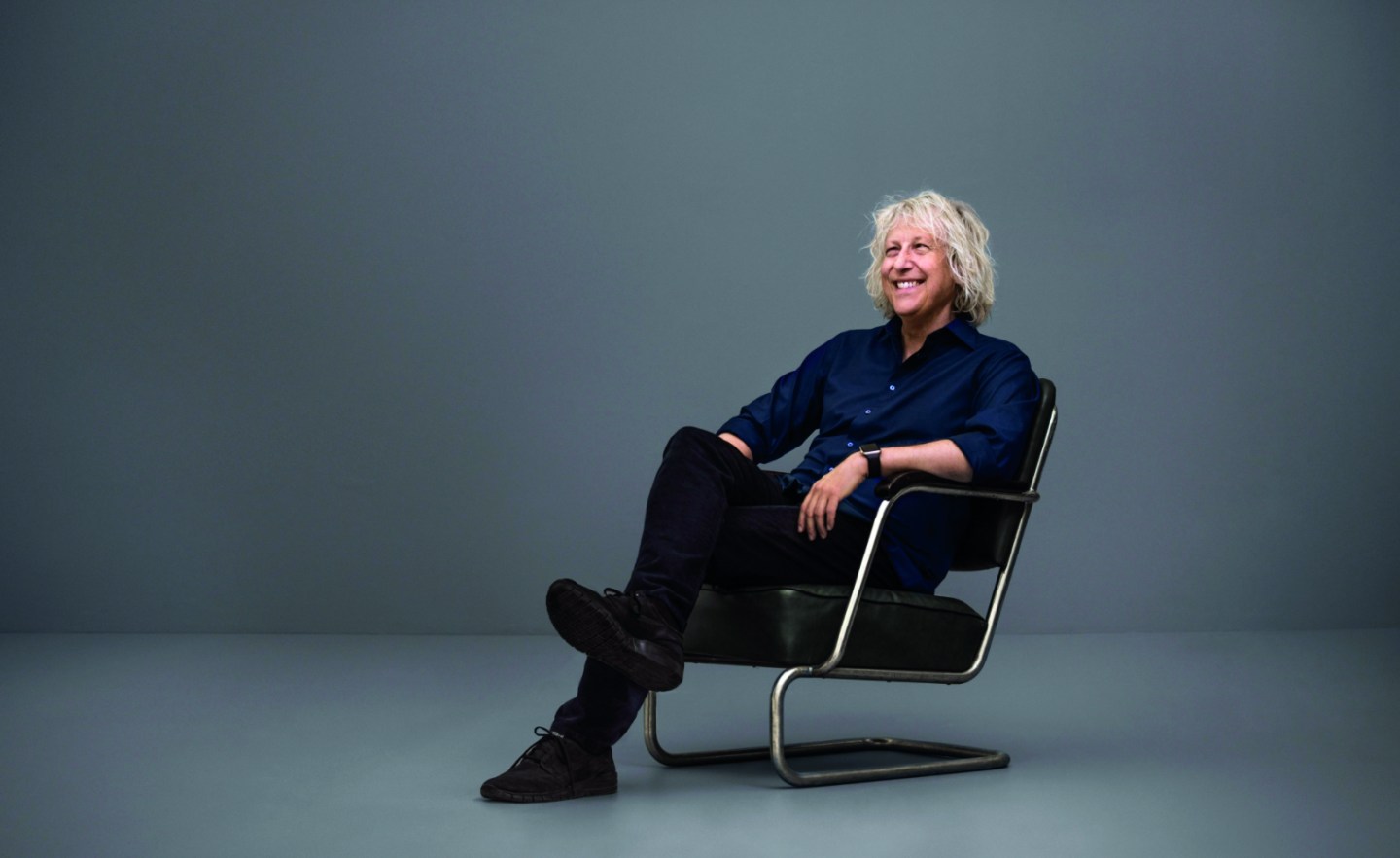
With a master’s thesis focused on sleep and 35 years at the helm of one of the world’s most exclusive bedmakers, it’s safe to say Jan Ryde knows a thing or two about a good night’s rest.
Not that the CEO of Hästens always got enough sleep over the last three decades, as he’s transformed his family beds business from a multi-generational local Swedish brand into an international powerhouse boasting scores of A-list celebrity customers.
He took the company there by going against the grain of highly affordable furniture championed by fellow Swedish outfit Ikea and instead bringing the brand back to its exclusive, artisanal roots.
But ask Ryde whether the supercharged beds should be considered as part of the luxury sector alongside LVMH and Gucci, and you’ll get an unusual answer.
Hästens’ A-list clients
Ryde was making decent progress with his embattled bed company after taking over from his parents in 1988 at the age of 25. He was growing his Swedish market share while paying off a debt taken on by his parents to buy out former business partners.
But with several years of growth under his belt, some staff members thought he had reached an impasse.
“After working on product development for two to three years, we came to a point where one sales guy said, ‘Everyone that can afford this bed has already bought one, there are no more customers left,’ and he quit because he believed we had already sold to everyone,” Ryde told Fortune.
Sales doubled in the year after that salesperson’s departure, and again the year after that, Ryde says, as he took it upon himself to go into stores and sell his beds to Swedish customers.
Skip forward 30 years, and a host of the world’s biggest celebrities are lining up to buy Hästens’ blue-check patterned beds.
Drake was reportedly the first person to buy Hästens’ $400,000 “Grand Vividus” bed, while the group says it has been the official bed supplier to the Swedish Royal Court for more than 70 years.
Former grand slam-winning tennis star Maria Sharapova said in Ryde’s new book that a Hästens bed was one of her first big purchases after she started picking up prize money. Ryde says there are many other high-profile clients whose names he can’t share.
Hästens beds have also featured in the lyrics of rapper Post Malone’s music as well as in the hit Netflix series Emily in Paris, demonstrating the company’s grasp on some of the world’s most materialistic subcultures.
But Ryde’s former employee from the early 90s raised a prescient point about the nature of prohibitively expensive consumer products, and what happens to its producers when a well of wealthy buyers dries up.
Luxurious, not luxury
The year 2023 may be remembered as the year the wealthy finally turned off the spending taps.
Major luxury businesses from LVMH to Kering endured rare and unexpected contractions in revenue last year. The drop followed a yearslong boom as COVID-19 stimulus fed into people’s wallets and then into luxury brands’ coffers.
But the wealthy showed they couldn’t insulate themselves from years of higher interest rates and an extended cost of living crisis, while a stuttering stock market in 2022 had particular impacts on the super-rich.
Viewed from the outside, it seems obvious that customers might view Hästens and its range of ultra-expensive beds as an unnecessary luxury item in the current economic climate.
Hästens’ beds range in price from its least expensive $8,500 “Excel” to the $400,000 “Grand Vividus” purchased by Drake. A £50,000 ($63,600) bed titled 2000T is one of the company’s best-selling, Ryde says.
The fifth-generation CEO, however, told Fortune he didn’t think the luxury slowdown would have a material impact on Hästens’ sales.
That’s not because Ryde’s luxury customers were resilient, but because he doesn’t regard his Hästens beds as a luxury item at all. His target demographic is, apparently, everyone.
Ryde said it “doesn’t help us” if the group’s beds are considered by shoppers to be a luxury item.
“We are for people, human beings, that prioritize their life in such a way that they want to sleep really well. So we are relevant for any consumer,” Ryde said.
It may not be that simple. Studies have shown that the poorer someone is, the less they sleep. Beds like Hästens, while not responsible for that inequality, may understandably be perceived as a halting reminder of it.
Ryde accepts that consumers need to make budgeting choices to purchase his beds, but appears to view the importance of sleep and its benefits as separating it from traditional luxuries like designer handbags, champagne, and beauty products.
“The value of sleeping is just tremendous,” Ryde summarizes.
He added that the company hadn’t seen any evident impact on sales last year from a luxury slowdown, though he didn’t divulge specific earnings information.
In the U.K., the company made £4.9 million ($6.3 million) in sales in 2022, which represented no growth from 2021, according to a filing seen by Fortune. Hästens faced a £1.2 million ($1.5 million) operating loss in the U.K. that year.
Hästens experiment with cheaper bed
There are immediate comparisons and obvious contrasts to be drawn between Hästens and another major Swedish furniture company: Ikea.
Indeed, the furniture giant is emblematic of Hästens’ biggest struggles and successes over the last 70 years.
When Ryde’s parents inherited the company from his grandfather in the 1960s, he said consumers were moving away from its pricey materials like cotton wool and toward cheaper alternatives like synthetic cotton and foam, adding to an affordability revolution championed by Ikea founder Ingvar Kamprad in the 1950s.
Ryde said his family couldn’t even sell the company for one krona in the 1960s thanks to this shift.
Ryde admitted that the company has occasionally tried to make a cheaper bed and rolled it out for consumer testing during his 35 years leading the company, but he says the result has always been the same.
“As soon as the consumers recognize or notice our beds and start to try them in the showroom, they don’t want the cheaper bed.”
Instead, he decided he needed to pivot the company back to its high-quality roots as consumers began to yearn for craftsmanship and exclusivity again.
“If they are not getting the value or being given a better product, they will choose something simpler or cheaper because it doesn’t matter.”
While there may be debates over Ryde’s assertion that his pricey beds are targeted at anyone who wants a good night’s sleep, and not simply the super-rich, it’s harder to deny the company’s success since Ryde pivoted the company back to its roots in the late 1980s.
The fifth-generation CEO’s new book When Business Is Love is the result of a promise he made to himself to reflect when he hit $100 million in annual sales.
The next milestones are sure to garner more ambitious developments as the Swede aims to corner the $300 billion sleep market.