• Home
  • Latest
  • Fortune 500
  • Finance
  • Tech
  • Leadership
  • Lifestyle
  • Rankings
  • Multimedia
CommentaryInternational
Europe

There are more refugees today than at any point in history since WWII. A new approach aims to turn them into the next wave of entrepreneurs

By
Dianne Calvi
Dianne Calvi
Down Arrow Button Icon
By
Dianne Calvi
Dianne Calvi
Down Arrow Button Icon
June 20, 2023, 7:28 AM ET
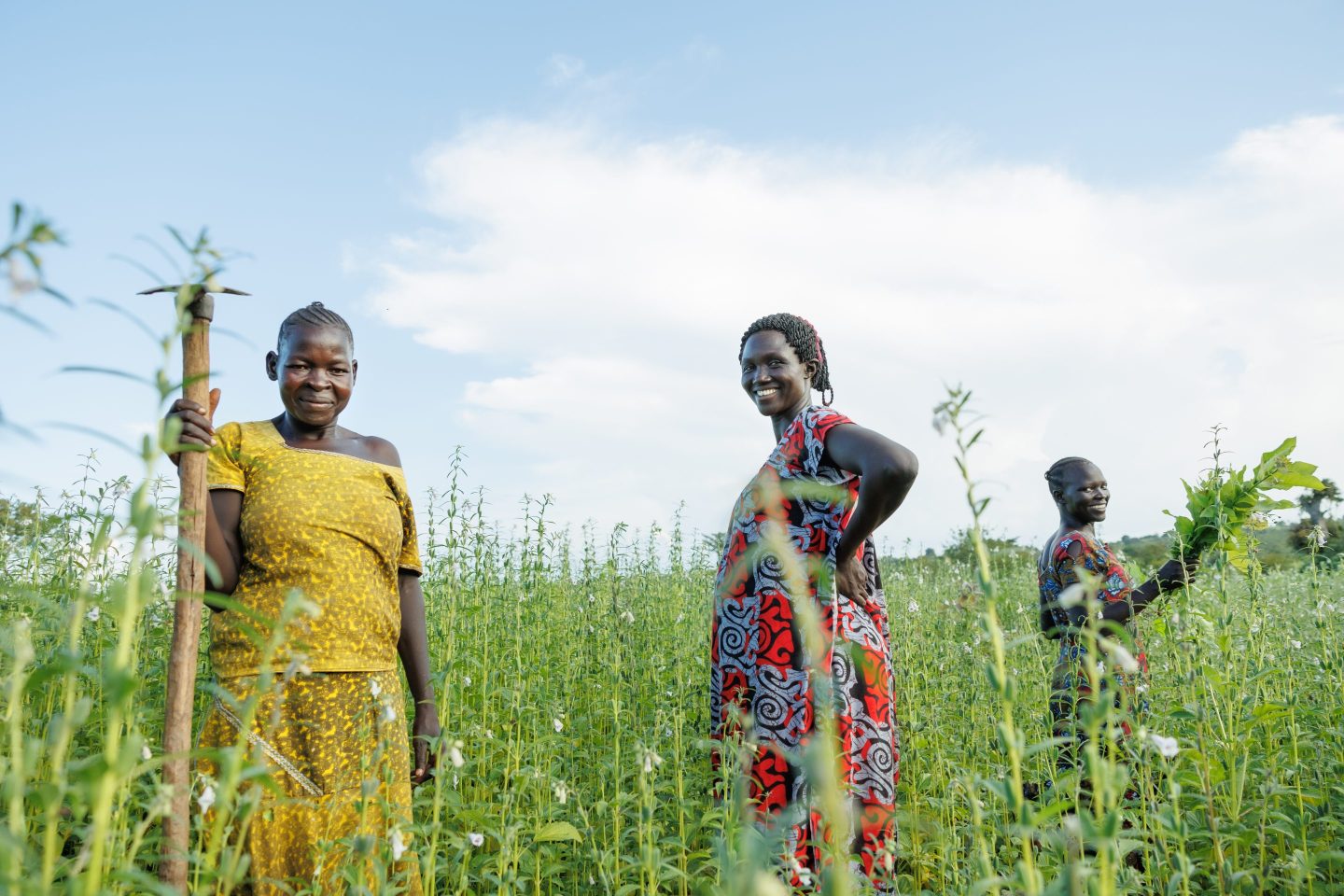
400 new businesses were launched by refugees who graduated from the program in the Bidi Bidi refugee camp in Uganda.
400 new businesses were launched by refugees who graduated from the program in the Bidi Bidi refugee camp in Uganda.Jjumba Martin for Mercy Corps.

Today, the world honors refugees, and celebrates their courage and resilience–but a failure to address a growing crisis means, this year, the words of support may ring hollow.

In 2022, according to the UNHCR, there were 32.5 million refugees, a higher number than at any point in history since the Second World War–and this figure has more than doubled in the space of a decade. 

Approximately 22% of refugees, around 7 million people, live in refugee camps or settlements, often for years. In fact, it’s becoming increasingly common for entire generations to grow up in them. Life in a refugee camp is extremely hard–and it’s been getting tougher.

Traditional approaches are failing refugees

The current model for supporting refugees living in camps is not working. The traditional approach has been to spend aid money on subsistence handouts, giving people the bare minimum to survive. The basic rations are essential in the immediate term, but can lead to dependency over the long term. When people are forced to rely on aid to live, they have no control over their futures. Trapped in poverty, they feel helpless and hopeless.

Moreover, with an ever-increasing refugee population and global food shortages, there is less and less to go around. The UN World Food Programme has shifted to needs-based targeting of food assistance for refugees in Ugandan camps because demand consistently outstrips available funds. Highly vulnerable families at times only receive 40% of basic survival rations.

To address this problem, we need to find ways to use the money spent on aid more effectively: to turn every dollar donated into three, four, or five. And we need to find approaches that empower people living in refugee camps and give them agency to improve their lives.

We’ve been working on one such approach with Mercy Corps; unleashing the power of entrepreneurship to enable refugees to lift themselves and their families out of extreme poverty.

Entrepreneurship as a route out of poverty

Providing people with the skills and means to start their own businesses and generate income is a tried-and-tested approach in settings where people live in extreme poverty. The success of this approach is backed by robust academic research, including a groundbreaking 2015 study led by Nobel Prize-winning economists Abhijit Banerjee and Esther Duflo, and published in Science.

Our recent longitudinal study, which followed more than 400 entrepreneurs in Kenya and Uganda, also showcased the sustainability of this approach: Five years after participating in the program, participants benefited from an 83% increase in household consumption and a 933% increase in savings, even despite the economic challenges of the pandemic.

Every dollar invested in such programs is multiplied many times over by the graduates that complete them, and the skills they develop last a lifetime.

How to start a business in a refugee camp

This approach is now being applied to one of the world’s most intractable problems: the refugee crisis.

If you’ve ever started your own business, you know the hard work and commitment it requires. This challenge is far greater for refugees, many of whom don’t have the skills, capital, or tools to start a business, but more fundamentally, are also faced with the lack of an obvious market for goods or services, the social networks, and understanding of the socio-economic-political context to do so.

That’s why, on top of equipping refugees with the resources and tools to become entrepreneurs, we’re partnering with Mercy Corps, who are experts in market systems development. By conducting market assessments, we are able to identify high-opportunity value chains and bring on board private sector companies and distributors, thus creating the markets the new small businesses need to sustain themselves. In the Bidi Bidi refugee camp in Uganda, entrepreneurs are growing and selling sesame, raising chickens, and selling fish to local markets.

The opportunity to earn money and become financially self-sufficient can be life-changing for refugees living in camps and settlements around the world–yet many countries won’t allow them to work or start a business. Complex rules hold back many refugees from creating livelihoods and contributing to the local economy.

The Global Refugee Compact, which was affirmed in 2018, commits signatories to increasing refugees’ self-reliance, including through livelihood initiatives like our own. The more countries that sign the Compact, the greater the opportunity for programs like ours to give refugees throughout the world the possibility of rebuilding their lives.

After years of exponential increases in the number of displaced people, the refugee crisis has become one of the biggest challenges facing our global society today. It’s crucial that our approach is to empower refugees to become self-reliant, not marginalize them further.

Dianne Calvi is the CEO of Village Enterprise.

The opinions expressed in Fortune.com commentary pieces are solely the views of their authors and do not necessarily reflect the opinions and beliefs of Fortune.

More must-read commentary published by Fortune:

  • The ‘Elon Paradox’: He sells Teslas–but you’d expect him to drive a Ram. Here’s what your car says about your politics
  • The alt-right economy is failing. Here’s the real performance of anti-woke entrepreneurs
  • Asana CEO: ‘The way we work right now will soon look vestigial. Here’s how A.I. will make work more human’
  • Why picking citizens at random could be the best way to govern the A.I. revolution

Join us at the Fortune Workplace Innovation Summit May 19–20, 2026, in Atlanta. The next era of workplace innovation is here—and the old playbook is being rewritten. At this exclusive, high-energy event, the world’s most innovative leaders will convene to explore how AI, humanity, and strategy converge to redefine, again, the future of work. Register now.
About the Author
By Dianne Calvi
See full bioRight Arrow Button Icon

Latest in Commentary

Finance
Lorem ipsum dolor sit amet, consectetur adipiscing elit, sed do eiusmod tempor incididunt ut labore et dolore magna aliqua. Ut enim ad minim veniam
By Fortune Editors
October 20, 2025
Finance
Lorem ipsum dolor sit amet, consectetur adipiscing elit, sed do eiusmod tempor incididunt ut labore et dolore magna aliqua. Ut enim ad minim veniam
By Fortune Editors
October 20, 2025
Finance
Lorem ipsum dolor sit amet, consectetur adipiscing elit, sed do eiusmod tempor incididunt ut labore et dolore magna aliqua. Ut enim ad minim veniam
By Fortune Editors
October 20, 2025
Finance
Lorem ipsum dolor sit amet, consectetur adipiscing elit, sed do eiusmod tempor incididunt ut labore et dolore magna aliqua. Ut enim ad minim veniam
By Fortune Editors
October 20, 2025
Finance
Lorem ipsum dolor sit amet, consectetur adipiscing elit, sed do eiusmod tempor incididunt ut labore et dolore magna aliqua. Ut enim ad minim veniam
By Fortune Editors
October 20, 2025
Finance
Lorem ipsum dolor sit amet, consectetur adipiscing elit, sed do eiusmod tempor incididunt ut labore et dolore magna aliqua. Ut enim ad minim veniam
By Fortune Editors
October 20, 2025

Most Popular

Finance
Lorem ipsum dolor sit amet, consectetur adipiscing elit, sed do eiusmod tempor incididunt ut labore et dolore magna aliqua. Ut enim ad minim veniam
By Fortune Editors
October 20, 2025
Finance
Lorem ipsum dolor sit amet, consectetur adipiscing elit, sed do eiusmod tempor incididunt ut labore et dolore magna aliqua. Ut enim ad minim veniam
By Fortune Editors
October 20, 2025
Finance
Lorem ipsum dolor sit amet, consectetur adipiscing elit, sed do eiusmod tempor incididunt ut labore et dolore magna aliqua. Ut enim ad minim veniam
By Fortune Editors
October 20, 2025
Finance
Lorem ipsum dolor sit amet, consectetur adipiscing elit, sed do eiusmod tempor incididunt ut labore et dolore magna aliqua. Ut enim ad minim veniam
By Fortune Editors
October 20, 2025
Finance
Lorem ipsum dolor sit amet, consectetur adipiscing elit, sed do eiusmod tempor incididunt ut labore et dolore magna aliqua. Ut enim ad minim veniam
By Fortune Editors
October 20, 2025
Finance
Lorem ipsum dolor sit amet, consectetur adipiscing elit, sed do eiusmod tempor incididunt ut labore et dolore magna aliqua. Ut enim ad minim veniam
By Fortune Editors
October 20, 2025
Rankings
  • 100 Best Companies
  • Fortune 500
  • Global 500
  • Fortune 500 Europe
  • Most Powerful Women
  • Future 50
  • World’s Most Admired Companies
  • See All Rankings
Sections
  • Finance
  • Leadership
  • Success
  • Tech
  • Asia
  • Europe
  • Environment
  • Fortune Crypto
  • Health
  • Retail
  • Lifestyle
  • Politics
  • Newsletters
  • Magazine
  • Features
  • Commentary
  • Mpw
  • CEO Initiative
  • Conferences
  • Personal Finance
  • Education
Customer Support
  • Frequently Asked Questions
  • Customer Service Portal
  • Privacy Policy
  • Terms Of Use
  • Single Issues For Purchase
  • International Print
Commercial Services
  • Advertising
  • Fortune Brand Studio
  • Fortune Analytics
  • Fortune Conferences
  • Business Development
About Us
  • About Us
  • Editorial Calendar
  • Press Center
  • Work At Fortune
  • Diversity And Inclusion
  • Terms And Conditions
  • Site Map
  • Facebook icon
  • Twitter icon
  • LinkedIn icon
  • Instagram icon
  • Pinterest icon

Most Popular

placeholder alt text
Success
In 2026, many employers are ditching merit-based pay bumps in favor of ‘peanut butter raises’
By Emma BurleighFebruary 2, 2026
1 day ago
placeholder alt text
Economy
'I just don't have a good feeling about this': Top economist Claudia Sahm says the economy quietly shifted and everyone's now looking at the wrong alarm
By Eleanor PringleJanuary 31, 2026
4 days ago
placeholder alt text
Future of Work
Ford CEO has 5,000 open mechanic jobs with up to 6-figure salaries from the shortage of manually skilled workers: 'We are in trouble in our country'
By Marco Quiroz-GutierrezJanuary 31, 2026
3 days ago
placeholder alt text
Personal Finance
Current price of silver as of Monday, February 2, 2026
By Joseph HostetlerFebruary 2, 2026
1 day ago
placeholder alt text
Cybersecurity
Top AI leaders are begging people not to use Moltbook, a social media platform for AI agents: It’s a ‘disaster waiting to happen’
By Eva RoytburgFebruary 2, 2026
1 day ago
placeholder alt text
Future of Work
‘You’re not a hero, you’re a liability’: Shark Tank’s Kevin O’Leary warns Gen Z founders to stop glorifying hustle culture
By Jacqueline MunisFebruary 2, 2026
1 day ago

© 2026 Fortune Media IP Limited. All Rights Reserved. Use of this site constitutes acceptance of our Terms of Use and Privacy Policy | CA Notice at Collection and Privacy Notice | Do Not Sell/Share My Personal Information
FORTUNE is a trademark of Fortune Media IP Limited, registered in the U.S. and other countries. FORTUNE may receive compensation for some links to products and services on this website. Offers may be subject to change without notice.


Latest in Commentary

minnesota
CommentaryMinnesota
I’ve studied nonviolent resistance in war zones for 20 years and Minnesota reminds me of Colombia, the Philippines and Syria
By Oliver Kaplan and The ConversationFebruary 3, 2026
4 hours ago
EuropeLetter from London
Oracle billionaire Larry Ellison’s next big bet: Redefining how long–and how well–we live
By Kamal AhmedFebruary 3, 2026
9 hours ago
davos
CommentaryCareers
While elites debate geopolitics, Americans are rethinking college in the search for economic mobility
By Ed MitzenFebruary 3, 2026
9 hours ago
american dream
CommentaryCapitalism
We need more capitalists, not necessarily more capitalism
By Seth Levine and Elizabeth MacBrideFebruary 3, 2026
10 hours ago
pretti
CommentaryLeadership
What should business leaders say about Alex Pretti’s death?
By Deepak MalhotraFebruary 3, 2026
10 hours ago
Photo of Donald Trump
CommentaryLeadership
What happened at Davos was a warning to CEOs: Their companies are designed for a world that no longer exists
By Ram CharanFebruary 3, 2026
12 hours ago